
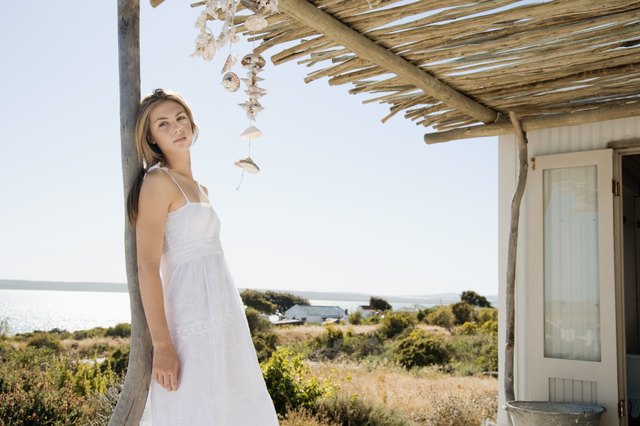
A smocked sundress looks like summer got organized: stretchy bodice, breezy skirt, and just enough “I made this myself” energy to make people ask where you bought it. But before the sewing machine starts humming, there is one important question: how much fabric do you actually need?
Measuring fabric for a smocked sundress is not complicated, but it does require more than holding a bolt of cotton in the store and whispering, “This feels like enough.” Smocking, shirring, elastic thread, fabric width, body measurements, skirt length, seam allowance, and hem depth all affect the final yardage. The good news is that once you understand the basic formula, you can measure fabric for a child’s sundress, an adult summer dress, a maxi dress, or a simple beach cover-up without needing a fashion degree or a dramatic fainting couch.
This guide explains how to measure fabric for a smocked sundress step by step, including how to calculate bodice width, dress length, skirt fullness, seam allowance, fabric shrinkage, and extra yardage for prints or mistakes. We will also cover the difference between true smocking and elastic-thread shirring, because sewing vocabulary likes to keep everyone humble.
Smocked vs. Shirred: Know What You Are Measuring For
Many casual sewing tutorials use the words “smocked” and “shirred” interchangeably, especially when talking about sundresses. Technically, traditional smocking is a hand-sewn embroidery technique that gathers fabric into decorative, structured pleats. Shirring uses elastic thread, usually in the bobbin, to create rows of stretchy gathers. A modern “smocked sundress” is often actually a shirred sundress.
Why does this matter for fabric measurement? Because shirring shrinks fabric. A flat rectangle of fabric may become 25 percent to 50 percent narrower after rows of elastic thread are sewn and steamed. That means you cannot simply cut fabric equal to the bust measurement and hope it magically fits. Fabric is talented, but it is not psychic.
For a DIY smocked sundress, you are usually measuring for one of two styles:
- A one-piece shirred sundress: One large rectangle forms the dress. The top section is shirred, and the lower section becomes the skirt.
- A separate bodice-and-skirt sundress: The smocked or shirred bodice is measured separately, then a gathered skirt is attached.
Both styles use similar measurements, but the layout and yardage calculation are slightly different.
Tools You Need Before Measuring Fabric
Before you start doing sewing math, gather the right tools. Accurate measuring makes the difference between a sundress that fits beautifully and one that behaves like a decorative pillowcase with straps.
- Flexible measuring tape
- Notebook or measurement worksheet
- Fabric marker or tailor’s chalk
- Ruler or quilting ruler
- Calculator
- Prewashed fabric sample
- Elastic thread if you are shirring the bodice yourself
- Regular sewing thread
- Iron with steam
Use a measuring tape that does not stretch. If the tape has survived three craft rooms, two junk drawers, and one mysterious coffee spill, check it against a ruler before trusting it with your sundress destiny.
Step 1: Take the Body Measurements
The most important part of measuring fabric for a smocked sundress is measuring the body accurately. Wear the undergarments you plan to wear with the dress, stand naturally, and keep the tape snug but not tight. The tape should rest against the body without squeezing. If it leaves a mark, it is measuring your determination, not your body.
Measure the Full Bust or Chest
Wrap the measuring tape around the fullest part of the bust or chest. Keep the tape level across the back. This measurement helps determine the finished circumference of the smocked bodice.
Measure the High Bust or Upper Chest
Measure above the full bust, around the upper chest and under the arms. This is useful for strapless or straight-across sundresses because the top edge needs to sit securely without gaping.
Measure the Waist or Underbust
For a dress with a separate bodice and skirt, measure where the bodice ends. This may be the natural waist, empire waist, or underbust. A smocked sundress often has flexible fit, but this measurement helps decide bodice height and skirt placement.
Measure the Hips
If the dress pulls on over the body without a zipper or buttons, measure the fullest part of the hips. The dress must either stretch over this area or have enough skirt width to pass over it. Ignoring the hip measurement is how a sundress becomes a very ambitious scarf.
Measure Dress Length
Decide where the top edge of the dress will sit. Measure from that point down to the desired hemline. Common lengths include mid-thigh, above the knee, knee length, midi, and maxi. Add extra for the top finish and hem.
Step 2: Choose the Right Fabric
The best fabrics for a smocked sundress are lightweight to medium-light woven fabrics that gather easily and feel comfortable in warm weather. Cotton lawn, voile, batiste, lightweight chambray, double gauze, and rayon challis are popular choices. These fabrics move well, gather nicely, and do not fight the elastic thread like a tiny fabric villain.
Avoid heavy fabrics such as canvas, denim, thick flannel, upholstery fabric, or wool suiting for a shirred bodice. The elastic thread may not gather them properly, and the finished bodice may feel bulky. If you want structure, use it in the skirt or straps, not in the shirred area.
Always prewash and dry the fabric the same way you plan to care for the finished dress. Cotton and rayon can shrink, and it is much better for the fabric to shrink before sewing than after you have created a perfect sundress. Nobody enjoys making a dress for themselves and accidentally gifting it to a houseplant.
Step 3: Test the Shirring Shrinkage
Shirring shrinkage varies by fabric, stitch length, elastic thread, machine tension, and steam. That is why a test swatch is not optional if you want reliable results. It is the sewing version of checking the weather before a picnic.
Cut a test strip from your fashion fabric. A practical size is 12 inches wide by 8 inches tall. Sew several rows of shirring across the width, spacing the rows about 3/8 inch to 1/2 inch apart. Steam the shirred sample with an iron, but do not crush it flat. Let it cool, then measure the finished width.
Use this formula:
Shirring factor = original width ÷ finished shirred width
Example: If your 12-inch sample shrinks to 7 inches after shirring and steaming, the shirring factor is:
12 ÷ 7 = 1.71
This means you need about 1.71 inches of flat fabric for every 1 inch of finished shirred bodice. If your sample shrinks from 12 inches to 6 inches, your factor is 2. If it shrinks from 12 inches to 9 inches, your factor is 1.33.
For many lightweight fabrics, a rough estimate is that shirring may reduce the fabric width by about one-quarter to one-half. However, your actual swatch is more reliable than a generic number. Sewing has rules, but fabric has opinions.
Step 4: Calculate the Bodice Width
To calculate fabric width for the smocked bodice, start with the body measurement that matters most. For most adult sundresses, use the largest of the full bust, high bust, and hip measurement if the dress must pull on without closures. For children’s sundresses, the chest measurement is often the main number, but still consider ease and growth room.
Use this formula for a shirred bodice:
Flat bodice width = finished bodice circumference × shirring factor + seam allowance
Adult Example
Suppose the full bust is 38 inches, the hip is 42 inches, and you want the dress to pull on comfortably. Choose a target finished circumference of 43 to 44 inches. If the shirring factor is 1.71, the flat bodice width is:
44 × 1.71 = 75.24 inches
Add 1 inch for side seam allowances:
75.24 + 1 = 76.24 inches
You would cut approximately 76 1/4 inches of flat fabric width for the bodice before shirring.
Child Example
Suppose a child’s chest measurement is 24 inches, and you want a comfortable finished circumference of 25 inches. Your test swatch gives a shirring factor of 1.5. The flat bodice width is:
25 × 1.5 = 37.5 inches
Add 1 inch seam allowance:
37.5 + 1 = 38.5 inches
You would cut about 38 1/2 inches of flat fabric width.
Step 5: Calculate the Bodice Height
Bodice height depends on the design. For a child’s smocked sundress, the shirred section may be 5 to 8 inches tall. For an adult dress, the shirred bodice may be 8 to 12 inches tall, depending on bust size, comfort, and style.
Measure from the top edge of the dress to where you want the smocking to end. Add extra for finishing the top edge and attaching the skirt if using a separate skirt.
Basic formula:
Bodice cut height = finished bodice height + top hem allowance + lower seam allowance
Example: If you want a 10-inch finished bodice, add 1 inch for the top fold and 1/2 inch for the lower seam allowance:
10 + 1 + 0.5 = 11.5 inches
Cut the bodice 11 1/2 inches tall.
Step 6: Calculate the Skirt Width
If your sundress has a separate skirt attached to the smocked bodice, measure the skirt width based on fullness. A gathered skirt usually looks best when it is 1.5 to 2 times the finished waist or bodice circumference. Lightweight fabrics can handle more fullness, while bulkier fabrics need less.
Use this formula:
Skirt width = finished bodice circumference × fullness ratio
For light cotton lawn or rayon challis, use 1.75 to 2 times the bodice circumference for a breezy summer look. For double gauze or chambray, use 1.5 to 1.75 times to avoid too much bulk.
Example Skirt Width Calculation
If the finished bodice circumference is 44 inches and you want moderate gathers:
44 × 1.75 = 77 inches
Add 1 inch for seam allowance:
77 + 1 = 78 inches
You need 78 inches of skirt width before gathering.
Step 7: Calculate the Skirt Length
Measure from the bottom of the smocked bodice to the desired hemline. Then add seam allowance and hem allowance.
Use this formula:
Skirt cut length = finished skirt length + waist seam allowance + hem allowance
Example: If you want the skirt to be 25 inches long, add 1/2 inch for the waist seam and 2 inches for a clean double-fold hem:
25 + 0.5 + 2 = 27.5 inches
Cut the skirt 27 1/2 inches long.
Step 8: Account for Fabric Width
Fabric is usually sold in standard widths, commonly around 44/45 inches or 58/60 inches. Width matters because your calculated dress panels may not fit across one width of fabric.
If your required bodice or skirt width is less than the usable fabric width, you may cut one panel. If the required width is greater than the fabric width, divide it into two or more panels and add seam allowance for each seam.
Example: You need 78 inches of skirt width, and your fabric is 44 inches wide. One width is not enough. Cut two panels, each about 39 1/2 inches wide, including side seam allowance. Sew them together at the side seams, then gather the top edge to fit the bodice.
For a one-piece shirred sundress, the total fabric width may need to wrap around the body before shirring. If your flat width is 76 inches and your fabric is 44 inches wide, you will need two panels. If the dress length is 40 inches, you need two dress lengths, plus extra for straps and mistakes.
Step 9: Add Fabric for Straps, Ties, Ruffles, and Details
A smocked sundress can be strapless, but most people prefer straps for comfort and security. Fabric straps, tie straps, shoulder bows, ruffles, and pockets all require extra fabric.
For basic straps, add about 1/8 to 1/4 yard. For long tie straps or statement bows, add 1/4 to 1/2 yard. For a bottom ruffle, calculate the ruffle width as 1.5 to 2 times the skirt hem circumference and add the ruffle height plus seam allowances.
Pockets are small but powerful. Add at least 1/4 yard if you want roomy in-seam pockets, especially on adult dresses. A sundress with pockets is not just clothing; it is a public service.
Step 10: Add Extra Yardage for Prints, Plaids, and Directional Designs
If your fabric has a one-way print, border print, nap, plaid, stripe, or large floral motif, buy extra. Matching designs across seams can take more fabric than expected. A tiny scattered floral is forgiving. A giant sunflower print that lands sideways across the bodice is less forgiving and slightly judgmental.
As a safe rule, add:
- 1/4 yard for small directional prints
- 1/2 yard for large prints, plaids, or stripes
- More if matching a border design or repeating motif
Quick Yardage Estimates for a Smocked Sundress
Exact yardage depends on body size, fabric width, dress length, and shirring shrinkage. However, these estimates can help you shop before final calculations.
| Dress Type | Suggested Fabric Width | Estimated Yardage |
|---|---|---|
| Child’s knee-length smocked sundress | 44/45 inches | 1 to 1 1/2 yards |
| Adult short sundress | 44/45 inches | 2 to 2 1/2 yards |
| Adult knee-length sundress | 44/45 inches | 2 1/2 to 3 yards |
| Adult midi smocked sundress | 44/45 inches | 3 to 4 yards |
| Adult maxi smocked sundress | 44/45 inches | 4 to 5 yards |
| Adult sundress using 58/60-inch fabric | 58/60 inches | Often 1/2 to 1 yard less than 44-inch fabric |
These are practical starting points, not universal laws. If your sundress has a very full skirt, ruffles, matching plaid, or dramatic tie straps, add extra fabric. Future you will be grateful. Future you also likes snacks, but that is another article.
Full Measurement Example: Adult Smocked Sundress
Let’s put the whole process together.
Measurements:
- Full bust: 38 inches
- Hips: 42 inches
- Target finished circumference: 44 inches
- Shirring factor from test swatch: 1.71
- Finished dress length from top edge to hem: 38 inches
- Top fold allowance: 1 inch
- Hem allowance: 2 inches
- Seam allowance: 1 inch total around circumference
Flat fabric width:
44 × 1.71 + 1 = 76.24 inches
Cut length:
38 + 1 + 2 = 41 inches
If using 44-inch fabric, cut two panels because 76 inches is wider than one fabric width. Each panel can be about 38 1/2 inches wide by 41 inches long. That requires two lengths of 41 inches:
41 × 2 = 82 inches
Convert to yards:
82 ÷ 36 = 2.28 yards
Round up to 2 1/2 yards. Add more if you want straps, pockets, print matching, or a safety cushion. A smart purchase would be 2 3/4 to 3 yards.
Common Mistakes When Measuring Fabric for a Smocked Sundress
Mistake 1: Skipping the Test Swatch
Different fabrics shrink differently when shirred. Without testing, your bodice may end up too loose, too tight, or weirdly determined to live its own life.
Mistake 2: Forgetting Seam Allowance
Every seam eats fabric. Add seam allowance to bodice width, skirt panels, straps, and ruffles. Small omissions become big surprises.
Mistake 3: Measuring Only the Bust
If the dress pulls on over the hips, the hip measurement matters. The smocked section may stretch, but the skirt still needs enough width to move comfortably.
Mistake 4: Using Heavy Fabric for Shirring
Heavy fabric resists elastic thread. Choose lightweight woven fabrics for the smocked bodice so the gathers form evenly and stretch comfortably.
Mistake 5: Buying the Exact Amount
Exact yardage is brave. Extra yardage is wise. Add a little more for mistakes, shrinkage, straps, pockets, and future “oops, I cut that upside down” moments.
Practical Experience: What Measuring Fabric for a Smocked Sundress Teaches You
After making a few smocked sundresses, you learn that measuring fabric is part math, part fabric psychology, and part learning to laugh when elastic thread acts like it has weekend plans. The first big lesson is that the tape measure is only the beginning. Two people can have the same bust measurement and need different fabric amounts because one wants a snug bodice, another wants a relaxed beach dress, and another wants enough room to eat barbecue at a summer picnic without negotiating with her clothing.
The second lesson is that a test swatch saves fabric, time, and emotional stability. It can feel annoying to cut a sample and sew rows of shirring before starting the real dress, but that little rectangle is basically a crystal ball. It tells you how much the fabric shrinks, whether the elastic thread gathers evenly, whether the stitch length works, and whether the fabric becomes soft and springy or stiff and grumpy. A 12-inch test swatch may prevent you from wasting three yards of beautiful cotton lawn. That is not extra work. That is sewing insurance.
Another useful experience is learning to measure the dress as a garment, not just as a flat rectangle. A smocked sundress must fit around the upper body, stretch where needed, hang nicely through the skirt, and move when you sit, walk, or reach for iced tea. If the bodice is perfect but the skirt is too narrow, the dress will not feel relaxed. If the skirt is gorgeous but the bodice is too loose at the top edge, you may spend the day tugging it upward like you are ringing an invisible bell. Measuring fabric well prevents those tiny annoyances.
Fabric width also becomes more important with experience. Beginners often think only in yards, but experienced sewists think in usable width. A 60-inch-wide rayon challis can reduce the number of panels, seams, and total yardage. A 44-inch cotton print may require two panels for the same design. Neither is better in every case, but knowing the difference helps you shop smarter and avoid standing at the cutting counter doing emergency math while someone behind you waits with fleece and determination.
Print direction is another lesson learned quickly. A plain solid fabric is forgiving. A stripe, plaid, border print, or large floral demands respect. If the print has a clear top and bottom, every panel must face the same direction. If you cut one panel upside down, the dress may still function, but the flowers will look like they are falling dramatically from the sky. Add extra fabric for pattern matching and directional layouts, especially when making adult sizes or longer sundresses.
Finally, measuring fabric for a smocked sundress teaches you to round up. Not wildly, not recklessly, but sensibly. An extra quarter yard can become straps, pockets, a hair scarf, a repair patch, or the difference between calm sewing and creative panic. A smocked sundress is supposed to feel easy, breezy, and joyful. When the fabric is measured thoughtfully, the sewing process feels that way too.
Conclusion
Learning how to measure fabric for a smocked sundress gives you control over fit, comfort, and style before you ever cut into your fabric. Start with accurate body measurements, choose lightweight woven fabric, test your shirring shrinkage, calculate the flat bodice width, add seam and hem allowances, and consider fabric width before buying yardage. For a fuller skirt, multiply the finished bodice circumference by 1.5 to 2. For straps, pockets, ruffles, directional prints, or “just in case” peace of mind, buy a little extra.
The perfect smocked sundress begins as a rectangle, but it becomes something much better with smart measuring. Get the numbers right, and the finished dress will stretch comfortably, skim beautifully, and make summer dressing feel wonderfully simple.











