
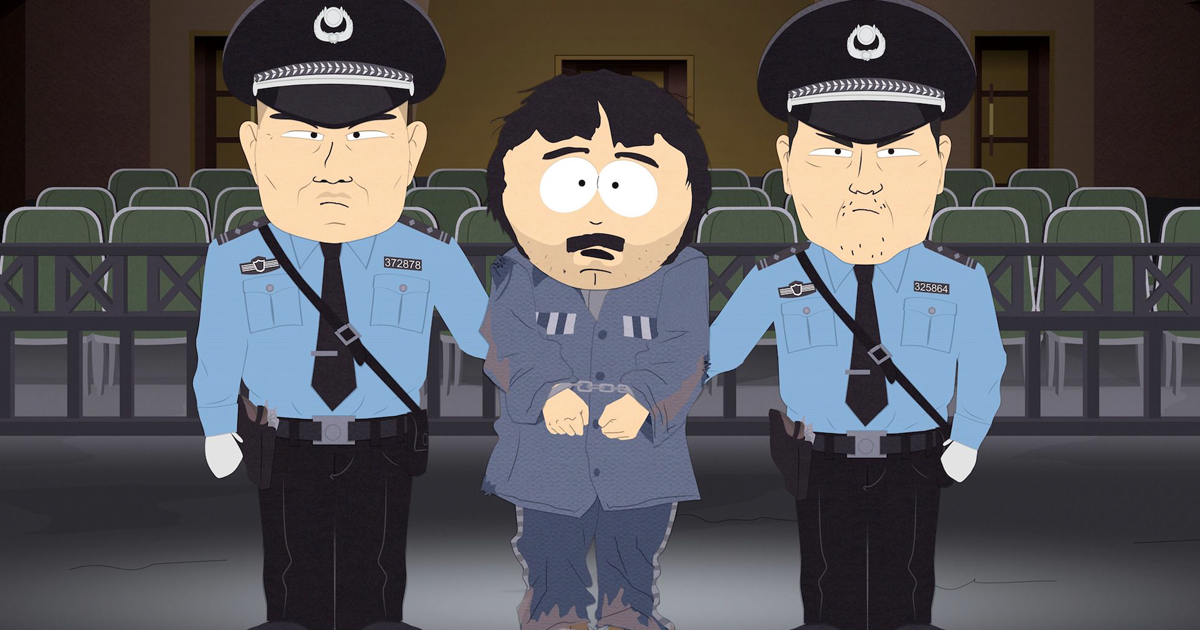
Note: This article is based on real public reporting about the 2019 South Park episode “Band in China,” which was the latest episode at the time of the controversy.
Some TV episodes quietly enter the world, make a few jokes, collect a few laughs, and disappear into streaming menus like socks in a dryer. Then there is South Park, the animated troublemaker that occasionally kicks open the door, throws a political grenade, and asks why everyone is suddenly so tense.
That is exactly what happened when South Park aired “Band in China,” the second episode of Season 23, on October 2, 2019. The episode mocked Chinese censorship, Hollywood’s eagerness to reshape stories for access to the Chinese market, and the awkward way global businesses tiptoe around political pressure. Within days, reports said the show had been scrubbed from major Chinese online platforms. Then creators Trey Parker and Matt Stone did what only South Park creators would do: they issued an “apology” that was not an apology at all.
The result was a perfect South Park storm: censorship, comedy, Hollywood money, free speech, the NBA-China controversy, Winnie the Pooh jokes, and one of the most memorable satirical tweets in television history.
What Happened With South Park In China?
“Band in China” followed two main storylines. In one, Randy Marsh sees a business opportunity for Tegridy Farms in China and travels there hoping to sell marijuana. Naturally, because this is Randy Marsh and therefore good judgment has already left the room, things go badly. He ends up in trouble with Chinese authorities and is sent to a prison-like labor camp.
In the second storyline, Stan and his friends form a band, only to discover that turning their story into a movie means adjusting the script to satisfy Chinese censors. The joke is not subtle. That is the point. The episode shows characters rewriting creative material not because it makes the story better, but because it makes the story more acceptable to a powerful market.
The episode also included references to Winnie the Pooh, a character that has been politically sensitive in China because online users have compared the bear to Chinese President Xi Jinping. For most shows, that kind of joke would be considered risky. For South Park, it was basically Tuesday with extra paperwork.
Why Was “Band in China” So Controversial?
The controversy came from the episode’s direct criticism of Chinese censorship and its blunt portrayal of Western companies bending their values for profit. In the entertainment world, China has long been a major box-office market. For studios with giant budgets and superhero-sized expectations, access to Chinese theaters can mean hundreds of millions of dollars. That kind of money makes executives suddenly very interested in “cultural sensitivity,” especially when “cultural sensitivity” also means “please approve our movie.”
South Park turned that business reality into a joke sharp enough to need a warning label. The episode suggested that some Hollywood productions are shaped less by artistic vision and more by fear of offending Chinese regulators. It also arrived during a wider public argument over the NBA, China, and free speech after Houston Rockets general manager Daryl Morey posted support for Hong Kong protesters.
In other words, the timing was explosive. South Park did not simply make a joke about censorship. It aired that joke while American companies were already under pressure to explain how much freedom of expression they were willing to defend when major international revenue was at stake.
The Reported China Ban: What Was Removed?
According to multiple reports at the time, South Park content became difficult or impossible to find on several Chinese internet platforms. Mentions of the show reportedly disappeared from Weibo searches, clips and episodes were removed from video platforms, and discussion pages were shut down or emptied. It was not just the episode that caused trouble; reports described a broader online disappearance of the series.
The irony was hard to miss. An episode about censorship appeared to trigger exactly the kind of censorship it was criticizing. Satire looked in the mirror and found the mirror had been removed for violating platform rules.
For longtime fans, the reaction made the episode feel even more powerful. South Park has always used exaggeration to expose uncomfortable truths. But when the real-world response seems to confirm the joke, the satire gets promoted from “funny” to “accidentally documentary.”
The Satirical Apology Tweet That Made Everything Louder
After reports of the ban spread, Trey Parker and Matt Stone posted what they called an official apology to China. The message opened by saying they welcomed Chinese censors, then joked that they loved money more than freedom and democracy. It also included a sarcastic denial of the Winnie the Pooh comparison and ended with the now-famous line: “We good now China?”
The tweet worked because it refused the usual corporate apology format. There was no “we regret that some viewers were offended.” No “we are listening and learning.” No beige public-relations oatmeal served in a branded bowl. Instead, Parker and Stone doubled down on the joke while mocking the entire ritual of companies apologizing to protect business interests.
That is why the satirical apology became bigger than a normal statement. It was not damage control. It was performance art with a punchline and a flamethrower.
How The NBA Controversy Fit Into The Story
The timing of the South Park controversy overlapped with the NBA’s own China-related crisis. Daryl Morey’s pro-Hong Kong tweet created a major backlash from Chinese organizations and broadcasters. The NBA found itself trying to defend free expression while also protecting a huge international business relationship.
South Park saw the tension and pounced. The fake apology directly referenced the NBA, using the league as an example of how powerful institutions can sound brave in theory but become nervous when money starts clearing its throat in the corner.
This is where the episode moved beyond simple television gossip. It became part of a larger conversation about global capitalism, artistic independence, political pressure, and whether companies can truly claim to support free speech if that support disappears when a lucrative market objects.
Why Hollywood Keeps Walking The China Tightrope
Hollywood’s relationship with China has been complicated for years. China’s film market is enormous, but access is controlled. Foreign films face import limits, censorship reviews, and political sensitivities that can affect everything from dialogue to maps to character choices. For studios spending hundreds of millions of dollars on global releases, losing access to China can be financially painful.
That pressure has shaped creative decisions in visible and invisible ways. Some films have changed scenes, softened references, adjusted character identities, removed politically sensitive content, or added China-friendly elements. Sometimes the changes are obvious. Other times, they are baked into the planning long before the audience ever sees a trailer.
“Band in China” mocked this process by making it ridiculous on purpose. The kids’ band movie becomes less about their story and more about approval. The joke lands because audiences understand the truth underneath it: art can get weird when the spreadsheet starts giving notes.
Why South Park’s Response Was So On-Brand
South Park has built its identity on attacking sacred cows, political hypocrisy, celebrity ego, corporate cowardice, and public outrage cycles. The show’s humor is often crude, aggressive, and deliberately uncomfortable. Fans do not watch it expecting diplomatic poetry. They watch it expecting someone to say the thing that would get everyone else escorted out of the meeting.
That is why the China controversy felt so natural for the series. Parker and Stone did not suddenly become political commentators. They simply applied the show’s usual method to a very large, very sensitive target. The method is simple: find where power, money, and hypocrisy overlap, then draw the ugliest cartoon possible.
The satirical tweet was also classic South Park. It took the language of apology and turned it inside out. Instead of calming the controversy, it made the criticism sharper. Instead of asking for forgiveness, it asked audiences to notice how absurd the whole situation was.
Free Speech, Satire, And The Price Of A Joke
The South Park China ban story remains important because it shows how comedy can reveal power dynamics quickly. A joke is not just a joke when governments, corporations, and global markets react to it. Satire becomes a stress test. Who laughs? Who panics? Who deletes the clip? Who writes the apology? Who refuses?
In this case, South Park chose refusal. The creators did not soften the message. They did not pretend the episode was misunderstood. They leaned into the controversy and transformed the expected apology into another joke about censorship and money.
That choice earned praise from some viewers who saw it as a defense of creative freedom. It also reinforced criticism from others who argue that South Park often uses provocation as a brand strategy. Both reactions can be true. The show is not gentle, and it is not trying to be. Its value comes from being irritating in public, like a mosquito with a political science degree.
What Brands And Creators Can Learn From The South Park China Ban
1. Satire works best when it attacks a real pressure point
“Band in China” did not become famous simply because it was offensive. It became famous because it identified a real tension: American entertainment companies want access to Chinese consumers, but that access can come with creative and political conditions.
2. A fake apology can say more than a real one
The satirical tweet succeeded because it exposed the formula of corporate apologies. By pretending to apologize while obviously refusing to do so, Parker and Stone made the apology itself part of the joke.
3. Global audiences notice contradictions
Companies often speak proudly about values such as creativity, inclusion, courage, and free expression. But audiences pay close attention when those values appear negotiable. The internet has a long memory and a very messy filing system.
4. Censorship can amplify the thing it tries to hide
Trying to erase a controversial joke can make more people curious about it. The reported removal of South Park content in China turned “Band in China” from another episode into an international headline.
Experience: What It Felt Like To Watch A Joke Become A Global Argument
For many viewers, the South Park China controversy felt like watching a cartoon episode escape from television and run directly into a diplomatic briefing. One minute, fans were discussing Randy Marsh’s latest terrible idea. The next, entertainment sites, political reporters, sports analysts, and free-speech commentators were all talking about the same twenty-two minutes of animation. That is not a normal viewing experience. Most sitcom episodes do not require a working knowledge of international film distribution, the NBA’s China strategy, and Winnie the Pooh memes.
The strange part was how quickly the joke became serious. At first, the episode played like classic South Park: outrageous, messy, rude, and designed to make viewers laugh before they had time to decide whether they should. But once reports appeared that the show had been removed from Chinese platforms, the tone changed. Suddenly the episode was not only making a point about censorship; it was being used as evidence in a real argument about censorship. The punchline had receipts.
For writers, creators, and media observers, the incident also felt like a warning. It showed how complicated global publishing has become. A joke written in Colorado can affect streaming platforms in China, sports debates in America, and boardroom conversations in Hollywood. Creative work no longer lives in one cultural room. It travels, gets translated, gets clipped, gets condemned, gets defended, and sometimes gets banned before breakfast.
For ordinary fans, the controversy may have been oddly energizing. There is a certain thrill when a show known for chaos manages to land a joke so precisely that powerful institutions react. It makes comedy feel alive. Not polite, not polished, not focus-grouped into pudding, but alive. Even viewers who do not agree with every South Park joke could recognize that the episode touched something real.
At the same time, the experience was not only funny. It raised uncomfortable questions about how much entertainment is shaped by markets we never see. When a movie avoids a topic, changes a line, or removes a character detail, audiences may never know whether that choice was artistic or strategic. “Band in China” made that invisible pressure visible. It turned the editing room into the joke.
The fake apology was the final twist. Viewers are used to careful statements written by committees, polished until every human fingerprint disappears. Parker and Stone’s response went the other direction. It was sharp, sarcastic, and obviously designed to make the situation worse in the funniest possible way. That made it memorable. In a culture full of cautious messaging, the tweet felt like someone had replaced the corporate communications department with Cartman holding a megaphone.
That is why the controversy still matters. It was not just about one episode or one country. It was about what happens when satire confronts money, politics, and censorship at the same time. The answer, apparently, is chaos but the useful kind.
Conclusion: South Park Turned A Ban Into The Punchline
The reported China ban over “Band in China” became one of the most revealing moments in modern television satire. South Park did not merely joke about censorship; it provoked a response that made the joke feel even sharper. By mocking Hollywood’s compromises, China’s censorship system, and the NBA’s awkward balancing act, the episode captured a global business problem in the language of crude cartoon comedy.
Then Parker and Stone’s satirical apology transformed the controversy into a cultural event. It showed that an apology can be used not to retreat, but to attack the very system demanding apology. Whether viewers saw the move as brave, rude, hilarious, reckless, or all four before lunch, it proved one thing: South Park still knows how to make the world argue over a joke.











