
Note: This article synthesizes practical Thanksgiving hosting guidance from reputable U.S. food safety, cooking, home, and kitchen-testing sources, including official food-safety agencies and established culinary publications. Source links are not included in the article body by request.
Hosting Thanksgiving is a little like directing a Broadway show where the turkey is the lead actor, the mashed potatoes are the emotional support cast, and Aunt Linda is definitely improvising. The good news? A calm, delicious, beautifully organized holiday meal does not require a restaurant kitchen, a walk-in cooler, or a degree in “advanced gravy physics.” What it does require is the right set of Thanksgiving hosting essentials: practical tools, smart prep systems, reliable food-safety habits, and a few sanity-saving shortcuts our kitchen expert swears by.
Whether you are cooking for four people or feeding a living room full of relatives who all “just want a tiny piece of pie,” the best Thanksgiving kitchen essentials are the ones that reduce stress. A dependable meat thermometer, a sturdy roasting pan, sharp prep tools, enough serving pieces, shallow storage containers, and a well-planned timeline can do more for your holiday than a dramatic centerpiece shaped like a cornucopia. Lovely? Yes. Necessary? Only if it can also hold rolls.
Why Thanksgiving Hosting Essentials Matter More Than Fancy Gadgets
Thanksgiving is not the day to discover your only baking dish is currently holding craft supplies, your carving board is too small, or your oven runs 40 degrees hotter than it claims. Holiday cooking puts unusual pressure on a home kitchen. You are roasting, baking, reheating, whisking, chopping, chilling, and serving several dishes at once. The right essentials help you control timing, temperature, space, and cleanup.
The smartest hosting strategy is not buying every shiny tool with a turkey on the label. It is choosing hardworking items that earn their drawer space long after Thanksgiving. A rimmed sheet pan can roast vegetables, catch pie drips, reheat rolls, and hold prepped ingredients. A large cutting board makes carving safer and cleaner. A digital thermometer protects both flavor and food safety. These are not gimmicks; they are the quiet backstage crew keeping the whole dinner from turning into edible theater of the absurd.
1. A Reliable Digital Meat Thermometer
If our kitchen expert could hand every Thanksgiving host one tool at the door, it would be a digital meat thermometer. Not a hopeful glance. Not “the juices look clear.” Not the pop-up timer that came with the turkey and has all the emotional reliability of a group text. A real thermometer is essential because turkey must reach a safe internal temperature of 165°F.
Check the thickest part of the breast, the innermost thigh, and the innermost wing. If you cook stuffing inside the bird, that stuffing also needs to reach 165°F. For many hosts, this one tool prevents the two great Thanksgiving tragedies: undercooked turkey and dry turkey. You are not guessing; you are measuring. Very glamorous? Not exactly. Extremely effective? Absolutely.
Expert tip
Use the thermometer before the turkey looks “perfect.” Turkey continues to rest after leaving the oven, and checking early gives you time to adjust without panic. Keep the thermometer clean between checks, especially when testing multiple foods.
2. A Sturdy Roasting Pan With a Rack
A quality roasting pan is one of the true Thanksgiving cooking essentials. The pan should be large enough to hold your turkey without crowding, sturdy enough to lift safely, and preferably fitted with a rack that raises the bird above the pan juices. That airflow helps the turkey roast more evenly while allowing drippings to collect below for gravy.
If you do not roast turkey every year, you do not necessarily need the fanciest pan in the store. But avoid flimsy pans that buckle when full. A heavy bird, hot drippings, and wobbly metal are not a holiday combination anyone wants to narrate later. If using a disposable aluminum pan, place it on a sturdy sheet pan before filling and lifting.
What to look for
Choose a roasting pan with strong handles, enough depth to catch juices, and a size that actually fits your oven. Measure first. Thanksgiving is not the ideal moment to learn your pan belongs in a commercial kitchen or possibly a medieval banquet hall.
3. Rimmed Sheet Pans, Also Known as Holiday Workhorses
Rimmed sheet pans are the unsung heroes of Thanksgiving hosting. They roast Brussels sprouts, toast nuts, warm dinner rolls, hold chopped vegetables, organize ingredients, and catch spills under pies. If you have two or three, you will use them. If you have one, everyone in the kitchen will keep asking where it went.
For easier cleanup, line sheet pans with parchment when appropriate. For better browning, avoid overcrowding vegetables. Give them room, or they steam instead of roast. Nobody wants pale, squeaky carrots at the biggest dinner of the year.
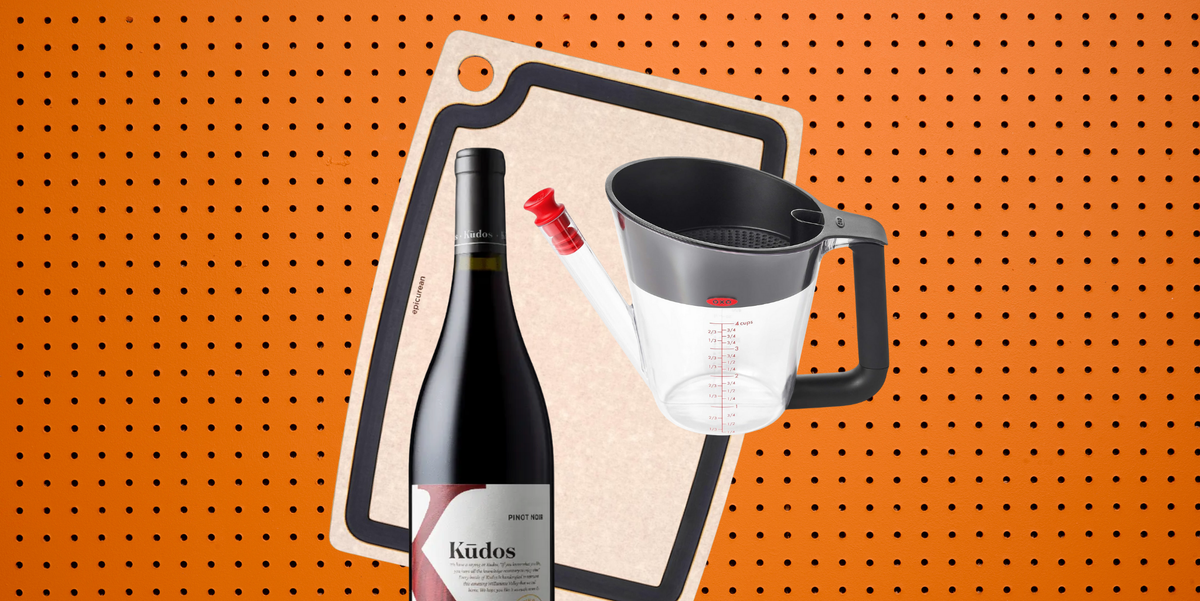
4. A Large Cutting Board With a Juice Groove
Carving turkey on a tiny board is how gravy-adjacent chaos begins. A large cutting board gives you room to work, keeps the bird stable, and helps contain juices. A juice groove around the edge is especially useful when carving meat, slicing fruit, or handling anything that likes to travel across the counter uninvited.
For food safety, use separate boards for raw poultry and ready-to-eat foods such as bread, herbs, fruit, and salad ingredients. Color-coded boards can make this easier in a busy kitchen. Cross-contamination is not festive. It does not pair well with cranberry sauce.
5. Dependable Prep Tools: Peeler, Masher, Whisk, and Measuring Cups
Thanksgiving exposes weak tools. A dull peeler turns five pounds of potatoes into a personal growth exercise. A flimsy whisk gives up halfway through gravy. A tiny measuring cup forces you into math when you should be focusing on pie.
Our kitchen expert recommends checking your basics at least a week before the holiday: vegetable peeler, potato masher, whisk, tongs, measuring cups, measuring spoons, mixing bowls, spatulas, ladle, and serving spoons. Replace anything broken, warped, stained beyond reason, or mysteriously missing. The goal is not perfection; the goal is not having to mash potatoes with a coffee mug.
Small tools that make a big difference
A flat whisk is excellent for gravy, a microplane helps with citrus zest and fresh nutmeg, and a wide potato masher handles mashed potatoes, sweet potatoes, and even cooked squash. These tools are affordable, compact, and useful all year.
6. Mixing Bowls in Multiple Sizes
Mixing bowls are not exciting until you do not have enough of them. Then suddenly they are the most important objects in the house. You need bowls for stuffing, salad, whipped cream, green beans, brine ingredients, pie filling, and the mysterious “extra chopped celery” that appears every year.
Choose nesting bowls to save cabinet space. Bowls with lids are even better because they allow you to prep ingredients ahead and store them neatly. Glass bowls are useful because they can often go from prep to serving, which means fewer dishes and more time pretending you are relaxed.
7. A Fat Separator or Fine-Mesh Strainer for Better Gravy
Great gravy depends on flavorful drippings without excess grease. A fat separator makes this easy by allowing the fat to rise while the good stuff pours out below. If you do not have one, a measuring cup and spoon can work, but a separator saves time and produces smoother results.
A fine-mesh strainer is another gravy essential. It catches bits of herb, roasted vegetables, and lumps before they reach the gravy boat. The result is silky sauce that looks intentional, not like it survived a kitchen wrestling match.
Make-ahead gravy is not cheating
One of the best Thanksgiving hosting tips is to make gravy ahead using roasted turkey wings, stock, aromatics, and herbs. On the big day, whisk in fresh drippings for that just-roasted flavor. Your stress level will drop dramatically, and your guests will still call it homemade because it is.
8. Oven Thermometer and Timers
Many home ovens run hotter or cooler than the temperature displayed. An oven thermometer helps you understand what is really happening in there. This matters when roasting turkey, baking pies, and reheating casseroles. A small temperature difference over several hours can change texture, timing, and browning.
Multiple timers are equally useful. Use one for the turkey, one for side dishes, and one for rolls or pies. Label them if possible. Otherwise, three alarms will go off and everyone will stare at each other like contestants on a very carb-heavy game show.
9. Serving Platters, Spoons, and Labels
Cooking is only half the battle. Serving Thanksgiving dinner requires platters, bowls, utensils, trivets, and a clear plan. Before the holiday, assign each dish to a serving piece. Put a sticky note on the platter: “turkey,” “stuffing,” “green beans,” “cranberry sauce.” This simple step prevents the classic last-minute question: “What are we putting the sweet potatoes in?”
Labels are also helpful for guests with allergies or dietary preferences. Mark dishes that contain nuts, dairy, gluten, shellfish, or meat. You do not need to turn dinner into a conference buffet, but a few discreet cards can make guests feel considered and safe.
10. Food Storage Containers for Leftovers
Leftovers are one of Thanksgiving’s greatest rewards, but they need proper storage. Use shallow containers so food cools quickly. Refrigerate leftovers within two hours, and keep the refrigerator at 40°F or below. Large portions, especially turkey, should be divided into smaller pieces before storing.
Plan your container situation before guests arrive. Have lids matched, labels ready, and a few disposable or reusable containers available for guests to take food home. Otherwise, your favorite glass container may leave with your cousin and begin a new life three towns away.
Leftover rule of thumb
Most Thanksgiving leftovers are best eaten within three to four days when refrigerated. For longer storage, freeze portions in airtight containers. Label them with the date because “mystery beige holiday food” is not a fun freezer game in February.
11. A Kitchen Timeline That Actually Works
A timeline is one of the most underrated Thanksgiving hosting essentials. It is not glamorous, but it is powerful. Start with dinner time and work backward. When does the turkey need to come out? When do casseroles go in? Which dishes can be served at room temperature? Which ones need stovetop attention at the last minute?
Write everything down. Include oven temperatures, cooking times, resting times, and reheating instructions. If you are making several dishes, group them by appliance: oven, stovetop, slow cooker, microwave, refrigerator, and countertop. This helps you avoid the dreaded 3 p.m. traffic jam where every dish suddenly requires 375°F and emotional support.
12. Make-Ahead Dishes That Save the Day
The best Thanksgiving hosts do not cook everything on Thanksgiving Day. They prep ahead like champions. Cranberry sauce can be made days in advance. Pie dough can be prepared early. Stuffing ingredients can be chopped ahead. Mashed potatoes can often be made ahead and reheated gently with extra butter or cream. Gravy, as mentioned, is practically begging to be prepared early.
Make-ahead cooking creates space, both physically and mentally. It also gives flavors time to develop. Cranberry sauce tastes better after a rest, pie dough behaves better when chilled, and a host with fewer last-minute tasks is less likely to threaten the dinner rolls.
13. A Beverage Station Away From the Kitchen
One of the smartest Thanksgiving entertaining essentials is a self-serve drink station located outside the main cooking zone. Put water, sparkling drinks, cider, coffee supplies, glasses, napkins, and a bottle opener in one place. This keeps guests from wandering into the kitchen every four minutes asking where the cups are while you are holding a hot pan.
A beverage station also makes guests feel welcome. Add a small sign, sliced citrus, or a pitcher of flavored water. It does not need to be fancy. It just needs to be obvious enough that people can help themselves without opening six cabinets and discovering your emergency chocolate stash.
14. Aprons, Towels, and Cleanup Supplies
Thanksgiving uses towels the way toddlers use crayons: everywhere and with surprising speed. Stock clean kitchen towels, paper towels, dish soap, trash bags, foil, parchment, and food-safe cleaning spray. Keep an apron nearby to protect your clothes, especially if you plan to greet guests before the cranberry sauce has stopped bubbling like a tiny volcano.
Set up trash, recycling, and compost areas clearly. Empty the dishwasher before guests arrive. Clear counter space early. These small moves make cleanup less painful and help your kitchen recover from the feast without looking like it hosted a potato rebellion.
15. Comfortable Hosting Touches Guests Actually Notice
Guests remember how the day feels. Yes, they appreciate juicy turkey and buttery mashed potatoes, but they also notice if there is a place for coats, enough chairs, stocked bathrooms, and a clear path to the table. Hosting essentials go beyond the kitchen.
Before guests arrive, check hand soap, toilet paper, hand towels, entryway space, lighting, and seating. Put extra napkins where people can find them. Choose music before the doorbell rings. Lower the pressure on yourself: your home does not need to look like a magazine cover. It needs to feel warm, functional, and welcoming.
Common Thanksgiving Hosting Mistakes to Avoid
Trying a complicated new recipe at the last minute
Thanksgiving is not the best day to debut a wildly ambitious recipe with 37 steps and a sauce that requires “constant attention.” Test new dishes beforehand or keep the menu mostly familiar.
Forgetting oven space
Before finalizing the menu, check cooking temperatures and timing. If everything needs the oven at once, add stovetop sides, slow-cooker dishes, room-temperature salads, or make-ahead casseroles.
Skipping the rest time
Turkey should rest before carving. This helps juices redistribute and gives you precious oven space for reheating sides. Resting time is not wasted time; it is the host’s secret bonus round.
Leaving food out too long
After dinner, move leftovers into shallow containers and refrigerate within two hours. You can still enjoy pie and conversation; just do not let the turkey sit around becoming a science project.
Our Kitchen Expert’s Thanksgiving Essentials Checklist
- Digital meat thermometer
- Sturdy roasting pan with rack
- Rimmed sheet pans
- Large cutting board with juice groove
- Vegetable peeler, masher, whisk, tongs, and ladle
- Mixing bowls in several sizes
- Fine-mesh strainer and fat separator
- Oven thermometer and multiple timers
- Serving platters, bowls, spoons, trivets, and labels
- Shallow leftover containers
- Kitchen towels, apron, foil, parchment, and trash bags
- Printed or handwritten cooking timeline
- Beverage station supplies
- Extra seating, stocked bathroom, and coat space
Experience Notes: What Hosting Thanksgiving Teaches You in Real Life
After hosting Thanksgiving a few times, you learn that the holiday is less about perfection and more about flow. The first year, many hosts focus on the turkey as if it were the final exam of adulthood. By year three, they realize the turkey matters, but so does counter space, a working timer, enough serving spoons, and the emotional stability of whoever is in charge of gravy.
One of the biggest lessons is that guests rarely notice the tiny things hosts worry about. They do not know the rolls were supposed to be shaped like knots. They do not care that the napkins are cream instead of ivory. They probably will not detect that the green beans were meant to have toasted almonds unless you announce it dramatically while staring into the middle distance. What guests do notice is whether the food is warm, the mood is welcoming, and the host is not visibly battling the oven.
A practical Thanksgiving experience always begins before the actual day. The calmest hosts shop early, clean the refrigerator, sharpen their plan, and prep ingredients in labeled containers. Chopped onions, washed herbs, measured spices, and pre-trimmed vegetables may look small, but together they create momentum. On Thanksgiving morning, momentum is everything. It is the difference between “I have this under control” and “Why is there celery in my coffee?”
Another experience-based tip: protect the kitchen zone. People naturally gather where the food smells good, which is sweet until someone stands between you and the oven while holding a story with no ending. Create a snack table or beverage station elsewhere. Put cheese, crackers, nuts, sparkling water, cider, and napkins away from the main prep area. Guests get something to do, and you get room to move hot dishes safely.
It also helps to accept help, but assign it clearly. “Can you help?” is vague. “Please fill water glasses,” “Please put these rolls in the basket,” or “Please take coats to the bedroom” is useful. Most guests want to contribute, but they need a job that does not require reading your mind while you are elbow-deep in mashed potatoes.
The best Thanksgiving hosts also build in recovery moments. Sit down for five minutes before guests arrive. Drink water. Eat a small snack. Put on the apron before the cranberry sauce attacks. Check the timeline, but do not worship it. Something will run late. Something will cool faster than expected. Someone will bring an unexpected dessert. This is not failure; this is Thanksgiving behaving exactly like Thanksgiving.
Finally, remember that a memorable holiday table is built from generosity, not flawless execution. A slightly uneven pie served with confidence tastes better than a perfect pie served with exhaustion. A simple table with candles and clean plates can feel more inviting than an elaborate setup that leaves the host too tired to enjoy dinner. The real Thanksgiving hosting essential is preparation that gives you enough breathing room to be present. The thermometer, roasting pan, sheet pans, bowls, containers, and timeline all serve that larger purpose: helping you feed people well without losing your mind in the cranberry bog.
Conclusion
Thanksgiving hosting does not have to feel like a culinary obstacle course with gravy. With the right Thanksgiving hosting essentials, you can plan smarter, cook safer, serve more smoothly, and actually enjoy the people gathered around your table. Focus on tools that solve real problems: a thermometer for doneness, a roasting pan for the main event, sheet pans for flexibility, bowls for prep, labels for clarity, containers for leftovers, and a timeline that keeps the day moving.
The expert-approved approach is simple: prepare what you can ahead, organize your kitchen before the rush, keep food safety in mind, and make guests feel welcome without turning your home into a showroom. Thanksgiving is not about proving you can do everything the hard way. It is about creating a meal that feels abundant, warm, and worth remembering. And if the gravy is smooth? Well, that is just showing off in the best possible way.












