
Movies have always had a strange relationship with characters who use drugs. Sometimes they are funny, sometimes terrifying, sometimes tragic, and sometimes so wildly charismatic that viewers remember them long after the credits roll. But let’s be clear from the first frame: “badass” does not mean “healthy,” “safe,” or “worth copying.” In cinema, a badass druggie is usually a character with dangerous confidence, unforgettable dialogue, chaotic energy, and a story that burns hot before it burns down the house.
The best drug-addicted movie characters are not simply written as walking warning labels. They are complex people: hustlers, dreamers, criminals, artists, teachers, loners, party animals, and broken souls trying to survive their own bad choices. Their drug use may fuel their swagger, but it also exposes their weakness. That tension is what makes them memorable.
This list looks at ten iconic movie characters whose substance use is central to their stories. Some are criminals. Some are victims of addiction. Some are funny until they are heartbreaking. All of them left a mark on film culture.
What Makes a “Badass Druggie” in Movies?
A great drug-related movie character usually has three things: screen presence, conflict, and consequences. They might be cool for five minutes, but the movie eventually shows the bill arriving. Addiction in film works best when it reveals character rather than just decorating the plot with neon lights, nightclub scenes, and suspiciously dramatic bathroom mirrors.
These characters are ranked by cultural impact, performance, complexity, and how strongly their drug use shapes the story. This is not a list celebrating addiction. It is a look at how movies turn self-destruction into unforgettable drama, dark comedy, crime mythology, and sometimes pure cinematic chaos.
1. Tony Montana Scarface (1983)
Tony Montana is the cinematic definition of “too much is never enough.” Played by Al Pacino with volcanic intensity, Tony rises from broke outsider to Miami drug lord, building an empire on cocaine, violence, ego, and enough white suits to make a dry cleaner nervous.
What makes Tony badass is not subtlety. There is nothing subtle about him. He speaks like every sentence is a threat, looks at the world like it owes him interest, and treats danger as if it were a minor scheduling inconvenience. His famous final stand has become one of the most quoted scenes in crime movie history.
But Scarface is also a warning about appetite. Tony wants power, money, respect, control, and a mountain of cocaine. He gets almost everything he wants, then discovers that getting everything can be a very efficient way to lose your mind. His addiction does not make him powerful; it helps expose how hollow his power really is.
2. Mark Renton Trainspotting (1996)
Mark Renton, played by Ewan McGregor, is one of the most famous heroin-addicted characters in modern cinema. He is witty, stylish, self-aware, and completely trapped in a lifestyle he understands better than anyone. That is what makes him so compelling: Renton knows the game is rigged, and he keeps playing anyway.
Trainspotting gives addiction a fast, funny, filthy, energetic face. Renton narrates his life with sharp intelligence, which makes his self-destruction even more painful to watch. He is not clueless. He is not a cartoon. He is smart enough to analyze the cage but not strong enough, at least for much of the film, to walk out of it.
Renton’s badass quality comes from his survival instinct. He is not the toughest guy in the room, and he is definitely not the most stable. But he has the nerve to imagine escape, even when the world around him seems built to pull him back in.
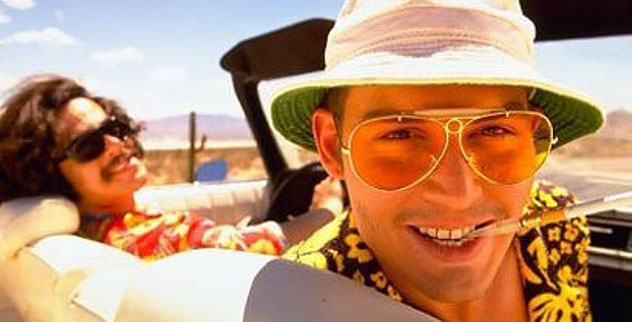
3. Raoul Duke Fear and Loathing in Las Vegas (1998)
Raoul Duke, played by Johnny Depp, is less a character than a walking chemical weather event. Based on Hunter S. Thompson’s gonzo persona, Duke drives into Las Vegas with his attorney Dr. Gonzo and a suitcase full of substances that could probably frighten a pharmacist into early retirement.
His drug use is exaggerated, surreal, and often absurd. The movie turns intoxication into a visual language: carpets crawl, faces mutate, and hotel lobbies become reptile conventions. Duke’s badass reputation comes from his reckless commitment to experience. He is a journalist, a troublemaker, a philosopher in sunglasses, and a man who treats reality like a first draft.
Still, beneath the comedy is a sense of cultural decay. Duke’s trip is not just about drugs; it is about the collapse of a dream. The movie uses intoxication to explore disillusionment, excess, and America’s hangover after the 1960s.
4. Bob Hughes Drugstore Cowboy (1989)
Matt Dillon’s Bob Hughes is a smooth, superstitious, pharmacy-robbing addict with outlaw charm. In Drugstore Cowboy, Bob leads a small group of users who travel through the Pacific Northwest robbing drugstores and hospitals to feed their habits.
Bob is badass because he runs his crew with a strange mix of criminal discipline and junkie folklore. He has rules, rituals, and beliefs that sound ridiculous until you realize they are part of how he creates order in a chaotic life. He is not glamorous in the Hollywood sense. He is lean, nervous, clever, and always one bad decision away from disaster.
The film’s power comes from its matter-of-fact tone. It does not shout about addiction. It watches people live inside it. Bob’s coolness is real, but so is his fear. When he tries to change, the movie becomes less about crime and more about the difficulty of leaving behind an identity built around using.
5. Sara Goldfarb Requiem for a Dream (2000)
Sara Goldfarb, played by Ellen Burstyn, may not be the first person people imagine when they hear “badass,” but she absolutely belongs on this list. Her story in Requiem for a Dream is one of the most devastating portrayals of prescription drug addiction ever put on screen.
Sara is a lonely widow who becomes obsessed with appearing on television and fitting into a red dress from her past. After she starts taking diet pills, her life turns into a nightmare of speed, delusion, and emotional isolation. Her addiction is not framed as street crime or wild rebellion. It begins with loneliness, vanity, and the crushing desire to be seen.
What makes Sara unforgettable is her emotional force. She is fragile, funny, heartbreaking, and terrifying all at once. Her scenes prove that addiction stories do not need guns, gangs, or nightclub chaos to be powerful. Sometimes the scariest battlefield is a quiet apartment with a television that never stops talking.
6. Jordan Belfort The Wolf of Wall Street (2013)
Leonardo DiCaprio’s Jordan Belfort is a tornado in a designer suit. In Martin Scorsese’s The Wolf of Wall Street, Belfort builds a stock-market empire powered by greed, fraud, cocaine, Quaaludes, and motivational speeches that sound like business seminars held inside a frat house.
Jordan is badass in the most morally bankrupt way possible. He is persuasive, energetic, shameless, and disturbingly entertaining. His famous Quaalude sequence is one of the great physical comedy scenes of modern film, turning a rich man’s self-inflicted collapse into a grotesque slapstick ballet.
But the movie never lets his excess become harmless. Jordan’s drug use is part of a larger addiction to money, attention, and domination. He consumes everything: drugs, people, loyalty, and consequences. The result is a character who is hilarious to watch and horrifying to think about for more than twelve seconds.
7. Mia Wallace Pulp Fiction (1994)
Mia Wallace, played by Uma Thurman, appears in only part of Pulp Fiction, but she owns every second. With her sharp bob haircut, dry wit, white shirt, and mysterious confidence, Mia became one of the most iconic characters of 1990s cinema.
Her drug-related moment is unforgettable: after a night out with Vincent Vega, she mistakes heroin for cocaine and overdoses. The scene shifts from cool to terrifying in an instant. One minute she is the effortlessly stylish wife of a crime boss; the next, everyone is panicking in a drug dealer’s house like the world’s worst emergency room opened in a living room.
Mia’s badass status comes from her charisma and mystery. She is not defined only by the overdose, but that scene reminds viewers how quickly movie cool can turn into mortal danger. Pulp Fiction makes the moment darkly comic, but the stakes are deadly serious.
8. Harry Goldfarb Requiem for a Dream (2000)
Harry Goldfarb, played by Jared Leto, is another tragic figure from Requiem for a Dream. Unlike Tony Montana or Jordan Belfort, Harry does not chase empire on a grand scale. He wants something smaller and sadder: money, love, a future with Marion, and enough heroin to keep the dream alive for one more day.
Harry is not badass because he wins. He does not. He is badass because his story is brutally honest about how ambition and addiction can become tangled together. He thinks he is moving toward independence, but every choice pulls him deeper into dependence.
His relationship with his mother adds another layer of tragedy. Both are addicted, but in different ways and through different systems. Harry’s story shows how addiction can make people cruel even when they still love each other. That is what makes the film so hard to shake.
9. Dan Dunne Half Nelson (2006)
Ryan Gosling’s Dan Dunne is a Brooklyn middle-school teacher with a crack cocaine habit. He is smart, politically aware, and genuinely invested in his students. He is also falling apart. That contradiction makes Half Nelson one of the most quietly powerful addiction movies of the 2000s.
Dan is not a flashy movie addict. He does not have Tony Montana’s mansion or Raoul Duke’s hallucinated reptiles. His battlefield is smaller: classrooms, apartments, locker rooms, and awkward silences. When one of his students discovers his drug use, the movie becomes a delicate study of shame, connection, and moral confusion.
Dan’s badass quality is not swagger. It is complexity. He is trying to teach young people about systems of power while being trapped inside his own private system of dependency. The performance is subtle, wounded, and deeply human.
10. Ben Sanderson Leaving Las Vegas (1995)
Ben Sanderson, played by Nicolas Cage, is an alcoholic screenwriter who goes to Las Vegas with the intention of drinking himself to death. That premise is bleak, and the movie does not soften it. Ben is charming, funny, poetic, and already halfway gone when the story begins.
His badass status is complicated. He is not heroic. He is not aspirational. But there is a terrible fearlessness in his surrender. Cage plays him as a man who has stopped negotiating with life. When he meets Sera, their relationship becomes a strange pact built on acceptance rather than rescue.
Leaving Las Vegas stands out because it refuses the easy recovery arc. Ben’s addiction is not a quirky flaw or a temporary obstacle. It is the center of his tragedy. The movie is painful because it asks viewers to sit with a person who does not want to be saved in the way audiences expect.
Why These Movie Characters Still Fascinate Audiences
Drug-addicted characters in movies remain fascinating because they live at extremes. They often say what others hide, do what others fear, and chase feelings with reckless honesty. That makes them exciting on screen, but it also makes them dangerous. The best films understand both sides.
Characters like Tony Montana and Jordan Belfort show addiction as part of a larger hunger for domination. Renton and Bob Hughes show addiction as lifestyle, community, and trap. Sara Goldfarb shows how loneliness can be chemically exploited. Dan Dunne shows that intelligence does not make a person immune to self-destruction. Ben Sanderson shows what happens when despair becomes a destination.
In other words, these are not just “drug movies.” They are movies about power, shame, class, grief, capitalism, masculinity, loneliness, friendship, performance, and the lies people tell themselves to make it through the day.
The Fine Line Between Cool and Cautionary
Hollywood sometimes gets criticized for making destructive characters look stylish, and honestly, that criticism is not always wrong. A sharp suit, a killer soundtrack, and a charismatic actor can make terrible choices look dangerously appealing. That is why strong storytelling matters.
The most responsible films do not need to lecture. They simply follow the consequences. Scarface lets Tony Montana become a legend, then buries him under the weight of his own ego. Trainspotting gives heroin addiction speed and humor, then shows the rot underneath. Requiem for a Dream removes every romantic illusion until only devastation remains.
That is the trick: let the characters be magnetic, but never pretend the destruction is free.
Extra Reflections: Watching These Films Without Missing the Point
Watching movies about drug use can be a strange experience because cinema is very good at making chaos look beautiful. A director can add slow motion, music, neon lights, sharp editing, and a charismatic actor, and suddenly a terrible decision looks like a poster you might hang in a dorm room. That is why the viewer has a job, too. We have to enjoy the art without confusing the movie’s energy for life advice.
The first experience many viewers have with a character like Tony Montana is pure adrenaline. He is loud, fearless, and impossible to ignore. But on a second viewing, the sadness becomes clearer. Tony is not free. He is ruled by insecurity, paranoia, rage, and appetite. The same thing happens with Jordan Belfort. The parties may look wild, but the emotional world is empty. Everyone is laughing, shouting, selling, snorting, and sinking.
Then there are films like Requiem for a Dream, which feel less like entertainment and more like being locked in a room with bad news. Sara Goldfarb’s story is especially important because it expands the idea of what addiction looks like. She is not a gangster, a dealer, or a rebellious youth. She is a lonely older woman who wants to feel beautiful and important again. That is what makes her arc so painful. It reminds us that addiction can enter quietly through ordinary hopes.
Trainspotting offers another kind of experience. It is funny, stylish, and full of unforgettable lines, but its humor has teeth. The movie understands that people often survive terrible situations by joking about them. Renton’s narration feels cool until you realize how much pain he is translating into sarcasm. That is one reason the film still connects with audiences: it does not flatten addicts into monsters or saints. It shows them as people who can be hilarious, selfish, loyal, cruel, clever, and lost all at once.
Films like Half Nelson and Leaving Las Vegas are quieter, but they may hit harder for viewers who prefer character studies over crime spectacle. Dan Dunne’s addiction is frightening because he understands so much about the world but cannot manage himself. Ben Sanderson’s story is frightening because he has stopped wanting the future. These characters do not explode across the screen; they erode. That slow collapse can be more disturbing than any shootout.
The best way to watch these movies is with two thoughts in mind at the same time. First, great performances deserve admiration. Pacino, McGregor, Burstyn, DiCaprio, Thurman, Gosling, Cage, and others created characters that shaped film history. Second, the behavior on screen is often a portrait of damage, not a blueprint for confidence. The coolness is cinematic. The consequences are the point.
That balance is what makes the “badass druggie” such a lasting movie archetype. These characters are not memorable because drugs make them great. They are memorable because movies use addiction to reveal who they are when the mask slips. Sometimes what appears is funny. Sometimes it is frightening. Sometimes it is heartbreak wearing sunglasses.
Conclusion
The top badass druggies in movies are not simply characters who use substances. They are characters whose addictions expose the deepest parts of their personalities. Tony Montana’s cocaine-fueled empire reveals his hunger for power. Mark Renton’s heroin use reveals his battle between escape and survival. Sara Goldfarb’s pills reveal a heartbreaking need to be seen. Jordan Belfort’s drug binges reveal greed without brakes. Ben Sanderson’s alcoholism reveals despair stripped of decoration.
These characters remain iconic because they are entertaining, disturbing, funny, tragic, and painfully human. They remind us that cinema can make destruction look dazzling, but the best films always show the wreckage after the shine fades.












