
Every December, the internet unwraps its favorite seasonal gifts: cookie recipes, family drama, inflatable lawn Santas, and at least one argument so oddly specific that it feels like it was grown in a greenhouse for viral content. This year, that honor went to the phrase "decolonized Christmas"a holiday concept that sent social media into full elf-on-the-shelf chaos.
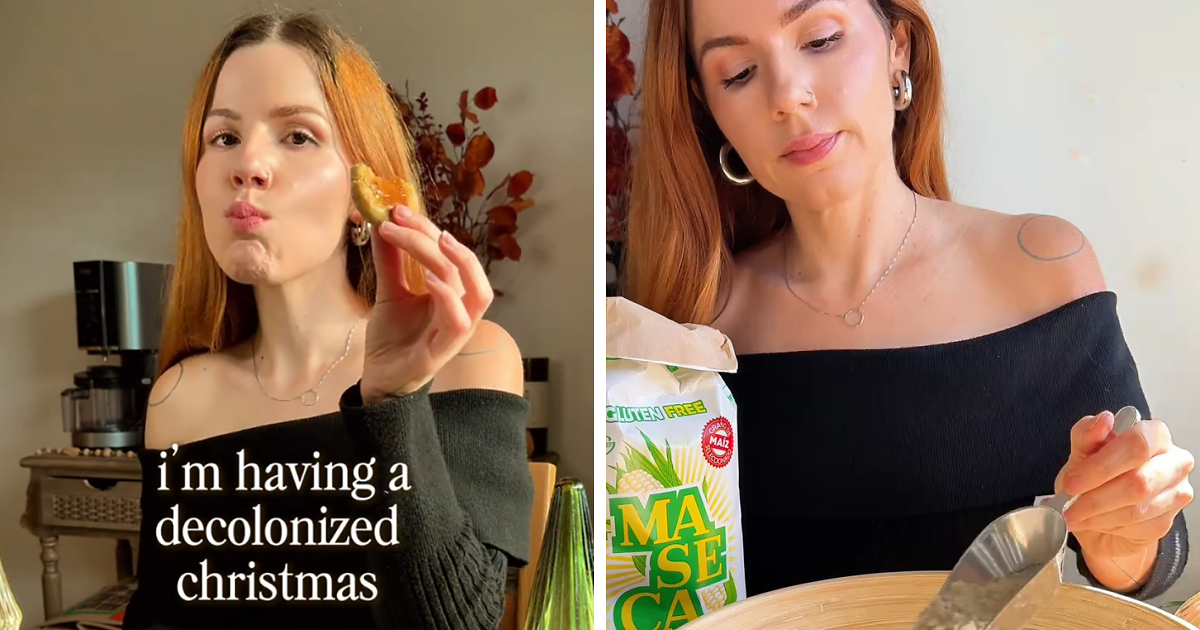
The story began when California-based influencer Elise Bonilla-Myers, known online as the Gluten Free Girlfriend, shared her ideas for rethinking Christmas through Indigenous ingredients, Native-owned businesses, and alternatives to wheat-based holiday treats. Her approach included a masa-based Christmas cookie, gift-buying from Native-owned brands, and a broader attempt to move away from ingredients and traditions she associated with colonization.
Then the internet did what the internet does best: it took a nuanced topic, shoved it into a glitter cannon, and fired it directly into the culture war. Critics mocked the idea as performative, confusing, or historically shaky. Supporters argued that buying from Native-owned businesses and learning about Indigenous foodways is a meaningful way to celebrate more thoughtfully. Everyone else mostly asked: "Can I just eat my cookies in peace?"
What Happened With the "Decolonized Christmas" Post?
According to viral coverage of the incident, Bonilla-Myers framed her holiday season around ingredients and gifts that placed Native cultures and women at the center. Instead of the usual butter-heavy sugar cookies or gingerbread men that look like they know too much, she promoted a griddle masa treat made from corn flour. She described the dough as being mixed with lime or culinary ash, sweetened with honey, grilled until brown, and finished with an agave glaze.
From a food-history perspective, this part was not random. Masa comes from corn, a crop central to many Indigenous food traditions across the Americas. The process behind masa, called nixtamalization, involves treating corn with an alkaline solution such as lime, which changes the texture and improves nutritional usefulness. So, yes, there is real culinary history behind the idea. This was not simply "Christmas cookie but make it TikTok."
The controversy came from the framing. The phrase "decolonized Christmas" landed online with all the subtlety of a sleigh crashing into a sociology department. Many users argued that Christmas is a Christian holiday with origins far older than European colonization of the Americas. Others pointed out that modern Christmas is already a giant cultural remix: Roman-era religious history, German trees, Victorian family rituals, American advertising, Dutch and British folklore, and a shopping season that now begins roughly twelve seconds after Halloween.
Why the Internet Trolled the Idea So Hard
The trolling was not just about corn cookies. It was about the collision of three volatile online ingredients: holiday nostalgia, political language, and social-media performance. Mix them together and you get a discourse casserole nobody asked to bring to dinner.
1. The Word "Woke" Is Already a Trigger Button
The word "woke" originally described awareness of racial and social injustice. Over time, it became a political insult used by critics to mock progressive language, activism, diversity efforts, or anything that sounds like it might come with a required reading list. Because of that, once the phrase "decolonized Christmas" appeared, many commenters did not engage with the actual details. They reacted to the vocabulary itself.
That is how online debates often work now. A phrase appears. People decide within half a second whether it belongs to their team or the opposing team. Then everyone starts throwing snowballs, except the snowballs are quote posts, stitches, comments, and reaction videos.
2. Christmas Has a Complicated History Already
Critics also latched onto the historical complexity of Christmas. The celebration of Christmas on December 25 dates back to the Roman world in the fourth century. In the United States, Christmas did not become a federal holiday until 1870, and many familiar American customs became popular in the 19th century. The Christmas tree tradition has German roots, the modern American Santa Claus was shaped heavily by 19th-century illustrations, and the family-centered holiday Americans recognize today developed over generations.
In other words, Christmas is not one clean, simple tradition. It is more like a holiday junk drawer: sacred observance, winter festival, immigrant custom, family ritual, retail event, office-party excuse, and annual test of whether one strand of lights can emotionally defeat a grown adult.
3. The Performance Problem
The sharpest criticism was not that supporting Indigenous businesses is bad. Most reasonable people can agree that buying thoughtful gifts from Native-owned shops is better than panic-ordering a plastic gadget that will live in a drawer until 2034. The issue was whether calling the whole thing a "decolonized Christmas" made the effort sound deeper than it was.
Online audiences are very sensitive to anything that looks like moral branding. A person can do something genuinely goodsupport small businesses, cook with historical ingredients, learn Native food traditionsand still get roasted if the presentation feels like a TED Talk trapped inside a holiday cookie tray. Social media rewards bold labels, but bold labels also invite bold mockery.
Was the Influencer Completely Wrong?
No. The internet loves a clean villain, but real life is messier than that. There are serious conversations about Indigenous food sovereignty, cultural erasure, Native-owned businesses, and the way American holidays often flatten complex history into cozy myths. Those conversations deserve more than a sarcastic comment section.
Indigenous food sovereignty is about Native communities having the power to reclaim, grow, distribute, and define their own foods. It is connected to land, health, culture, language, and self-determination. Supporting Native farmers, chefs, artists, and businesses can be a practical way to honor that workespecially when it is done respectfully and not as a seasonal costume for one’s personal brand.
So the basic instinct behind the influencer’s idea had value: ask where traditions come from, think about whose labor and culture are being recognized, and spend holiday money in ways that support communities rather than giant corporations selling singing reindeer that never asked to be born.
Where the Idea Went Off the Rails
The problem was not the masa. The masa was innocent. The problem was the packaging.
Calling a personal holiday menu "decolonized" can sound like a major political act, when in practice it may only mean swapping flour for corn and buying a few gifts from different vendors. That gap between language and action is where the jokes live. If someone says, "I’m trying to support Native-owned businesses this Christmas," many people will nod. If someone says, "I am decolonizing Christmas," half the internet immediately reaches for popcorn.
There is also the risk of oversimplifying Indigenous cultures. Native communities are not a single aesthetic, recipe category, or shopping guide. There are hundreds of federally recognized tribes in the United States, each with distinct histories, foods, languages, and traditions. Treating "Indigenous" as one broad holiday vibe can accidentally repeat the same flattening that decolonization is supposed to challenge.
Why Social Media Turns Every Holiday Into a Battlefield
Christmas used to be a time when families argued privately about politics over ham. Now, thanks to social media, strangers can join the argument before the gravy cools. Platforms reward emotion, speed, and certainty. A careful explanation of Indigenous food systems may get a polite handful of likes. A screenshot that says "decolonized Christmas" can become a digital snowball rolling downhill at terrifying speed.
This is why online backlash often feels larger than the original event. A creator posts a niche idea for her audience. Critics clip it, mock it, and share it outside its original context. Supporters defend it. Commentators analyze it. Soon, a masa cookie has become a referendum on Western civilization, Indigenous rights, Christianity, TikTok, gluten, and whether anyone is still allowed to enjoy peppermint bark without citing a historian.
The Real Lesson: Thoughtful Holidays Beat Performative Holidays
There is a useful takeaway buried under the jokes. People can make their holiday celebrations more thoughtful without turning them into a moral obstacle course. You can support Native-owned shops. You can learn about the Indigenous history of the land where you live. You can cook with ingredients native to the Americas, such as corn, beans, squash, cranberries, wild rice, maple, and cacao. You can talk with children about history in a way that is honest without making dessert feel like homework.
But the best approach is humble. Instead of announcing that you have personally decolonized Christmas before lunch, try saying, "I’m learning," "I’m supporting these makers," or "I wanted to cook something connected to Indigenous food traditions." That tone invites curiosity rather than combat.
Specific Examples of a Better Approach
A family that wants a more historically aware Christmas could start small. They might buy one or two gifts from Native-owned businesses and include a note about the maker. They might add a dish featuring the Three Sisterscorn, beans, and squashwhile learning which Native communities cultivated those crops and how the technique worked. They might replace a generic "tribal print" decoration with artwork purchased directly from a Native artist.
Another family might use the holiday to talk about consumerism. Instead of buying twenty novelty gifts, they could choose fewer items with stronger community impact. That could mean local artisans, Indigenous brands, small bookstores, handmade goods, or experiences rather than piles of plastic. No one has to cancel Santa. Santa has survived centuries of reinvention; he can handle a receipt from a Native-owned tea company.
Food lovers can also explore the topic without making grand claims. Masa cookies, blue corn pancakes, wild rice stuffing, cranberry sauces, maple desserts, and squash dishes can all open doors to learning about food history. The trick is to avoid acting as if one recipe magically solves colonial history. A cookie can be delicious, meaningful, and still just a cookie. Let the cookie breathe.
Experiences Related to the "Decolonized Christmas" Debate
Many people have experienced a smaller version of this exact argument at a holiday table. Someone tries to introduce a new tradition with good intentions, and the room reacts as if they have unplugged the Christmas tree. Maybe an aunt suggests skipping excessive gifts and donating to charity. Maybe a cousin brings vegan tamales instead of the usual roast. Maybe someone says the family should talk honestly about where certain holiday customs come from. Suddenly, people who were peacefully eating cheese cubes become constitutional scholars of tradition.
The funny thing is that families change Christmas all the time. One year the family serves turkey, the next year everyone votes for lasagna. One generation insists on church at midnight; the next prefers hot chocolate and pajamas. A grandparent may treasure handwritten cards while a teenager sends a meme of Santa looking emotionally unavailable. Traditions survive because they bend. If they never changed, half of us would still be celebrating with candles on dry trees, which sounds charming until the fire department arrives.
The "decolonized Christmas" drama feels familiar because it captures a common modern anxiety: people want their choices to mean something, but they also do not want every choice to become a public exam. A person can want ethical gifts without giving a lecture beside the stockings. A person can care about Indigenous history without turning Christmas dinner into a panel discussion titled Problematic Peppermint: A Reckoning. The balance is sincerity without self-importance.
Imagine a holiday gathering where someone brings masa cookies and simply says, "I tried something different this year. I learned about nixtamalized corn and wanted to make a dessert inspired by that tradition." That would probably lead to curiosity, compliments, and maybe one uncle asking whether it has gluten while already chewing. Now imagine the same person entering the room and declaring, "I have decolonized dessert." Same cookie. Very different survival odds.
The experience also shows how online life removes warmth from experimentation. In person, people can hear tone, ask questions, and taste the food before judging it. Online, the phrase travels without context. A thoughtful attempt becomes a slogan. A slogan becomes a target. A target becomes entertainment. By the time the story reaches millions of people, the original cookie is no longer a cookie; it is a tiny edible flag in a giant culture-war snow globe.
Still, the episode is not useless. It reminds readers that good intentions need good communication. It also reminds critics that mockery is easy, but curiosity is more nutritious. Supporting Native-owned businesses is worthwhile. Learning food history is worthwhile. Laughing at over-the-top phrasing is also, frankly, part of the internet’s renewable energy system. The sweet spot is being thoughtful enough to learn and relaxed enough not to turn every holiday choice into a moral press release.
Conclusion
The viral "decolonized Christmas" debate was funny because it sounded like a holiday special written by a committee of activists, food bloggers, and exhausted comment-section comedians. But beneath the jokes was a real tension: Americans are still figuring out how to honor tradition, acknowledge history, support marginalized communities, and avoid sounding unbearable while doing it.
Elise Bonilla-Myers’ idea was mocked because its language felt grand, political, and easy to parody. Yet parts of the conceptsupporting Native-owned businesses, learning about Indigenous ingredients, and thinking beyond mass-produced holiday habitsare genuinely valuable. The lesson is not that people should stop caring about history. The lesson is that meaning works best when it is grounded, specific, and humble.
So go ahead: bake the masa cookies, buy from Native makers, learn the story behind the food, and make Christmas more thoughtful if that matters to you. Just maybe do not announce that you have personally decolonized the North Pole. The elves are already unionizing, and they do not need another meeting.












