
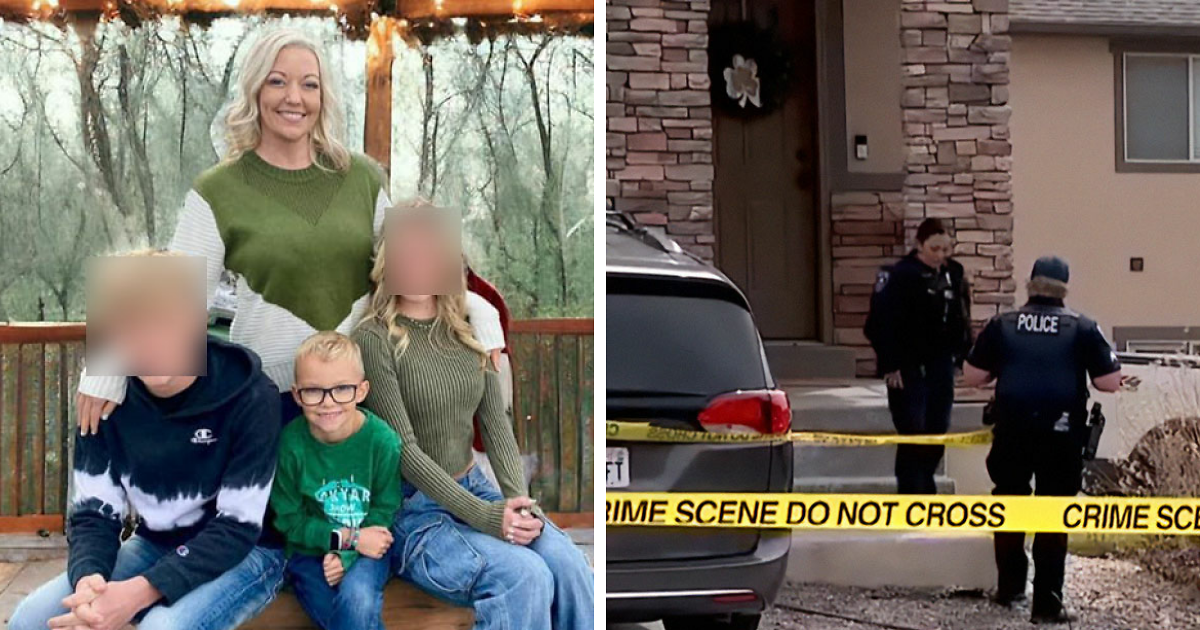
In true-crime stories, the first details often arrive like scattered puzzle pieces: a 911 call, a quiet neighborhood suddenly full of police lights, a family asking for privacy, and investigators carefully choosing what they can say without damaging a case. The Saratoga Springs, Utah, deaths of Jessica Orton Lyman and her 8-year-old son, Eli Painter, became one of those casesheartbreaking, confusing, and full of questions the public desperately wanted answered.
According to public reports and unsealed search warrants, investigators found hostile text messages and a handwritten note in the room of Jessica’s teenage son after Jessica and Eli were found shot inside their home in March 2025. Authorities have not publicly named a suspect, and that matters. In a world where social media can turn a whisper into a “confirmed fact” before lunch, the legal phrase “no suspect has been named” is not fine printit is the whole steering wheel.
This article looks at what has been publicly reported, why the evidence drew so much attention, and what families can learn from a tragedy that continues to raise painful questions about warning signs, digital communication, grief, and the long road between suspicion and justice.
What Happened In Saratoga Springs?
Jessica Orton Lyman, a 44-year-old mother, and her young son, Eli Painter, were found inside their Saratoga Springs home on March 28, 2025. Public reports state that Jessica’s teenage daughter discovered them and called emergency services. Eli died at the scene, while Jessica was taken to a hospital and later died from her injuries.
Police quickly treated the case as a serious homicide investigation. The home, located in a residential area, became the center of an inquiry involving local law enforcement and later assistance from federal investigators. For neighbors, the situation felt almost impossible to process. Violent crime is always shocking, but when it happens inside a family homeone of the places people are supposed to feel safestit lands differently.
The early public information was limited. That is normal in major investigations, even if it frustrates everyone watching from the outside. Detectives often withhold details to protect evidence, verify statements, compare timelines, and prevent false confessions or copycat claims. True crime fans may want the entire case file by breakfast, but real investigations do not work like a streaming documentary with dramatic music and a tidy ending.
Why The Text Messages And Note Became A Major Focus
Months after the deaths, unsealed search warrants revealed details that made headlines across national and local outlets. Among the most discussed findings were hostile text messages reportedly exchanged between Jessica and her 15-year-old son before the shootings. Reports also described a handwritten note found in the teen’s room that referred to a “murder story.”
Those details are disturbing, but they do not equal a conviction. Text messages can show conflict, emotional volatility, resentment, fear, manipulation, or ordinary family arguments that look darker after a tragedy. A note can be alarming, symbolic, fictional, personal, or connected to something investigators have not yet explained publicly. That is why detectives collect evidence, test it, compare it, and build timelines instead of simply reading one document and calling it a day.
Still, the discovery of the texts and note matters because it gave investigators more context about the household. Police reportedly examined digital devices, clothing, surveillance footage, and other physical evidence. They also looked into whether people outside the home could be connected to the case. In other words, the investigation did not appear to rest on a single clue. It involved many pieces, and some of those pieces raised more questions than answers.
The Teen Was Present, But Authorities Have Not Named A Suspect
Public reporting has stated that Jessica’s teenage son was inside the home when police arrived. Reports also say he told investigators he had been sleeping and did not hear anything unusual. Search warrant information later described investigators’ interest in his clothing, phone activity, and online communications.
That naturally led to public speculation. But speculation is not the same as proof, and it is especially important to be careful when a minor is involved. Juvenile privacy laws, incomplete evidence, and the presumption of innocence all matter. The public may see a headline and jump to a conclusion; prosecutors must prove a case beyond a reasonable doubt. Those are two very different sports. One is internet dodgeball. The other is the justice system.
As of the latest public updates checked for this article, no arrest had been announced and no suspect had been officially identified. Police and family statements have emphasized that the investigation remains active. The family has also asked for justice while protecting the privacy and rights of those involved.
Surveillance Footage, A Mask, And Other Evidence
One of the most reported details involved surveillance footage from the area near the home. Public reports described a figure seen near the property around the time investigators were building their timeline. A mask reportedly found in the teen’s room was described as similar to one seen in footage. Investigators also searched for a firearm believed to be connected to the shootings, and later searches included areas near the Jordan River with FBI assistance.
These details show why homicide investigations can take months or even years. A mask may matter, but investigators must determine who wore it, when it was worn, whether it connects to the crime, and whether forensic testing supports that connection. Digital activity may matter, but police must verify timestamps, device access, deleted data, app records, and whether someone else could have used the device. Physical evidence may matter, but it must be tested and interpreted carefully.
That careful process can feel painfully slow to a grieving family and a worried community. But speed without accuracy can destroy a case. If investigators rush and get it wrong, the result can be a failed prosecution, an innocent person harmed, or the responsible person remaining free.
How Family Conflict Can Look Different After A Tragedy
Every family argues. Some arguments are loud. Some are icy. Some are conducted entirely through texts, which is basically the modern family dinner table, except everyone has screenshots and nobody passes the mashed potatoes. But after a violent death, ordinary conflict is re-read through a darker lens.
That does not mean hostile messages should be ignored. Threatening language, escalating rage, cruelty, obsession, isolation, fascination with violence, and sudden behavioral changes can all be warning signs that deserve attention. But it also means families, schools, and communities need better tools for responding before a crisis happens.
For parents and caregivers, the lesson is not to panic every time a teenager slams a door or sends a dramatic message. Teenagers can be emotional, impulsive, sarcastic, and convinced that no adult in history has ever understood anything. The lesson is to notice patterns. Is the anger escalating? Are threats becoming specific? Is the teen withdrawing from real-life relationships? Are they spending extreme amounts of time in hidden online spaces? Are they showing interest in harming themselves or others? Are they collecting disturbing materials or becoming fixated on violent scenarios?
When several warning signs appear together, it is time to involve professionals: a school counselor, pediatrician, therapist, crisis line, trusted family doctor, or local emergency services if there is immediate danger.
Digital Clues Are Now Central To Investigations
Modern investigations often begin with the physical scene, but they quickly move into phones, apps, cloud backups, search history, location data, messages, and social media. In the Saratoga Springs case, public reports say investigators examined the teen’s phone and communications. That is not unusual. Digital evidence can help establish timelines, relationships, emotional states, contacts, and movements.
But digital evidence is complicated. A message can be deleted but still recoverable. A phone can be used by someone else. A timestamp can depend on device settings, app servers, or time zones. A teenager may use multiple platforms, private chats, disappearing messages, gaming communities, or anonymous accounts. Investigators must turn digital chaos into courtroom-ready evidence.
For families, this is a reminder that online life is real life. A teen’s digital world may contain friendships, stress, bullying, secrets, jokes, threats, and emotional spirals that adults never see. Parents do not need to become spies, but they do need to stay curious. “Who are you talking to lately?” and “What apps are you using most?” may sound simple, but simple questions asked calmly can open doors.
Why The Public Should Be Careful With True Crime Cases Involving Minors
True crime attracts attention because people want answers. They want justice. They want to understand how something terrible happened so they can feel safer in their own lives. That is human. But when a case involves a minor, public speculation can become especially harmful.
A teenager’s name may be withheld for legal reasons. Evidence may be sealed. Some details may be inaccurate, incomplete, or later corrected. Family members may be grieving while strangers online debate their private lives like a fantasy football lineup. That is not justice; that is noise wearing detective sunglasses.
Responsible coverage should avoid declaring guilt before charges are filed. It should not publish graphic details unnecessarily. It should center the victims without turning them into clickbait. And it should remind readers that investigators, not comment sections, are responsible for building cases.
What Communities Can Learn From The Jessica Lyman And Eli Painter Case
There are several hard lessons from this case, even while many facts remain unknown.
1. Take Escalating Family Conflict Seriously
Conflict alone does not predict violence. But repeated hostile communication, fear in the home, threats, and disturbing behavior should be treated as signals to seek help. Families should not wait until a situation feels “bad enough.” If something feels unsafe, it deserves attention.
2. Preserve Evidence Instead Of “Cleaning Up” The Story
When a crisis happens, people may want to delete messages, tidy rooms, move objects, or protect someone from embarrassment. Don’t. Evidence can be critical, even if it seems small or uncomfortable. Screenshots, messages, call logs, videos, and physical items may help investigators understand what happened.
3. Online Behavior Can Reveal Real-World Risk
Long hours in private online spaces do not automatically mean danger. Many teens socialize online, play games, learn skills, and build friendships there. But extreme isolation, violent fixation, secretive communities, or sudden personality shifts should prompt concern and conversation.
4. Grief Needs Support, Not Gossip
Families affected by homicide face trauma on top of public attention. They need privacy, practical support, and patience. They do not need strangers turning every relative into a suspect based on half-read headlines.
Experience-Based Reflections: What This Case Teaches Parents, Teens, And Communities
Cases like this leave people with a heavy feeling because they touch the deepest fear of family life: danger inside the home. Most families will never face anything like the deaths of Jessica Lyman and Eli Painter, but many families do face conflict, emotional distance, scary messages, or a child who seems to be changing in ways nobody understands. The experience lesson is not “be afraid of your teen.” The lesson is “stay connected before silence becomes the family language.”
One practical experience many parents share is that teens often reveal distress indirectly. They may not say, “I am overwhelmed,” or “I need help.” Instead, they may become cruel, withdrawn, obsessed with privacy, suddenly reckless, or unusually numb. Adults sometimes respond only to the attitude: “Don’t talk to me that way.” That boundary is fair, but it should be paired with curiosity: “This level of anger feels bigger than this argument. What is really going on?”
Another lesson is that families need a plan for conflict. Not a corporate-style plan with laminated chartsnobody wants a quarterly meeting about who took the last cereal barbut a real agreement. When arguments get heated, who steps away? Who can the teen call? Which adult outside the home is trusted? What happens if someone makes a threat? Having those answers before a crisis can prevent panic later.
Schools and communities also play a role. Teachers, coaches, neighbors, relatives, and friends may notice changes parents miss because they are too close to the daily stress. A teen who suddenly stops participating, talks often about violence, becomes fixated on revenge, or appears emotionally detached may need support. Reporting concerns is not betrayal; it can be protection.
For teens reading about cases like this, the takeaway is equally important: intense anger is not a life sentence. You can be furious, hurt, embarrassed, or misunderstood and still choose help. Talk to a counselor, teacher, coach, relative, doctor, or emergency service if you feel unsafe or afraid of what someone might do. Asking for help is not weakness. It is the emotional equivalent of pulling the fire alarm before the building burns down.
Finally, communities should remember that justice and compassion can exist together. People can want answers without spreading rumors. They can support investigators without harassing grieving relatives. They can discuss warning signs without treating every struggling teen as dangerous. The best response to a tragedy is not panic; it is attention, prevention, and care that arrives early enough to matter.
Conclusion
The deaths of Jessica Orton Lyman and Eli Painter remain a devastating case marked by grief, unanswered questions, and disturbing evidence described in public court records and news reports. The reported text messages and handwritten note found in the teen’s room became central points of public interest, but authorities have not publicly named a suspect. That distinction is essential.
For readers, the case is a reminder to take escalating conflict seriously, preserve potential evidence, avoid online speculation, and support families touched by violence with dignity. True crime should never become a guessing game that forgets the victims. At the center of this story were a mother and a child whose family continues to wait for answers.
Note: This article is based on publicly available reporting and official statements. It avoids graphic details and does not accuse any individual of a crime. The investigation should be understood as active unless authorities announce otherwise.












