
Note: This article is written for educational and professional formatting purposes. Nurses should always check their state board of nursing rules, employer policy, and certifying organization requirements before finalizing credentials for legal, clinical, or official use.
Writing nursing credentials should not feel like solving a hospital-grade word puzzle while your coffee gets cold. Yet for many nurses, the letters after a name can become a tiny alphabet parade: BSN, RN, APRN, FNP-BC, CCRN, CEN, CNM, DNP, FAANand suddenly the email signature looks like it needs its own discharge instructions.
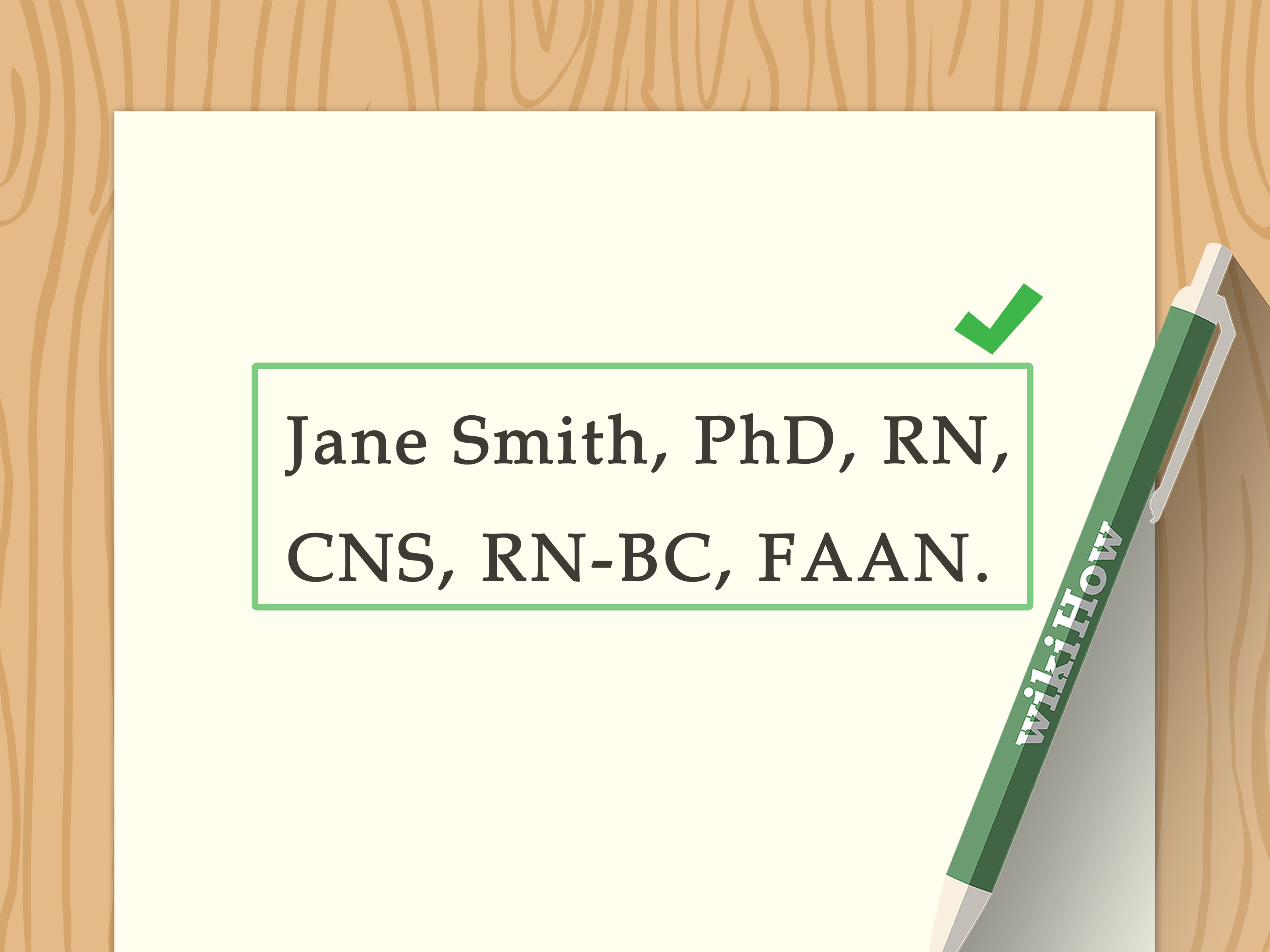
The good news is that there is a standard way to list nursing credentials in the United States. The order is not random, decorative, or based on which letters look most impressive next to your name. Nursing credentials usually follow a professional hierarchy: highest earned degree, licensure, state designations or requirements, national certifications, awards and honors, and other recognitions. Once you understand that order, writing your credentials becomes much easier.
This guide explains how to write nursing credentials in 9 practical steps, with examples for registered nurses, nurse practitioners, critical care nurses, emergency nurses, nurse-midwives, nurse anesthetists, educators, and nurse leaders. Think of it as a tidy medication cart for your professional identity: everything in the right drawer, labeled clearly, and no mystery abbreviations rolling around loose.
Why Nursing Credentials Matter
Nursing credentials tell patients, employers, colleagues, regulators, and academic institutions what you are qualified to do. They can show your education, license, advanced practice authority, board certification, specialty knowledge, honors, and professional development.
Correctly written credentials also prevent confusion. A patient may not know the difference between an RN and an APRN. A hiring manager may need to quickly confirm whether a candidate has a national certification. A state board may require certain professional titles to be displayed in a specific way. In healthcare, clarity is not just politeit is part of professional communication.
That does not mean every nurse must list every possible credential in every situation. Your badge, resume, charting signature, research publication, business card, faculty profile, and email footer may each need a slightly different version. The goal is to be accurate, consistent, and relevant without turning your name into alphabet soup with a stethoscope.
How to Write Nursing Credentials: 9 Steps
Step 1: Gather Every Credential You Actually Hold
Before deciding what to display, make a complete list of your credentials. Include degrees, licenses, state titles, national certifications, fellowships, honors, and other professional recognitions.
For example, a nurse may hold:
- Bachelor of Science in Nursing: BSN
- Registered Nurse license: RN
- Certified Emergency Nurse: CEN
- Basic Life Support: BLS
- Advanced Cardiovascular Life Support: ACLS
Not all of these belong after the nurse’s name in every professional setting. BLS and ACLS are important, but they are usually listed on a resume, skills checklist, or credentialing file rather than in a formal signature line. Start with the full inventory, then choose what belongs in the final version.
A simple worksheet can help. Create columns for credential name, abbreviation, issuing organization, expiration date, renewal requirement, and where you use it. This protects you from accidentally displaying an expired certification, which is the professional equivalent of wearing two different shoes to an interview: not the end of the world, but definitely not ideal.
Step 2: Start With Your Highest Earned Degree
The first credential after your name is usually your highest earned academic degree. Degrees are placed first because they are generally permanent. Licenses and certifications can expire, lapse, or be revoked, but an earned degree normally remains part of your academic record.
Common nursing degrees include ADN, ASN, BSN, MSN, DNP, and PhD. If your highest nursing degree is a BSN, a basic professional signature may look like this:
Example: Jordan Williams, BSN, RN
If your highest nursing degree is an MSN, you usually do not need to include the BSN as well:
Better: Jordan Williams, MSN, RN
Usually unnecessary: Jordan Williams, MSN, BSN, RN
There are exceptions. If you have a high-level degree in another relevant field, you may choose to list it along with your nursing degree. A nurse executive with an MBA and MSN might write:
Example: Taylor Morgan, MBA, MSN, RN
A nurse researcher may list a PhD and nursing degree when both are relevant:
Example: Priya Shah, PhD, MSN, RN
The key is relevance. Your credentials should help the reader understand your professional qualifications, not make them wonder whether your email signature needs a table of contents.
Step 3: Add Your Nursing Licensure
After the degree comes licensure. Licensure shows that a state board of nursing has authorized you to practice within a defined scope. Common nursing licenses include LPN, LVN, RN, and APRN-related licensure titles, depending on the state.
For registered nurses, the standard format is usually:
Example: Morgan Lee, BSN, RN
For licensed practical or vocational nurses, the format may look like:
Example: Casey Brown, LPN
or, in states that use the vocational nurse title:
Example: Casey Brown, LVN
For advanced practice nurses, the license and state-recognized title may vary. Some states use APRN broadly. Others use titles such as ARNP, CRNP, CNP, CNS, CNM, or CRNA. Because state rules differ, advanced practice nurses should always confirm how their state board requires titles to appear.
One important point: do not place RN before the degree when following the standard professional credential order. Although many people casually say “RN, BSN,” the formal credential order places the academic degree before the license: BSN, RN.
Step 4: Include State Designations or Requirements
State designations are official titles or abbreviations required by a state board of nursing or state law. This step matters especially for advanced practice registered nurses. A family nurse practitioner may hold an RN license, an APRN license or designation, and a national certification. The state designation shows the legal authority to practice in that jurisdiction.
For example:
Example: Elena Martinez, DNP, APRN, FNP-BC
In another state, the required title may differ:
Example: Elena Martinez, DNP, ARNP, FNP-BC
State designations can be a little like hospital parking rules: every place has them, and they are not always the same. This is why copying another nurse’s credentials from LinkedIn is risky. That nurse may work in a different state, hold a different license, or follow a different employer policy.
If you are an APRN, check your state board’s guidance for title use. Also check whether your employer requires a specific format for badges, prescriptions, chart notes, or patient-facing materials.
Step 5: Add National Certifications
National certifications come after degrees, licenses, and state designations. Certifications show specialty knowledge and usually come from recognized certifying bodies. They may be required for an advanced practice role, preferred for specialty employment, or used to demonstrate professional expertise.
Examples include:
- FNP-BC: Family Nurse Practitioner-Board Certified
- FNP-C: Family Nurse Practitioner-Certified
- CCRN: Critical Care Registered Nurse
- CEN: Certified Emergency Nurse
- RNC-OB: Inpatient Obstetric Nursing certification
- WHNP-BC: Women’s Health Care Nurse Practitioner-Board Certified
- CNM: Certified Nurse-Midwife
- CRNA: Certified Registered Nurse Anesthetist
A critical care nurse might write:
Example: Alex Thompson, BSN, RN, CCRN
An emergency nurse might write:
Example: Renee Carter, MSN, RN, CEN
A family nurse practitioner might write:
Example: Dana Brooks, DNP, APRN, FNP-BC
If you have multiple certifications, list the most relevant and highest-priority certifications first. If one certification is required for your license or role, it generally deserves a more prominent position than a secondary course completion.
Step 6: Add Awards, Honors, and Fellowships
Awards and honors come after national certifications. These may include fellowships, major professional honors, or distinctions that are widely recognized in nursing or healthcare leadership.
For example, a nurse who is a Fellow of the American Academy of Nursing may use FAAN:
Example: Michelle Adams, PhD, RN, FAAN
Honors should be meaningful and current. A major national fellowship belongs in a formal bio, academic profile, conference program, or publication byline. A “Best Smile on the Unit” certificate from Nurses Week may be deeply cherishedand possibly accuratebut it probably does not need to follow your name in a research journal.
Use judgment. Credentials should communicate professional qualifications, not become a scrapbook.
Step 7: Decide Whether “Other Recognitions” Belong
Other recognitions are listed last. This category may include non-nursing certifications, emergency response courses, certificates, or professional training programs. Examples include EMT, paramedic credentials, public health credentials, informatics certificates, legal nurse consultant training, or other relevant professional designations.
Many nurses hold BLS, ACLS, PALS, NIHSS, TNCC, or similar course-based credentials. These are important for practice, hiring, and competency files, but they are not always appropriate after your name. In most cases, place them on your resume, clinical portfolio, onboarding paperwork, or skills checklist instead of your formal signature.
However, context matters. A flight nurse, emergency nurse, transport nurse, or trauma educator may include certain credentials when they are directly relevant to the role. A nurse who is also a paramedic might write:
Example: Daniel Kim, BSN, RN, CEN, NRP
When in doubt, ask: “Will this credential help the reader understand my professional authority or specialty expertise?” If the answer is no, save it for the resume.
Step 8: Use Correct Formatting, Commas, and Capitalization
Formatting matters because credentials are meant to be read quickly. In the United States, credentials are commonly separated by commas. Avoid slashes, random periods, decorative symbols, or creative arrangements that make your credentials harder to understand.
Clean: Samantha Green, BSN, RN, CCRN
Messy: Samantha Green RN/BSN/CCRN!!!
The first version looks professional. The second version looks like the credentials are trying to win a raffle.
Use the official abbreviation from the degree-granting school, state board, or certifying body. For example, do not invent “Critical Care Certified Super Nurse” because it sounds exciting. Use the recognized credential, such as CCRN, if that is the certification you hold.
Also be consistent. Your resume, professional bio, email signature, conference submission, and LinkedIn profile should not all display different credential orders unless there is a specific reason. Consistency builds trust and reduces confusion.
Step 9: Tailor Your Credentials to the Setting
The “right” credential line depends on where it appears. A nurse does not always need the same version everywhere.
For an Email Signature
Keep it professional and readable:
Example: Jamie Roberts, MSN, RN, CEN
For a Resume Header
Use the credentials most relevant to the job:
Example: Jamie Roberts, MSN, RN, CEN
Then list additional certifications, expiration dates, licenses, and continuing education in separate resume sections.
For a Name Badge
Follow employer policy. Badges often prioritize role clarity for patients:
Example: Jamie Roberts, RN
For Academic or Research Work
Include the highest relevant degrees and major professional credentials:
Example: Jamie Roberts, PhD, MSN, RN
For Advanced Practice
Check state title rules and certifying body guidance:
Example: Jamie Roberts, DNP, APRN, FNP-BC
Tailoring credentials is not hiding your achievements. It is professional editing. A good credential line gives the reader the information needed for that momentno more, no less.
Common Nursing Credential Examples
| Situation | Credential Example | Why It Works |
|---|---|---|
| Registered nurse with a BSN | Patricia Evans, BSN, RN | Lists degree before license. |
| Registered nurse with an MSN | Marcus Hill, MSN, RN | Uses the highest nursing degree. |
| Critical care nurse | Olivia Turner, BSN, RN, CCRN | Adds national specialty certification after license. |
| Emergency nurse | Kevin Moore, BSN, RN, CEN | Shows emergency nursing certification clearly. |
| Family nurse practitioner | Lena Wright, DNP, APRN, FNP-BC | Lists degree, state designation, and national certification. |
| Nurse executive | Angela Morris, MBA, MSN, RN | Includes a relevant non-nursing graduate degree. |
| Nurse scholar | Rebecca James, PhD, RN, FAAN | Highlights doctoral preparation and major honor. |
Common Mistakes When Writing Nursing Credentials
Mistake 1: Listing Every Degree Ever Earned
If you have an MSN, you usually do not need to list ADN and BSN after your name. Your resume can show your full education history. Your credential line should stay focused.
Mistake 2: Putting RN Before BSN
Many people casually write RN, BSN because “RN” feels like the main identity. However, the standard professional order places the academic degree before licensure: BSN, RN.
Mistake 3: Using Expired Certifications
If a certification has expired, remove it until it is renewed. A credential should represent current authority, certification, or recognition.
Mistake 4: Ignoring State Rules
Advanced practice titles can be regulated by state law. If your state requires a specific title, use it correctly. A polished credential line is not helpful if it conflicts with legal title requirements.
Mistake 5: Overloading an Email Signature
Your email signature should not require horizontal scrolling. Include the credentials most relevant to your role, then place the full list in your resume, faculty profile, or professional biography.
Real-World Experiences: What Nurses Learn About Credentials Over Time
In real practice, nurses often learn credential formatting the same way they learn where the good unit snacks are hidden: from experience, correction, and the occasional friendly side-eye from someone who has been there longer.
A common experience happens right after graduation. A new nurse proudly passes the NCLEX, receives an RN license, and updates every profile with “RN, BSN.” It feels natural because “RN” is the license that took so much work to earn. Then a faculty member, manager, or mentor gently explains that the standard written order is “BSN, RN.” At first, it may feel backward. But once the nurse understands the logicpermanent degree first, then licenseit makes sense. The credential line becomes cleaner and more professional.
Another experience appears when nurses move into specialty practice. A critical care nurse who earns CCRN certification may suddenly wonder whether the credential belongs before or after RN. The answer is after licensure: BSN, RN, CCRN. This order shows the path clearly. First came formal education, then the legal license, then the specialty validation. It tells a professional story in a few letters.
Advanced practice nurses face a more complicated version. A new nurse practitioner may hold an MSN or DNP, an RN license, an APRN designation, and a certification such as FNP-BC or FNP-C. The nurse may also discover that classmates in other states use slightly different titles. That is where state board rules become essential. One state may prefer APRN. Another may use ARNP, CRNP, or another legally recognized title. The experience teaches a valuable lesson: credentials are not only personal achievements; they are also regulated professional identifiers.
Nurse educators and leaders often learn to tailor credentials based on the audience. In a classroom syllabus, an educator may include graduate degrees and teaching credentials. In a hospital email signature, the same person may keep the line shorter for readability. In a conference brochure, the full academic and professional version may be appropriate. The experienced nurse knows that the longest credential line is not always the strongest one. Sometimes the best version is the one that gives the reader exactly what they need.
There is also the resume lesson. Many nurses want to include BLS, ACLS, PALS, NIHSS, TNCC, and every course they have completed after their name. Those credentials matter, especially for hiring and clinical competency. But they usually fit better in a certification section than in the name line. A resume can showcase everything without making the header look like a bowl of alphabet cereal.
The biggest practical lesson is consistency. Once nurses settle on the correct format, they should update their resume, email signature, professional bio, name badge request, online profile, and portfolio. Consistent credentials make a nurse look organized and credible. More importantly, they help patients, colleagues, employers, and regulators understand the nurse’s qualifications quickly. In a profession where clarity can change outcomes, even the letters after your name deserve thoughtful placement.
Conclusion
Learning how to write nursing credentials is less about showing off and more about communicating clearly. The standard orderhighest degree, licensure, state designation, national certification, awards and honors, and other recognitionscreates a professional structure that readers can understand at a glance.
For most nurses, the best strategy is simple: list your highest relevant degree first, add your license, include state-required titles when applicable, then add national certifications that matter to your role. Use commas, official abbreviations, and consistent formatting. Avoid expired credentials, unnecessary lower degrees, and clutter that does not help the reader.
Your credentials represent years of study, practice, exams, late nights, patient care, and professional growth. They deserve to be written correctly. After all, you earned those letters. The least they can do is stand in the right order.












