
Medical school has a funny way of making impressive people feel like wilted houseplants. On paper, everything looks shiny: intelligence, ambition, white coats, stethoscopes, and a schedule so packed it could qualify as a carry-on violation. But inside that polished picture, many students are running on fumes. Long hours, relentless evaluation, emotional strain, and the quiet pressure to keep functioning no matter what can turn a dream into a blur.
That is why the story behind this title matters. A medical student did not board a plane to Nepal and magically emerge with a new personality, a glowing aura, and a flute soundtrack. What happened was more human than that. In Tess Timmes’s well-known first-person account, a month in Dhulikhel, Nepal, gave her enough distance from the grind of medical training to notice what her life had been missing: community, movement, nature, perspective, and time to feel like a person again. The trip did not invent healing out of thin air. It helped uncover the conditions that made healing possible.
That distinction matters. Depression is a real medical condition, not a character flaw, not laziness, and not something people simply “snap out of” because they saw a mountain and drank a nice cup of tea. But stories like this one are still powerful because they show how environment can shape mental health. Sometimes a change of place does not cure suffering. Sometimes it reveals what suffering was trying to say all along.
When the high-achiever life starts to feel strangely dim
The original story begins after a brutal stretch of medical school. Timmes describes the kind of schedule many students know too well: predawn alarms, long hospital days, evening studying, and the slow erosion of everything that used to make life feel alive. That part hits hard because it is so familiar. Depression does not always arrive wearing dramatic boots and kicking down the door. Sometimes it slips in quietly while you are being productive, responsible, and extremely good at answering emails.
Medical training has a documented mental health burden. A widely cited JAMA meta-analysis found that 27.2% of medical students experienced depression or depressive symptoms, and only a fraction of those who screened positive sought treatment. In plain English: the struggle is common, and getting help is still harder than it should be. Add burnout to the equation, and the picture becomes even rougher. Burnout is not identical to depression, but the overlap in exhaustion, detachment, and emotional depletion can make life feel flattened and joyless.
That is why this Nepal story resonates far beyond one traveler. It speaks to a larger truth about medicine and modern life: when work consumes relationships, movement, rest, and identity, mental health often sends the bill.
Why Nepal changed the story
So what happened in Nepal? Not a miracle. Not a cinematic montage. Something more believable and therefore more useful.
She stepped into a world built around people, not performance
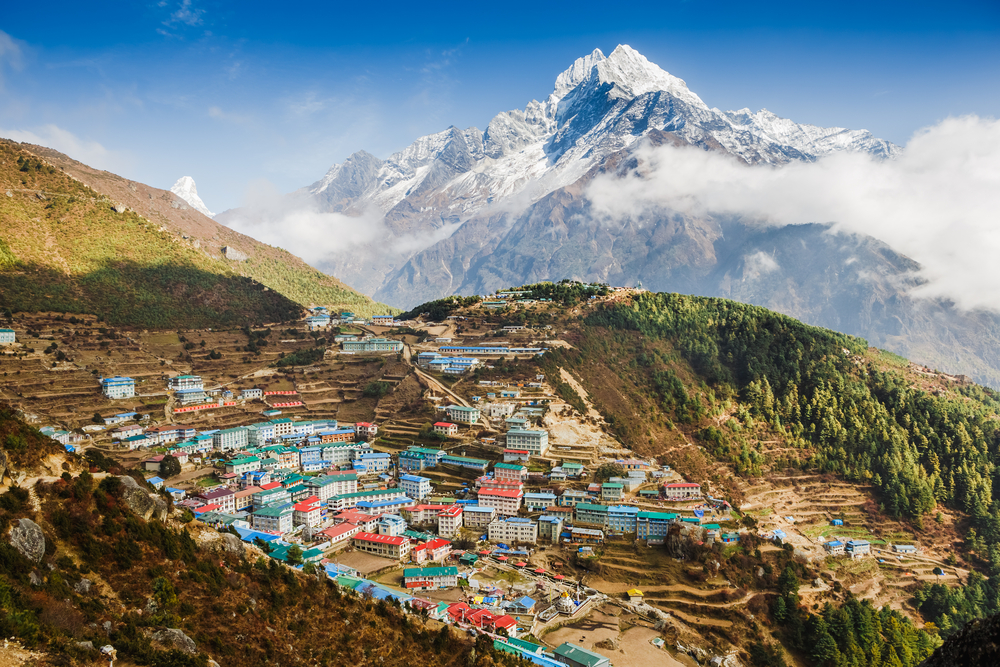
In Dhulikhel, Timmes was interviewing local women about primary care and mental health. Instead of racing between wards and screens, she spent days sitting with people in and around their homes, listening to stories, observing rhythms of daily life, and walking through a place where community was visible rather than theoretical. Neighbors helped one another. Family members stayed woven into the day. Women gathered, worked, talked, and shared space. Loneliness, while certainly not absent from life, was not treated like a default setting.
That observation changed her. She had expected hardship to automatically produce higher depression rates, yet what stood out to her was the strength of social connection. And that insight aligns with what mental health experts have been saying for years: strong social ties support well-being. In fact, public-health research has grown so concerned about isolation that the U.S. Surgeon General’s advisory on loneliness and social connection warned that a lack of social connection is associated with serious health risks. That is not small talk. That is public-health alarm-bell territory.
Put simply, Timmes did not just travel to a new country. She spent time inside a social fabric that reminded her what she had been missing.
Her body started moving again, but not in a “wellness influencer” kind of way
There is something almost wonderfully ordinary about one detail from the essay: she walked. A lot. Day after day, she and her interpreter trekked the local terrain, visiting women, asking questions, and covering miles together. It was not a choreographed boot camp. Nobody was wearing a smartwatch and yelling about optimization. It was movement folded into life.
That matters more than it may seem. Research from organizations such as the CDC and Mayo Clinic consistently shows that physical activity can support mood, reduce anxiety, improve sleep, and help interrupt the loop of rumination that often feeds depression. Exercise is not a magical fix for everyone, and it is not a replacement for therapy or medication when those are needed. But it is one of the most evidence-backed ways to support mental health, especially when it is sustainable and connected to daily living rather than punishment disguised as self-improvement.
Walking through Nepal did not matter because it was exotic. It mattered because it was movement, daylight, routine, and embodied life. The body got to participate in recovery instead of being dragged around by a stressed-out brain.
The landscape gave her perspective she could not find in a schedule
There is also the Nepal factor itself: hillsides, open air, long views, the physical scale of a place that does not care about your inbox. Nature has a way of shrinking the ego without insulting it. That can be healing. Harvard experts have highlighted links between time in nature and better mental well-being, and mental health professionals have long noted that outdoor time can help ease stress, anxiety, and low mood.
Nepal, in this story, becomes more than a destination. It becomes a contrast agent. In Boston, medical school had narrowed life to tasks and deadlines. In Dhulikhel, the student could see more clearly what had been crowded out: wonder, slowness, connection, and the psychological breathing room that comes from not living every hour under fluorescent urgency.
Sometimes people call that perspective. Sometimes they call it awe. Sometimes they just call it finally being able to hear themselves think.
What the trip did not do
This is the part that deserves honesty. A trip did not “cure” depression in a universal, copy-and-paste way. Depression is a medical condition that can affect mood, sleep, appetite, concentration, energy, and daily function. For many people, treatment may include psychotherapy, medication, lifestyle changes, support groups, or a combination of approaches. There is no one-size-fits-all answer, and no responsible article should pretend otherwise.
So why keep the title? Because headlines love drama, but the deeper lesson is still worth keeping. Nepal did not act like a miracle pill. The trip interrupted a harmful pattern. It restored relationships, physical activity, outdoor time, and a sense of meaning. It helped Timmes notice that what looked like personal weakness was, at least in part, a life stripped of the things that kept her grounded.
That is an important message for readers. If a change in environment helps depression lift, that does not mean the depression was fake. It may mean the environment was making things worse. The brain does not live in a vacuum. It lives in a body, in a routine, in a social world, in a place.
What readers can borrow without booking a flight to Kathmandu
Most people are not going to Nepal next week, and that is fine. The useful part of this story is not the passport stamp. It is the pattern.
First, protect community like it is medication with a very inconvenient refill policy. Friendship, family, peer groups, and ordinary human company are not side quests. They are often part of what keeps people mentally steady. If your life is full of tasks but empty of people, your calendar may be efficient and your nervous system may still be filing a complaint.
Second, bring movement back into your life in whatever form is doable. Walking counts. Stretching counts. Dancing badly in your kitchen while waiting for leftovers counts. The point is not to become a heroic athlete. The point is to remind your body that it is alive and allowed to participate in your day.
Third, spend time outside. Not because nature is magic, but because modern life is weirdly good at trapping people indoors under light that feels like it was designed by exhausted printers. Fresh air, daylight, greenery, and visual distance can change how the mind feels. Sometimes that shift is subtle. Sometimes it is the first crack in a very long dark season.
Fourth, notice when achievement starts replacing identity. Many high performers become so fluent in producing that they forget how to exist without performing. That is a dangerous trade. You are not supposed to disappear inside your résumé.
And finally, seek real support when symptoms persist. If low mood, hopelessness, sleep changes, loss of interest, or impaired concentration keep hanging around like unwelcome houseguests who refuse to take the hint, professional help matters. The brave move is not pretending you are fine. The brave move is getting care before things get worse.
Why this story still lands years later
This story endures because it offers a refreshing alternative to two bad narratives. The first says depression is just weakness. The second says depression is totally disconnected from how a person lives. Neither is true. Mental health is complex. Biology matters. Stress matters. Relationships matter. Rest matters. Community matters. Meaning matters. Place matters.
Timmes’s Nepal experience is compelling because it does not flatten that complexity. It shows that healing can begin when a person returns to the conditions that make them feel human. In her case, those conditions included friendship, physical movement, useful work, time outdoors, and a community where people were not constantly isolated into private little pressure cookers.
There is also something quietly radical in the story’s ending. She does not come home claiming she has solved life forever. She comes home more aware. More grounded. More protective of the relationships and rhythms that keep her steady. That may be the most believable kind of hope: not a promise that nothing hard will happen again, but an understanding of what helps when it does.
Conclusion
So, here is how a trip to Nepal stopped this medical student’s depression: not by acting as a fairy-tale fix, but by restoring the pieces of life that depression and burnout had slowly stolen. The trip gave her community instead of isolation, walking instead of constant sitting, mountain air instead of institutional tunnel vision, and meaningful human contact instead of nonstop performance. It helped her recognize that her mental health had faltered not because she lacked grit, but because she had lost the connections that kept her balanced.
That is the real takeaway. You may not need a plane ticket. You may need people. You may need rest. You may need sunlight, movement, therapy, honest conversation, a less punishing routine, or all of the above. Nepal was the setting. Reconnection was the medicine.
Additional experiences related to the topic
What makes this kind of story feel so believable is that the emotional shift usually happens in tiny moments, not grand speeches. It might begin with the first morning you wake up somewhere unfamiliar and realize your shoulders are not already braced for battle. There is no pager. No pre-round panic. No mental checklist tap-dancing on your forehead before breakfast. Instead, there is a cool breeze, a rough walking path, a kettle whistling in the distance, and the strange sensation that the day might contain actual life rather than just obligations.
In a place like rural Nepal, the details do a lot of quiet work. Hills force you to move differently. Roads and trails slow you down. Conversations take time because people are not treating human interaction like an item to clear from a task manager. Shared tea becomes a pause instead of a luxury. A walk to meet someone is not dead time; it is the rhythm of the day. If you have been living in a pressure system where every minute must justify itself, that change can feel almost rebellious.
There is also the humbling effect of entering another culture and realizing the world is much bigger than your private spiral. You notice how people improvise, endure, laugh, help one another, and carry on with dignity even when life is objectively hard. That does not mean suffering elsewhere should be romanticized. It means perspective can be clarifying. Problems do not vanish, but they stop being the only thing visible in the frame.
Another experience people often describe in journeys like this is the return of attention. Depression and burnout can make the mind feel sticky, as if every thought is coated in gray syrup. Then, slowly, attention starts waking up. You notice colors again. You register birds, weather, smells from a kitchen, the texture of dust on your shoes, the sound of laughter from a courtyard. It is not that your life suddenly turns into a tourism ad. It is that numbness loosens its grip, and the world begins to feel legible again.
Human connection matters here too. Not just deep emotional confession, but ordinary companionship. Walking beside someone. Translating questions together. Sharing a joke after stumbling on a trail. Eating after a long day of work. Those low-glamour moments can be deeply corrective. They tell the nervous system: you are not alone, you are not only useful when producing, and you do not have to carry your entire internal weather system by yourself.
Then comes one of the most meaningful experiences of all: the realization that recovery may feel less like becoming a new person and more like recognizing an old one. The self that enjoys friends, movement, fresh air, curiosity, and purpose was not destroyed. It was buried under stress, exhaustion, and isolation. A different environment simply made it easier to find again.
That is why this story continues to resonate. It captures a truth many people know but struggle to name: sometimes healing begins the moment life becomes livable again.











