
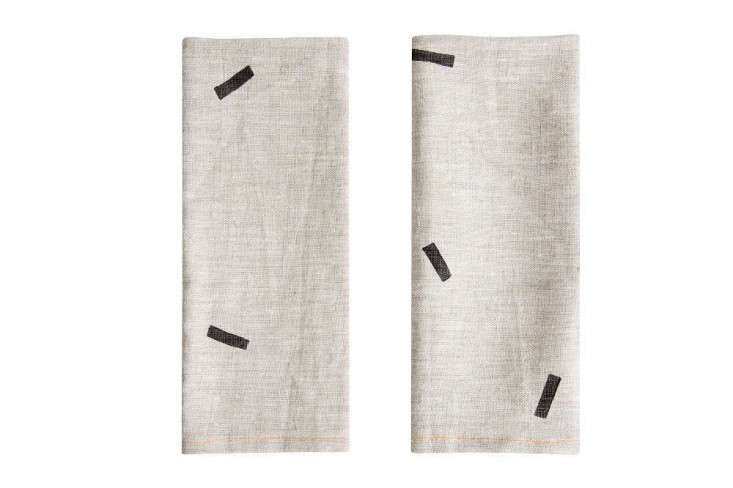
Some home accessories whisper. Some shout. And then there are Caroline Z. Hurley “Sticks” Napkins, which do something far more interesting: they casually stroll onto the table, look effortlessly artistic, and make even takeout pizza feel like it has a gallery opening at seven.
These napkins belong to a world where textiles are not just background objects. They are part of the mood, the meal, the memory, and occasionally the reason guests ask, “Wait, where did you get those?” Designed by artist and textile designer Caroline Z. Hurley, the “Sticks” napkins reflect the brand’s signature interest in hand-blocked patterns, natural materials, relaxed elegance, and artful imperfection. They are practical table linens, yes, but they also feel like small paintings that happen to be useful when someone spills sparkling water.
The original Caroline Z. Hurley “Sticks” Napkins were featured as a set of four and described as hand block printed with non-toxic acrylic ink. Archived product information notes a rectangular shape, a natural colorway, and a handmade look that fits beautifully within modern, rustic, coastal, bohemian, and quietly luxurious interiors. The item has since been listed as discontinued, which only adds to its appeal for collectors and design lovers. After all, nothing makes a table accessory more intriguing than knowing it has become a bit of a treasure hunt.
Who Is Caroline Z. Hurley?
Caroline Z. Hurley is a Brooklyn-based painter and textile designer whose work bridges fine art and everyday living. Originally trained as a painter, Hurley built a design language around simple shapes, expressive marks, and tactile materials. Her home collections have included textiles such as napkins, throws, quilts, pillows, tablecloths, wallpaper, fabrics, and other pieces that bring an artist’s hand into domestic spaces.
Her story is especially compelling because the brand did not begin as a cold business calculation. It grew from experimentation, travel, painting, and the happy accident of turning studio ideas into objects people could actually live with. That is part of what makes the Caroline Z. Hurley aesthetic feel so human. The work does not seem over-polished or machine-perfect. It has rhythm, softness, and personality. It looks like it was made by someone who understands that homes should feel lived in, not staged for a furniture catalog where no one is allowed to eat crackers.
A Painter’s Approach to Textile Design
What separates Caroline Z. Hurley from many home textile brands is the painterly mindset behind the patterns. Her designs often begin as visual compositions rather than trend forecasts. Shapes are arranged with a sense of movement. Colors are chosen for feeling, not just matching. Repetition is present, but it is rarely stiff. The result is a textile style that feels modern without being icy and handmade without looking overly precious.
The “Sticks” pattern is a strong example of this approach. It takes a simple motiflinear, branch-like marksand turns it into a graphic surface that feels casual, organic, and slightly playful. The design is minimal enough to work with many table settings, yet distinctive enough to stand out. In other words, it does not scream for attention, but it definitely knows it looks good.
What Are Caroline Z. Hurley “Sticks” Napkins?
Caroline Z. Hurley “Sticks” Napkins are artisan-style table linens known for their hand-blocked appearance and natural, understated design. The pattern features repeated stick-like forms, giving the napkins a loose geometric quality. They feel structured and organic at the same time, which is a difficult balance to pull off. Too structured, and a napkin starts looking like graph paper. Too organic, and it begins to resemble something discovered under a porch. “Sticks” lands nicely in the middle.
The archived product listing described the napkins as a set of four, block printed by hand with non-toxic acrylic ink. The napkins were associated with a natural color palette, making them easy to pair with wood tables, white dishes, stoneware, glassware, brass flatware, and casual ceramics. Their appeal comes from their ability to elevate a table without making dinner feel formal or fussy.
Key Design Features
The charm of the “Sticks” napkins is found in a handful of thoughtful details. The pattern is simple but memorable. The handmade printing process gives the design subtle variation. The neutral base makes the napkins versatile. The rectangular shape gives them a relaxed utility, allowing them to function as napkins, small kitchen textiles, or styling pieces for a layered table.
Because the napkins were made with an artisan sensibility, the small irregularities are not flaws. They are the personality. A perfectly identical print can feel flat, but a hand-printed textile has tiny shifts that catch the eye. That is what gives pieces like these their warmth. They remind us that a real person made them, not a robot with a ruler and a grudge.
Why the “Sticks” Pattern Still Feels Fresh
Good design has a way of escaping its original date stamp. Even though the Caroline Z. Hurley “Sticks” Napkins were connected to earlier design coverage and have since been discontinued, the pattern still feels relevant. That is because it taps into several lasting interior design ideas: natural materials, handmade details, simple geometry, and relaxed entertaining.
Today’s best table settings often avoid the overly coordinated look. Instead of matching every plate, glass, and napkin like a department-store display from 1998, modern hosts are mixing textures and tones. A linen napkin with a hand-blocked pattern fits this style perfectly. It adds visual interest without demanding that the entire table revolve around it.
Minimalist, But Not Boring
Minimalism can sometimes get unfairly blamed for being cold. The “Sticks” napkins prove that simple design can still have soul. The repeated line motif is restrained, but because it feels handmade, it carries warmth. It is the difference between a plain white wall and a white wall with beautiful afternoon shadows. One is empty; the other has atmosphere.
These napkins work especially well for people who love neutral interiors but do not want their homes to look like a silent retreat where joy goes to whisper. The pattern adds movement. It breaks up a table setting. It gives the eye somewhere to land between the bread basket and the salad bowl.
How to Style Caroline Z. Hurley “Sticks” Napkins
The beauty of Caroline Z. Hurley “Sticks” Napkins is their flexibility. They can lean casual, elegant, rustic, modern, beachy, or artsy depending on what surrounds them. Think of them as the dependable friend who can show up to brunch, dinner, a picnic, or a small holiday gathering and somehow be dressed correctly every time.
For a Casual Everyday Table
Pair the napkins with simple white plates, clear glasses, and wood-handled flatware. Add a small bowl of lemons or a vase with a few loose stems. The result is easy, unfussy, and bright. This is the kind of table that says, “I have taste,” but not, “I spent three hours measuring the distance between forks.”
For a Modern Organic Look
Use the “Sticks” napkins with matte stoneware, handmade ceramic bowls, and a linen table runner. Add black or dark bronze flatware for contrast. The stick-like print will echo natural shapes while still feeling graphic. This combination works beautifully for dinner parties where the food is simple but thoughtful: roast chicken, grain salads, grilled vegetables, or pasta that looks rustic but secretly required five pans.
For a Coastal-Inspired Setting
Because Caroline Z. Hurley’s work often carries a relaxed, breezy spirit, the “Sticks” napkins can easily fit a coastal table. Pair them with pale blue glassware, woven placemats, and off-white dishes. Avoid going too literal with seashells and anchors unless your table is auditioning for a nautical theme restaurant. A subtle coastal mood is usually more sophisticated.
For Holiday Hosting
The neutral look of the napkins makes them surprisingly useful during the holidays. Add greenery, candles, and warm metallic accents for Thanksgiving or Christmas. For spring gatherings, combine them with fresh flowers and pastel ceramics. For summer, use them outdoors with grilled food and pitchers of iced tea. Their simplicity gives them seasonal range.
Why Handmade Napkins Matter
In a world full of disposable paper napkins, handmade or artisan-style cloth napkins feel almost rebellious. They suggest that meals deserve attention. They make a table feel complete. They also reduce waste when used regularly, which is a bonus for anyone who likes both good design and not filling the trash can with paper squares every time someone eats toast.
Cloth napkins are also tactile. They soften the table. They invite people to slow down. A well-chosen napkin can turn a quick breakfast into a small ritual and a basic dinner into something more intentional. That may sound dramatic for a rectangle of fabric, but anyone who loves table settings knows the truth: details change the whole experience.
The Appeal of Block Printing
Block printing is one of the reasons Caroline Z. Hurley textiles have such charm. The process creates a human quality that digital perfection often lacks. Each impression can vary slightly depending on pressure, ink, fabric texture, and placement. These variations create depth and individuality.
For the “Sticks” napkins, the hand-blocked look reinforces the natural character of the design. The pattern does not feel stamped into submission. It feels alive. That makes the napkins especially attractive to people who appreciate craft, slow design, and objects that carry a visible trace of the maker.
Are Caroline Z. Hurley “Sticks” Napkins Still Available?
Archived product information lists the Caroline Z. Hurley “Sticks” Napkins as discontinued. That means they may not be available through their original retailer, and shoppers may need to search vintage marketplaces, resale platforms, design archives, or secondhand home decor sources to find them. Their discontinued status can make them more desirable among fans of Caroline Z. Hurley’s earlier work.
If you are looking for a similar style, consider searching for Caroline Z. Hurley napkins, Caroline Z. Hurley table linens, hand-block printed linen napkins, artisan block print napkins, or natural patterned cloth napkins. The exact “Sticks” design may be hard to find, but the broader design languagesimple marks, natural fabric, hand-printed textureis still a strong category in modern table linens.
What to Check Before Buying Secondhand
When buying discontinued table linens, check condition carefully. Look for stains, fading, fabric thinning, uneven wear, and whether the set includes all four napkins. Some variation in print is normal for hand-blocked textiles, but damage is different from character. Character is charming. Mystery sauce from 2015 is less charming.
Also check dimensions. The archived listing described the “Sticks” napkins as 9 inches by 16 inches, a size that may feel more like a compact napkin, towel, or styling textile than a large formal dinner napkin. That can be useful, but buyers should know what they are getting before imagining a grand banquet fold worthy of a royal wedding.
Design Analysis: Why These Napkins Work
The success of the Caroline Z. Hurley “Sticks” Napkins comes from balance. The pattern is graphic but not harsh. The material feels natural but not sloppy. The handmade process adds uniqueness without making the napkins too delicate for real use. They sit comfortably between art object and household tool.
From an interior design perspective, the “Sticks” motif also works because it introduces line. Tables often include circles and solids: round plates, cylindrical glasses, smooth bowls, flat chargers. A linear napkin pattern adds contrast. It creates movement and keeps the table from looking too static. This is a small detail, but small details are basically the espresso shots of interior design.
Color and Texture
The natural palette makes the napkins easy to style across multiple rooms and seasons. Neutral textiles often last longer in a home because they are not tied to one trend cycle. The hand-printed design gives them texture even when the colors are quiet. That is important because a neutral object needs either shape, surface, or material interest to avoid disappearing completely.
The napkins also fit well with the larger trend toward warm minimalism. People still want calm spaces, but they increasingly want those spaces to feel personal. Caroline Z. Hurley’s work fits that desire beautifully. It offers restraint with a pulse.
How to Care for Similar Hand-Printed Napkins
Care instructions can vary by item, so always follow the specific label if available. For hand-printed napkins in general, gentle washing is wise. Use cold water, mild detergent, and avoid harsh bleach. Air drying can help preserve print quality, though some sturdy linens may tolerate low tumble drying. If ironing is needed, iron on the reverse side or use a pressing cloth to protect the printed surface.
For stains, treat quickly. Blot instead of rubbing. Rubbing can push the stain deeper into the fibers and may disturb the print. Red wine, tomato sauce, and turmeric are the usual villains. They arrive at dinner dressed as flavor and leave acting like permanent tenants.
of Experience: Living With “Sticks” Napkins at the Table
There is a particular pleasure in using napkins like Caroline Z. Hurley “Sticks” Napkins because they make ordinary meals feel considered without making them feel staged. Imagine setting the table on a Saturday morning. There is coffee, a loaf of bread, scrambled eggs, maybe berries in a small ceramic bowl. Nothing dramatic. No towering centerpiece. No imported butter shaped like a swan. Then you add the napkins, and suddenly the table looks intentional. Not fancy, exactlybetter than fancy. Personal.
The “Sticks” pattern has the kind of relaxed confidence that works well in real homes. It does not require a perfect table. In fact, it probably looks better with a little life around it: a chipped mug, a wooden board, flowers leaning slightly to one side, a stack of plates that do not all match. These napkins seem comfortable with imperfection, which makes them easy to use. You do not feel as though you need to serve a five-course meal to justify them. They are just as happy beside soup as they are beside roasted salmon.
For hosting, this matters more than people realize. A table that looks too formal can make guests nervous. They hesitate before sitting down. They wonder which fork is safe to touch. They start behaving like the napkin police might be hiding behind the curtains. A table with hand-printed napkins feels warmer. It says the host cared, but not so much that everyone needs to speak in museum voices.
One of the best experiences with napkins like these is how easily they become conversation pieces. Someone notices the pattern. Another person touches the fabric. Someone asks whether they are handmade. Suddenly the table has a story, and stories are what make gatherings memorable. The food may be excellent, but people also remember the atmospherethe candlelight, the music, the objects that made the space feel alive.
They are also useful for everyday rituals. Fold one beside a lunch plate and a simple sandwich feels upgraded. Place one under a vase and it becomes a soft visual anchor. Use one as a tray liner for coffee and toast, and breakfast in bed looks charming rather than like crumbs are about to declare independence. This kind of versatility is what makes small textiles worth collecting.
The discontinued nature of the “Sticks” napkins adds another layer to the experience. Owning or finding a set feels less like buying a generic product and more like discovering a small design artifact. It carries a bit of the earlier Caroline Z. Hurley story: the painterly experiments, the hand-blocked surfaces, the natural materials, the charm of independent design. These napkins are not just about wiping hands. They are about adding texture to daily life.
And that may be the real reason they remain interesting. The best home objects do not simply decorate a space. They participate in it. Caroline Z. Hurley “Sticks” Napkins bring pattern, craft, and a little personality to the table. They make meals feel more grounded, more beautiful, and slightly more fun. Which is a lot to ask from a napkinbut apparently, these were up for the job.
Conclusion
Caroline Z. Hurley “Sticks” Napkins are more than simple table linens. They represent an artist-led approach to home design, where everyday objects carry the warmth of handwork and the intelligence of good composition. With their block-printed look, natural palette, and easy styling potential, they remain appealing even after being discontinued. For collectors, design lovers, and anyone who believes a table should have personality, these napkins offer a small but memorable way to bring art into daily life.
Their greatest strength is that they do not try too hard. They are simple, tactile, useful, and expressive. They make casual meals feel special and special meals feel relaxed. In a home design world that often swings between sterile minimalism and overdecorated drama, Caroline Z. Hurley “Sticks” Napkins land in a sweet spot: handmade, modern, and quietly delightful.











