
Note: This article is based on verified public music-history information, rewritten in original American English for web publication. Source links are intentionally omitted as requested.
Some songs sound like they were born wearing sunglasses, holding a cold drink, and inviting the whole neighborhood to a harmless little dance party. “Dancing in the Moonlight” is one of those songs. The King Harvest version, released in 1972 and popularized in 1973, has the breezy glow of a summer evening when nobody has checked their email in six hours and the world briefly remembers how to behave.
That is exactly why the song’s origin story feels so counterintuitive. This cheerful classic was not inspired by a perfect beach night, a carefree romance, or a charming group of friends swaying under palm trees. It was written by Sherman Kelly after a horrifying attack in St. Croix in 1969. While recovering from serious injuries, Kelly imagined the opposite of what he had experienced: a peaceful world where people gathered together, celebrated, and did not harm one another.
In other words, “Dancing in the Moonlight” is not simply a feel-good song. It is a feel-good song created in direct response to something that was not good at all. That contrast is the reason the story still surprises listeners decades later. The song sounds like joy, but its deepest engine is survival.
Why the Song Feels So Effortlessly Happy
Before digging into the darker backstory, it helps to understand why the song has such a light emotional footprint. King Harvest’s recording is built around a soft, rolling groove, a memorable keyboard line, and Dave “Doc” Robinson’s relaxed lead vocal. Nothing in the performance sounds forced. The rhythm does not stomp; it strolls. The melody does not beg for attention; it leans back and somehow makes everyone come to it.
That easygoing quality is a major reason the song has remained durable. It works at backyard parties, wedding receptions, road trips, retro playlists, TV soundtracks, and late-night grocery store aisles where you suddenly realize you are choosing cereal to a 1970s pop masterpiece. Not every song can improve the snack aisle. This one can.
Musically, “Dancing in the Moonlight” sits somewhere between pop rock, soft rock, and a gentle soul-influenced groove. It is not aggressive, not overly dramatic, and not lyrically complicated. Its magic comes from atmosphere. The song creates a little world: warm light, good company, music in the air, and a sense that everyone has agreed to be decent for the evening.
The Real Inspiration: Sherman Kelly’s 1969 St. Croix Experience
The songwriter, Sherman Kelly, was active in music during the late 1960s and had connections to bands that moved between New York, the Caribbean, and Europe. In 1969, Kelly and friends were in the Virgin Islands. During a trip from St. Thomas to St. Croix, Kelly and his girlfriend became seasick. After reaching land, they decided not to return to the boat for the night.
What followed was traumatic. Kelly and his girlfriend were attacked by a group of men. Kelly was badly beaten and suffered severe injuries. The event could easily have ended his life. It also left him with the kind of memory that does not politely stay in the past just because a calendar page changes.
During his recovery, Kelly wrote “Dancing in the Moonlight.” The most important part of this story is not simply that a happy song came after a terrible event. It is that the song was Kelly’s imagined correction to the world. He was not documenting the night as it happened. He was creating the night as it should have been.
That is the counterintuitive inspiration: the song came from a desire to replace violence with community, fear with ease, and danger with celebration. Kelly was not writing escapism in the shallow sense. He was building a small musical refuge, one where people could gather under the moon and not threaten one another.
An “Alternate Reality” Set to Music
Many popular songs are autobiographical, but “Dancing in the Moonlight” is more like emotional architecture. Kelly built a room inside the song and filled it with the feeling he wished had existed. Instead of replaying brutality, the song imagines harmony. Instead of focusing on isolation, it creates a crowd. Instead of fear, it offers trust.
This is why the song’s cheerfulness does not feel fake once you know the backstory. It feels intentional. There is a difference between pretending nothing bad happened and insisting that badness should not get the final word. “Dancing in the Moonlight” belongs to the second category.
The song’s peaceful mood can be heard as a kind of quiet defiance. It does not shout, “I survived.” It simply survives by existing. The groove keeps moving. The melody keeps smiling. The whole track seems to say, “Here is the world we deserved that night.” That is a powerful artistic move, even if the song itself never pounds the table to announce it.
From Boffalongo to King Harvest
“Dancing in the Moonlight” was first recorded by Boffalongo, the band that included Sherman Kelly. Boffalongo’s version appeared before the song became widely famous, and Kelly sang lead on that earlier recording. However, it was King Harvest that brought the song to a national audience.
The King Harvest story has its own winding charm. The band’s roots trace back to Ithaca, New York, with members connected to Cornell University. The group later developed in Paris, where American musicians were performing, recording, and trying to make something happen. As every struggling band knows, “trying to make something happen” is a full-time job with part-time furniture.
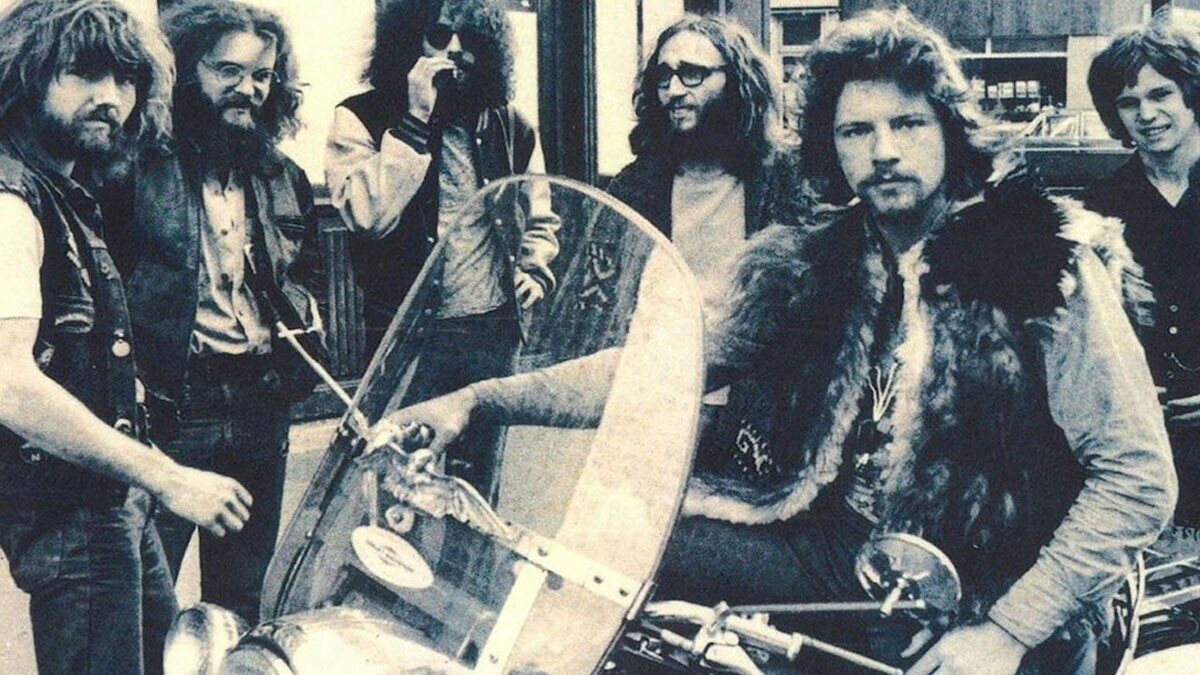
Sherman Kelly’s brother, Wells Kelly, played an important role in moving the song toward King Harvest. Wells was a drummer and later became associated with Orleans, the band known for hits such as “Still the One.” He introduced “Dancing in the Moonlight” to King Harvest, whose lineup included Dave “Doc” Robinson, a former Boffalongo member. Robinson’s warm voice became central to the King Harvest recording.
The King Harvest version was released in 1972 and gradually found its audience. It eventually peaked at No. 13 on the Billboard Hot 100 in early 1973 and reached No. 5 in Canada. The song became the band’s signature hit and, for many listeners, the only King Harvest song they can name without phoning a music historian or an uncle with an alarming vinyl collection.
Why King Harvest’s Version Worked So Well
Several elements helped the King Harvest recording become the definitive version. First, the keyboard hook is instantly recognizable. It gives the track a bright, slightly funky personality without making it too busy. Second, the vocal performance is casual but confident. Robinson sounds like he is inviting listeners into a scene, not selling them a product.
Third, the arrangement leaves room for the song to breathe. This matters. A heavier production might have buried the gentleness that makes the song special. Instead, the King Harvest version feels open, almost weightless. It has enough rhythm to dance to and enough softness to make the dancing feel communal rather than showy.
Finally, the song arrived during an era when pop radio could make room for hybrids. In the early 1970s, a hit could be a little rock, a little country, a little jazz, a little soul, and still fit between more polished chart singles. “Dancing in the Moonlight” benefited from that openness. It did not need to choose one lane. It simply rolled down the road with the windows open.
The Emotional Paradox Behind the Song’s Lasting Appeal
The reason people keep rediscovering the backstory is simple: the contrast feels almost impossible. How could a song this sunny come from something so dark? Yet that is exactly what makes it human. People often respond to pain not by making art that resembles pain, but by making art that answers it.
That answer can take many forms. Some artists write angry songs. Some write confessionals. Some create satire sharp enough to cut a sandwich. Sherman Kelly created a peaceful dance scene. That choice does not minimize what happened. It reveals what he longed for afterward: safety, kindness, and a world where strangers gather without becoming threats.
There is also a reason the song does not feel like a lecture. It never tells listeners, “Please consider the philosophical necessity of nonviolence under lunar conditions.” That would be a different song, and probably a difficult one to dance to. Instead, it lets the mood do the work. The song makes peace feel attractive. It turns gentleness into a groove.
Toploader, Covers, and New Generations
Although King Harvest gave “Dancing in the Moonlight” its classic American identity, the song did not stop there. In 2000, the British band Toploader released a cover that became a major hit in the United Kingdom and introduced the song to a new generation. Their version leaned into a more modern pop-rock brightness, keeping the core melody while giving it late-1990s and early-2000s energy.
Toploader’s cover became so popular that many younger listeners first encountered the song through that version rather than King Harvest’s. Later, other artists and producers also revisited the song, including dance-oriented interpretations that brought it into streaming playlists and party settings far removed from its original 1970s radio context.
That long afterlife is important because it proves the song’s emotional design is unusually flexible. It can sound vintage, modern, acoustic, polished, or dance-floor ready, and the central feeling still survives. The melody carries its own weather. Wherever it appears, the forecast is usually warm.
How the Backstory Changes the Listening Experience
Learning the origin of “Dancing in the Moonlight” does not ruin the song. It deepens it. At first, many listeners hear only the surface: a sweet, mellow tune about nighttime joy. After discovering Sherman Kelly’s inspiration, the song becomes less like a simple party track and more like a small act of emotional restoration.
It is similar to looking at a bright painting and later learning the artist made it during a period of grief. The color does not become false. Instead, the color becomes brave. The cheerfulness gains dimension because it is not naïve. It has seen the opposite.
This is why the song remains a fascinating case study in popular music. It shows that joy is not always the result of an easy life. Sometimes joy is an argument. Sometimes it is a refusal. Sometimes it is what a person builds after reality has behaved terribly and needs to be corrected, at least for three minutes on the radio.
The Song’s Place in 1970s Pop Culture
“Dancing in the Moonlight” is often described as a one-hit wonder, but that label can be misleading. It is technically useful when discussing chart history, yet it can make a song sound small. This song is not small. It has outlived many bigger hits, traveled through covers, appeared in screen soundtracks, and remained familiar to people who may not know King Harvest by name.
That kind of cultural endurance is not an accident. The song has a rare combination of simplicity and emotional openness. It is easy to remember but not irritating. It is cheerful but not sugary. It has nostalgia baked in, yet it does not require listeners to have lived through the 1970s to enjoy it. A teenager can find it on a playlist and understand the appeal in about eight seconds.
The track also fits a broader pattern in music history: songs with complicated origins often become public property in the emotional sense. Once released, they belong to weddings, car rides, movies, commercials, family cookouts, and private memories. The songwriter’s inspiration remains vital, but the audience keeps adding new layers.
What “Dancing in the Moonlight” Teaches About Resilience
The story behind “Dancing in the Moonlight” is not inspirational in a greeting-card way. Trauma is not a convenient plot device. It is not something anyone should have to endure so a song can exist. The better lesson is more careful: art can sometimes help people imagine beyond what happened to them.
Sherman Kelly’s response was not to write a revenge fantasy or a detailed account of the attack. He wrote a vision of people being harmless together. That may sound simple, but it is profound. In a world that often rewards cynicism, imagining peace can be surprisingly radical.
The song’s optimism is also communal. It is not about one person winning while everyone else watches. It is about everyone sharing the same good atmosphere. That is part of why the track still works at gatherings. It creates the feeling that joy is not scarce. There is enough moonlight to go around.
Experiences Related to “Dancing in the Moonlight”
One of the most interesting experiences a listener can have with “Dancing in the Moonlight” is hearing it twice: once before knowing the story, and once after. The first listen is usually uncomplicated. The song floats in, does its work, and leaves the room a little lighter. The second listen can feel different. Suddenly, the softness has weight. The happiness is no longer just decorative; it becomes purposeful.
Imagine hearing it at a wedding. On the surface, it is a perfect reception song. It is familiar enough to make older guests smile and gentle enough not to scare anyone’s grandmother off the dance floor. But with the backstory in mind, it becomes even more fitting. A wedding is supposed to be a public promise of safety, trust, and shared joy. That is exactly the world Kelly imagined when he wrote the song. The dance floor becomes more than a place to perform questionable shoulder moves. It becomes a tiny model of the kinder world the song dreams about.
Or picture a late-night drive when the song appears unexpectedly on the radio. There is something almost cinematic about it. The road is quiet, the dashboard glows, and the melody arrives like a friendly ghost from 1973. If you know the history, the song can feel like a reminder that people are capable of turning pain into something generous. Not every wound becomes art, and no one should be pressured to transform suffering into productivity. Still, when it happens naturally, it can be deeply moving.
The song also changes the experience of nostalgia. Many oldies are comforting because they seem to come from a simpler time. But “Dancing in the Moonlight” reminds us that no era was simple for the people living inside it. The early 1970s had its own violence, fear, uncertainty, and social tension. The song’s peace was not a snapshot of a perfect past. It was an imagined alternative, a musical wish. That makes its nostalgia more honest.
For writers, musicians, and creative people, the song offers another useful experience: it shows how contrast can create power. The most obvious song after a traumatic event might be dark, heavy, or openly sorrowful. Kelly went the other way. He wrote brightness. That does not mean every artist should choose optimism, but it proves that emotional truth does not always wear the expected costume. Sometimes the deepest response to darkness is not more darkness. Sometimes it is a piano groove, a soft vocal, and a moonlit place where everybody gets to be safe for a while.
Conclusion
The very counterintuitive inspiration for “Dancing in the Moonlight” is what makes the song more than a pleasant 1970s classic. Sherman Kelly wrote it after surviving a violent experience in St. Croix, but instead of preserving that violence in musical form, he imagined its opposite. The result was a song about peace, togetherness, and the kind of night that should have existed.
King Harvest turned that vision into a timeless hit, and later covers helped keep it alive for new audiences. Its bright sound, memorable groove, and gentle communal spirit continue to make it one of pop music’s most enduring feel-good songs. Yet the story underneath gives it unusual depth. “Dancing in the Moonlight” is not happy because nothing bad happened. It is happy because something bad happened, and the songwriter still chose to imagine a better world.
That is the quiet miracle of the song. It dances, but it also remembers. It smiles, but not because it is empty. It invites everyone into the moonlight because, at its heart, it knows how badly people need a safe place to gather.











