
Some animals look as if they escaped from a fantasy novel, a rejected superhero sketchbook, or a very ambitious school science project. Yet the strangest part is this: they are completely real. The animal kingdom is packed with creatures that glow, slime, punch, regenerate, hide their blood, wear armor, hunt with electricity, and casually walk around looking like nature lost a bet.
But “weird” does not mean useless. Most strange animals look unusual because evolution handed them very specific survival tools. A bizarre nose may work better than eyes in muddy tunnels. A transparent belly may help a frog vanish on a leaf. A duck-like bill on a mammal may detect tiny electric signals underwater. Weirdness, in nature, is often genius wearing a funny hat.
Below are more than ten weird animals that are real, fascinating, and scientifically remarkable. Some are cute. Some are creepy. A few look like they know your Wi-Fi password. All of them prove that Earth is far more imaginative than fiction.
1. Axolotl: The Smiling Salamander That Refuses to Grow Up
The axolotl looks like a cheerful underwater cartoon character with feathery pink gills and a permanent little smile. Native to the Xochimilco lake system near Mexico City, this amphibian is famous for neoteny, meaning it keeps juvenile features throughout its adult life. While most salamanders leave the water and lose their larval gills, axolotls keep their aquatic lifestyle and their frilly head decorations, because apparently growing up is optional.
What makes the axolotl truly extraordinary is its regeneration ability. It can regrow limbs, tail tissue, parts of its heart, spinal cord, eyes, and even portions of the brain. Scientists study axolotls because their healing process may offer clues for regenerative medicine. Unfortunately, wild axolotls are critically endangered due to pollution, urban development, invasive species, and habitat loss. In aquariums and online culture, they are celebrities. In the wild, they are fighting for survival.
2. Star-Nosed Mole: The Animal With a Tiny Octopus on Its Face
The star-nosed mole is what happens when evolution says, “Eyes are overrated; let’s build a super-nose.” This small mammal lives in wet, marshy areas of eastern North America and is nearly blind. Instead of relying on sight, it uses 22 fleshy tentacle-like rays around its nose to explore the world.
That star-shaped snout is not just for dramatic effect. It is packed with touch receptors and can detect prey with astonishing speed. The mole rapidly taps its nose against soil and mud, building a tactile map of its surroundings. It is considered one of the fastest eaters among mammals, able to identify and consume small prey in fractions of a second. It can also forage underwater, making it a tiny underground-and-underwater sensory machine. Is it adorable? Debatable. Is it brilliant? Absolutely.
3. Aye-Aye: The Finger-Tapping Lemur of Madagascar
The aye-aye is a nocturnal lemur from Madagascar with huge ears, glowing eyes, rodent-like teeth, and an extremely long middle finger. If it looks like a forest gremlin who just heard a secret, that is part of its charm.
Aye-ayes use a hunting method called percussive foraging. They tap tree bark with their thin finger, listen for hollow spaces, gnaw into the wood with strong incisors, and then use that flexible finger to fish out insect larvae. This makes them the primate version of a woodpecker, except with more side-eye. Sadly, aye-ayes face habitat destruction and persecution because some local superstitions treat them as bad omens. In reality, they are specialized, intelligent animals that help reveal how evolution can shape behavior in wonderfully odd ways.
4. Platypus: Nature’s Most Confusing Mammal
The platypus looks like several animals were assembled during a power outage: duck bill, beaver tail, otter body, webbed feet, and venomous spurs. It is a mammal, but it lays eggs. It nurses its young, but it has no nipples; milk is secreted through skin and lapped up by the babies. Early European naturalists reportedly suspected preserved platypus specimens were hoaxes, which is understandable. The platypus gives off strong “somebody glued this together” energy.
Its bill is not just decorative. When hunting underwater, a platypus closes its eyes, ears, and nostrils, then uses electroreception to detect tiny electric signals produced by prey. Male platypuses also have venomous spurs on their hind legs, especially active during breeding season. So yes, this egg-laying mammal can sense electricity and deliver venom. If comic books need a new mascot, the platypus is ready.
5. Pangolin: The Walking Pine Cone With a Long Tongue
Pangolins are the only mammals covered in large protective scales. These scales are made of keratin, the same material found in human fingernails. When threatened, a pangolin curls into a tight armored ball. Against natural predators, this strategy works well. Against human poaching, sadly, it has not been enough.
There are eight pangolin species across Africa and Asia. They feed mostly on ants and termites using long, sticky tongues that can reach deep into insect nests. Pangolins are shy, mostly nocturnal, and incredibly important for controlling insect populations. They are also among the most trafficked mammals in the world, hunted for their scales and meat. Their weirdness is wonderful, but their survival depends on stronger conservation and reduced illegal wildlife trade.
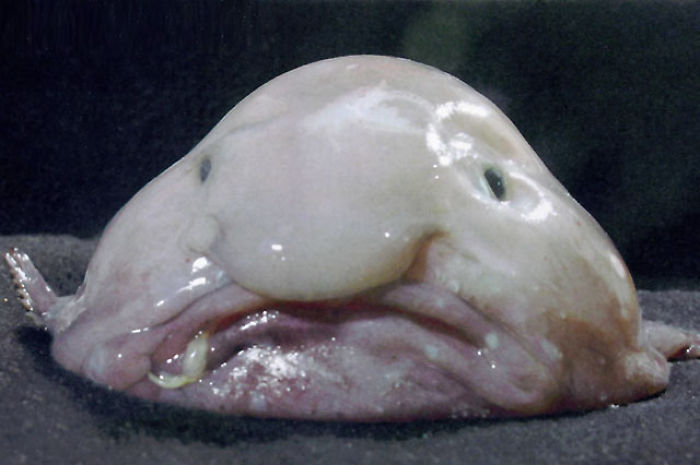
6. Blobfish: The Deep-Sea Meme With a Bad Publicist
The blobfish became internet-famous for looking like a sad melted dumpling. But that viral image is misleading. Blobfish live deep underwater, where intense pressure supports their soft bodies. When brought to the surface, the pressure change distorts their shape, turning them into the gloomy meme we know today.
In their natural deep-sea environment, blobfish are not cartoonish blobs; they are adapted survivors. Their gelatinous bodies help them float above the seafloor without spending much energy. They do not need a muscular athletic build because life in the deep ocean rewards patience, efficiency, and the ability to look unbothered in total darkness. The blobfish is not ugly. It is simply photographed under extremely unfair conditions. Honestly, most of us would not look great after being dragged up from thousands of feet below the ocean either.
7. Naked Mole-Rat: The Underground Queen’s Loyal Worker
The naked mole-rat is wrinkled, nearly hairless, buck-toothed, and built like a tiny sausage that has seen things. It lives underground in East Africa and has one of the strangest social systems among mammals. Naked mole-rats are eusocial, meaning they live in colonies with a queen, breeding males, and many nonbreeding workers, much like ants or bees.
They dig tunnels, gather food, defend the colony, and care for young. Their huge front teeth can move independently and are used for digging through hard soil. Naked mole-rats are also famous for their unusual biology: they are long-lived for rodents, tolerant of low oxygen, and highly resistant to certain types of pain and cancer. They may not win a beauty contest, but they are basically underground survival engineers.
8. Mantis Shrimp: The Colorful Crustacean With a Bullet-Speed Punch
The mantis shrimp is small, colorful, and armed with one of the most powerful strikes in nature. Some species have club-like appendages that smash prey with incredible speed. Their punch is so fast that it can create cavitation bubbles in water, producing a secondary shockwave. In other words, this animal can hit you, and then the water hits you too.
Mantis shrimp use these strikes to crack shells, stun prey, defend burrows, and remind the ocean that they are not to be handled casually. Their eyes are also remarkable, moving independently and providing complex visual abilities. The peacock mantis shrimp, in particular, looks like a rainbow decided to take boxing lessons. Beautiful? Yes. Safe to annoy? Absolutely not.
9. Leafy Sea Dragon: A Fish Pretending to Be Seaweed
The leafy sea dragon is a delicate marine fish related to seahorses and pipefish. Found off southern and western Australia, it has leaf-like appendages that help it blend into seaweed and seagrass. It does not use these “leaves” to swim; they are camouflage accessories. Fashion, but make it survival.
Leafy sea dragons drift slowly through the water, swaying like floating plants. Their actual swimming comes from tiny, nearly transparent fins. Predators may look directly at them and see nothing but drifting vegetation. Like seahorses, male sea dragons also carry eggs, making them another example of nature’s habit of ignoring human expectations. They are elegant, fragile, and strange in the most poetic way possible.
10. Narwhal: The Arctic Whale With a Unicorn Tooth
The narwhal is often called the unicorn of the sea, but its famous “horn” is actually an elongated tooth. In males, this spiral tusk can grow several feet long and is believed to play a role in social behavior, dominance, and possibly sensing the environment. Some narwhals have two tusks, while others have none.
These whales live in Arctic waters and are adapted to icy environments. Their mysterious appearance helped inspire unicorn legends when tusks reached Europe centuries ago. Unlike fantasy unicorns, narwhals do not prance through enchanted forests. They navigate cold seas, dive for fish and squid, and live in one of the planet’s harshest habitats. Still, a whale with a spiral tooth is about as magical as real biology gets.
11. Hagfish: The Slime Machine of the Deep
Hagfish are jawless, eel-like animals that live on the seafloor and are famous for producing astonishing amounts of slime. When threatened, they release slime from glands along their bodies. In seawater, the slime expands rapidly into a thick, slippery mess that can clog a predator’s gills and encourage it to reconsider its lunch plans.
Hagfish have no jaws, no true eyes, no stomach, and multiple hearts. They can tie themselves into knots to scrape slime off their bodies or help pull food from carcasses. They are not glamorous, but they are important scavengers that help clean ocean ecosystems. If the sea had a janitorial department with a horror-movie budget, hagfish would be employee of the month.
12. Glass Frog: The See-Through Amphibian
Glass frogs are small tree frogs found in Central and South American rainforests. Many species have translucent belly skin, allowing you to see internal organs such as the heart and digestive tract. It is like nature installed a tiny biological window.
Recent research shows that some glass frogs become more transparent while resting by moving red blood cells into the liver. This reduces visible redness and helps them blend into leaves. Their transparency is not just spooky; it is camouflage. By softening their outline and matching the brightness of their leafy background, glass frogs become harder for predators to spot. They are delicate, beautiful, and slightly unsettling in the way only a transparent frog can be.
13. Tardigrade: The Microscopic Water Bear That Can Survive Almost Anything
Tardigrades, also called water bears or moss piglets, are tiny eight-legged animals that live in water films, moss, soil, oceans, and other damp places. Under a microscope, they look like plush toys designed by a scientist with a strange sense of humor.
Their real superpower is survival. When conditions become harsh, many tardigrades enter a dried-out state called a tun, slowing their metabolism dramatically. In this form, they can survive extreme cold, heat, radiation, dehydration, and even exposure to space conditions in scientific experiments. They are not immortal, but they are astonishingly durable. For something smaller than a poppy seed, a tardigrade has the confidence of a creature that has read the apocalypse instructions and shrugged.
14. Shoebill: The Bird That Looks Like a Dinosaur’s Accountant
The shoebill is a large African wetland bird with a massive shoe-shaped bill, intense stare, and statue-like hunting style. It can stand motionless for long periods, waiting for fish, frogs, snakes, or even small crocodiles to move within striking distance. Then it lunges with explosive force.
Its huge bill is not only for catching prey. Shoebills also use bill-clapping sounds in communication. Their stiff posture, pale eyes, and prehistoric look have made them internet favorites, but they are vulnerable in the wild due to habitat disturbance and wetland loss. The shoebill is not a dinosaur, but it certainly has the dramatic presence of one that survived and learned patience.
Why Weird Animals Matter
Weird animals are not just entertainment for curious humans. They show how evolution solves problems. The star-nosed mole teaches us about touch. The axolotl teaches us about regeneration. The glass frog teaches us about transparency and blood management. The mantis shrimp inspires studies in biomechanics and materials science. The naked mole-rat offers clues about aging, oxygen tolerance, pain, and disease resistance.
These animals also remind us that appearance is not the same as value. Many strange-looking creatures are threatened because people fear them, misunderstand them, destroy their habitats, or exploit them. Pangolins are trafficked. Axolotls are disappearing from the wild. Shoebills depend on wetlands. Leafy sea dragons rely on healthy coastal ecosystems. A species does not need to be cuddly to deserve protection.
In fact, the oddest animals are often the most important ambassadors for biodiversity. They grab attention. They make people ask questions. They turn casual readers into curious learners. Once someone discovers that a mammal can lay eggs, a frog can hide its blood, or a tiny water bear can survive space exposure, the natural world becomes harder to ignore.
Personal Experiences and Reflections: Meeting the World’s Weird Animals With Curiosity
There is a special kind of joy in discovering that a strange animal is real. It feels like opening a door you did not know existed. Many people first encounter weird animals through documentaries, zoo exhibits, aquarium tanks, science books, viral photos, or a random late-night search that begins with “funny-looking animal” and ends three hours later with deep respect for hagfish slime. That journey from laughter to fascination is part of what makes these creatures so powerful.
Think about seeing an axolotl for the first time. At first, it looks cute, almost too cute, with its small eyes and feathery gills. Then you learn that it can regenerate complex body parts, and suddenly the cute face becomes a scientific marvel. The same thing happens with the mantis shrimp. You might start by admiring its colors, then discover it can punch with astonishing force. It goes from “pretty ocean bug” to “tiny marine superhero with anger issues.”
Visiting an aquarium or natural history museum can make these animals feel even more impressive. A leafy sea dragon drifting through water does not move like an ordinary fish. It seems to float with intention, pretending to be seaweed so convincingly that your eyes may skip over it. A glass frog, when visible, feels almost impossible: a living animal with a body that lets you glimpse the machinery of life. A naked mole-rat colony, meanwhile, turns the idea of mammal behavior upside down. Watching them dig, pile together, and work around a queen feels like seeing a mammal borrow a social blueprint from insects.
These experiences also create humility. Humans often classify animals as beautiful, ugly, creepy, useful, or pointless based on quick impressions. But weird animals challenge that habit. The blobfish is not designed for social media glamour; it is designed for deep-sea pressure. The star-nosed mole is not trying to win a face contest; it is equipped for life in dark, wet tunnels. The hagfish is not gross for no reason; its slime is an effective defense system. Once you understand the purpose behind the oddity, weirdness becomes elegance.
Writing or reading about real weird animals is also a reminder that Earth still holds surprises. Even familiar creatures can be stranger than expected. A platypus is not mythical, yet it lays eggs, detects electricity, and carries venom. A pangolin looks like a fantasy creature, yet it is a real insect-eating mammal threatened by illegal trade. A tardigrade is nearly invisible to the naked eye, yet it has become a symbol of resilience because of its ability to endure extreme conditions.
The best way to experience weird animals is with curiosity rather than fear. Ask what problem the animal’s strange feature solves. Ask what habitat shaped it. Ask what role it plays in its ecosystem. That approach turns a “creepy animal” into a survival story. It turns a meme into a biology lesson. It turns a bizarre face into a map of evolution.
And maybe that is the real magic of weird animals: they expand our imagination while keeping us grounded in reality. Dragons may not breathe fire in the ocean, but leafy sea dragons drift through kelp forests. Unicorns may not roam the Arctic, but narwhals swim beneath sea ice with spiral tusks. Monsters may not hide under the bed, but hagfish wait on the seafloor with enough slime to ruin a predator’s entire afternoon. Nature does not need fantasy to be fantastic. It has already written better characters.
Conclusion
The world’s weirdest animals prove that evolution is bold, practical, and occasionally hilarious. From the axolotl’s regeneration powers to the shoebill’s prehistoric stare, each creature on this list has a reason for being strange. Their unusual bodies and behaviors help them hunt, hide, heal, defend themselves, or thrive in difficult habitats.
More importantly, these real weird animals remind us that biodiversity is not just about famous lions, whales, and eagles. It is also about slime-making fish, armored anteaters, transparent frogs, electric-billed mammals, and microscopic water bears. The stranger the animal, the more it may teach us about life on Earth. So the next time someone says nature is boring, politely show them a star-nosed mole. Conversation over.












