
Note: This article is based on publicly available entertainment reporting, studio information, review coverage, and box-office data, rewritten in an original editorial style for web publication.
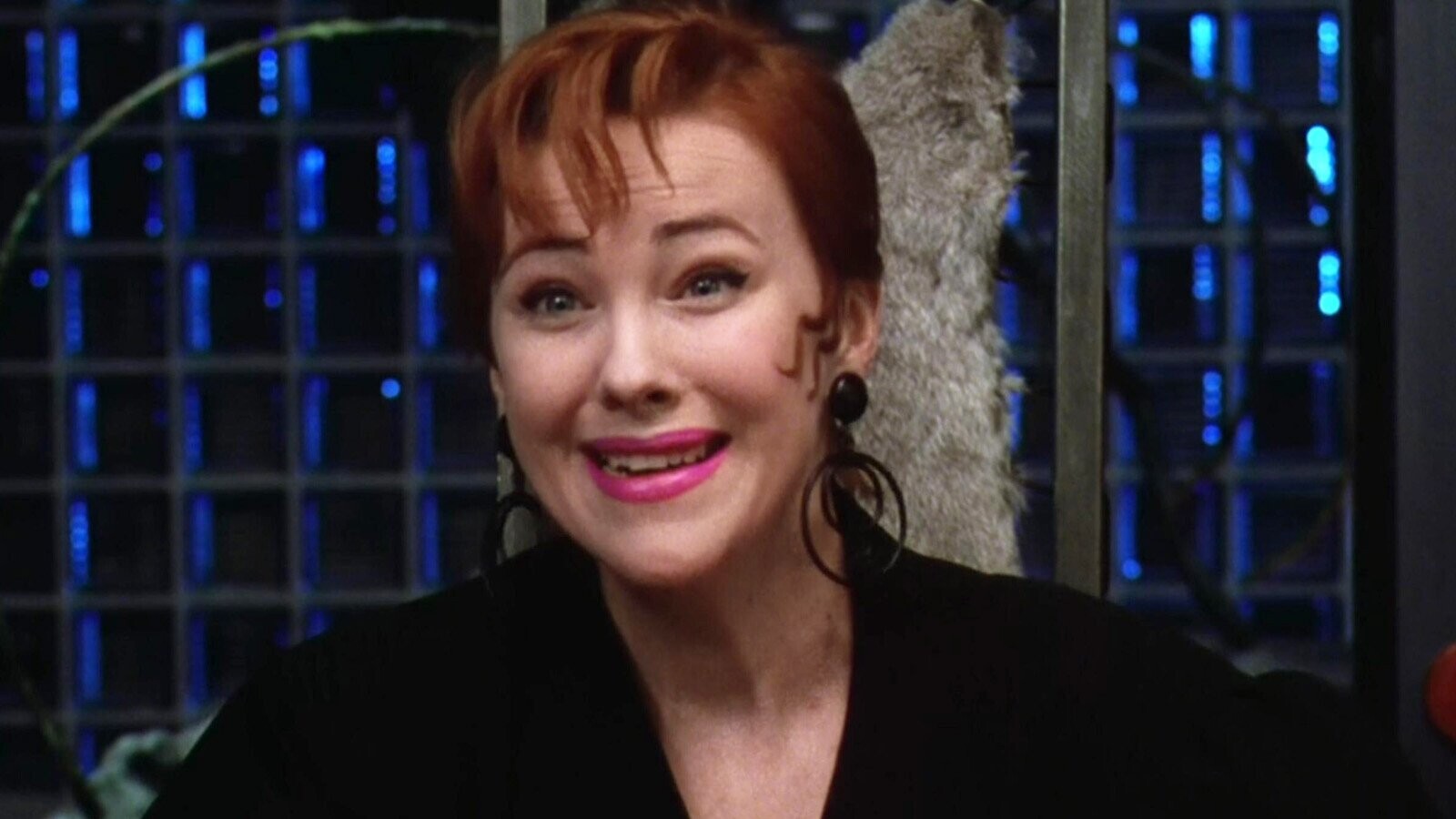
Catherine O’Hara has never needed a megaphone to be unforgettable. Give her a dinner table, a red wig, a sculptural black outfit, or one perfectly timed facial expression, and she can turn a scene into a tiny museum of comic panic. So when she offered a blunt message to anyone already preparing to dislike the Beetlejuice sequel, it felt less like a press-tour sound bite and more like Delia Deetz herself had briefly seized the microphone.
Her message, delivered during the promotional build-up for Beetlejuice Beetlejuice, was simple, spicy, and very on-brand: if people do not like the sequel, then “F*** them.” It was not a corporate-approved slogan. It was not the kind of quote that looks like it was polished in a conference room by six people named Brad. It was Catherine O’Hara being Catherine O’Hara: playful, fearless, mischievous, and just rude enough to make the room laugh.
The line caught fire because it tapped into something bigger than one movie. Legacy sequels arrive carrying emotional baggage heavier than a haunted attic. Fans want nostalgia, but not too much. They want new characters, but not at the expense of old favorites. They want practical effects, but they also want modern pacing. They want the same magic, somehow freshly bottled after more than three decades. No pressure, right?
O’Hara’s response cut through that impossible expectation with a laugh and a shrug. In a world where every reboot is dissected before the opening credits roll, her attitude was refreshingly undead: enjoy the strange ride, or don’t. The sandworm will keep moving either way.
Why Catherine O’Hara’s Beetlejuice Sequel Comment Went Viral
The quote worked because it sounded like a perfect collision between actor, character, and franchise. Beetlejuice has always lived in the space between good manners and total chaos. The original 1988 film did not ask politely for permission to be weird. It put ghosts in bureaucracy, turned a dinner party into a possession musical number, gave Michael Keaton permission to be gloriously disgusting, and let O’Hara’s Delia Deetz transform pretentious art-world anxiety into comedy gold.
So when O’Hara defended the sequel with a wink and an F-bomb, fans understood the assignment. It was not meant as a serious attack on critics. It was a comic flourish, the verbal equivalent of Delia throwing on a dramatic coat and declaring the room insufficiently visionary.
That matters because Beetlejuice Beetlejuice was always going to face skepticism. The gap between the original movie and the sequel was enormous. Many beloved franchises have returned after decades only to discover that nostalgia is a dangerous potion: add one drop and the audience cheers; pour in the whole bottle and everyone wakes up with a headache.
O’Hara’s quote became a headline because it gave fans a fun emotional shortcut. Instead of explaining why the sequel should exist, she projected confidence. She basically said, “We made the strange little ghost circus. Enter if you dare.”
The Return of Delia Deetz: Why O’Hara Still Matters to Beetlejuice
Michael Keaton’s Betelgeuse may be the ghost with the most, but Catherine O’Hara’s Delia Deetz is one of the original film’s secret weapons. Delia is not merely a stepmother, artist, or dramatic homeowner. She is a walking installation piece made of insecurity, ambition, and fabulous bone structure.
In the first Beetlejuice, Delia arrives in Winter River with the energy of someone who believes the countryside should be grateful for her presence. She does not simply decorate a house; she wages aesthetic war on it. Every sculpture, outfit, and exasperated gesture tells us who she is: a woman desperate to be taken seriously, even when reality itself is throwing ghosts at her dinner guests.
The sequel brings Delia back into a different family dynamic. Lydia Deetz, once the goth teen who could see the dead, is now older, more complicated, and dealing with her own daughter, Astrid. That three-generation setup gives Delia room to become something more than a comic accessory. She is part of a family that has aged, grieved, performed, failed, and somehow kept going.
O’Hara’s genius is that she never plays Delia as a flat joke. Delia is ridiculous, yes, but she also believes every ridiculous thing she says. That sincerity is what makes her funny. A lesser performance would mock the character from the outside. O’Hara builds the joke from inside Delia’s nervous system, then lets it escape through her eyes, posture, and voice.
Beetlejuice Beetlejuice and the Risk of the Legacy Sequel
Legacy sequels are Hollywood’s favorite haunted house. Studios keep returning because the address is familiar, the wallpaper has brand recognition, and audiences already know where the creaky floorboards are. But familiar does not automatically mean alive.
Beetlejuice Beetlejuice had to solve a tricky problem: how do you continue a movie that became iconic partly because it felt so unlike everything else? The original was short, strange, and unruly. It did not behave like a franchise launchpad. It behaved like Tim Burton had opened a cabinet labeled “bad ideas” and discovered they were all brilliant.
The sequel’s smartest move was bringing back core creative ingredients: Burton’s visual imagination, Keaton’s manic performance, Winona Ryder’s Lydia, and O’Hara’s Delia. At the same time, it added Jenna Ortega as Astrid, giving younger audiences a new point of entry. That casting was not accidental. Ortega’s screen persona already carries a modern gothic edge, making her feel naturally at home in Burton’s world.
The result was a movie built on generational tension. Lydia has become the kind of adult her younger self might have side-eyed. Astrid is skeptical of her mother’s paranormal life. Delia, meanwhile, continues to orbit the family like a glamorous comet made of art talk and emotional weather. Then, naturally, Beetlejuice returns to make everything worse in the most entertaining way possible.
What O’Hara’s F-Bomb Says About Fan Culture
O’Hara’s quote landed because fan culture can be both passionate and exhausting. Loving a movie deeply is wonderful. Treating a sequel like a personal court case is less charming. Before Beetlejuice Beetlejuice even arrived, many viewers already had their verdict ready. Some feared it would be a cash grab. Others worried the original’s oddball spirit could not survive modern blockbuster machinery.
Those concerns were understandable. The entertainment landscape is crowded with revivals that confuse references for storytelling. A character walks on screen, the audience recognizes the jacket, and the movie expects applause to do the work of emotion. But O’Hara’s comment pushed back against the idea that every beloved property must be handled with museum gloves.
Beetlejuice is not a museum piece. It is a haunted carnival. It is supposed to be loud, strange, slightly rude, and occasionally sticky. A sequel that tries too hard to be respectable would miss the whole point. O’Hara’s attitude reminded fans that this universe works best when it refuses to sit up straight.
Critical Response: Not Everyone Was Ready to Say His Name Again
As expected, reactions to Beetlejuice Beetlejuice were mixed but largely positive. Many critics enjoyed the return to Burton’s handmade, macabre playground. Others felt the plot was too crowded or leaned heavily on nostalgia. That split makes sense. A sequel to Beetlejuice is almost designed to divide people, because the original itself is a strange cocktail of horror, comedy, art-school weirdness, and cartoon logic.
Some viewers came for Michael Keaton’s return and got exactly what they wanted: a disgusting, hilarious, fast-talking demon who looks like he crawled out of a moldy wedding cake. Some came for Winona Ryder and appreciated seeing Lydia as an adult shaped by grief, fame, motherhood, and unresolved supernatural trauma. Others came for Catherine O’Hara and were rewarded with Delia’s wonderfully theatrical evolution.
Even the criticisms point to the challenge of the project. A clean, tidy Beetlejuice sequel would probably feel wrong. The franchise is built on mess. Bureaucratic afterlife offices, sandworms, possession gags, family dysfunction, musical chaos: this is not a world that whispers, “Please admire my elegant structure.” It screams from behind a striped suit and then offers you a questionable business card.
Box Office: The Audience Did Not Seem Too Offended
Whatever skeptics thought, audiences showed up. Beetlejuice Beetlejuice became one of the major movie events of 2024, proving that the original film’s cult status had grown into broad mainstream curiosity. The movie’s strong opening demonstrated the power of cross-generational appeal: parents who remembered the first film, younger fans drawn by Jenna Ortega, Burton loyalists, Halloween-season moviegoers, and people who simply wanted a comedy-horror spectacle that did not look like everything else in theaters.
That success also made O’Hara’s quote age beautifully. Before release, “F*** them” sounded like comic bravado. After the movie performed strongly, it felt like a tiny victory lap in advance. Not because every critic had to love it, but because the film clearly found its audience.
And that is the secret lesson. A movie does not need unanimous approval to matter. In fact, unanimous approval would be suspicious for a Beetlejuice movie. This franchise should make some people grin, some people squirm, and some people wonder whether the production designer had been left unsupervised in the best possible way.
Why the Quote Fits O’Hara’s Comedy Legacy
Catherine O’Hara built a career on making bold choices look effortless. From sketch comedy to Christopher Guest mockumentaries, from Home Alone to Schitt’s Creek, she has specialized in characters who are exaggerated without becoming empty. Moira Rose, Delia Deetz, and so many of her other creations are funny because they are precise. The voice, the posture, the vocabulary, the emotional temperature: everything is tuned like a strange little instrument.
Her Beetlejuice sequel quote fits that legacy because it is not blandly promotional. It has rhythm. It has bite. It has the casual confidence of someone who understands that comedy is not about pleasing everyone. Sometimes the joke works because it refuses to apologize for existing.
That is also why Delia remains such a beloved character. She is not designed to be universally likable. She is self-involved, dramatic, vain, and often hilariously wrong. But she is alive in every frame. O’Hara makes Delia’s flaws sparkle, which is far more interesting than sanding them down.
Experience Section: Watching the Beetlejuice Sequel Through O’Hara’s Attitude
Watching Beetlejuice Beetlejuice after hearing Catherine O’Hara’s famous comment changes the experience in a funny way. You go in expecting a movie with its shoulders back. The film does not feel like it is begging for approval. It feels like it knows some viewers will complain and has already decorated a waiting room for them in the afterlife.
For longtime fans, the biggest emotional experience is not simply seeing Beetlejuice again. It is seeing how time has rearranged the living. Lydia is no longer the mysterious teenage outsider. Delia is no longer just the invading art-world stepmother. The house is not just a spooky location; it is a container for memory. That is what makes the sequel more interesting than a simple nostalgia parade. The characters have been changed by the years, even inside a movie full of cartoon death jokes.
O’Hara’s Delia adds a particular flavor to that experience. Every time she appears, the movie gets sharper around the edges. She brings adult absurdity into a story that could otherwise lean too heavily on supernatural spectacle. Her presence reminds viewers that Beetlejuice was never only about ghosts. It was also about taste, class performance, family friction, grief, and the ridiculous ways people try to control what cannot be controlled.
For newer viewers, especially those drawn in by Jenna Ortega, the sequel offers a different entry point. Astrid’s skepticism gives the audience permission not to worship the old movie blindly. She is not standing around saying, “Wow, the 1980s were perfect.” She has her own frustrations, her own grief, and her own reason to doubt the adults around her. That helps the sequel avoid becoming a wax museum of familiar faces.
The best way to enjoy the film is to accept its carnival logic. Do not walk in demanding a perfectly organized plot diagram. Walk in expecting a haunted family reunion where every hallway may contain a joke, a corpse, a monster, or Catherine O’Hara wearing something fabulous enough to deserve its own agent. The movie is busy, yes. It is messy, yes. But it is also alive in the way Burton’s best comic nightmares are alive: handmade, theatrical, gloomy, goofy, and strangely affectionate.
That is why O’Hara’s quote became more than a headline. It became a viewing strategy. Not everyone has to like the sequel. Not everyone has to agree about whether it captures the original’s magic. But the movie is easier to appreciate when you stop asking it to behave. Beetlejuice has never behaved. That is the whole charm. It barges in, stains the carpet, sings at the worst possible moment, and somehow leaves the room more memorable than it found it.
Conclusion: A Perfectly Rude Toast to a Perfectly Weird Sequel
Catherine O’Hara’s “F*** them” remark worked because it carried the spirit of Beetlejuice in miniature: funny, defiant, theatrical, and impossible to mistake for anything else. It reminded audiences that not every sequel needs to arrive trembling before the altar of fan approval. Some stories are meant to return with a crooked grin, a puff of grave dust, and a little bad behavior.
Beetlejuice Beetlejuice may not satisfy every viewer, and that is fine. The original did not become beloved by being normal. It became beloved because it was bizarre with confidence. O’Hara’s line captured that same confidence. Like Delia Deetz, it made an entrance, rearranged the furniture, and dared everyone else to keep up.












