
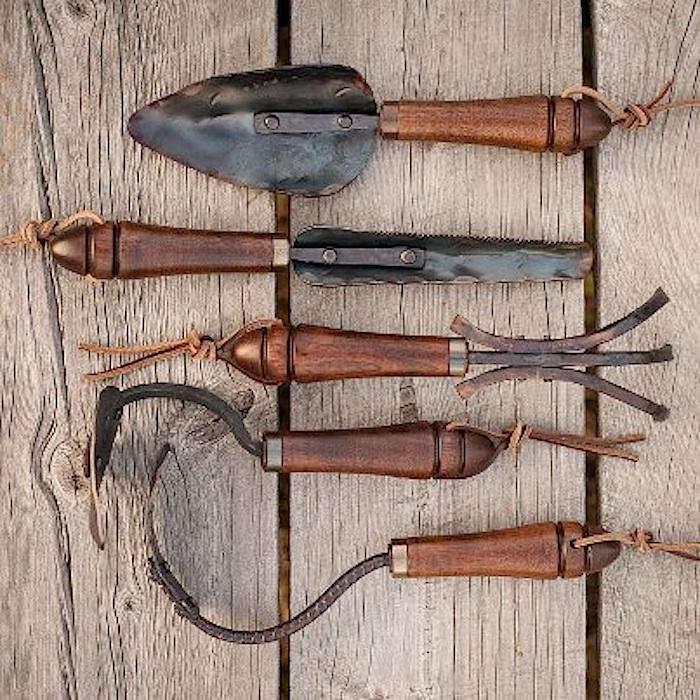
Some garden tools look as if they were designed during a five-minute meeting between a spreadsheet and a plastic mold. The Fisher Blacksmithing Set of Hand Forged Garden Tools is not that kind of tool set. This is the sort of collection that makes you pause before digging, not because you are lazy, but because the tools are handsome enough to make your compost pile feel underdressed.
Handcrafted in Bozeman, Montana by blacksmith Tuli Fisher, this set belongs to the rare category of gardening equipment that blends utility, craft, durability, and old-school charm. The tools are made for real work: planting, transplanting, cultivating, loosening soil, edging, and weeding. Yet they also have the warm, heirloom look of objects made by human hands rather than stamped out by the thousands.
For gardeners who believe tools should be more than disposable seasonal accessories, Fisher Blacksmithing offers something refreshingly tangible: forged steel, American black walnut handles, riveted joinery, and designs inspired by traditional agricultural implements. In other words, these are not “cute little garden things.” They are serious hand tools that just happen to look fantastic leaning against a potting bench.
What Is the Fisher Blacksmithing Set of Hand Forged Garden Tools?
The Fisher Blacksmithing garden tool set is a handcrafted collection designed for everyday planting and garden maintenance. The commonly featured five-piece set includes a large planting trowel, narrow perennial trowel, square hand hoe, pointed blade hand hoe, and three-tined garden rake. Together, these tools cover many of the most common hand-scale garden jobs, from opening a planting hole to teasing out weed roots that apparently signed a 30-year lease under your tomatoes.
The set is made from hand-forged metal with hand-turned American black walnut handles. Instead of welded joints, the tools use solid rivets, a construction choice that supports strength and gives each piece an unmistakable handmade character. The result is a garden tool set that feels closer to traditional craft than modern mass-market equipment.
Gardeners often call tools “essential,” but the word gets thrown around so freely that even a novelty gnome with a solar lantern might start feeling important. In this case, the label fits. A trowel, hand hoe, and hand rake are foundational tools for small-bed gardening, container planting, flower borders, herb gardens, and raised beds. Fisher Blacksmithing simply gives these basics a more permanent, artisanal form.
Meet the Maker: Tuli Fisher and the Bozeman Blacksmithing Tradition
Fisher Blacksmithing is led by Tuli Fisher, a full-time blacksmith based in Bozeman, Montana. His work reflects traditional forging methods: steel is heated in a forge, shaped over an anvil with hammers, punched, patterned, riveted, quenched, finished, and fitted with turned wooden handles. That process gives each tool slight individual differences, which is exactly the point. A hand-forged garden tool should not look as if it rolled off a conveyor belt while thinking about quarterly efficiency targets.
The appeal of these tools comes from both function and story. A gardener uses them to plant basil, divide perennials, loosen compacted soil, or remove weeds. But there is also satisfaction in knowing the tool was shaped by fire, hammer, and skill. It brings the user closer to the long history of human-made implements: simple forms, durable materials, and a design language that has survived because it works.
What Comes in the Set?
1. Large Planting Trowel
The large planting trowel is the workhorse of the set. It is ideal for digging planting holes, moving soil, setting annuals, planting herbs, and working in containers. A good trowel should feel sturdy enough to enter firm soil without bending and balanced enough that your wrist does not file a complaint after ten minutes.
Fisher Blacksmithing’s version has the look of a traditional forged tool, with a practical blade shape and comfortable wood handle. It is especially useful in raised beds, vegetable gardens, and flower borders where a full-size shovel is too dramatic. Not every marigold needs excavation equipment.
2. Narrow Perennial Trowel
The narrow perennial trowel is built for more precise digging. Its slimmer profile helps when planting bulbs, working between established plants, transplanting seedlings, or dividing tight clumps. In a crowded perennial bed, where every inch seems occupied by roots, stems, labels, mulch, and one mysterious plant you swear you did not buy, a narrow trowel can be a lifesaver.
This tool is particularly helpful for gardeners who grow daylilies, hostas, irises, herbs, small shrubs, and spring bulbs. It gives you more control than a broad trowel when you want to disturb less soil around neighboring plants.
3. Square Hand Hoe
The square hand hoe is made for weeding, edging, scraping, and shaping soil. Its squared blade makes it useful along raised-bed edges, between rows, and around hardscape borders. When small weeds appear, this tool can slice or loosen them before they mature into the botanical equivalent of a villain origin story.
A hand hoe is especially useful in close-up gardening. Long-handled hoes are excellent for larger rows, but in tight ornamental beds or vegetable boxes, a shorter hand tool gives more precision. The square hand hoe belongs in the category of tools that may look simple but quickly become favorites.
4. Pointed Blade Hand Hoe
The pointed blade hand hoe offers a different kind of control. Its shape helps break soil crust, draw narrow furrows, loosen weeds, and work around plant crowns. The point can get into tighter spaces than a square blade, which makes it valuable in mixed beds and around young plants.
This is the tool for gardeners who like accuracy. It can help open a small line for seeds, chop into compacted patches, and flick out weeds before they become emotionally attached to the garden. Used carefully, it gives you a lot of power in a compact form.
5. Three-Tined Garden Rake
The three-tined garden rake, sometimes thought of as a hand cultivator, is excellent for loosening soil, pulling out shallow roots, clearing debris, and working compost into the top layer of a bed. The tines can catch runners, tease out grass roots, and open compacted surface soil without turning the entire bed upside down.
In small gardens, this type of rake is wonderfully versatile. Use it around lettuces, herbs, strawberries, flowers, and container plantings. It is also handy for refreshing mulch or preparing small patches for seed. Think of it as the garden’s tiny but determined claw.
Why Hand-Forged Garden Tools Feel Different
The main difference between hand-forged garden tools and ordinary stamped tools is not just appearance. It is the way material, weight, balance, and construction come together. Forged steel has a dense, purposeful feel in the hand. The tool does not need to be bulky to feel capable. Instead, it carries a reassuring heft that helps it bite into soil and stand up to repeated use.
The Fisher Blacksmithing Set of Hand Forged Garden Tools also has the advantage of wooden handles. American black walnut is known for its attractive grain and comfortable feel. While plastic handles can be practical, wood offers warmth, grip, and a tactile quality that many gardeners prefer. When maintained properly, a wood-handled tool can age beautifully rather than merely look old.
There is also an emotional difference. A handcrafted tool invites care. You are more likely to wipe it down, hang it up, oil the handle, and keep it out of the rain. That matters, because the best garden tools are not only bought; they are maintained.
Best Uses for the Fisher Blacksmithing Garden Tool Set
Raised Bed Gardening
Raised beds are one of the best environments for this set. The tools are compact enough for close work and strong enough to handle planting, cultivating, and weeding in loose or moderately firm soil. The trowels help with transplants, the hoes keep edges clean, and the three-tined rake refreshes the soil surface between crops.
Flower Borders and Perennial Beds
In flower beds, precision matters. You may need to divide perennials, plant bulbs, tuck in annuals, or remove weeds without disturbing nearby roots. The narrow trowel and pointed hoe shine here, especially when working around established plants.
Container Gardening
Container gardeners often underestimate the value of good hand tools. A forged trowel or hand rake can make repotting, refreshing potting mix, removing dead roots, and planting herbs much easier. If your patio garden is small but beloved, using better tools makes every task feel more intentional.
Kitchen Gardens and Herb Beds
For herbs, greens, tomatoes, peppers, and compact vegetable beds, this set covers daily maintenance beautifully. You can weed around basil, loosen soil near carrots, plant parsley starts, or cultivate between lettuce rows without bringing out a full-size tool that behaves like a bulldozer at a tea party.
Durability, Care, and Maintenance
A hand-forged garden tool is durable, but it is not magical. Steel can rust, wood can dry, and soil can hold moisture against the tool surface. The good news is that proper care is simple. After use, remove dirt with a brush or cloth. If the tool is muddy, wash it with mild soapy water and dry it thoroughly.
For seasonal maintenance, wipe the metal and handle with a drying oil such as linseed oil or tung oil. This helps protect both the steel and the wood from moisture. If rust appears, remove it with steel wool or a wire brush, then re-oil the surface. Avoid storing tools outside, even if they look rugged enough to survive a frontier winter. Your garden shed exists for a reason.
Garden hygiene matters too. Tools can spread plant diseases when used around infected material. When needed, clean visible debris first, then disinfect with an appropriate solution and allow tools to dry completely. This is especially important after working with diseased plants, pruning infected material, or moving between different garden areas.
Who Should Buy This Tool Set?
The Fisher Blacksmithing Set of Hand Forged Garden Tools is best for gardeners who value craftsmanship, durability, and the daily pleasure of using beautiful equipment. It is an excellent choice for serious home gardeners, raised-bed growers, flower lovers, homesteaders, and anyone who enjoys American-made artisan tools.
It also makes a memorable gift. Many garden gifts are charming but temporary: seed packets, gloves, plant markers, decorative pots. A hand-forged tool set has more permanence. It suits weddings, housewarmings, Mother’s Day, Father’s Day, retirements, birthdays, and “you have somehow kept that fiddle-leaf fig alive” celebrations.
This set may not be the best match for someone who routinely loses tools under mulch or leaves them outdoors for months. It is also more of an investment than a basic hardware-store kit. But for gardeners who enjoy caring for their tools as much as they enjoy caring for their plants, the value is clear.
How It Compares With Ordinary Garden Tool Sets
Most inexpensive garden tool sets focus on convenience and price. They often include lightweight trowels, plastic handles, small cultivators, and maybe a storage bag that looks useful until it fills with soil crumbs and regret. These sets can work fine for casual use, especially for beginners.
Fisher Blacksmithing takes a different approach. The set emphasizes fewer, better tools. Instead of chasing quantity, it focuses on proven forms, strong materials, and long-term usability. The tools are not trying to be flashy gadgets. They are trying to be the kind of equipment you reach for again and again because they feel right.
That is the real luxury here. Not gold plating. Not unnecessary features. Just tools that make basic gardening tasks more satisfying.
Buying Tips Before Choosing Hand-Forged Garden Tools
- Think about your garden style: Raised beds, containers, and flower borders benefit most from compact hand tools.
- Check tool weight: A little heft helps in soil, but the tool should still feel comfortable for your hand and wrist.
- Consider maintenance: Carbon steel and wood reward simple care, including cleaning, drying, and oiling.
- Buy for use, not display only: These tools are attractive enough to hang on a wall, but they are made to dig.
- Store them properly: A dry shed, hook, or tool rack will keep them in better condition than a rainy corner of the yard.
Experience Notes: Gardening With a Fisher Blacksmithing Set
Using a Fisher Blacksmithing Set of Hand Forged Garden Tools changes the rhythm of ordinary garden work. The first thing you notice is the weight. Not heavy in a clumsy way, but substantial, like the tool has an opinion and that opinion is “yes, we can absolutely dig there.” When you press the trowel into soil, it does not feel flimsy or apologetic. It feels ready.
In a raised bed, the large planting trowel becomes the tool you reach for without thinking. It handles transplant holes for herbs, tomatoes, peppers, and flowers with ease. The narrow perennial trowel feels more precise. It is the one you grab when working between established roots or planting bulbs in a crowded border. There is something satisfying about making a clean, narrow opening in the soil instead of disturbing half the bed like a raccoon with a landscaping license.
The hand hoes bring a different pleasure. The square hoe is excellent for quick surface weeding. It lets you scrape along bed edges and remove young weeds before they turn into woody little garden goblins. The pointed hoe is more surgical. It slips between plants, opens tight spots, and breaks crusted soil around stems where a wider tool would be too rough.
The three-tined rake may become the surprise favorite. It is small, direct, and incredibly useful for loosening the top layer of soil. After watering or rain, garden soil can form a crust. A few passes with the rake restores texture and airflow. It also catches little roots and runners hiding under the surface. Pulling them out feels oddly triumphant, like solving a tiny underground mystery.
The wooden handles add to the experience. They feel warm compared with metal or plastic, and they invite a relaxed grip. Over time, a well-used wooden handle develops character. It may darken slightly, smooth at the contact points, and begin to feel personal. That is one of the quiet joys of owning tools made from natural materials: they do not remain frozen in showroom perfection. They become yours.
Maintenance becomes part of the ritual. After a morning of planting, you brush away the soil, wipe the steel dry, and hang the tools where air can reach them. A light coat of oil at the end of the season feels less like a chore and more like saying, “Good work, friend.” That may sound sentimental, but gardeners understand. We routinely talk to seedlings and apologize to overwatered basil. Bonding with a trowel is hardly the weirdest thing happening in the garden.
The biggest experience difference is mindfulness. Cheap tools can make gardening feel disposable. Hand-forged tools make it feel deliberate. You slow down a little. You pay attention to the soil texture, the angle of the blade, the roots beneath the surface, and the way the tool responds. That does not mean every gardening session becomes poetry. Sometimes you are still sweaty, muddy, and losing a battle with crabgrass. But good tools make even those moments feel more worthwhile.
For anyone who gardens often, the Fisher Blacksmithing set offers a rare combination: practical enough for daily use, beautiful enough to admire, and durable enough to become part of a long gardening story. It is not just about owning better tools. It is about making the repeated tasks of gardening feel a little more meaningful.
Conclusion
The Fisher Blacksmithing Set of Hand Forged Garden Tools is more than a polished gift for gardeners. It is a functional, heirloom-style collection made for people who plant, weed, cultivate, and care about the tools in their hands. With forged steel construction, American black walnut handles, riveted joinery, and practical shapes for real garden tasks, the set offers a compelling alternative to ordinary mass-produced garden kits.
If your garden is a place where you spend time, experiment, grow food, collect flowers, or recover from the general chaos of modern life, better tools can make a difference. These tools will not weed the garden for you. Sadly, no tool has yet agreed to do that without supervision. But they can make the work smoother, more satisfying, and more connected to the tradition of making useful things well.












