
Editor’s Note: This article is a commentary-style analysis based on public reporting, film reviews, interviews, and the public record surrounding Woody Allen’s recent career. It discusses allegations and controversy in a careful, non-graphic way and does not make a legal judgment.
Few modern filmmakers arrive with as much baggage as Woody Allen. For some viewers, his name still signals neurotic comedy, jazz, Manhattan apartments, and characters who can turn one awkward dinner into a philosophy seminar. For others, it immediately raises the long-running allegations made by Dylan Farrow, the family rupture with Mia Farrow, and the larger Hollywood debate about who gets to keep making art after serious accusations. Into that crowded cultural courtroom walks Coup de Chance, Allen’s French-language thriller about luck, marriage, infidelity, and the possibility that people can do terrible things and still keep their dinner reservations.
So, is Woody Allen trolling his accusers with his new movie? The short answer is: not in the internet-meme sense. There is no obvious wink to the camera, no character named “Cancel Culture,” and no speech in which a filmmaker explains why everyone should leave him alone. But the longer answer is more interesting. Coup de Chance is so loaded with Allen’s familiar themesguilt, denial, privilege, chance, and moral escapethat it can feel less like a neutral thriller and more like a film arguing with the headlines around its maker.
Why the Question Follows Woody Allen Everywhere
Woody Allen has never been a filmmaker whose work sits quietly on the shelf. His movies have always invited interpretation because they are full of talk, anxiety, rationalization, and characters who can explain themselves into a corner and then redecorate the corner. But after the renewed public scrutiny of allegations against him during the #MeToo era, Allen’s movies are no longer discussed only as movies. They are discussed as events, as statements, and sometimes as tests of an audience’s personal boundaries.
The allegations against Allen date back decades and remain fiercely contested in public discourse. Dylan Farrow has consistently maintained her account, while Allen has repeatedly denied wrongdoing and was not criminally charged. That unresolved divide has shaped the way audiences, studios, actors, critics, and festivals respond to his work. Some former collaborators have expressed regret or donated salaries connected to Allen films. Others have defended him or argued that the art should be judged separately from the artist. Hollywood, as usual, has turned an ethical dilemma into a messy group project with no clear deadline.
Coup de Chance enters this landscape as Allen’s 50th feature film and his first movie made in French. It also arrives after years in which his American distribution grew more complicated. The fact that the movie received a North American release at all made it newsworthy. The film’s debut at the Venice Film Festival brought both applause and protest, which is basically the modern Woody Allen reception in miniature: standing ovation on one side, public objection on the other, and everyone else wondering whether to clap, leave, or write a think piece.
What Is Coup de Chance About?
Coup de Chance, whose title translates roughly to “stroke of luck,” centers on Fanny, a woman in an elegant Parisian marriage to Jean, a wealthy and controlling businessman. Their life looks polished from the outside: beautiful apartment, expensive clothes, curated social circles, and the kind of tasteful interiors that make ordinary kitchens feel personally attacked. But Fanny’s emotional world shifts when she reconnects with Alain, an old school acquaintance who is romantic, literary, and conveniently available for long lunches.
What begins as a story of temptation becomes a thriller about suspicion, control, and consequences. The film fits neatly into Allen’s long fascination with whether luck or justice determines who pays for wrongdoing. That theme has appeared in earlier films such as Crimes and Misdemeanors and Match Point, both of which explore characters who commit grave moral violations and then wait to see whether the universe has a conscience.
In Coup de Chance, chance is not just a plot device. It is practically a character. A random meeting changes Fanny’s life. A decision made in private sends the story into darker territory. A small accident or coincidence can expose what wealth and planning try to hide. Allen has spent decades returning to the idea that people like to believe in morality, but life often behaves like a crooked casino dealer. That does not mean the movie is automatically autobiographical. But it does mean viewers aware of Allen’s public history may find it difficult to watch the film as a sealed fictional object.
Why Some Viewers Think the Movie Feels Like a Provocation
1. The Theme of Getting Away With It Is Hard to Ignore
The biggest reason the “trolling” question exists is the movie’s obsession with moral escape. Allen’s critics have often argued that his later films return again and again to stories where guilt is softened, punishment is uncertain, and privileged men try to outwit consequences. Coup de Chance does not simply include that pattern; it dresses it in Parisian tailoring and sends it out for lunch.
For an ordinary thriller, that would be fair game. Crime stories have always loved clever villains, hidden motives, and the unsettling possibility that justice may arrive late, badly, or not at all. But with Allen, the surrounding context changes the temperature of the room. When a filmmaker publicly associated with allegations he denies releases another movie about luck, guilt, and whether powerful people can arrange reality to their advantage, some viewers understandably read the film as more than entertainment.
Is that trolling? Maybe not intentionally. But it is certainly provocative. The film does not need to mention the real-world controversy to echo it. Sometimes the echo is enough.
2. The Movie Refuses to Apologize for Being a Woody Allen Movie
Another reason the film can feel defiant is that Coup de Chance does not attempt a reinvention designed to win back skeptical audiences. Allen does not suddenly make a solemn courtroom drama about accountability. He does not step aside stylistically. He gives viewers a familiar Allen structure: a sophisticated setting, romantic dissatisfaction, philosophical chatter, moral irony, jazz-inflected energy, and characters who treat bad decisions as if they were minor scheduling conflicts.
That artistic consistency can be read two ways. Fans might see it as proof of a veteran filmmaker still doing what he does best. Critics might see it as stubborn refusal to engage with the cultural moment. In other words, the movie can look either like craft or like a shrug. And when a public figure is accused of shrugging at serious criticism, a shrug can start to look like a smirk.
3. The French Setting Adds Another Layer
The fact that Coup de Chance is set in France and performed in French also matters. Allen has long admired European cinema, and European institutions have often been more receptive to him than many American platforms in recent years. The Paris setting gives the movie elegance, but it also carries symbolic weight. It suggests an artist who has found a stage elsewhere after becoming more controversial at home.
That does not mean France is being used as a hiding place. It does mean the film’s existence reflects a changed career map. The old Allen could reliably release films through major American channels. The later Allen often finds a warmer welcome in Europe. For viewers who believe he has evaded sufficient professional consequences, that international mobility may feel like one more version of the movie’s central idea: luck favors those who already have options.
Why It May Not Be Trolling at All
There is also a strong argument that calling Coup de Chance a troll move gives Allen too much credit for strategy and not enough credit for repetition. He has explored these same ideas for decades. Murder, infidelity, chance, guilt, and cosmic unfairness are not new obsessions suddenly invented to needle his critics. They are part of his established filmography.
In that sense, Coup de Chance may simply be Allen continuing to make the kind of movie he has always made. Artists often circle the same themes because those themes are their creative furniture. Alfred Hitchcock returned to mistaken identity and obsession. Martin Scorsese returns to guilt, power, violence, and faith. Woody Allen returns to desire, anxiety, moral compromise, and whether the universe bothers balancing its books.
The difference is that Allen’s real-world controversy has changed the audience’s lens. A theme that once seemed philosophical can now seem personal. A character’s rationalization can sound like a public defense. A plot about consequences can feel like a comment on accountability. The movie may not be trolling, but it is impossible to separate from the conversation that surrounds it.
The Critical Response: A Movie Caught Between Craft and Controversy
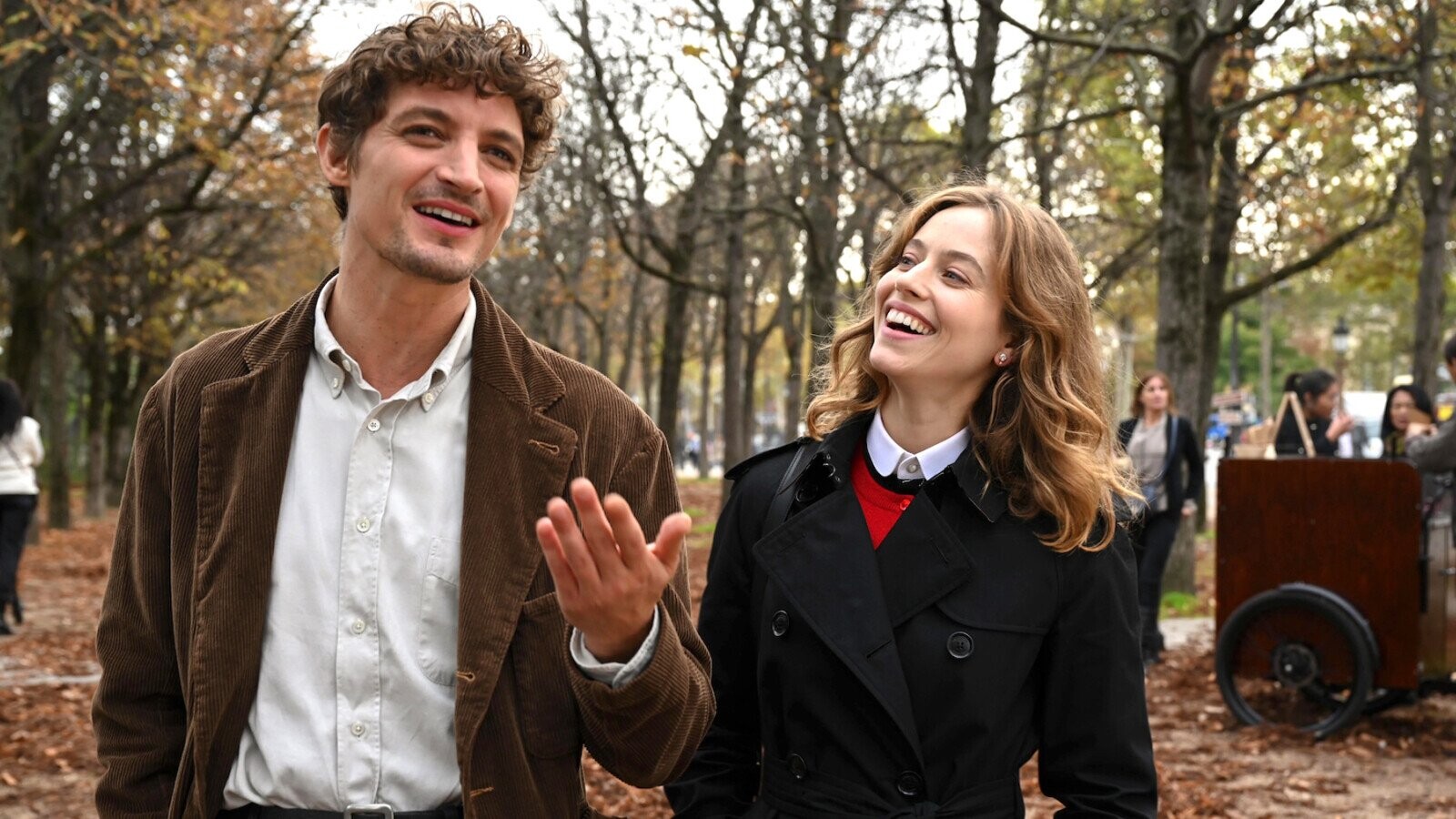
Critics were divided but often acknowledged that Coup de Chance is more energetic than some of Allen’s recent work. Several reviews described it as a sleek, watchable thriller, even if not a major artistic breakthrough. Others argued that the film’s polished surfaces cannot hide its familiar patterns. The performances, especially from Lou de Laâge, Melvil Poupaud, Niels Schneider, and Valérie Lemercier, give the movie style and momentum. Vittorio Storaro’s cinematography adds a warm, golden look that makes Paris appear almost suspiciously beautiful, as if the city itself has an excellent lighting department.
Yet the movie’s reception was never going to be only about whether the plot works. The Venice Film Festival response showed the split clearly. Applause inside the screening room existed alongside protest outside it. That split is now part of the Woody Allen brand, whether he wants it or not. Every new film becomes both a film review and a referendum.
For SEO readers searching “Is Woody Allen trolling his accusers?” the answer depends on what they mean by trolling. If trolling means deliberately mocking critics with obvious bait, Coup de Chance does not provide a smoking gun. If trolling means making a movie so thematically aligned with one’s public controversy that it seems designed to irritate detractors, the case becomes stronger. The film functions like a Rorschach test: supporters see an elegant late-career thriller; critics see a filmmaker once again fascinated by people who escape consequences.
Art, Accountability, and the Problem of Watching
The larger issue is not only Woody Allen. It is how audiences handle art made by controversial figures. The streaming era has made that question more personal. A ticket used to be a public act: you went to a theater, paid at a box office, and sat among strangers. Now the decision may happen quietly on a couch. Viewers can watch, refuse to watch, hate-watch, separate art from artist, or decide that separation is impossible. Everyone becomes their own ethics committee, which sounds important until you realize the committee also wants popcorn.
There is no universal answer. Some people believe that engaging with Allen’s work minimizes the pain of accusers. Others argue that films can be examined critically without endorsing the filmmaker. Some viewers may watch Coup de Chance precisely because it reveals something about Allen’s worldview. Others may skip it because they do not want their attention converted into cultural oxygen for him.
What matters is being honest about the choice. Watching Coup de Chance in 2026 is not the same as discovering Annie Hall in a film class decades ago. The context is unavoidable. The movie arrives inside a public argument about power, belief, memory, celebrity, and consequences. Pretending otherwise is not neutrality; it is selective hearing.
So, Is Woody Allen Trolling His Accusers?
The most reasonable answer is: indirectly, perhaps; explicitly, no. Coup de Chance does not appear to be a direct message to Dylan Farrow, Mia Farrow, protesters, journalists, or former collaborators. But it is a movie made by a man who knows exactly how his work is received now. Allen is not an unknown filmmaker stumbling into accidental controversy. He is a veteran public figure whose films are interpreted through decades of biography and dispute.
That makes the film’s themes feel charged. A story about a wealthy man, control, moral risk, and luck will inevitably be read against Allen’s public life. Whether that reading is fair depends on the viewer. But it is not irrational. Art does not float above context like a balloon at a parade. It drags strings behind it.
In the end, Coup de Chance may be less a troll than a refusal. It refuses to change subject. It refuses to ask permission. It refuses to soften its maker’s old obsessions. That refusal can look like artistic consistency or moral arrogance. It can look like a late-career craftsman returning to familiar territory or a controversial figure daring critics to keep watching. The uncomfortable truth is that it may be all of those things at once.
Experiences Related to the Topic: What It Feels Like to Watch Coup de Chance Now
The experience of watching Coup de Chance is unusually layered because the viewer is not only following a thriller. The viewer is also managing a private debate. One part of the brain may notice the elegant framing, the crisp pacing, the old-fashioned pleasure of a plot that actually moves. Another part may keep whispering, “Yes, but who made this?” That split-screen feeling is now central to engaging with Woody Allen’s work.
For longtime film fans, the experience may feel oddly nostalgic. The movie contains many of the ingredients associated with Allen’s career: witty conversations, romantic dissatisfaction, moral gamesmanship, and a belief that chance can overturn the most careful plans. There is pleasure in seeing a director handle a compact story with professional skill. The film does not sprawl. It does not behave like a franchise audition. It is an adult thriller about choices, consequences, and people who have too much money and not enough self-awareness. In today’s movie landscape, that alone can feel almost exotic.
But that pleasure is complicated. Viewers who are sensitive to the controversy may find themselves reading every scene as subtext. A line about luck may sound like a statement about privilege. A character’s calm self-justification may feel too familiar. A plot turn involving whether wrongdoing will be exposed may seem impossible to separate from public debates about Allen himself. This does not mean the viewer is watching incorrectly. It means the movie has entered a cultural space where the artist’s reputation has become part of the text.
For critics, the experience can be even trickier. Reviewing the movie only as craft risks ignoring the reason many readers care about it. Reviewing it only as controversy risks flattening the film into a headline. The most honest approach is to hold both ideas at once. Coup de Chance can be a functional, stylish thriller and a work that raises uncomfortable questions because of who made it. Those two realities do not cancel each other out. They sit together awkwardly, like two dinner guests who absolutely should not have been seated side by side.
For younger viewers, especially those who did not grow up with Allen as a dominant American auteur, the experience may be less nostalgic and more anthropological. They may wonder why so much cultural oxygen still surrounds him. They may see Coup de Chance not as a comeback or scandal, but as a case study in how artistic reputations survive, shrink, mutate, or become permanently disputed. That perspective is valuable because it refuses to treat fame as a permanent moral discount card.
The most useful experience, then, may be not simply watching the movie but noticing your own reaction to it. Do you feel entertained? Irritated? Suspicious? Bored? Persuaded by the craft? Distracted by the controversy? All of those reactions reveal something about the modern relationship between art and accountability. Coup de Chance may not answer the question of whether Woody Allen is trolling his accusers. But it does force viewers to ask a harder question: when the artist and the art are both in the room, which one are we really watching?
Conclusion
Coup de Chance is not a simple act of cinematic trolling, but it is far from innocent in how it lands. The movie revives Woody Allen’s lifelong themes of chance, guilt, privilege, romantic deception, and moral escape at a time when his own public reputation makes those themes impossible to view neutrally. To some, that is the stubborn persistence of an artist who has always asked whether justice exists. To others, it feels like an unnerving provocation from a filmmaker who knows the controversy around him and keeps circling stories about people who may or may not face consequences.
The best answer may be that Allen is not trolling his accusers so much as trolling the audience’s desire for clarity. Coup de Chance gives viewers a polished thriller and a cultural argument in the same package. Whether you see it as art, defiance, denial, or late-career repetition depends on what you bring into the theateror onto the couch. Either way, the movie proves one thing: with Woody Allen, the conversation never ends when the credits roll.












