
Editorial note: This article is written for web publication and is based on verified archaeological reporting, museum resources, and scholarly context about cuneiform, Alalah, and Bronze Age economic records.
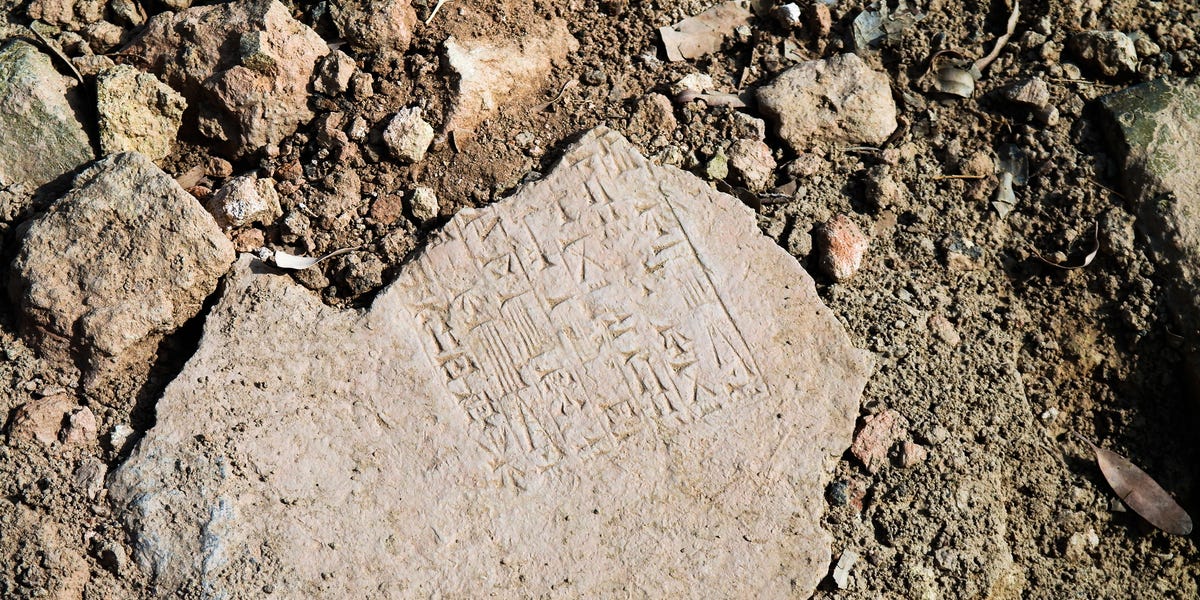
Some people save receipts in a shoebox. Others keep them in an email folder they swear they will organize someday. But around 3,500 years ago, someone in the ancient city of Alalah went with a more durable option: clay. A small tablet inscribed in Akkadian cuneiform, discovered at Aççana Mound in modern-day southern Turkey, appears to record a large furniture transaction from the Late Bronze Age. In modern terms, it reads less like a royal epic and more like a very serious shopping list.
That is exactly what makes it fascinating. The ancient world often reaches us through kings, battles, temples, and dramatic ruins. Then a palm-sized clay tablet shows up and whispers, “Actually, people also needed chairs.” This Bronze Age shopping list is a reminder that civilization is not built only with swords and crowns. It is also built with tables, stools, carpenters, receipts, delivery notes, and someone making sure the right buyer got the right furniture.
What Was Found?
The artifact was found at Aççana Höyük, also known as Tell Atchana, the site of ancient Alalah in Turkey’s Hatay province. Alalah was an important urban center in the Amuq Valley, near present-day Antakya, and served as the capital of the kingdom of Mukish during part of the second millennium BCE. The area sat near major routes connecting Anatolia, Syria, Mesopotamia, and the Mediterranean world, making it a natural place for trade, diplomacy, and administration.
The tablet itself is tiny but mighty. Reports describe it as measuring about 4.2 by 3.5 centimeters, around 1.6 centimeters thick, and weighing roughly 28 grams. That is smaller than a credit card and far less likely to survive a washing machine. Yet unlike our paper receipts, which fade into ghostly gray strips after a few months, this clay record made it through roughly three and a half millennia.
Why Scholars Call It a Bronze Age Shopping List
The phrase “shopping list” is catchy, but the tablet is better understood as an administrative record or receipt. Initial readings of the Akkadian cuneiform indicate that it documents a significant amount of furniture, including wooden tables, chairs, and stools. Researchers are still studying the inscription, including the names of people involved in the transaction and the precise details of the exchange.
In other words, this was not a casual “grab milk, eggs, and a chair” note scratched before a market trip. It was probably part of a formal system of accounting. Someone wanted a record of what was ordered, sold, delivered, or received. That tells us the transaction mattered, and it suggests a world where goods, labor, ownership, and responsibility were carefully tracked.
Akkadian Cuneiform: The Original Office Software
The tablet was written in Akkadian cuneiform, one of the major writing traditions of the ancient Near East. Cuneiform was made by pressing a reed stylus into soft clay to create wedge-shaped signs. Once dried or fired, clay tablets could become extremely durable. That durability is why today’s archaeologists can still read records of grain, loans, land sales, letters, legal cases, beer rations, and now, apparently, a furniture order that outlived every sofa in history.
Modern readers often think ancient writing began with poetry, sacred stories, or royal bragging. Those came later in glorious abundance, of course. But many early written records were practical. They counted things. They recorded who owed what, who received what, and who had better not pretend the shipment never arrived. In that sense, the Bronze Age clay tablet belongs to a long line of paperwork that begins in Mesopotamian accounting and ends, perhaps less majestically, in your inbox with a subject line reading “Your order has shipped.”
What the Tablet Reveals About Alalah
Alalah was not some sleepy village with a few mudbrick houses and a goat named Steve. It was a complex urban center with palaces, fortifications, workshops, and archives. Earlier excavations by British archaeologist Sir Leonard Woolley in the 1930s and 1940s revealed major Bronze Age structures and large numbers of tablets. More recent work at Tell Atchana continues to refine what scholars know about the city’s political and economic life.
The furniture tablet adds another piece to that picture. A record of tables, chairs, and stools points to organized craft production. Furniture requires skilled labor, wood supply, design, transport, and customers with enough wealth or institutional authority to place large orders. If the order involved a palace, workshop, or elite household, it could help scholars understand how resources moved between state institutions and private producers.
Furniture as Evidence of Everyday Power
Furniture sounds humble, but it is socially powerful. A table can be where officials seal agreements. Chairs can mark rank. Stools can serve household, workshop, or ceremonial functions. Beds and other wooden items, mentioned in related research about Alalah’s furniture economy, point to domestic comfort as well as status. Ancient furniture rarely survives because wood decays, burns, or gets reused. A clay tablet listing furniture may therefore preserve evidence of objects that archaeology cannot easily recover intact.
That is the magic of administrative texts. They often record the invisible parts of material culture. A palace may collapse. A chair may vanish. But the order for the chair, if pressed into clay and buried by time, can sit patiently underground until someone with a trowel and a very good eye brings it back into the conversation.
The Human Side: Buyers, Sellers, and Craftspeople
One of the most intriguing aspects of the tablet is that scholars are working to identify the people connected with the transaction. Johns Hopkins reporting has highlighted research into a woman named Zaze, associated with a furniture workshop and carpenters in the Bronze Age Amuq Valley. While final publication details may refine the interpretation, the broader point is already exciting: these tablets are not just about objects. They are about workers, managers, owners, scribes, buyers, and institutions.
That matters because ancient history can sometimes feel like a crowd scene where only kings get names. Administrative tablets push back. They preserve traces of people who made, moved, counted, managed, and received goods. A furniture receipt can turn an anonymous economy into a network of individuals. Suddenly the Bronze Age is not just “long ago.” It is a place where someone was responsible for making sure the chairs were accounted for.
Why a Tiny Clay Tablet Has Big Historical Value
At first glance, a shopping list may not seem as thrilling as a golden mask or a royal tomb. But archaeologists love context, and this tablet has plenty of it. It was found at a site already known for rich Bronze Age archives. It belongs to a period when Alalah was tied into wider political systems involving regional powers such as Yamhad, Mitanni, and the Hittites. It also comes from a city whose location made it a valuable crossroads between inland and coastal worlds.
The tablet may help researchers better understand the economic structure and state system of the Late Bronze Age. That phrase sounds academic, but the idea is simple: by studying ordinary transactions, scholars can reconstruct how a society worked. Who produced goods? Who ordered them? Were workshops attached to palaces, independent households, or both? Did administrators track furniture the way they tracked grain, textiles, metal, or land? Each answer helps rebuild the ancient economy from the ground up.
Ancient Receipts and Modern Life: Not So Different
The funniest part of this discovery is how familiar it feels. Strip away the clay, the cuneiform, and the Bronze Age setting, and the basic human behavior is instantly recognizable. Someone needed furniture. Someone else made or supplied it. A record was created so nobody could later say, “What chairs?”
Today we use apps, spreadsheets, invoices, purchase orders, and digital receipts. In Alalah, they used clay. The technology changed; the anxiety did not. Humans have always wanted proof. Proof that payment was made. Proof that goods were delivered. Proof that the office really did order twelve stools and not eleven. Bureaucracy may not be glamorous, but it is one of humanity’s most persistent inventions. Somewhere, an ancient scribe is probably nodding with professional satisfaction.
How Archaeologists Read a Clay Shopping List
Reading a cuneiform tablet is not like opening a book. The signs may be damaged, compressed, or written in a local scribal style. Cuneiform is three-dimensional, meaning the angle, depth, and shape of each wedge can matter. Specialists photograph tablets under controlled lighting, study sign forms, compare them with known texts, and work carefully through the language. A single small tablet can require a great deal of patience.
That patience is worth it. A tablet like this may contain names, quantities, object categories, and administrative formulas. Even when a text seems plain, it can connect to broader archives from the same site. If another tablet mentions the same person, workshop, palace office, or transaction type, researchers can begin to build a larger picture. One receipt becomes a thread. Follow enough threads, and the fabric of a Bronze Age city begins to appear.
Why Clay Was the Perfect Ancient Record Keeper
Clay was cheap, available, and practical. In a region where reeds could be shaped into writing tools and wet clay could be formed into tablets, the materials for record keeping were literally underfoot. Clay tablets could be small enough to hold in one hand or large enough to carry lengthy texts. They could be dried for temporary use or fired, intentionally or accidentally, into long-lasting records.
Ironically, destruction sometimes preserved them. Fires that destroyed buildings could bake clay tablets hard, turning disaster into preservation. That is why archaeologists often find administrative texts in burnt layers. Nobody in the Bronze Age intended to create a museum collection for the twenty-first century. Yet collapse, fire, and burial sometimes turned office paperwork into archaeological treasure.
Experience Section: What This Bronze Age Shopping List Feels Like Today
There is a special feeling that comes from standing in front of an ancient clay tablet in a museum or seeing one in a high-resolution photograph. At first, it can look modest, even shy. No glitter. No dramatic face. No cinematic sword. Just a small, brownish object with rows of pressed marks. But the longer you look, the more it changes. The marks become evidence of a hand. The hand becomes a person. The person becomes part of a city. Suddenly, the tiny tablet feels louder than the biggest monument in the room.
The Alalah furniture tablet creates that same experience because it connects ancient history to a task everyone understands: buying things for a home, workplace, or institution. Imagine moving into a new apartment and realizing you need chairs before guests arrive. Imagine opening a café and ordering stools. Imagine furnishing an office and hoping the delivery arrives before the meeting. Now move that feeling back 3,500 years. The tools are different, the language is different, and the furniture probably did not come with a tiny Allen wrench, but the practical concern is wonderfully familiar.
This is why everyday artifacts can be so powerful for students, readers, and museum visitors. Grand objects impress us, but ordinary records invite us in. A royal inscription says, “Look at the king.” A shopping list says, “Look at the people.” It allows modern readers to imagine the carpenter smoothing wood, the scribe pressing wedges into damp clay, the buyer checking the order, and the administrator making sure the account was correct. These are not background extras in history. They are the people who made history function.
There is also a useful lesson here for modern life. We often treat our own records as disposable clutter. Receipts pile up, invoices get archived, spreadsheets multiply like rabbits wearing business casual. Yet records are how future people may understand what mattered to us. Our grocery lists, shipping confirmations, and home renovation invoices reveal habits, prices, materials, tastes, and social priorities. The Bronze Age tablet reminds us that the ordinary can become extraordinary when enough time passes.
For writers, teachers, and history lovers, this discovery is a gift. It offers a way to talk about ancient economies without making readers feel trapped in a dusty lecture hall. Start with the shopping list, and suddenly you can discuss cuneiform, trade routes, craft specialization, gender and labor, state administration, and the survival of clay tablets. The hook is funny; the history is deep. That is the sweet spot where archaeology becomes memorable.
Conclusion: A Shopping List That Outlived an Empire
The ancient clay tablet inscribed with a Bronze Age shopping list is small enough to fit in the palm of a hand, but its significance is much larger. It shows that Alalah was part of a sophisticated world of writing, trade, craft production, and administration. It reveals that people tracked furniture transactions with care. It also proves, with charming clarity, that the need to document purchases is not a modern inconvenience. It is a very old human habit.
In a way, this tiny tablet is a time machine disguised as paperwork. It carries us past kings and battles into the daily machinery of civilization. Someone needed tables, chairs, and stools. Someone recorded the transaction. Thousands of years later, we are still reading the receipt. Not bad for a piece of clay that probably never expected to become famous.













