
Note: This article is written for web publishing in standard American English and is based on real product, design, and historical information about Fritz Hansen’s PK54 Table.
Some dining tables politely hold your plates. Fritz Hansen’s PK54 Table does something a little more dramatic: it walks into a room without walking at all. Designed by Danish master Poul Kjærholm in 1963, the PK54 is not simply a round dining table; it is a carefully balanced conversation between stone, steel, geometry, and restraint. It is the sort of furniture piece that makes minimalism feel less like “empty space” and more like a very confident person who does not need to raise their voice.
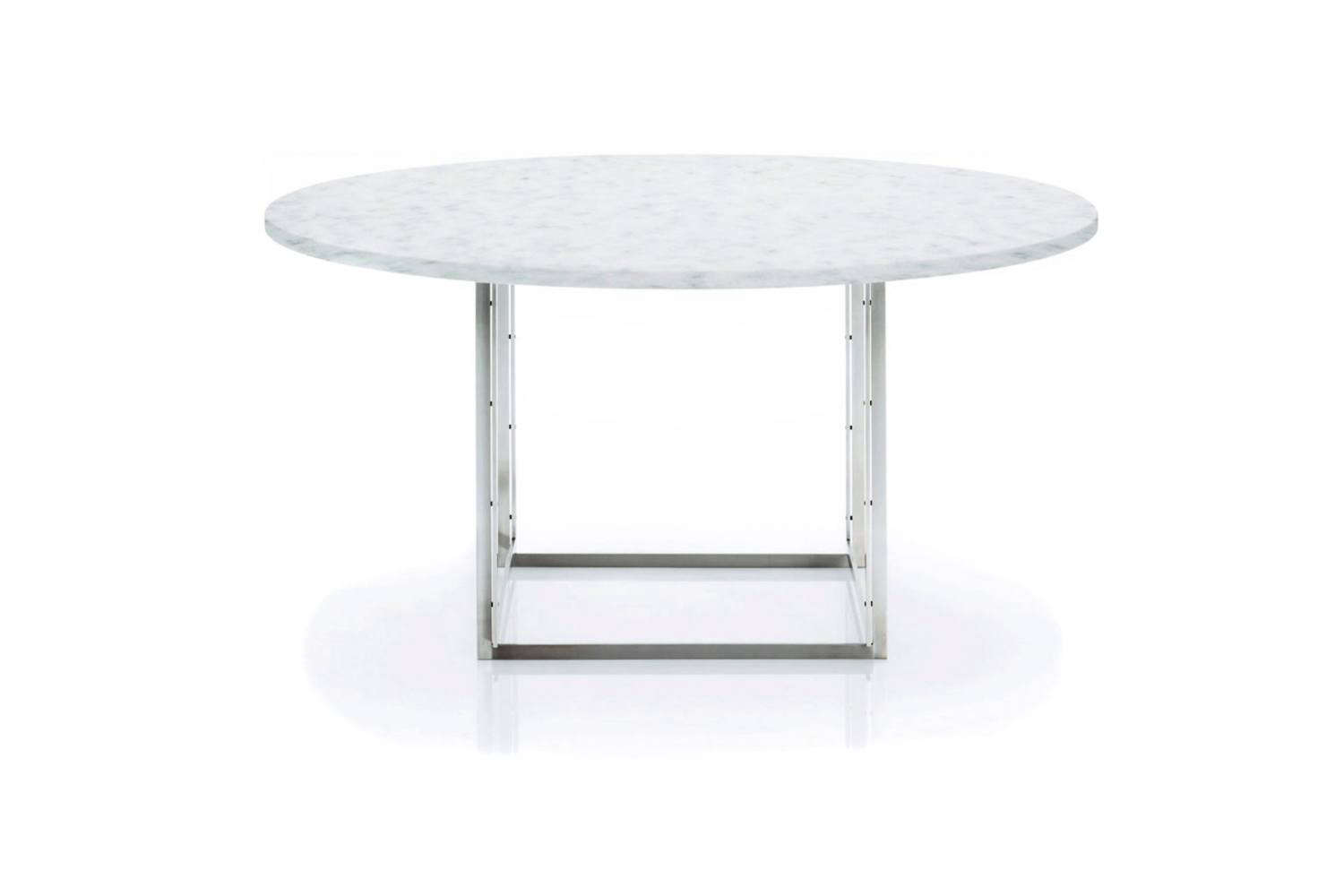
The PK54 Table is one of the most recognizable designs in the Poul Kjærholm collection produced by Fritz Hansen. Its identity is built around contrast: a circular tabletop in marble or granite meets a square base in satin-brushed stainless steel. The result is clean, architectural, and surprisingly warm for a table made from materials that sound like they belong in a museum lobby. Yet that is the charm. The PK54 is formal without being stiff, luxurious without shouting, and practical enough to gather people around it for dinner, work, coffee, or the kind of “quick meeting” that somehow becomes two hours.
What Is the Fritz Hansen PK54 Table?
The Fritz Hansen PK54 Table is a round dining table designed by Poul Kjærholm, a Danish furniture designer known for his precise, architectural approach to form. The original table has a 55.1-inch diameter and was historically listed at a lower height, while newer production has introduced a taller standard height of about 28.5 inches to better suit contemporary dining chairs and armchairs. Its top is available in natural stone, typically marble or granite, and its base is made from satin-brushed stainless steel.
At first glance, the design looks almost too simple: a round top, a square base, no decorative flourishes, no sculpted legs trying to become famous on their own. But that simplicity is deceptive. The PK54 is a masterclass in proportion. The circle softens the room. The square base anchors the stone. The steel catches light. The stone brings natural variation. It is not loud design; it is disciplined design. Think of it as a tuxedo with excellent posture.
The Designer Behind the Table: Poul Kjærholm
Poul Kjærholm was trained as a cabinetmaker before studying at the Danish School of Arts and Crafts. Unlike many Danish Modern designers who focused primarily on wood, Kjærholm became fascinated by steel. He believed steel deserved the same artistic respect usually given to traditional materials like wood and leather. That idea runs through much of his work, including the PK54 dining table.
Kjærholm often called himself a “furniture architect,” and the phrase fits. His pieces do not simply decorate interiors; they organize them. The PK54 Table is a perfect example. It does not rely on ornament. It relies on structure, clarity, and the emotional effect of materials placed in exact relationship to one another. The table has the calm authority of a building model, but it remains human enough for everyday life.
Design Analysis: Circle Meets Square
The genius of the PK54 Table begins with its geometry. A round tabletop encourages conversation because everyone sits in a shared visual field. There is no head of the table, no formal command center, no “dad has claimed the end chair” energy. Everyone belongs equally to the circle.
Below that circular surface sits a square steel base. This contrast is essential. The round top feels natural, social, and soft. The base feels architectural, precise, and grounded. Together they create tension without chaos. The table feels stable but not heavy, sculptural but not impractical.
Many dining tables are designed to disappear into the background. The PK54 does the opposite, but elegantly. It becomes the focal point of a room not because it is oversized or flashy, but because the proportions are so calm that the eye keeps returning to it. It is the furniture equivalent of a person who says very little at dinner and somehow becomes the most interesting guest.
Materials: Marble, Granite, and Stainless Steel
Natural Stone Tabletop
The tabletop of the PK54 is available in marble or granite, depending on configuration and market availability. Each stone surface has natural variation, so no two tables are exactly alike. Veining, color depth, mineral patterns, and subtle irregularities give the table its quiet drama. A white or light marble version feels airy and refined. A darker stone version creates a stronger, moodier presence. Granite offers a more mineral, durable personality.
This is one reason the PK54 ages beautifully. The table is not trying to remain visually frozen. Natural stone changes with light, use, and perspective. Morning sun may reveal faint veining that disappears in the evening. A pendant light above the table may create reflections that shift as people move around it. The PK54 rewards attention, but it does not beg for it.
Satin-Brushed Stainless Steel Base
The base is where Kjærholm’s philosophy becomes visible. Satin-brushed stainless steel gives the table a refined industrial quality. It is not shiny in a flashy, mirror-polished way. Instead, it has a quiet sheen that reflects light softly. The steel structure supports the heavy stone top while keeping the overall design visually clean.
Kjærholm’s use of steel was not a gimmick. He saw it as a serious design material with its own beauty. In the PK54, steel is not hidden; it is celebrated. The base is square, disciplined, and almost abstract. It gives the table its architectural presence and keeps the stone from feeling visually bulky.
The PK54A Extension Ring: The Table’s Clever Party Trick
One of the most fascinating features related to the PK54 is the optional PK54A extension ring. This solid-wood ring consists of interlocking sections that fit around the circular stone top. When added, the table expands dramatically, from about 55.1 inches in diameter to roughly 82.7 inches. In practical terms, the table can move from seating around six people to accommodating a larger gathering, often described as about twelve people depending on chair size and spacing.
But the extension ring is not just functional. It transforms the personality of the table. Without the ring, the PK54 is stone and steel: cool, precise, and monumental. With the wood ring, it becomes warmer, softer, and more social. Stone meets wood. Hard meets soft. Minimalism suddenly puts on a cardigan and invites everyone to stay for dessert.
The extension ring also shows Kjærholm’s sensitivity to ritual. Dining is not only about furniture dimensions; it is about how people gather. The PK54 can be intimate on a normal evening and expansive when guests arrive. That flexibility is rare in a design icon, because many iconic pieces are wonderful to look at and slightly bossy to live with. The PK54 manages to be both museum-worthy and genuinely useful.
Why the PK54 Still Feels Modern
The PK54 was designed in 1963, yet it feels completely at home in contemporary interiors. That is not an accident. The table avoids trend-based styling. There are no fashionable curves that belong only to one decade, no decorative details that date the piece, and no visual tricks that wear out after a season. Its power comes from proportion and material honesty.
This is why the PK54 works in so many settings: modern apartments, open-plan dining rooms, gallery-like homes, executive meeting spaces, and hospitality interiors. It can sit under a dramatic pendant light, beside upholstered dining chairs, or in a room with wood floors and textured walls. The table’s restraint allows other elements to breathe while still giving the space a strong center.
How to Style Fritz Hansen’s PK54 Table
Choose Chairs That Respect the Shape
Because the PK54 has a round top and architectural base, dining chairs should complement rather than compete. Slim-profile chairs work beautifully. Fritz Hansen chairs, including designs from the broader Danish Modern tradition, can create a cohesive look. Armchairs may work especially well with the newer taller height, but always check seat height and arm clearance before committing.
Avoid chairs that are visually too bulky unless the room is large enough to handle the extra mass. The PK54 already has a strong presence. Pairing it with oversized chairs can turn the dining area into a furniture traffic jam, and nobody wants to parallel park around a marble table before breakfast.
Use Lighting to Highlight the Stone
A pendant light above the PK54 can make the stone surface glow. Soft, diffused lighting is often better than harsh direct light, especially with polished or pale stone. The goal is to reveal the natural veining without turning dinner into an interrogation scene.
For a minimalist look, choose a simple pendant with a clean silhouette. For a warmer room, consider lighting with brass, paper, fabric, or opal glass elements. The table is refined enough to handle contrast, as long as the surrounding pieces do not fight for attention.
Keep the Centerpiece Simple
The PK54 does not need a complicated centerpiece. A low ceramic bowl, a sculptural vase, fresh branches, or a small arrangement of flowers is enough. Because the tabletop itself is visually rich, too much decoration can distract from the stone. Let the material do its job. Marble waited millions of years to become a tabletop; it deserves a moment.
Who Should Buy the PK54 Table?
The PK54 is ideal for people who appreciate collectible design, Danish Modern furniture, and investment-quality pieces with strong historical value. It is not the table for someone who wants a low-maintenance bargain piece for a high-chaos craft room. Natural stone requires care, and authentic Fritz Hansen production sits in the luxury category.
However, for the right buyer, the PK54 is more than a dining table. It is a design object, a functional sculpture, and a long-term piece that can move through different homes and interior styles. It suits homeowners, architects, collectors, design studios, and anyone who believes a dining table should do more than hold takeout containers. Although, to be fair, it would hold takeout containers magnificently.
Care and Maintenance Considerations
Owning a marble or granite dining table means understanding the material. Marble can be sensitive to acidic substances such as lemon juice, vinegar, and wine. Granite is generally harder and more resistant, but it still benefits from thoughtful care. Coasters, placemats, and quick cleanup habits are your friends. This does not mean the table should be treated like a fragile museum artifact, but it should be respected.
For daily maintenance, use a soft cloth and mild, stone-safe cleaner. Avoid abrasive pads and harsh chemicals. If the table has a marble top, be especially careful with acidic spills. Stainless steel should also be cleaned gently to preserve its satin-brushed finish. The point is not to panic every time someone reaches for a glass of orange juice. The point is to build small habits that help the table remain beautiful for decades.
PK54 vs. Ordinary Round Dining Tables
An ordinary round dining table may offer similar social benefits: easy conversation, flexible seating, and a softer footprint in a room. The PK54 adds another level. Its value lies in the precision of the design, the quality of materials, the legacy of Poul Kjærholm, and the continuing production by Fritz Hansen.
Where many round tables are merely practical, the PK54 is expressive. It has a point of view. It says that a table can be both simple and monumental, both useful and poetic. It also proves that luxury does not have to mean decorative excess. Sometimes luxury is a perfect circle of stone resting on a square of steel, minding its own beautifully proportioned business.
The PK54 in Modern Interior Design
In contemporary interiors, the PK54 Table works especially well because it bridges several design languages. It is modern but not cold, luxurious but not flashy, historic but not old-fashioned. In a minimalist space, it adds substance. In a warmer, layered room, it adds discipline. In a professional environment, it communicates taste without turning into a showroom cliché.
The table also performs well visually in open-plan homes. Because it is round, it softens the hard lines of kitchens, sofas, shelving, and rectangular rooms. Because it is stone, it adds permanence. Because the base is steel, it feels crisp and intentional. This combination makes the PK54 a strong anchor in rooms where multiple functions share one space.
Why Collectors Respect the PK54
Collectors often value furniture that combines historical significance, design clarity, material quality, and continued relevance. The PK54 checks all four boxes. Poul Kjærholm’s work is represented in major design collections, and his furniture remains highly respected among architects, collectors, and design historians. The PK54 is part of that legacy.
Its collectibility also comes from its restraint. Trendy furniture often needs novelty to attract attention. The PK54 needs only proportion. That is why it continues to feel desirable decades after its debut. It has the rare ability to look important without looking desperate. In the world of luxury furniture, that is no small achievement.
Real-Life Experiences With Fritz Hansen’s PK54 Table
Experiencing the PK54 Table in person is different from seeing it in a product photo. Online, the table reads as elegant and minimal. In a real room, it feels more substantial. The stone top has physical presence. The steel base is slimmer than expected but visually strong. The round shape changes how people approach the table. Instead of choosing sides, guests naturally gather around it.
One of the most memorable experiences with a table like the PK54 is how it changes the mood of a meal. A rectangular table can sometimes feel formal, especially when people sit across from one another like they are negotiating a treaty. A round table feels more democratic. Conversation moves easily. Eye contact is natural. Passing food is simpler. Nobody gets stranded at the “far end,” because there is no far end.
The stone surface also adds a sensory quality. Placing a cup, plate, or book on the tabletop feels different from using wood. There is a coolness to the touch and a sense of permanence. In the morning, the table may feel calm and almost architectural. At night, with warm lighting above it, the same stone can feel intimate and dramatic. That flexibility is one of the table’s quiet pleasures.
The optional extension ring creates another kind of experience. When the wood ring is added, the table becomes more generous and informal. The stone center remains visible, but the wood edge gives the surface a softer rhythm. It is easy to imagine a dinner party where the stone holds serving dishes and flowers while the wooden ring gives each guest more space for plates and glasses. The transformation feels almost ceremonial, like the table is changing clothes for company.
Living with the PK54 would also teach a person to slow down a little. Not in a precious, “please do not breathe near the marble” way, but in a more attentive way. You become aware of coasters. You notice light. You think about chair proportions. You choose centerpieces more carefully. The table encourages better habits because it has standards. It is not fussy, exactly; it is just quietly judging the paper towel you almost used as a placemat.
In a family setting, the PK54 can be both beautiful and practical if treated with common sense. It is sturdy, spacious, and social. Still, households with very young children, frequent spills, or heavy craft projects may prefer to use protective mats during messy activities. The PK54 can handle real life, but it is still a luxury stone table. Peanut butter experiments and permanent markers should probably happen elsewhere.
For design lovers, the most rewarding experience is the table’s ability to make a room feel finished. Some furniture fills space. The PK54 defines space. Place it in a dining area, and suddenly the room has an anchor. Add good chairs and a pendant light, and the setting becomes intentional. It does not need much decoration because the table itself supplies the architecture.
That may be the best way to understand Fritz Hansen’s PK54 Table. It is not simply an object to own; it is an object to live around. It changes how people sit, talk, serve food, and move through a room. It makes ordinary activities feel slightly more considered. Breakfast becomes calmer. Dinner becomes more elegant. Even a laptop session feels upgraded, although the table would probably prefer you not spill coffee on it.
Conclusion: A Dining Table With Architectural Soul
Fritz Hansen’s PK54 Table remains one of Poul Kjærholm’s most compelling designs because it captures so much with so little. A circle. A square. Stone. Steel. Optional wood. That is the recipe, but the result feels much richer than the ingredients suggest. The table is minimalist, but never empty. Luxurious, but never loud. Functional, but never ordinary.
For anyone interested in Danish Modern design, collectible furniture, or refined interiors, the PK54 is more than a beautiful dining table. It is a lesson in balance. It proves that contrast can be calm, that geometry can feel human, and that a well-designed table can become the emotional center of a room. Not bad for something that also has to survive soup night.











