
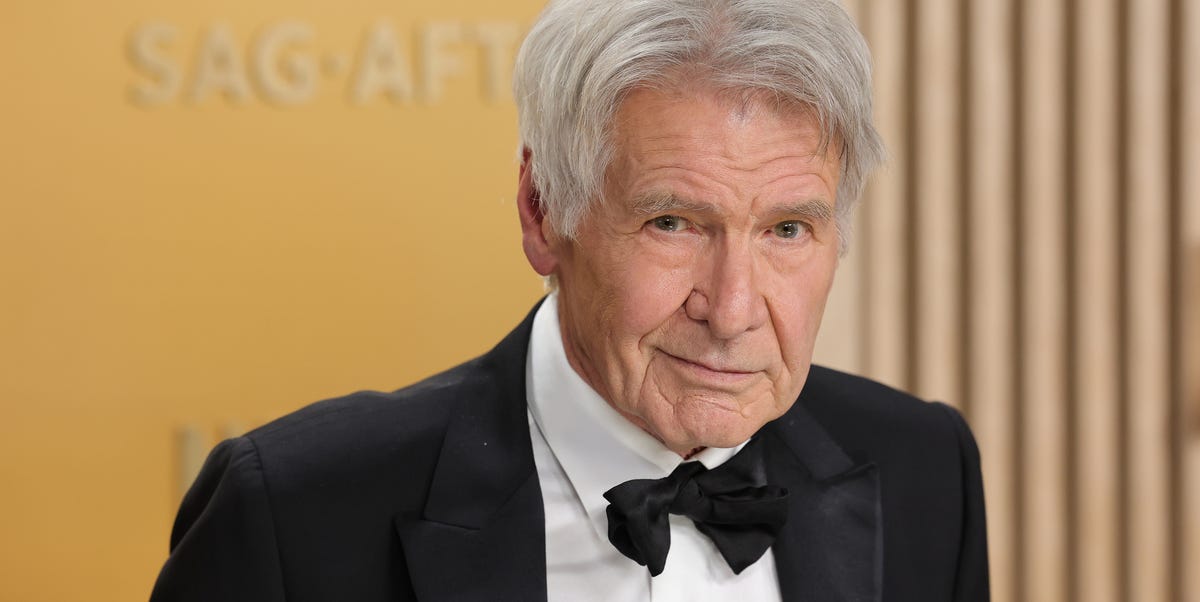
Harrison Ford has faced smugglers, stormtroopers, snake-filled tombs, runaway boulders, and more cinematic trouble than most actors could fit into three careers. But in March 2025, the Hollywood legend had to step away from a very different kind of mission: presenting at the 97th Academy Awards. The reason was not drama, scandal, or a mysterious Hollywood scheduling puzzle. It was illness.
The 82-year-old actor was expected to appear as a presenter at the 2025 Oscars, held on March 2 at the Dolby Theatre at Ovation Hollywood. Just days before the ceremony, the Academy had included Ford among a fresh group of stars scheduled to take the stage, alongside names such as Dave Bautista, Gal Gadot, Andrew Garfield, Samuel L. Jackson, Margaret Qualley, Alba Rohrwacher, Zoe Saldaña, and Rachel Zegler. Then came the update fans did not expect: Harrison Ford would no longer present after being diagnosed with shingles.
For fans, the news was disappointing. For anyone who has ever had shingles, it was painfully understandable. The condition can cause a burning, blistering rash and intense nerve pain, making red-carpet smiles and live television duties far less glamorous than they sound. Even Indiana Jones knows when it is time to swap the fedora for rest.
What Happened Before the 2025 Oscars?
The timeline moved quickly. On Wednesday, February 26, 2025, the Academy announced that Harrison Ford would be part of the presenter lineup for the 97th Oscars. The ceremony, hosted by Conan O’Brien, was scheduled to air live on ABC and stream on Hulu on Sunday, March 2, with the official red carpet show beginning earlier that evening.
By Saturday, March 1, reports confirmed that Ford had canceled his planned Oscars appearance. According to entertainment outlets, he had received a shingles diagnosis on Friday, February 28, and stepped down from his presenting duties the following morning. Reports also noted that Ford was doing okay and resting.
That detail matters. In celebrity news, the phrase “forced to cancel due to illness” can sound dramatic, especially when attached to one of the most recognizable actors alive. But the available reporting did not suggest an emergency or career-altering crisis. Instead, it pointed to a sensible decision: a painful viral illness required rest, and a live awards show is not exactly a low-stress environment.
Why Harrison Ford’s Absence Got So Much Attention
Harrison Ford is not just another famous face on an awards-show schedule. He is one of Hollywood’s great cultural constants. Born in Chicago on July 13, 1942, Ford became globally known through roles that shaped modern blockbuster cinema, including Han Solo in Star Wars and Indiana Jones in the adventure franchise that made a fedora look like essential survival gear.
His career has stretched from early supporting work in films such as American Graffiti and The Conversation to decades of box-office hits, prestige dramas, television work, and franchise revivals. By 2025, he was not slowing down quietly. He had been appearing in the Apple TV+ comedy-drama Shrinking, the Paramount+ drama 1923, and Marvel’s Captain America: Brave New World, where he played Thaddeus Ross.
That is why the Oscars cancellation landed as a genuine entertainment headline. Ford’s public appearances are often brief, dryly funny, and instantly meme-able. Fans enjoy the fact that he seems allergic to fake enthusiasm but deeply committed to the work itself. He does not need to chase attention; attention usually trips over itself trying to follow him.
The SAG Awards Moment That Made the Timing Even More Noticeable
Ford’s Oscars absence came shortly after he attended the 2025 Screen Actors Guild Awards on February 23. During that ceremony, he became part of a widely shared comic moment when his Shrinking co-star Jessica Williams was speaking during the “I Am an Actor” segment and Ford was caught snacking in the background.
The moment was funny because it felt completely unmanufactured. In an awards season filled with planned jokes, rehearsed speeches, and carefully angled cameras, Ford accidentally delivered the kind of relaxed, human beat that audiences love. One minute, the broadcast was highlighting the poetry of acting careers. The next minute, Harrison Ford was simply a man with a cracker, caught in the wild.
That viral SAG Awards appearance made the sudden Oscars cancellation more surprising. Fans had just seen him in good spirits. But illnesses can move quickly, and shingles is a reminder that health does not care about press schedules, red carpets, or whether millions of viewers were hoping to see a beloved actor hand out a golden statue.
What Is Shingles?
Shingles, also known as herpes zoster, is a viral illness caused by the varicella-zoster virus, the same virus that causes chickenpox. After a person has chickenpox, the virus can remain dormant in the body for years. Later in life, it may reactivate as shingles.
The condition often causes a painful rash, commonly appearing on one side of the body. Some people experience itching, tingling, burning, sensitivity, or sharp nerve pain before the rash is fully visible. Blisters may form, and even after the rash clears, some people can develop lingering nerve pain known as postherpetic neuralgia.
Shingles is generally not considered life-threatening for most healthy adults, but it can be extremely painful. Complications can include long-term nerve pain and, in some cases, vision problems if the rash affects the eye area. Risk increases with age and with conditions or medications that weaken the immune system.
Because Ford was 82 at the time of the diagnosis, his decision to rest was not only reasonable; it was the kind of health-first choice more public figures should be allowed to make without unnecessary speculation. A person can be tough, legendary, and still need to cancel plans when a painful virus shows up uninvited.
Why Rest Matters More Than the Red Carpet
A presenter role at the Oscars may look simple from the couch. The actor walks out, reads a few lines, opens an envelope, smiles for the camera, and walks away. Easy, right? Not exactly.
Behind the scenes, a major awards-show appearance can involve travel, fittings, rehearsals, long waiting periods, interviews, security logistics, bright lights, crowded rooms, and hours of sitting or standing in formal clothing. For someone dealing with shingles, that is a lot of pressure on an already uncomfortable body.
Shingles discomfort can be aggravated by stress, fatigue, and friction from clothing. Even if a person is medically stable, a live event can be physically draining. Ford’s team and representatives did what most doctors, family members, and sensible humans would likely recommend: skip the show, rest, and recover.
How the Oscars Carried On Without Ford
The 97th Academy Awards still moved forward with a large presenter lineup and plenty of star power. Conan O’Brien hosted the ceremony, bringing his first-time Oscars host energy to Hollywood’s biggest night. The show included returning Oscar winners, major nominees, and prominent entertainers from film and television.
Ford’s absence did not derail the ceremony, but it did remove one of the evening’s most anticipated classic-Hollywood presences. Awards shows often rely on legacy stars to create a sense of continuity between generations. Ford is especially valuable in that role because he bridges multiple eras: the New Hollywood 1970s, the blockbuster explosion of the 1980s, the franchise age, and the streaming era.
When Ford appears at an awards show, he carries more than celebrity. He carries movie history. His absence was felt not because audiences expected a long speech, but because even a short appearance from him can make the room feel connected to decades of film memory.
Public Reaction: Concern, Humor, and Respect
Fan reaction to the cancellation was largely a mix of concern and affection. Many people expressed disappointment that Ford would not be part of the Oscars broadcast, but the tone was generally understanding. After all, shingles is not a vague excuse. It is a real and often painful condition.
There was also a touch of the usual Harrison Ford humor in the way people discussed the news online. Fans joked that if he could survive carbonite, snakes, and intergalactic chaos, he could certainly defeat shingles. The jokes were affectionate rather than dismissive, reflecting the unique place Ford holds in pop culture: he is both an action icon and a famously dry, grounded presence who often seems amused by the machinery of fame.
That affection is part of why the story traveled so widely. A younger actor canceling a presenter slot might have generated a short update. Harrison Ford canceling becomes a reminder that fans feel personally connected to stars whose work has lived in their homes for decades.
Harrison Ford’s Late-Career Momentum
One reason the news stood out is that Ford has remained remarkably active. In Shrinking, he plays Dr. Paul Rhoades, a sharp, emotionally layered therapist whose gruff exterior hides warmth, vulnerability, and excellent comic timing. The role introduced Ford to some viewers as a television comedy standout, while longtime fans got to see a different side of his screen presence.
In 1923, Ford plays Jacob Dutton, a rugged patriarch facing brutal conditions and family threats in the Yellowstone universe. The role leans into Ford’s weathered authority, the kind of presence that makes a hat, a horse, and a hard stare feel like a full paragraph of dialogue.
Then there is Captain America: Brave New World, which placed Ford inside the Marvel Cinematic Universe as Thaddeus Ross. Joining a superhero franchise in one’s eighties is not exactly the standard retirement plan. But Ford has never seemed interested in the standard version of anything.
That late-career momentum made his health-related cancellation more noticeable, but it also kept the news in perspective. The Oscars withdrawal looked like a temporary interruption, not a full stop. Ford’s recent work suggested an actor still curious, still busy, and still capable of surprising audiences.
Why Celebrity Health Stories Should Be Handled Carefully
When a celebrity illness becomes public, the internet often tries to fill in every blank. That can quickly become irresponsible. In Ford’s case, the confirmed information was limited and clear: he was diagnosed with shingles, canceled his presenting role, and was resting. Anything beyond that should be treated carefully.
Public figures deserve privacy, especially around health. Fans can care without demanding medical details. Journalists can report verified updates without turning discomfort into a spectacle. Readers can understand that “doing okay” does not mean “ready to work,” and “resting” does not mean “something worse is happening.”
The healthiest way to read a story like this is with proportion. It is entertainment news, yes, but it is also a human story. A famous actor got sick and made the practical decision to stay home. Sometimes the most dramatic thing a legend can do is listen to a doctor.
What Readers Can Learn From This Moment
The bigger lesson is simple: illness does not care about status. Harrison Ford is one of the most successful actors in American film history, but even he had to cancel a major public appearance because his body needed rest. That is not weakness. It is reality.
For everyday readers, the story can serve as a reminder to take symptoms seriously. A painful rash, tingling skin, burning sensation, or unusual nerve pain should not be ignored, especially for older adults or people with weakened immune systems. Prompt medical care can help manage shingles and reduce the risk of complications.
It is also worth remembering that prevention matters. Health authorities recommend shingles vaccination for many adults, particularly those over 50. Anyone with questions about vaccination, symptoms, or treatment should speak with a qualified healthcare professional.
Experiences Related to Harrison Ford Forced to Cancel Oscars Appearance Due to Illness
Stories like Harrison Ford being forced to cancel his Oscars appearance due to illness often resonate because they feel familiar, even if most of us have never been invited to present at the Academy Awards. Almost everyone has had a moment when an important event was circled on the calendar, planned in detail, and then completely disrupted by health. It might be a wedding, a graduation, a business presentation, a long-awaited vacation, or a family reunion. You prepare the outfit, arrange the schedule, tell everyone you will be there, and then your body raises its hand and says, “Actually, no.”
That is part of why Ford’s cancellation felt relatable. The scale was Hollywood-sized, but the experience was human-sized. There is disappointment in missing a meaningful occasion. There may be guilt about letting people down. There is also the awkwardness of explaining that you are not choosing to skip the event; your immune system has simply taken over the calendar.
Anyone who has dealt with shingles, severe flu, migraine, back pain, or another sudden health issue knows that public expectations can become heavy. You may look fine in a recent photo. You may have seemed energetic last week. You may even want to attend. But wanting to show up and being physically able to show up are two different things. Ford had appeared at the SAG Awards only days earlier, so fans were surprised. Yet that is how illness often works. One week you are laughing with colleagues; the next week you are negotiating with a rash that feels like it brought its own tiny lightning storm.
The experience also highlights a healthier cultural shift. In the past, celebrities were often praised for pushing through pain, working while ill, or showing up no matter what. That attitude sounds heroic until you remember that rest is not laziness and recovery is not failure. Today, more audiences understand that canceling because of illness can be responsible. It protects the person who is sick, avoids unnecessary strain, and, in some cases, reduces risk for others.
For working adults, Ford’s situation is a useful reminder to build flexibility into important plans. If a person has a major event ahead, it helps to have backup options: someone who can step in, a way to notify attendees quickly, and a mindset that values health over appearance. In workplaces, this means not treating sick days as personal betrayals. In families, it means not guilt-tripping someone who has to miss a gathering. In entertainment, it means understanding that even beloved icons are not machines with perfect lighting.
There is also a lesson in dignity. Ford did not need to make a dramatic public statement or turn the diagnosis into a promotional moment. The information was shared, the reason was clear, and the focus stayed on recovery. That kind of simplicity can be refreshing in a media environment where every update can become a thunderstorm of speculation.
In the end, the experience connected to this topic is not just about missing the Oscars. It is about recognizing when the wisest choice is to pause. Harrison Ford has built a career playing characters who keep moving through impossible situations. But real life sometimes asks for a different kind of courage: cancel the appearance, close the door, take the medicine if prescribed, rest properly, and let the show go on without you. Hollywood survived. The Oscars survived. And fans, while disappointed, understood that even legends need recovery time.
Conclusion
Harrison Ford’s canceled Oscars appearance was a brief but memorable awards-season story because it brought together celebrity, health, timing, and fan affection. The actor was scheduled to present at the 2025 Oscars, but after being diagnosed with shingles, he stepped away from the ceremony and rested. For a star whose career has been defined by endurance, adventure, and unmistakable screen presence, the decision was a practical reminder that health comes first.
The incident did not diminish Ford’s legacy or suggest that his busy career was slowing to a halt. Instead, it showed the human side of a Hollywood icon. Whether he is playing Han Solo, Indiana Jones, Dr. Paul Rhoades, Jacob Dutton, or a Marvel president, Harrison Ford remains a figure audiences follow closely. And when he misses a major stage because of illness, people notice not just because he is famous, but because he has been part of their movie lives for generations.
Note: This article is written for informational and entertainment purposes only. Health details are general background and should not replace advice from a qualified medical professional.













