
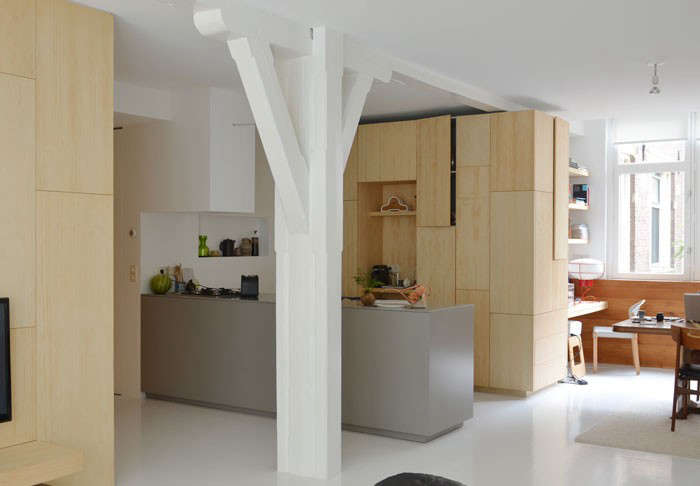
Some homes are designed for people who stay put. Others are designed for people whose calendars look like flight departure boards. An Amsterdam loft for a nomadic family belongs proudly to the second category: part home base, part memory box, part highly functional landing pad for a family that moves between cities, seasons, and versions of itself.
Set in the heart of Amsterdam’s Jordaan area, this kind of loft tells a story that feels very modern but is built on old bones. Think thick timber beams, a converted warehouse, custom cabinetry, vintage finds, thrifted treasures, and enough clever storage to make a suitcase blush. It is not just a pretty interior. It is a lesson in how to create a flexible family home that works when you are there, waits patiently when you are away, and welcomes you back without acting offended.
The beauty of an Amsterdam loft is that it rarely tries too hard. It does not shout luxury through polished marble and furniture nobody is allowed to sit on. Instead, it whispers in natural wood, muted color, handmade ceramics, practical layouts, and pieces collected over time. For a nomadic family, that matters. A home filled only with showroom perfection can feel like a hotel. A home filled with objects that have stories feels like an anchor.
Why an Amsterdam Loft Works So Well for a Nomadic Family
Amsterdam has a particular talent for turning compact spaces into homes that feel generous. The city’s historic buildings, narrow footprints, converted warehouses, and canal-side apartments often demand design intelligence. You cannot simply buy oversized furniture and hope for the best. Amsterdam will laugh politely and then refuse to give you closet space.
A loft, however, offers something special: volume. Even when the floor plan is not enormous, high ceilings, exposed beams, open living zones, and large windows can create a feeling of spaciousness. For a family that travels often, that openness is valuable. It allows the apartment to shift easily between quiet retreat, holiday gathering place, work zone, and children’s play space.
The best Amsterdam loft interiors balance three ideas: history, function, and warmth. The old structure gives the home character. Custom storage gives it order. Personal objects give it soul. When these elements work together, the result feels lived-in without being messy, simple without being cold, and stylish without looking as if someone laminated the personality out of the room.
The Story: A Home Base Between Worlds
The idea behind an Amsterdam loft for a nomadic family is especially compelling because it reflects how many modern families live today. Work, school, creative projects, and extended family can stretch across countries. One city may be where the family currently lives; another may be where their roots are. A pied-à-terre becomes more than a vacation apartment. It becomes a bridge.
In this type of home, the design challenge is not only about square footage. It is about emotional function. How do you make a place feel instantly familiar after months away? How do you store belongings efficiently when the family arrives with luggage, books, toys, groceries, and a heroic number of charging cables? How do you keep the space calm enough for adults but forgiving enough for children?
The answer is thoughtful restraint. Instead of filling every wall, the loft uses built-ins, neutral surfaces, carefully chosen furniture, and texture. The design creates room for movement. It also creates room for memory. Vintage pieces, family hand-me-downs, ceramics, textiles, and travel finds soften the architecture and keep the home from feeling like a rental.
Original Beams: The Soul of the Loft
One of the strongest features in many Amsterdam loft conversions is the presence of original wooden beams. These beams do more than hold up a building; they hold up the entire mood of the interior. They remind you that the home had a life before its current occupants. It may have been part of a warehouse, workshop, school, or industrial building long before it became a family retreat.
In a minimalist space, original beams are design gold. They add warmth, rhythm, and imperfection. Their texture keeps white walls from feeling sterile. Their age gives new cabinetry and modern lighting something to converse with. Without them, the loft might risk becoming too polished. With them, it feels grounded.
For a nomadic family, this historic texture is especially meaningful. Travel can be exciting, but it can also make life feel temporary. Old beams quietly say, “This place has been here. You can return.” That is a surprisingly powerful design feature, and it does not require a motivational quote printed on canvas.
Custom Cabinetry: The Secret Hero
Every family home needs storage. A family home used in bursts needs even better storage. Custom cabinetry is the secret hero of this Amsterdam loft concept because it allows the open space to stay visually calm while hiding the daily evidence of real life.
Built-ins can wrap around walls, frame beds, conceal appliances, hold books, store linens, and create clean architectural lines. Instead of adding random freestanding cabinets, custom storage becomes part of the room itself. This is especially useful in a loft, where open layouts can quickly look chaotic if every object is visible.
The smartest cabinetry does not scream, “I am storage!” It blends in. Simple door fronts, finger holes instead of bulky hardware, and muted paint colors can create a seamless effect. Inside, however, the cabinets can be highly practical: shelves for luggage, drawers for children’s clothes, compartments for seasonal items, and space for household basics that stay behind when the family leaves.
A Kitchen Made for Returning
The kitchen in a nomadic family’s loft has a different job from a kitchen in a full-time residence. It must be easy to restart. After travel, nobody wants to spend the first hour searching for salt, a cutting board, or the one pan that did not mysteriously migrate to the back of a cabinet.
A practical Amsterdam loft kitchen often favors open shelves in small doses, deep drawers, durable surfaces, and a layout that encourages togetherness. A simple inset shelf for pottery or everyday dishes can make the room feel personal without turning it into a clutter museum. The kitchen should be attractive, yes, but also forgiving. Children may make snacks. Guests may pour wine. Someone will definitely leave toast crumbs. The design should survive all of this with dignity.
For a family that gathers in Amsterdam during holidays or vacations, the kitchen becomes the emotional center of the loft. It is where jet lag meets coffee, where relatives stop by, where children announce they are hungry immediately after saying they are full. A good kitchen supports these rituals without demanding attention every five minutes.
Vintage Finds and the Art of Not Overbuying
One of the most appealing lessons from this kind of loft is that a beautiful family home does not need an unlimited budget. In fact, too much money can sometimes make a space less interesting. When every object is bought new in one weekend, a room can feel efficient but strangely flat, like a catalog page waiting for a human to wander in.
Vintage furniture, thrifted pieces, and family hand-me-downs bring depth. A Dutch dining table found secondhand can carry more charm than a brand-new piece with a suspiciously poetic product name. Old ceramics can warm up a modern shelf. A chair from a relative’s attic can become the thing guests ask about first.
The trick is editing. Nomadic design is not the same as collecting everything that ever looked charming at a flea market. The goal is to choose objects that earn their place. A vintage table works because it is useful and beautiful. Handmade pottery works because it adds texture and memory. Too many small objects, however, can make the space feel busy. The best approach is simple: collect with feeling, display with restraint.
Designing for Children Without Surrendering the Entire Home
A family loft must welcome children without allowing toys to declare independence and form their own government in the living room. That means storage, durable materials, and flexible zones are essential.
Children’s spaces in a loft do not have to be overly themed. In fact, simple rooms often age better. Built-in wardrobes, under-bed storage, open shelves for favorite books, and baskets for toys can keep things organized. Soft rugs, washable textiles, and sturdy furniture make the rooms comfortable without requiring constant adult panic.
The best family interiors also recognize that children use the entire home. They do homework at dining tables, build forts near sofas, and leave tiny socks in places no architect could have predicted. A well-designed loft accepts this reality. It gives children room to live while giving adults a way to reset the space quickly.
Minimalism, But Make It Human
Amsterdam interiors often borrow from minimalist principles: clean lines, natural light, honest materials, and a strong sense of order. But the most successful lofts avoid cold minimalism. They are not empty for the sake of looking serious. They are edited so life can happen more easily.
Human minimalism means choosing fewer things, but better things. It means letting texture do some of the decorating. Wood, linen, wool, ceramic, painted cabinetry, and old beams can create richness without visual noise. A muted palette can make a compact apartment feel calmer, while darker accents add depth.
This approach is ideal for a nomadic family because it reduces maintenance. Fewer decorative objects mean less dusting. Closed storage means faster cleanups. Durable materials mean the home can handle arrivals, departures, guests, suitcases, and the occasional child-related incident involving juice.
How the Loft Balances Public and Private Space
Open-plan living is one of the pleasures of a loft, but family life also requires privacy. The key is subtle separation. Instead of chopping the space into small rooms, designers can use cabinetry, rugs, lighting, partial walls, curtains, and furniture placement to define zones.
The dining area can sit near the kitchen as a natural gathering point. The living area can be softened with a rug and comfortable seating. Bedrooms can feel cocooned through darker paint, built-in storage, and lower lighting. Work areas can be tucked into niches or along walls so they are available when needed but not visually dominant.
For families moving between homes, these zones help everyone settle quickly. Children know where to play. Adults know where to work or rest. Guests know where to sit without awkwardly hovering near the kitchen pretending to help.
Lessons You Can Borrow for Any Home
You do not need a century-old Amsterdam warehouse to borrow ideas from this loft. You do not even need beams, though if your ceiling suddenly produces some, congratulations. The principles can work in apartments, townhouses, small family homes, and vacation properties.
1. Build Storage Into the Architecture
Whenever possible, choose built-in or wall-to-wall storage over scattered furniture. It makes rooms feel calmer and more intentional.
2. Keep a Tight Material Palette
Use a few materials repeatedly. Wood, painted cabinetry, linen, ceramic, and natural fibers can create continuity from room to room.
3. Mix Old and New
Pair modern lighting or cabinetry with vintage tables, inherited objects, or handmade decor. This gives a home character without clutter.
4. Design for Fast Resets
If the home is used by a busy family, make cleanup easy. Baskets, drawers, hidden cabinets, and washable textiles are not glamorous, but they are heroes.
5. Let the Home Tell Your Story
Nomadic families often carry memories from many places. Display a few meaningful objects instead of trying to showcase every souvenir. Your home should feel personal, not like an airport gift shop with plumbing.
Experience Notes: Living With the Idea of an Amsterdam Loft
The most useful experience related to an Amsterdam loft for a nomadic family is learning that flexibility beats perfection. A home used by travelers cannot behave like a fragile display. It needs to support messy arrivals, slow mornings, quick dinners, and the strange emotional rhythm of being both “home” and “away.”
Imagine arriving in Amsterdam after a long flight. The children are tired, the adults are pretending not to be tired, and everyone has suddenly developed strong opinions about food. A good loft makes this moment easier. The entry has a place for coats and shoes. The kitchen has basics within reach. The living room does not require delicate navigation around precious objects. The bedrooms feel calm enough for immediate rest. This is design serving life, not the other way around.
One practical experience is the importance of having duplicate essentials. A nomadic family should not have to pack every small item each time. Toothbrush chargers, basic toiletries, pajamas, children’s books, pantry staples, and seasonal layers can live in the loft. Custom cabinets make this possible without turning the home into a storage unit with better lighting.
Another experience is that the home should be easy for guests and relatives to understand. When a family uses a city apartment during vacations, visitors often appear. Sometimes they are planned. Sometimes they are “just nearby,” which in family language means they are arriving in twelve minutes. Clear storage, a welcoming dining table, and flexible seating make hospitality easier. Nobody has to perform a dramatic chair hunt.
Lighting also matters more than people expect. Amsterdam can be moody, especially in colder months. Layered lighting helps the loft shift from bright morning energy to cozy evening calm. Pendant lights over the dining area, task lighting in the kitchen, sconces near beds, and warm lamps in the living space can completely change how the apartment feels. Good lighting is basically emotional weather control.
For children, the experience of returning to the same loft again and again can be grounding. Even if the family lives internationally, the apartment becomes part of their personal map. The same beams, the same table, the same cabinet where games are storedthese details build continuity. A nomadic childhood can be rich and exciting, but familiar places matter. A well-designed family loft gives children that sense of return.
For adults, the lesson is to resist overdecorating. When you are away from a home for stretches of time, dust, maintenance, and visual clutter become more noticeable. A simpler interior is easier to reopen. Natural materials, vintage furniture, and meaningful objects provide warmth without creating work. The best compliment for this kind of home is not “It looks expensive.” It is “It feels easy to come back to.”
Finally, an Amsterdam loft teaches that a home does not need to represent every part of a family’s life. It only needs to hold the right parts. For a nomadic family, that may mean a table for long breakfasts, shelves for handmade pottery, beds that feel restful, storage that hides the chaos, and a living room where everyone naturally gathers. The magic is not in having more. It is in choosing well.
Conclusion
An Amsterdam loft for a nomadic family is more than a stylish city apartment. It is a thoughtful response to modern family life: mobile, creative, sentimental, practical, and occasionally overrun by luggage. Its charm comes from the balance between old architecture and new function, between minimalist calm and personal warmth, between global movement and local roots.
The best version of this home does not chase trends. It uses durable materials, smart cabinetry, vintage finds, and flexible rooms to create a place that feels good every time the family returns. It proves that a loft can be elegant without being stiff, family-friendly without being chaotic, and deeply personal without being crowded. In other words, it is the rare home that knows how to travel without moving.
Note: This article is written in original standard American English for web publication, using real design context and practical interior design principles without source-link elements or citation placeholders.












