
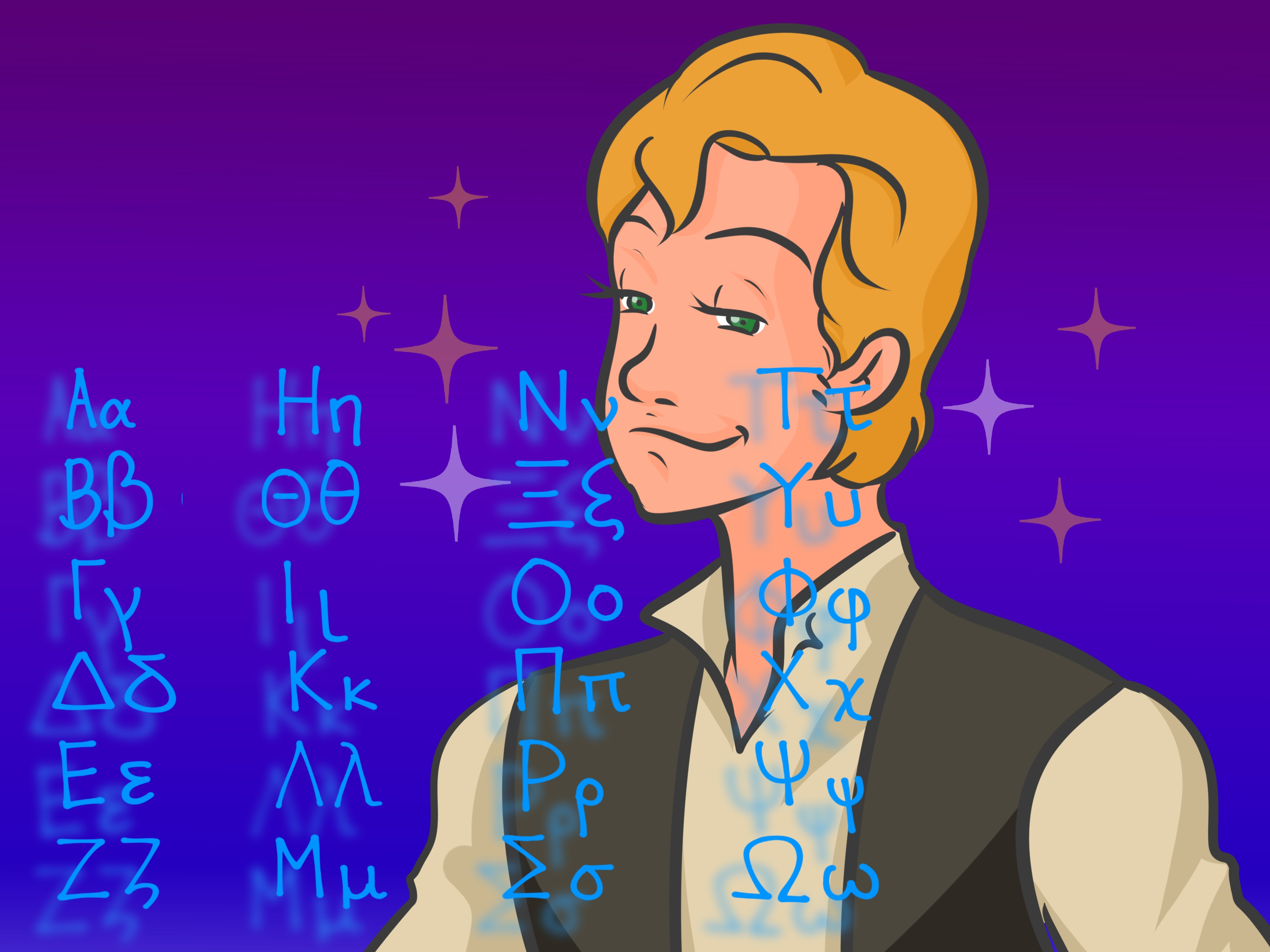
Learning how to write the Greek alphabet may look intimidating at first, especially when letters like ξ, ψ, and ω stroll onto the page as if they own the place. But the good news is simple: Greek handwriting is not a mystery cave guarded by a mythological beast. It is a learnable system of 24 letters, each with an uppercase and lowercase form, plus a few helpful marks that guide pronunciation and stress.
The Greek alphabet is one of the most influential writing systems in history. It helped shape the Roman alphabet used in English and many European languages, and it still appears everywhere today: math, physics, fraternities and sororities, biblical studies, classical literature, medicine, astronomy, and even the occasional intimidating college hoodie. If you have ever seen π in math class or Ω on a logo, you have already met Greek letters in the wild.
This beginner-friendly guide explains how to write the Greek alphabet in four practical steps. You will learn the complete Greek letter chart, how to form uppercase and lowercase letters, how to avoid common mistakes, and how to build a simple practice routine that actually works. No dusty scroll required.
Why Learn to Write the Greek Alphabet?
Writing Greek letters by hand helps you recognize them faster, remember their order, and understand how Greek words are built. Even if your main goal is reading Ancient Greek, studying Modern Greek, solving equations, or simply writing a beautiful alpha without making it look like a sleepy fish, handwriting gives your brain an extra memory hook.
Greek has 24 letters. Most have uppercase and lowercase forms, just like English. However, some Greek lowercase letters look very different from their uppercase partners. For example, uppercase Σ becomes lowercase σ, and at the end of a word it changes again into final sigma, ς. That one tiny curve has confused many beginners, so congratulations: you are now warned.
Step 1: Learn the 24 Greek Letters in Order
The first step is memorizing the Greek alphabet in order from alpha to omega. Do not try to become a calligraphy champion on day one. Start by learning each letter’s name, uppercase form, lowercase form, and rough English equivalent. This gives you a map before you start driving.
Greek Alphabet Chart
| Order | Name | Uppercase | Lowercase | Common English Guide | Handwriting Tip |
|---|---|---|---|---|---|
| 1 | Alpha | Α | α | a | Lowercase alpha is like a small loop with a tail. |
| 2 | Beta | Β | β | b or v, depending on system | Keep the lower loop rounded and clear. |
| 3 | Gamma | Γ | γ | g | Uppercase gamma looks like an upside-down L. |
| 4 | Delta | Δ | δ | d | Uppercase delta is a triangle; lowercase delta has a loop. |
| 5 | Epsilon | Ε | ε | e | Lowercase epsilon should stay open, not closed like an 8. |
| 6 | Zeta | Ζ | ζ | z | Lowercase zeta has a descending tail. |
| 7 | Eta | Η | η | e or i, depending on system | Lowercase eta looks like n with a long tail. |
| 8 | Theta | Θ | θ | th | Think of a circle with a center line. |
| 9 | Iota | Ι | ι | i | Small, simple, and easy to lose in messy notes. |
| 10 | Kappa | Κ | κ | k | Looks close to English k. |
| 11 | Lambda | Λ | λ | l | Uppercase lambda is like an upside-down V. |
| 12 | Mu | Μ | μ | m | Lowercase mu has a left stem and rounded body. |
| 13 | Nu | Ν | ν | n | Lowercase nu can look like a small v. |
| 14 | Xi | Ξ | ξ | x or ks | Practice lowercase xi slowly; it is the spaghetti noodle of the alphabet. |
| 15 | Omicron | Ο | ο | o | Both forms are simple circles. |
| 16 | Pi | Π | π | p | Keep the top line straight. |
| 17 | Rho | Ρ | ρ | r | Do not confuse uppercase rho with English P. |
| 18 | Sigma | Σ | σ / ς | s | Use σ inside words and ς at the end. |
| 19 | Tau | Τ | τ | t | Lowercase tau has a short crossbar. |
| 20 | Upsilon | Υ | υ | u or y | Lowercase upsilon is rounded, like a soft u. |
| 21 | Phi | Φ | φ | ph or f | Draw the vertical line through the circle. |
| 22 | Chi | Χ | χ | ch or kh | Lowercase chi has flowing crossed strokes. |
| 23 | Psi | Ψ | ψ | ps | Think of a trident with a tail. |
| 24 | Omega | Ω | ω | o | Lowercase omega looks like two connected curves. |
A smart way to memorize the order is to divide the alphabet into four groups of six letters: Α Β Γ Δ Ε Ζ, Η Θ Ι Κ Λ Μ, Ν Ξ Ο Π Ρ Σ, and Τ Υ Φ Χ Ψ Ω. Six letters at a time feels much friendlier than 24 letters charging at you like an army in sandals.
Step 2: Practice Uppercase Greek Letters First
Uppercase Greek letters are usually easier for English speakers because many look familiar. Some are nearly identical to Latin letters, including Α, Β, Ε, Ι, Κ, Μ, Ν, Ο, and Τ. Others look familiar but represent different sounds or names. Uppercase Ρ, for example, looks like English P but is rho, not pi. That little identity crisis is normal.
Start by writing each uppercase letter on lined paper. Use a slow, deliberate motion. Your goal is not speed; your goal is consistency. Write one row of each letter, then say its name aloud as you write. This combines sight, sound, and movement, which makes memorization faster.
Simple Uppercase Practice Method
Write the alphabet once while looking at the chart. Then cover the chart and try to write it from memory. After that, compare your version with the correct order. Circle the letters you missed, rewrite them five times, and try again. This method is not glamorous, but neither is forgetting Ξ every time it appears.
Pay special attention to uppercase letters that are easy to confuse. Η is eta, not English H. Ρ is rho, not English P. Χ is chi, not English X in every pronunciation system. Υ is upsilon, not English Y. Once you recognize these traps, they become much less annoying.
Step 3: Master Lowercase Greek Letters and Final Sigma
Lowercase Greek letters are where the real learning begins. They are the forms you will see most often in Greek words, printed texts, vocabulary lists, and reading exercises. Some lowercase letters are friendly, such as ο, ι, and π. Others need extra practice, especially ξ, ζ, φ, χ, ψ, and ω.
The most important lowercase rule is the sigma rule. Greek has two lowercase forms of sigma: σ and ς. Use σ at the beginning or middle of a word. Use ς only at the end of a word. For example, in κόσμος, the first sigma is written σ because it appears inside the word, while the final sigma is written ς because it ends the word.
Examples of Sigma in Words
- σοφία uses σ at the beginning.
- μέσος uses σ in the middle and ς at the end.
- λόγος ends with final sigma, ς.
When writing lowercase letters, focus on shape and spacing. Many beginners make ν and υ too similar, or they let ρ, φ, and ψ float above the line instead of descending below it. Greek handwriting has rhythm: some letters sit neatly on the line, some dip below, and some rise above. Think of it as choreography, but with fewer sequins.
Step 4: Add Accents, Read Simple Words, and Build a Practice Routine
Once you can write the letters, begin adding accent marks and simple words. In Modern Greek, the acute accent shows which syllable receives stress. In Ancient Greek materials, you may also see breathing marks and additional accents, depending on the text and learning system. Beginners do not need to master every mark immediately, but they should learn to notice them.
For Modern Greek, examples include νερό, meaning water, and καλημέρα, meaning good morning. The accent tells you where the stress falls. For Ancient Greek study, you may encounter more marks, including rough and smooth breathings. These can look tiny, but they carry useful information. Greek has a talent for making small marks feel important.
Beginner Practice Words
| Greek Word | Transliteration | Meaning | What to Practice |
|---|---|---|---|
| άλφα | alpha | alpha | Accent over the first vowel |
| βήτα | beta | beta | Eta and accent placement |
| γάμμα | gamma | gamma | Double mu |
| δέλτα | delta | delta | Lowercase delta |
| λόγος | logos | word, reason, speech | Final sigma |
| κόσμος | kosmos | world, order | Both sigma forms |
A strong Greek alphabet practice routine can be short. Ten minutes a day is enough if you practice with attention. Write the uppercase alphabet once, the lowercase alphabet once, five tricky letters five times each, and three simple words. End by covering your notes and writing as much as you can from memory. This small routine builds muscle memory without turning your desk into a tragic archaeological site of abandoned worksheets.
Common Mistakes When Writing the Greek Alphabet
Confusing Greek Letters with English Look-Alikes
The biggest beginner mistake is assuming that similar-looking letters behave the same way in Greek and English. Ρ is not P; it is rho. Η is not H; it is eta. Ν looks like N and is nu, but ν looks like a small v. Take your time and learn each Greek letter as its own character.
Forgetting Final Sigma
Final sigma is small but important. If a word ends in an s sound, write ς, not σ. Inside the word, use σ. This is one of the fastest ways to make your Greek handwriting look more accurate.
Writing Too Fast Too Soon
Speed comes after accuracy. If you rush, lowercase letters like ξ, ζ, and ω can turn into mysterious squiggles. Slow writing is not a failure. It is the training stage before your hand learns what your brain already knows.
Ignoring Letter Height
Some Greek letters extend below the line, including ρ, φ, χ, and ψ. Others stay compact. Practice on lined paper so your letters have structure. Without lines, beginners often create an alphabet that looks like it survived a small earthquake.
Best Tips for Learning Greek Handwriting Faster
First, copy real Greek words instead of writing isolated letters forever. Letters make more sense inside words. Second, say the letter names as you write them. Third, review the alphabet in both directions: alpha to omega and omega to alpha. This prevents you from depending only on alphabetical order. Fourth, compare printed Greek with handwritten Greek because handwriting styles can vary.
Finally, use spaced repetition. Practice today, review tomorrow, then again in three days, then again in a week. Your memory likes reminders. It does not like being abandoned and then ambushed before a quiz.
of Practical Experience: What Learning to Write Greek Actually Feels Like
The first time you try to write the Greek alphabet, it may feel like your hand has suddenly forgotten how civilization works. That is normal. Most learners begin with confidence because Α, Β, and Ε look familiar. Then ξ appears, and suddenly the pencil wants to resign. The secret is to treat Greek handwriting like learning a short musical piece. You do not perform the whole concert on the first try. You practice small patterns until they feel natural.
In my experience helping learners approach unfamiliar alphabets, the breakthrough usually comes when they stop seeing Greek letters as “weird versions of English letters.” Greek is not English wearing a toga. It has its own visual logic. Lowercase α has a compact loop. λ rises with a clean upward stroke. μ and ν have related shapes but different movement. Once you notice those patterns, the alphabet becomes less random.
A useful exercise is the “three-line method.” On the first line, copy the Greek alphabet from a chart. On the second line, write it while glancing only when necessary. On the third line, write it from memory. This shows exactly which letters are strong and which letters are sneaking out the back door. Most beginners discover they know the first ten letters fairly quickly but stumble around ξ, ρ, σ, φ, χ, and ψ. That is not a disaster; it is a study plan.
Another practical trick is to group letters by shape. Practice round letters together: ο, θ, σ, φ, ω. Then practice letters with descenders: ρ, φ, χ, ψ, ζ, ξ. Then practice letters that resemble English forms but behave differently: η, ν, ρ, and υ. Grouping letters this way trains the hand instead of forcing the brain to memorize 24 unrelated drawings.
It also helps to write meaningful words early. Try λόγος, κόσμος, σοφία, and μουσική. These words give you practice with accents, curves, descenders, and final sigma. They also look satisfyingly Greek, which is excellent motivation. Nothing says “I am learning” like writing φιλοσοφία and feeling briefly like a philosopher, even if you are wearing pajama pants.
The most important experience-based advice is this: do not judge your Greek handwriting too early. For the first few days, your letters may look uneven. After a week of consistent practice, they will look more controlled. After a month, you will recognize Greek letters without mentally translating every shape. That is the real goal. Beautiful handwriting is nice, but readable handwriting is the victory. Start slowly, practice daily, laugh at the letters that look like noodles, and keep going. The Greek alphabet rewards patience.
Conclusion
Learning how to write the Greek alphabet is easier when you break the process into four steps: memorize the 24 letters, practice uppercase forms, master lowercase forms and final sigma, then use accents and real words in a daily routine. Greek letters may look unfamiliar at first, but they become friendly with repetition. Start with clear charts, write slowly, practice the tricky shapes, and build confidence one line at a time.
The Greek alphabet is more than a set of symbols. It is a bridge to language, history, science, philosophy, literature, and culture. Whether you are studying Ancient Greek, learning Modern Greek, reading academic symbols, or simply trying to make ψ look less like a confused cactus, the best method is steady practice. Alpha begins the journey. Omega is waiting politely at the finish line.











