
Editor’s note: This article is based on publicly reported information, social media reaction, and Megan Fox’s own public comments about beauty, style, body image, and cosmetic procedures. It discusses online commentary without diagnosing anyone, speculating beyond reported facts, or treating appearance as a public referendum.
The Selfie That Made the Internet Squint at Its Phone
Megan Fox has never exactly been a background character in celebrity culture. For nearly two decades, she has been photographed, styled, debated, adored, criticized, copied, and turned into a kind of pop-culture beauty shorthand. So when she posted a rare makeup-free selfie after Coachella, the internet did what the internet does best: zoomed in, overreacted, argued in the comments, and briefly forgot how human faces work.
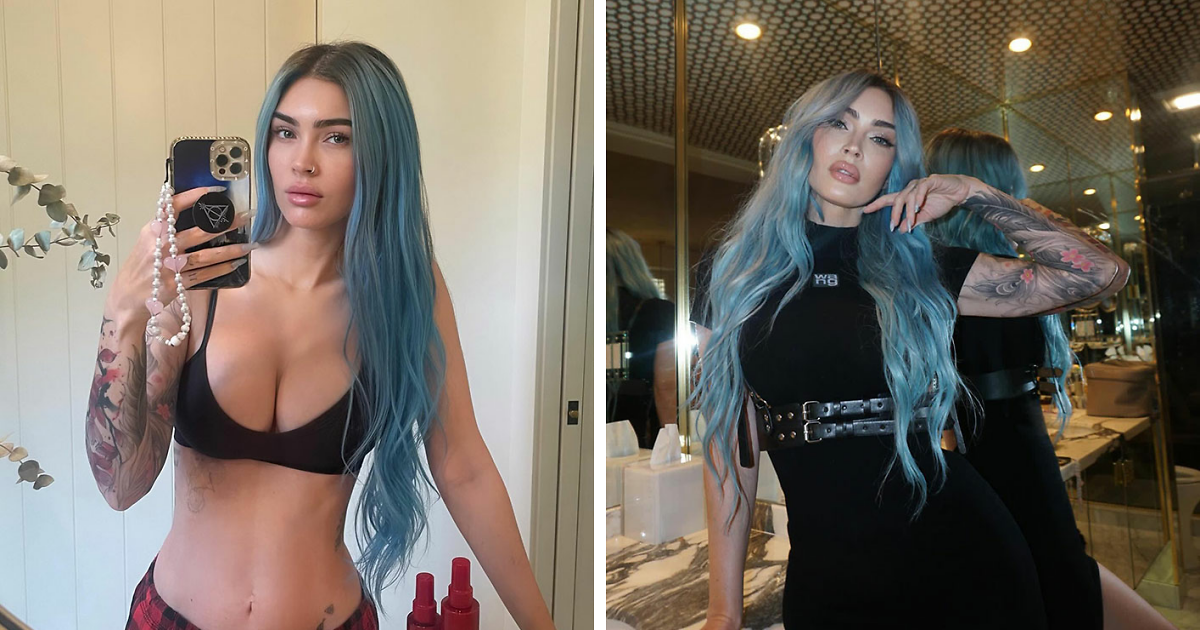
The photo showed Fox in a casual, post-festival moment, wearing a bra and plaid boxers, with long blue hair extensions and hair repair products visible nearby. The caption referenced “repairing” her hair and 26 inches of extensions after Coachella, and the post was connected to Wella Professionals through partner and ad tags. In other words, it was technically a beauty-product post. But fans did not focus only on the hair treatment. They focused on her face.
Some users praised her natural beauty. Others insisted she looked “unrecognizable.” One viral-style reaction summed up the shock with brutal internet efficiency: “Who TF is that?” Another wave of comments compared her to other celebrities, questioned whether the image had been edited, or suggested that makeup, lighting, camera angle, and cosmetic enhancements had created a version of Megan Fox that looked unfamiliar to casual viewers.
Was it really that shocking? Not exactly. Was it a perfect example of how celebrity beauty culture trains audiences to expect one polished face forever? Absolutely.
Why Megan Fox Looked So Different Without Her Usual Glam
The phrase “makeup-free selfie” sounds simple, but celebrity imagery is rarely simple. Most red-carpet photos involve professional makeup, controlled lighting, expert hairstyling, flattering angles, high-resolution cameras, and sometimes post-production edits. A bathroom mirror selfie, even from a global star, plays by different rules.
Makeup Changes Facial Architecture
Makeup does more than add color. It can reshape how a face appears. Contour can sharpen cheekbones, bronzer can add warmth, eyeliner can change the perceived shape of the eyes, and lashes can make the upper face look more dramatic. Megan Fox is especially associated with a high-impact glam style: defined brows, sculpted skin, smoky eyes, glossy lips, and a camera-ready finish that has become part of her public image.
Remove those layers, and the face underneath may look softer, younger, more relaxed, or simply less “Hollywood.” That does not mean the person has transformed into someone else. It means the audience has grown used to the produced version.
Hair Color Can Trick the Eye
Fox’s blue hair also played a major role in the confusion. Fans often recognize celebrities through a cluster of visual cues: hair color, makeup style, clothing, facial expression, and overall styling. Megan Fox has been famous for her dark brunette bombshell image, so waist-length blue extensions created a major visual shift. Add a bare face and a casual outfit, and the internet’s facial-recognition softwarealso known as people with too much time on Instagramstarted glitching.
Lighting Is the Secret Celebrity Villain
Lighting can make a person look radiant, tired, lifted, shadowed, fresh, or completely different. Red-carpet lighting is designed to flatter. Bathroom lighting is designed to help people find toothpaste. That is a big difference. A makeup-free selfie taken in everyday lighting will not resemble a professionally lit magazine cover, and expecting it to is like comparing a passport photo to a perfume campaign.
The Fan Reaction: Praise, Confusion, and Classic Comment-Section Chaos
The reaction to Megan Fox’s selfie split into predictable camps. Some fans celebrated her natural look, calling her gorgeous and praising her confidence. Others were confused, saying she did not look like the Megan Fox they remembered. A third group treated the selfie as evidence in the never-ending public debate over celebrity cosmetic procedures.
The most revealing part of the response was not that people noticed she looked different. People notice visual change all the time. The revealing part was how quickly some users turned that observation into suspicion, criticism, or mockery. A celebrity posting a bare-faced selfie should be fairly normal. Instead, it became a mini cultural event because the public has been trained to see famous women’s faces as fixed brands, not living faces attached to actual people.
There is also a strange contradiction in celebrity fandom. Audiences often demand authenticity, then punish it when it appears. They ask stars to “be real,” but when a woman posts a less-polished photo, the same audience may ask why she looks tired, different, older, edited, unedited, enhanced, natural, unnatural, or somehow all of the above before lunch.
Megan Fox, Beauty Standards, and the Public Microscope
Megan Fox’s relationship with beauty culture has always been complicated. She became famous in the 2000s, an era when tabloids, men’s magazines, gossip blogs, and entertainment shows were extremely comfortable reducing young actresses to appearance-based headlines. Fox was repeatedly framed as a fantasy figure, a sex symbol, and a standard of beauty. That kind of fame may look glamorous from the outside, but it can become a cage with excellent lighting.
In later interviews, Fox has spoken openly about body dysmorphia and the disconnect between how others see her and how she sees herself. She has also discussed cosmetic procedures, including breast augmentations, a nose job, Botox, filler, and laser treatments, while denying several procedures that fans have speculated about. Her willingness to discuss those topics publicly is unusual in an industry where celebrities are often expected to look perfect while pretending perfection arrived naturally, like a package from an expensive genetics department.
That honesty matters. It complicates the lazy conversation around celebrity beauty. Instead of pretending stars either “age naturally” or “ruin their faces,” Fox’s comments show a more realistic picture: beauty, insecurity, public pressure, personal choice, money, image-making, and self-perception all collide. The result is not a simple moral lesson. It is a very modern mess.
Why Makeup-Free Celebrity Photos Go Viral
Makeup-free celebrity photos often go viral because they feel like glimpses behind the curtain. Fans are used to polished images, so a bare-faced selfie can seem intimate, surprising, or even rebellious. But the reaction also reveals how little room famous women are given to look ordinary.
We Confuse Familiarity With Reality
Most people do not know what celebrities truly look like day to day. They know what celebrities look like at premieres, in campaigns, on Instagram grids, and in photos selected from dozens or hundreds of frames. That creates a false sense of familiarity. When a celebrity appears without the usual styling, fans may feel as though something is “off,” even though they are simply seeing a different version of the same person.
The Internet Rewards Extreme Reactions
“She looks different” is a normal observation. “Who TF is that?” is a clickable reaction. Social media platforms reward comments that are funny, harsh, dramatic, or shocking. That is why celebrity posts often turn into reaction contests. The most moderate take rarely wins the algorithmic talent show.
Beauty Culture Has a Memory Problem
People age. Hair changes. Weight fluctuates. Skin texture changes. Lighting changes. Makeup trends change. Cosmetic treatments change. Personal style changes. Yet audiences often compare a current celebrity selfie to a mental image from 2009 and act shocked that time did not politely pause.
The Coachella Context: Festival Glam Meets Hair Recovery
The selfie arrived after Coachella, where Fox had been seen with bold blue hair and festival-ready outfits. Coachella has become as much a style arena as a music festival, with celebrities using the event to debut dramatic looks. Fox’s blue hair fit that tradition perfectly: eye-catching, playful, and very much designed to be photographed.
But festival styling has consequences. Extensions, bleach, heat tools, product buildup, sun, dust, and long days can leave hair looking and feeling exhausted. Fox’s post framed the moment as hair repair after the weekend, which is a relatable premise even if most people are not casually recovering 26 inches of blue extensions next to professional products.
That contrast is part of why the post worked. It was glamorous and casual at the same time. It showed a celebrity in an intimate setting while still being part of a beauty partnership. That mixauthenticity and marketing, bare face and brand tagis very 2020s celebrity culture.
What the Selfie Says About “Natural Beauty” Online
The phrase “natural beauty” gets thrown around constantly, but online culture often uses it unfairly. When a celebrity wears no makeup, people praise her for being natural, then inspect every feature for signs of cosmetic work. When she wears makeup, people accuse her of hiding. When she discusses procedures, people call her fake. When she denies speculation, people keep speculating anyway. It is a game with no winning square.
Megan Fox’s selfie became a flashpoint because it sat right in the middle of that contradiction. She looked less made-up, but not untouched by beauty culture. She appeared casual, but the image was still posted to millions. She promoted hair repair, but the public debated her face. That is the celebrity internet in one picture: a woman tries to talk about hair, and the comment section holds a congressional hearing about cheekbones.
Specific Examples of How Styling Changes Perception
Consider how many elements can change the way a person is perceived in a single image:
- Eyebrows: A defined brow can make the face look more structured. A softer brow can change expression dramatically.
- Lashes and eyeliner: Megan Fox is known for dramatic eye makeup. Without it, her eyes may appear less stylized but more natural.
- Lip color: A glossy or lined lip can alter balance in the lower face. A bare lip reads differently on camera.
- Hair color: Blue hair changes contrast against skin tone and can distract from familiar facial cues.
- Camera angle: A mirror selfie can lengthen, flatten, widen, or soften features depending on distance and lens distortion.
- Expression: A relaxed selfie expression is not the same as a red-carpet pose.
None of these details require conspiracy theories. They are basic visual reality. Anyone who has ever opened their front-facing camera by accident understands that a face can have multiple identities before coffee.
The Bigger Conversation: Women, Aging, and Online Policing
Megan Fox’s selfie also taps into a larger conversation about how women are policed online. Female celebrities are expected to stay recognizable, youthful, stylish, honest, effortless, natural, polished, humble, sexy, tasteful, and relatable. Preferably all at once, preferably without visible labor, and preferably while never aging. That is not a beauty standard; that is a software bug.
When a woman in the public eye changes her look, the internet often treats it as a public mystery to be solved. But faces are not puzzles. Hair color, makeup, cosmetic treatments, health, stress, pregnancy, lighting, and age all affect appearance. The insistence on turning every change into a scandal says more about audience expectations than about the celebrity in the photo.
Fox has spent much of her career under intense visual scrutiny. The selfie reaction shows that even after years of public discussion about body image, people still struggle to let famous women exist outside the narrow version of themselves that fans first accepted.
Was the Backlash Fair?
Fair is probably not the right word for a comment section. Comment sections are less like courts and more like raccoons near a tipped-over trash can: energetic, messy, and not always guided by evidence.
Still, the reaction was not entirely negative. Many fans defended Fox, arguing that she looked beautiful and that people were overreacting. Others pointed out that makeup can change anyone’s appearance. Some simply enjoyed seeing a more relaxed version of a celebrity often associated with ultra-glam styling.
The harshest comments, however, reveal a common problem. Online audiences often forget that celebrities can read what is said about them. A joke may feel harmless when typed quickly, but thousands of appearance-based comments can become a loud and cruel chorus. That matters, especially when the person being discussed has publicly spoken about body image struggles.
What Brands Can Learn From the Viral Moment
From a marketing perspective, the post did what beauty posts are designed to do: it got attention. But the attention did not stay neatly focused on the product. The Wella Professionals connection was part of the caption, yet the conversation became about Fox’s appearance. That is a useful reminder for brands working with celebrities: audiences do not always follow the campaign brief.
Celebrity partnerships can generate huge visibility, but the public conversation may shift instantly toward personal narratives, relationship rumors, appearance debates, or unrelated controversies. In this case, hair repair became a beauty-standard debate. For brands, that can be both a risk and an opportunity. A post that sparks conversation can boost awareness, but it also requires careful awareness of the celebrity’s public image and the cultural context around the campaign.
Experience Section: What This Topic Feels Like in Real Life
Most people are not Megan Fox, but many understand the experience behind this viral moment. Almost everyone has had a photo that made friends say, “That doesn’t look like you,” even when it absolutely was them. Maybe it was a driver’s license photo taken under fluorescent lighting. Maybe it was a tagged picture from a wedding after six hours of dancing and one questionable dessert decision. Maybe it was a sleepy morning selfie sent to the wrong group chat. The point is simple: people look different in different contexts.
That is why the reaction to Megan Fox’s makeup-free selfie feels strangely familiar. It is celebrity news, yes, but it also mirrors everyday pressure. Many people feel they must present the “best” version of themselves online. They choose the right angle, apply a filter, brighten the image, crop the background, and retake the photo until it looks socially acceptable. Then, when they appear in a candid image, they may feel exposed or even embarrassed. If that happens to regular people with a few hundred followers, imagine it happening in front of millions.
The selfie also reminds us how powerful routine beauty habits can be. If coworkers always see someone with winged eyeliner, they may react dramatically the first day that person arrives bare-faced. If a friend always wears their hair straight, curls can make them seem like a different person. If someone grows a beard, shaves one off, changes hair color, loses weight, gains weight, tans, stops tanning, or switches glasses, people notice. Sometimes they comment kindly. Sometimes they make it weird. Humans are visual creatures, but we are not always graceful ones.
One useful lesson from the Megan Fox conversation is that surprise does not have to become criticism. It is fine to notice that a celebrity looks different. It is not necessary to turn that observation into an insult. A better response might be, “Wow, different vibe,” and then continue living life like a person with laundry to fold. The internet often acts as if every face requires a formal review, but not every thought needs to become a comment.
There is also a confidence lesson here. Posting a bare-faced selfie can feel vulnerable, especially when the world is used to seeing you styled to perfection. Fox’s photo showed a version of beauty that was less polished but still striking. The fact that it confused people says less about her and more about how narrow our mental image of celebrity beauty has become.
For readers, the practical takeaway is simple: your face is allowed to have range. You do not have to look the same in every photo. You do not have to resemble your best selfie at the grocery store. You do not owe anyone a permanent version of your appearance. Makeup can be fun. Bare skin can be beautiful. Hair experiments can be chaotic. Lighting can be criminal. None of those things determine your worth.
Megan Fox’s viral selfie may have started as a post-Coachella hair-repair moment, but it turned into a reminder that beauty is not a fixed image. It moves, changes, softens, sharpens, and surprises. Sometimes it wears smoky eyeliner. Sometimes it wears plaid boxers and blue extensions. Sometimes it makes the internet ask, “Who TF is that?” And sometimes the answer is obvious: it is the same person, just not packaged exactly the way people expected.
Conclusion: The Face Behind the Fame
Megan Fox’s makeup-free selfie became viral because it disrupted a familiar image. Fans are used to seeing her as a highly styled celebrity figure, so a casual, bare-faced, blue-haired post felt jarring to some and refreshing to others. The reaction exposed more than curiosity about one actress’s appearance. It revealed how celebrity culture teaches audiences to expect consistency, perfection, and constant visual performance from women in the spotlight.
The fairest reading of the moment is also the simplest: Megan Fox looked different because people look different without professional glam, under different lighting, with a new hair color, and in a casual setting. That should not be shocking, but in the age of filters, brand deals, red carpets, and comment-section detectives, normal variation can become headline material.
Instead of treating the selfie as a mystery, it may be better to see it as a useful reminder. Makeup is powerful. Styling is powerful. So is the pressure placed on famous women to remain frozen in one idealized version of themselves. Megan Fox’s selfie did not break the internet because she became someone else. It went viral because she briefly stepped outside the version of herself the internet thought it owned.












