
Every generation has a school book that lives rent-free in its memory. Sometimes it is a beloved classic. Sometimes it is a novel that made everyone stare silently at the classroom clock, wondering whether adulthood was just one long assigned reading. And sometimes it is a book so intense, outdated, confusing, or emotionally heavy that parents look back and think, “Wait, they gave that to us at age twelve?”
The conversation around books parents read in school that they feel their own children should never read is not always about censorship. Often, it is about timing, maturity, teaching context, and whether a child should meet difficult material alone, in a rushed classroom, with a quiz waiting like a tiny academic shark. Many of these books are historically important. Some are brilliantly written. A few are just plain exhausting. The issue is not always “bad book.” Sometimes the issue is “wrong age, wrong setting, wrong support.”
Below is a thoughtful, SEO-friendly look at 26 books parents often remember as troubling, age-inappropriate, emotionally brutal, or simply not the best fit for modern classrooms without serious discussion. The goal is not to throw literature into a bonfire. It is to ask a better question: What should children read, when should they read it, and how should adults guide the conversation?
Why Parents Rethink the Books They Read in School
Parents are not always reacting to a title alone. They are reacting to memories: the awkward silence after a disturbing chapter, the teacher who skipped the hard discussion, the racial slur no one unpacked, the graphic topic handed to students without warning, or the classic that seemed to exist only to punish anyone who liked happiness.
Modern parents also have more language for things earlier generations often ignored: trauma, representation, consent, mental health, racism, religious pressure, and developmental readiness. A book can be valuable and still require care. A novel can be a masterpiece and still be a terrible surprise for a ten-year-old who thought the dog story would end with tail wags and sunshine.
26 Books Parents Read in School That They Would Think Twice About Today
1. Dianetics by L. Ron Hubbard
Some parents remember being assigned or encouraged to explore Dianetics in classes dealing with religion, psychology, or belief systems. The concern is not just that it is controversial, but that younger students may not have the tools to separate persuasive writing from evidence-based study. If used at all, it belongs in a carefully framed media literacy or comparative belief discussion, not as casual reading.
2. Shakespeare’s Plays
Yes, Shakespeare is not one book, and yes, English teachers everywhere just adjusted their cardigans defensively. The complaint is usually not about Shakespeare being “bad.” It is that plays are meant to be performed. Handing a teenager a dense Elizabethan script and saying “enjoy” can turn Romeo and Juliet into a vocabulary obstacle course. Parents may prefer their children watch, perform, and discuss Shakespeare rather than silently suffer through footnotes like tiny academic speed bumps.
3. Flowers in the Attic by V.C. Andrews
This gothic family drama has long been controversial because of its disturbing themes and emotionally dark plot. Many parents who encountered it too young remember feeling unprepared. It may interest older readers who enjoy psychological fiction, but it is rarely the kind of book parents want casually appearing in a younger child’s school reading pile.
4. The Catcher in the Rye by J.D. Salinger
Some adults adore Holden Caulfield; others remember wanting to mail him a diary, a sandwich, and a firm reality check. The novel explores alienation, grief, phoniness, and teenage confusion, but parents sometimes worry that students read it before they can understand its emotional layers. Without discussion, it can feel like a long walk through sarcasm and sadness.
5. Go Ask Alice
Often remembered as a cautionary teen book, Go Ask Alice has been criticized for its disputed authenticity and scare-driven approach. Parents may worry that it presents complex issues in a sensational way rather than encouraging thoughtful, honest conversation. For modern classrooms, more transparent and better-contextualized nonfiction or fiction may serve students better.
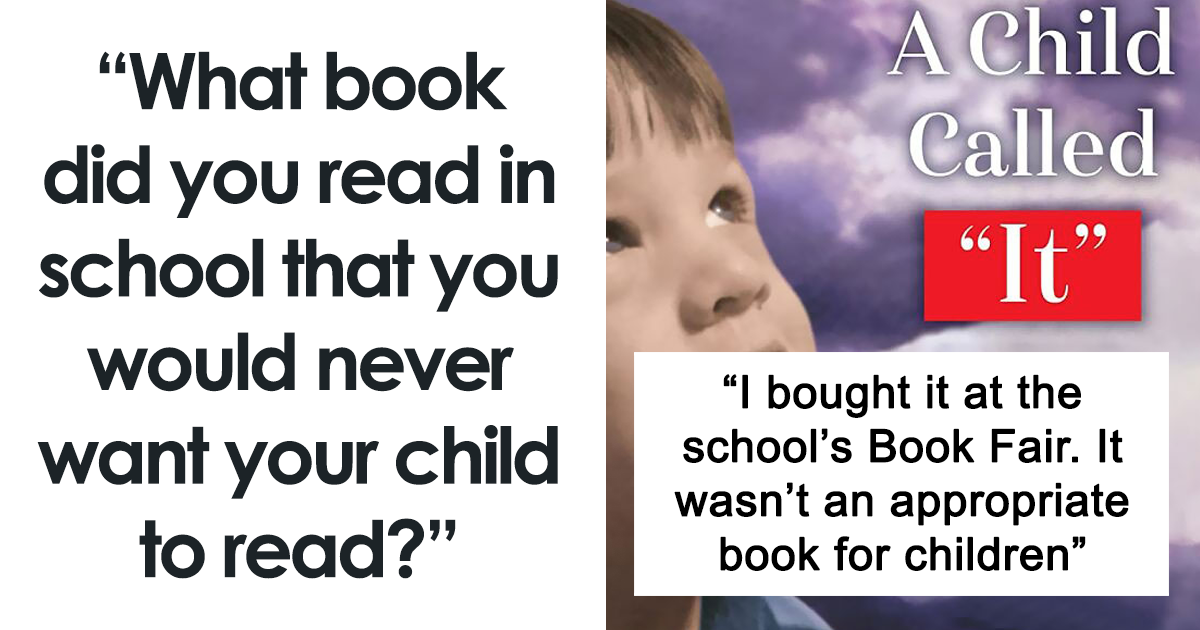
6. A Child Called “It” by Dave Pelzer
This memoir deals with severe childhood abuse. While some readers find it powerful, many parents feel it is far too intense for young children, especially without emotional support. The book may belong in older teen or adult conversations about resilience and trauma, but not as casual elementary or middle-grade reading.
7. Cyrano de Bergerac by Edmond Rostand
On the surface, it is romantic, witty, and dramatic. However, some parents worry that young readers may absorb a strange message about idealized love, hidden identity, and persistence without consent or honesty. With good teaching, it can spark smart conversations. Without that, students may walk away thinking grand gestures are a substitute for emotional maturity.
8. 1984 by George Orwell
1984 is one of the most important dystopian novels ever assigned by teachers with serious faces. The concern is age. Its themes of surveillance, control, propaganda, fear, and psychological pressure can be too heavy for younger readers. Older students can benefit from it, especially when paired with discussions about history, media, technology, and civic life.
9. The Bluest Eye by Toni Morrison
Toni Morrison’s work is profound, literary, and emotionally demanding. The Bluest Eye addresses racism, beauty standards, family pain, and trauma. Many parents would not say children should never read Morrison, but they may insist that this novel requires maturity, preparation, and sensitive teaching. It should never be tossed into a syllabus like just another chapter quiz.
10. Where the Red Fern Grows by Wilson Rawls
This book has introduced generations of students to love, loyalty, and the unique heartbreak of literary dogs. Parents who cried into their desks may hesitate before giving it to sensitive young readers. It is not inappropriate in the usual sense; it is emotionally devastating. For animal-loving children, adults may want to read alongside them and keep tissues nearby.
11. The Giving Tree by Shel Silverstein
Some readers see generosity. Others see a one-sided relationship wearing a children’s-book disguise. Parents may worry that the story can be used to teach self-sacrifice without boundaries. A better approach is to read it as a conversation starter: What is love? What is giving? When does kindness become unhealthy? Also, why does this tree need a therapist?
12. Of Mice and Men by John Steinbeck
Steinbeck’s novella is short, sharp, and emotionally heavy. Its themes include loneliness, disability, poverty, racism, dreams, and moral responsibility. Many parents remember reading it too young and feeling stunned by the ending. It can still be valuable, but younger teens may need careful guidance and space to process it.
13. A Day No Pigs Would Die by Robert Newton Peck
This coming-of-age novel is often remembered less as “farm life literature” and more as “why did school do this to my nervous system?” Its depiction of rural hardship can be intense for young readers. Parents may prefer it be reserved for older students or taught with clear context about historical setting and emotional content.
14. The Red Badge of Courage by Stephen Crane
Some parents object less to content and more to the fact that the book can feel painfully dull to students who are not ready for its style. The Civil War setting and psychological focus are important, but reluctant readers may experience it as a beige wall with chapters. If taught, it needs energy, historical background, and a teacher willing to translate the inner drama.
15. Little Women by Louisa May Alcott
Beloved? Absolutely. Long? Also absolutely. Parents who struggled through it may not want their children forced to read it before they can appreciate its family dynamics, moral lessons, and historical context. For many young readers, excerpts, adaptations, or guided reading may work better than assigning the whole novel like a literary mountain climb.
16. The Scarlet Letter by Nathaniel Hawthorne
This classic has symbolism, moral conflict, social judgment, and enough dense prose to make a teenager suddenly passionate about cleaning their room instead. Parents may question whether it is the best introduction to American literature for modern students. It can still teach valuable lessons about shame and hypocrisy, but it requires strong guidance and patience.
17. A Million Little Pieces by James Frey
This book became controversial because of questions about truth and memoir. Parents may not want students reading it without understanding how publishing, memory, marketing, and personal narrative can collide. If used, it belongs in a media literacy unit about authenticity, not simply as a recovery story.
18. Les Misérables by Victor Hugo
Victor Hugo’s novel is magnificent, moving, and enormous. Assigning it to unprepared students can feel less like reading and more like being trapped under a decorative antique bookshelf. Parents may not object to the content as much as the length and complexity. For many teens, selected chapters or a well-structured unit may be more effective.
19. Nightjohn by Gary Paulsen
This novel about slavery can be powerful, but it contains painful material that may be too intense for younger students. Parents may feel it should not be read too early or without historical context, emotional care, and serious discussion. Books about injustice matter, but children should not be left alone with the hardest parts of history.
20. Heart of Darkness by Joseph Conrad
Parents and students often criticize this book for its language, colonial viewpoint, and dense style. It can be used to discuss imperialism and racism, but it should not be presented as a neutral adventure story. If assigned, it needs critical framing and companion texts from voices historically pushed to the margins.
21. The Things They Carried by Tim O’Brien
This modern war literature is powerful, but emotionally intense. Students with family connections to military service or personal experiences with grief may find it difficult. Parents may not reject the book itself, but they may want warnings, alternatives, and compassionate teaching. War literature should open understanding, not ambush students emotionally.
22. Lord of the Flies by William Golding
The classic “children stranded without adults” novel is famous for its dark view of human nature. Parents may worry that younger students focus on the shocking behavior and miss the symbolism. Taught well, it can spark discussions about power, fear, and society. Taught poorly, it becomes “kids are awful, please write five paragraphs.”
23. To Kill a Mockingbird by Harper Lee
Many parents read this novel in school, and many still value it. Others worry about racial slurs, the centering of a white child’s perspective, and the way classrooms sometimes avoid deeper conversations about racism. The book can remain useful, but modern teaching should include broader voices and honest historical context.
24. Adventures of Huckleberry Finn by Mark Twain
Twain’s novel is frequently discussed because of its racial language and complicated satire. Some parents do not want children encountering that language without preparation. If taught, it should be handled with care, clear historical framing, and respect for students who may be personally affected by the language.
25. The Grapes of Wrath by John Steinbeck
This novel about poverty, migration, and economic injustice is deeply important, but it can be slow and bleak for younger readers. Parents may prefer students meet Steinbeck through shorter works first. When taught with historical background on the Great Depression and labor issues, it becomes far more meaningful.
26. Fahrenheit 451 by Ray Bradbury
Ironically, a book about censorship often appears in debates about school reading. Parents may not object to the novel’s message, but some students struggle with its abstract style and bleak setting. It works best when paired with real conversations about media, attention, technology, and why books matter in the first place.
Should These Books Be Banned?
Not necessarily. “I do not want my child reading this at age eleven” is different from “no child should have access to this book.” Good reading decisions depend on age, maturity, classroom support, family values, educational goals, and the child’s personal experience. Parents should have a voice in their own child’s reading life, but schools also need room to teach challenging literature responsibly.
The strongest solution is not panic. It is partnership. Teachers can provide content notes, alternative assignments, discussion guides, and historical context. Parents can read ahead, ask questions, and talk with children instead of treating books like mysterious emotional explosives hidden in backpacks. Students can learn that difficult books are not always endorsements; sometimes they are invitations to think.
How Parents Can Decide Whether a Book Is Right for Their Child
Look Beyond the Title
A famous title is not automatically appropriate, and a controversial title is not automatically harmful. Read summaries, reviews, educator notes, and sample pages. A book’s reputation is useful, but your child’s readiness matters more.
Ask What the Class Will Do With the Book
The same novel can be harmful in one classroom and transformative in another. Will students discuss historical context? Will difficult language be addressed? Are alternative books available? Is the teacher prepared for sensitive conversations?
Consider Your Child’s Personality
Some children love dark themes and big questions. Others carry sad stories around for weeks like emotional backpacks full of bricks. Parents know their children’s sensitivities better than any reading list does.
Read With, Not Just Before
If a book seems challenging but worthwhile, read along. Ask what your child thinks. Let them disagree. Let them be bored. Let them say, “This character is the worst.” That is not a failed reading experience. That is literary analysis wearing sneakers.
of Experience: What This Topic Feels Like in Real Family Life
Many parents do not rethink school books because they hate literature. In fact, it is often the opposite. They remember how powerful books were. They remember the first novel that made them cry, the first character who sounded like them, the first ending that made them stare at the wall like the wall owed them an explanation. Those memories matter. But so do the memories of being handed a book before they were ready.
Picture a parent cleaning out an old box from high school. Between a yearbook, a faded theater ticket, and a suspiciously dramatic journal, they find a paperback copy of Of Mice and Men or Lord of the Flies. Suddenly they are fourteen again, sitting under fluorescent lights, trying to act normal after reading something that felt much bigger than a homework assignment. Back then, nobody called it emotional readiness. Nobody asked whether the class needed time to process. The bell rang, everyone went to lunch, and the cafeteria served square pizza as if literature had not just rearranged everyone’s soul.
Now that same person has a child. The child may be ten, twelve, or fifteen. They are funny, moody, curious, dramatic, brilliant, and occasionally unable to locate socks that are directly in front of them. When the parent sees a familiar title on the reading list, the reaction is complicated. Part of them thinks, “That book mattered.” Another part thinks, “That book also flattened me like a pancake.”
This is where experience becomes useful. Parents can say, “I read this too. Here is what I remember. Here is what confused me. Here is what I wish an adult had explained.” That kind of conversation turns an assigned book into a shared experience. It also gives children permission to have honest reactions. They do not have to pretend a classic is automatically enjoyable. They do not have to admire every narrator, accept every message, or quietly absorb every painful scene. They can question it.
The best family reading conversations are rarely lectures. They sound more like, “What did you think of that?” or “Did that seem fair?” or “Do you think the author wanted us to agree with this character?” Sometimes they sound like, “Yes, I also thought that chapter would never end.” Humor helps. So does honesty. A parent does not need a PhD in literature to guide a child through a hard book. They need attention, empathy, and the willingness to say, “Let’s talk about it.”
In the end, the books parents fear are often the books they wish had been handled better. Maybe the answer is not to erase every uncomfortable title. Maybe it is to stop treating children like tiny filing cabinets for classics and start treating them like thoughtful readers who deserve context. A difficult book can build empathy, critical thinking, and historical awareness. But only when adults remember that children are not just reading words. They are meeting ideas, and some ideas should come with a hand to hold.
Conclusion
The phrase “books parents read back in school that their children should never read” sounds dramatic, but the real issue is more nuanced. Many of these books are not worthless. Some are extraordinary. The problem is that school reading lists can become frozen in time, passed down like literary leftovers, without asking whether a book still fits the students in front of us.
Parents, teachers, and librarians do not need to agree on every title. But they should agree that children deserve books chosen with care, taught with context, and discussed with honesty. A challenging book can be a doorway. Without guidance, it can also feel like being shoved into a dark hallway and told there will be a quiz on Friday.
So before declaring a book forbidden or forcing it into every backpack, ask better questions: Is the child ready? Is the teacher prepared? Is the book being taught critically? Are there alternatives? And most importantly, will this reading experience help a young person grow, or will it simply become one more school memory they complain about twenty years later on the internet?











