
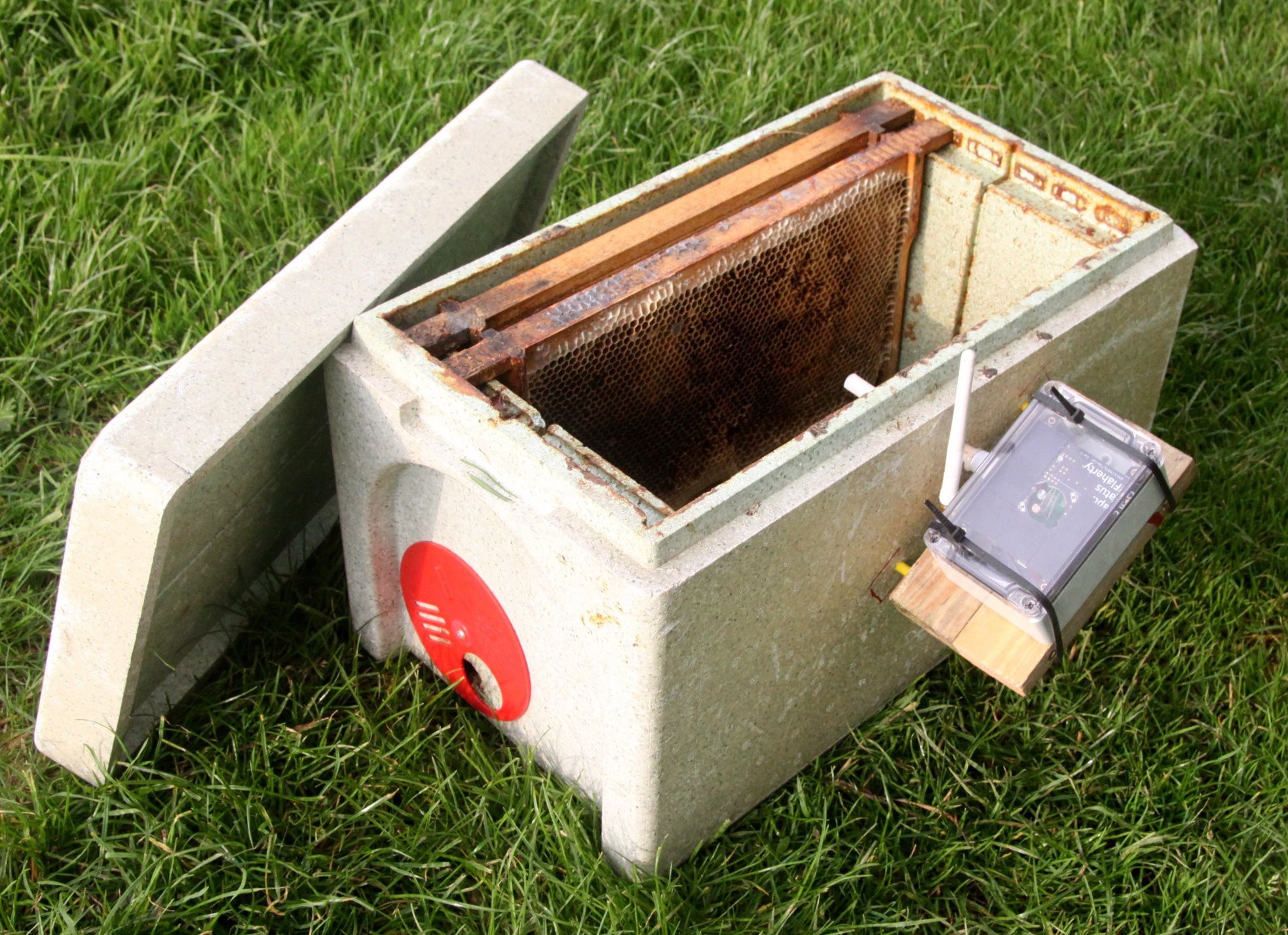
Bees are tiny, fuzzy, suspiciously organized flying engineers. They do not hold meetings with whiteboards, yet somehow they scout real estate, vote with dance moves, move thousands of workers at once, and make human project managers look like they are still buffering. That is exactly why the 2023 Hackaday Prize: Two Bee Or More Bee Swarm Detection project feels so charming: it takes one of nature’s most dramatic relocation events and asks a practical questioncan a beekeeper detect or even predict a honey bee swarm using sensors, solar power, LoRa radio, and machine learning?
The answer is not a magical “bee crystal ball,” thankfully, because nobody wants a gadget that confidently predicts bees will arrive “eventually, probably, on a Tuesday.” Instead, the project shows how a smart catch hive can monitor carbon dioxide, combine that signal with local weather data, and help a beekeeper know when scouting activity or a real swarm has moved in. It is open-source hardware with mud on its boots, sunshine on its solar panel, and just enough artificial intelligence to be useful without pretending to be the queen bee.
At its heart, this bee swarm detection idea is simple: bees breathe. One bee does not change the atmosphere of a box very much. A thousand bees absolutely do. When a swarm begins inspecting or occupying a catch hive, the carbon dioxide level inside the box can rise. Pair that with timing, temperature, humidity, wind, sunlight, and beekeeper observations, and you have a data-rich story about what the colony may be doing.
What Is “Two Bee Or More Bee Swarm Detection”?
Two Bee Or More Bee Swarm Detection refers to a Hackaday-featured project known on Hackaday.io as the AI Honey Bee Swarm Detector / Predictor System. The project was built around the real-world needs of a beekeeper trying to capture and protect local honey bees, especially native or locally adapted honey bee populations. Rather than climbing ladders and checking far-flung catch hives every few hours like a human-shaped squirrel, the builder designed a system that lets the hive report useful information remotely.
The project uses a catch hive, which is a box placed in an attractive location where scout bees may investigate before a swarm moves in. In the project description, the catch hive is positioned high above the apiary, and scouting activity may indicate that a swarm is forming somewhere in the surrounding area. If the box becomes occupied by many bees, the carbon dioxide inside rises because bees respire: they take in oxygen and breathe out CO2.
That CO2 signal is the clever part. The detector does not need a camera to recognize bee bodies, wings, or traffic at the entrance. It does not need to listen to every buzz and determine whether the bees sound “excited,” “confused,” or “politely British.” Instead, it watches an environmental fingerprint. Elevated CO2 during the day may suggest scouting or heavy inspection. Elevated CO2 that remains high into the night can be stronger evidence that a swarm has taken up permanent residence.
Why Swarm Detection Matters
Honey bee swarming is not a malfunction. It is reproduction at the colony level. When a colony becomes crowded or conditions encourage expansion, the old queen may leave with a large portion of the workers while the remaining colony raises a new queen. To a beekeeper, this moment can be both beautiful and chaotic. It is part wildlife documentary, part air-traffic emergency, and part “where did half my bees go?”
Swarming matters because a captured swarm can become a productive new colony, while an uncaptured swarm may settle in a wall, roof, tree hollow, or other inconvenient location. In responsible beekeeping, catching swarms can help preserve local genetics, reduce nuisance colonies in human spaces, and give bees a managed home where disease, nutrition, and hive health can be monitored.
The project also sits inside a much larger conversation about pollinator health. Honey bees contribute enormously to crop pollination, and the USDA Agricultural Research Service describes managed honey bees as a critical link in U.S. agriculture. At the same time, honey bee colonies face pressure from parasites, pests, pathogens, poor nutrition, pesticide exposure, and environmental stress. In that context, tools that help beekeepers monitor colonies more intelligently are not just gadget candy. They can support better management decisions.
How the Smart Catch Hive Works
1. The Catch Hive Becomes a Sensor Station
A traditional catch hive is usually a passive lure. You place it where scout bees may find it, make it smell and feel like a good home, and hope the bees agree with your real estate listing. The Hackaday project upgrades that idea by turning the catch hive into a sensor station.
The hive can sit in a tree or other elevated position while the electronics monitor conditions inside. Since catch hives may be scattered across different locations, remote monitoring is a major advantage. Nobody wants to hike around every day just to discover that Box A contains nothing, Box B contains spiders, and Box C contains the entire bee equivalent of a moving truck.
2. CO2 Becomes the Main Clue
Carbon dioxide is a practical signal because it scales with bee presence. A few scout bees may cause small changes, while a full swarm can cause a much larger increase. In the project logs, the builder observed elevated readings during intense scouting and much higher readings when a swarm appeared to have colonized the catch hive. Ambient CO2 was referenced around 420 ppm, while a strong scouting or occupancy event rose far above that, including reports above 2,000 ppm when a swarm was likely inside.
Research on honey bee hives supports the idea that CO2 is meaningful inside colonies. Honey bee colonies regulate internal temperature and gas conditions, and CO2 is a byproduct of respiration. That does not mean a CO2 number alone can explain everything, but it is a powerful variable when combined with time of day, weather, and observed swarm behavior.
3. LoRa Sends the Message Home
The project uses LoRa communication because remote beekeeping locations are not always friendly to Wi-Fi. A catch hive may be up a tree, across a field, behind a hedgerow, or in a place where your router gives up and writes a resignation letter. LoRa and LoRaWAN technologies are designed for long-range, low-power Internet of Things communication, making them attractive for rural sensors, environmental monitors, and other devices that need to send small packets of data over long distances.
The Hackaday feature describes a custom PCB with a solar-powered LoRa radio. The board contains an ESP32 D4 and a 1-watt Ebyte E22-400M30S LoRa module. The ESP32 family is widely used in IoT projects because it combines microcontroller capability with wireless features and low-power operating modes. The Ebyte module provides high-power LoRa transmission, useful when sensor boxes are placed far from a gateway.
4. Solar Power Keeps It Practical
Solar power is not just a green flourish here. It is what makes the device practical. A swarm detector placed high in a tree is not something you want to service every weekend. Solar harvesting helps keep the system running through the swarming season, especially when paired with low-power electronics and careful transmission schedules.
This is where the project fits beautifully into the Green Hacks spirit of the 2023 Hackaday Prize. It is not green because it has a leaf sticker. It is green because it uses renewable power, supports pollinator-aware beekeeping, and solves a field problem with efficient hardware.
Where Machine Learning Enters the Hive
The project does not stop at “CO2 high equals bees.” That would be useful, but limited. The builder also collected weather data and human observations, then shaped the information into a dataset suitable for training an XGBoost model. XGBoost is a popular gradient boosting library often used for structured data, classification, and prediction tasks. In plain English, it is good at looking at columns of real-world variables and finding patterns that may help classify outcomes.
For bee swarm prediction, the variables may include CO2 readings, the maximum CO2 value over a recent window, temperature, humidity, wind, sunlight, date, time of year, and manual observations of whether a swarm was visible. The target can be a simple yes-or-no label: swarm observed or not observed.
This approach matters because swarming is not random. The builder noted that local bees tended to swarm on warm, humid, sunny afternoons with little wind, rather than during rainy or windy conditions. That aligns with common beekeeping experience: weather and season strongly influence colony behavior. Machine learning can help combine those signals without forcing the beekeeper to write a rigid rule like “if CO2 is above X and humidity is Y and wind speed is Z, panic politely.”
Why XGBoost Makes Sense for This Project
XGBoost is not the only possible model, but it is a sensible choice for this type of project. Bee swarm detection involves tabular data: sensor readings, weather values, timestamps, and labels. XGBoost can handle nonlinear relationships and feature interactions better than a simple spreadsheet formula. It can also estimate which factors are most influential, helping the builder learn whether CO2, temperature, humidity, wind, or recent scouting patterns matter most.
There is also an important practical reason: this project likely does not start with millions of examples. A beekeeper may collect a small number of swarm events over a season. A full deep learning system would be overkill, like using a bulldozer to plant basil. Gradient boosting models can be effective on smaller structured datasets when the features are meaningful and the training process is handled carefully.
Still, a good article about AI should say the quiet part out loud: machine learning is not magic. One swarm is not enough data to build a reliable predictor. A single season may reveal patterns, but more seasons and more catch hives will make the model stronger. The best version of this system would keep collecting data over multiple years, across different weather patterns, hive types, and bee populations.
The Hardware: Simple Idea, Serious Field Constraints
Field hardware is where elegant ideas go to meet rain, insects, dead batteries, loose connectors, condensation, heat, curious animals, and the occasional human who says, “I’ll just mount it quickly” while standing on a ladder with bees nearby. The honey bee swarm detector has to survive all of that.
The project’s custom PCB and solar harvester design are important because field installations need reliability. A sensor node must wake up, measure CO2, log or transmit the data, and conserve energy. The radio must reach the gateway. The enclosure must protect the electronics while still allowing accurate air sampling. The system must avoid becoming a cozy bug hotel for everything except the bees.
Sensor placement is also crucial. CO2 can vary within a hive depending on airflow, ventilation, bee clustering, and temperature. If a sensor is placed poorly, it may see stale air, outside air, or misleading short-term spikes. A robust design needs repeated testing to understand normal baselines, scouting signatures, and true occupancy signatures.
What Makes This Hackaday Prize Project Stand Out
The best Hackaday projects often share three qualities: they solve a real problem, they explain the build, and they invite others to learn. This project checks all three boxes. It is not a vague “AI for nature” concept. It is a working beekeeping tool with logs, hardware files, field observations, and messy real-world data.
It also has personality. The title “Two Bee Or More Bee” is playful, but the project underneath is serious. It uses practical sensing to reduce unnecessary manual checks and helps the beekeeper respond when a swarm arrives. It also shows how open-source hardware can serve small-scale agriculture, conservation-minded beekeeping, and citizen science.
In the 2023 Hackaday Prize context, that matters. The prize’s 10-year milestone emphasized open-source hardware and projects aimed at real-world impact. A solar-powered, LoRa-connected bee swarm monitor is exactly the kind of build that turns a niche problem into a shareable design pattern. Today it is bees. Tomorrow it could be bat boxes, bird nests, greenhouse vents, livestock shelters, or remote compost systems. Nature is full of things worth monitoringthough some of them smell worse than bees.
Potential Improvements and Future Ideas
Better Data Across More Seasons
The strongest improvement would be more data. Swarming is seasonal and local. A model trained on one region, one apiary, or one weather pattern may not generalize to another. Collecting data across several years would help distinguish true biological signals from lucky coincidences.
Multiple Sensor Types
CO2 is powerful, but a multi-sensor design could improve accuracy. Temperature, humidity, pressure, sound, weight, entrance activity, and light exposure could all contribute. Audio analysis, for example, may detect changes in hive activity, while weight sensors may show whether a colony has settled in and begun using the box consistently.
Smarter Alerts
A practical system should avoid alert fatigue. If a beekeeper receives twenty notifications that say “maybe bees,” the phone may end up in a drawer. Better alerts would classify events as scouting, likely occupancy, overnight occupancy, or urgent inspection recommended. Clear confidence levels would make the system more useful.
Community Data Sharing
Because the project is open-source in spirit, a community dataset could become extremely valuable. Beekeepers in different climates could upload anonymized sensor readings and swarm outcomes. Over time, that could help identify regional swarm patterns and improve prediction models for everyone.
SEO Takeaway: Why This Topic Has Long-Term Interest
The phrase 2023 Hackaday Prize Two Bee Or More Bee Swarm Detection sits at the intersection of several growing search interests: smart beekeeping, open-source hardware, AI agriculture, LoRa IoT, pollinator health, and environmental sensing. That makes it more than a one-off maker story. It is a useful example of how low-cost electronics and machine learning can help with practical ecological work.
Readers interested in beekeeping will find the swarm management angle useful. Hardware builders will notice the solar LoRa architecture. Data science readers will recognize the appeal of XGBoost for small, structured field datasets. Environmental readers will appreciate a project that supports bees without pretending technology alone can save every pollinator. The result is a topic with multiple entry points and enough depth to satisfy both curious beginners and experienced makers.
Practical Experiences and Lessons from Bee Swarm Detection
One of the biggest lessons from a project like this is that the natural world rarely behaves like a clean lab demo. In a lab, the sensor sits nicely on a bench, the battery is charged, the Wi-Fi works, and nobody is trying to sting your sleeve. In a catch hive, everything is alive, moving, humid, and seasonal. A beekeeper using a smart swarm detector quickly learns that the technology is only half the story. The other half is interpretation.
For example, a sudden CO2 rise may look exciting, but it needs context. Is it a swarm moving in, a crowd of scout bees spending time inside, poor ventilation, a sensor calibration issue, or simply a hot day changing airflow? A smart system should not replace the beekeeper’s judgment. It should act like a helpful assistant tapping the beekeeper on the shoulder and saying, “This box deserves attention.” That is much more realistic than expecting a sensor to declare the complete emotional state of 1,000 bees.
Another practical lesson is that timing matters. In the project logs, elevated CO2 during scouting was valuable, but high readings that persisted after dark were especially meaningful. Scout bees may come and go during the day, but a full swarm staying overnight suggests occupancy. This difference between a short spike and a sustained signal is the kind of insight that comes only from field experience. It is also exactly the kind of pattern machine learning can help formalize after enough examples are collected.
Installation experience matters too. A catch hive placed high in a tree may be attractive to bees, but it also makes maintenance harder. Solar panels need sun, antennas need good placement, enclosures need weather protection, and sensors need airflow. Every design decision creates a trade-off. A perfect radio location may be terrible for solar charging. A watertight enclosure may accidentally trap air and distort CO2 readings. A convenient mounting height may be less attractive to scouts. Beekeeping technology is really a long conversation between biology, electronics, and gravity.
There is also the human side. A swarm can arrive fast, and moving it safely takes patience. The project’s field notes about gradually moving a caught swarm down from a ladder show the difference between “detected bees” and “successfully managed bees.” Once bees orient to a location, moving their box too far too quickly can confuse foragers. Small daily movements allow bees to reorient without chaos. That is a humble but important reminder: good data helps, but good animal handling still matters.
Finally, the experience of building a bee swarm detector teaches a broader lesson about useful AI. The best AI in small agriculture is not flashy. It does not need to write poetry, argue online, or generate a picture of a bee wearing sunglasses. It needs to notice patterns, reduce wasted trips, support better timing, and help humans make calmer decisions. The 2023 Hackaday Prize bee swarm detection project succeeds because it treats AI as a tool, not a throne. The bees are still in charge, naturally. They have been running distributed systems for millions of years, and unlike most software teams, they ship honey.
Conclusion
The 2023 Hackaday Prize: Two Bee Or More Bee Swarm Detection project is a delightful example of practical innovation: a beekeeper’s problem solved with environmental sensing, solar-powered hardware, LoRa communication, and machine learning. It does not overcomplicate the biology. It starts with a humble observationlots of bees produce measurable CO2and builds a useful monitoring system around it.
For beekeepers, the project offers a smarter way to watch catch hives and respond when a swarm moves in. For makers, it demonstrates how open-source hardware can operate in demanding outdoor conditions. For data enthusiasts, it shows how XGBoost and weather-informed features can turn messy field readings into useful predictions. And for everyone else, it is a reminder that some of the best technology does not replace nature. It listens to it more carefully.
Note: This article is prepared for web publication in standard American English and is based on real Hackaday project information, established honey bee swarm biology, IoT communication principles, and documented hive CO2 monitoring concepts.











