
Loki is the rare Marvel character who can betray his family, fake his death, steal a cube, flirt with apocalypse, and still leave audiences saying, “Honestly, he had a point.” That is not just charisma. That is a full-time supernatural disorder wrapped in green leather and unresolved childhood issues.
Marvel Studios’ Loki on Disney+ already proved that the God of Mischief is more than Thor’s dramatic brother with excellent hair. The series turned him into a cosmic survivor, a TVA problem child, a defender of free will, and finally a lonely guardian of branching timelines. That is a huge evolution from “kneel before me,” and yet the comics still contain enough wild Loki material to fuel several more seasons, specials, animated episodes, and possibly one extremely confused therapy group.
The best Loki comic plots are not just strange for the sake of being strange. They work because Loki is a walking contradiction: villain and hero, liar and truth-teller, chaos gremlin and tragic philosopher. The MCU has already touched on variants, time travel, identity, magic, and multiversal weirdness. Now it should go all in. Here are four bonkers Loki plots Marvel should definitely adapt for Disney+preferably with the confidence of a studio that already gave us Alligator Loki and somehow made him emotionally important.
Why Loki Is Perfect for Disney+ Weirdness
Some Marvel characters need a straightforward plot. Loki does not. Loki thrives when the rules are bent, folded, rewritten, and then sold back to Odin as a limited-edition prophecy. Disney+ is the ideal home for these stories because Loki’s best adventures are often too odd for a two-hour movie but perfect for episodic storytelling.
A Loki series can jump from political satire to magical horror, from Asgardian family drama to absurd animal mythology, without breaking the character. In fact, that tonal whiplash is part of the appeal. Loki is funny, dangerous, wounded, theatrical, and clever enough to know when the audience is watching. The more bizarre the premise, the more room there is for emotional payoff.
With the MCU currently leaning into the Multiverse Saga, Marvel has every excuse to bring in comic plots that once felt impossible. President Loki already appeared as a variant. Kid Loki and Alligator Loki have already entered the conversation. The TVA exists. Timelines are loose. Reality is basically a group project with no adult supervision. This is the moment to adapt the wild stuff.
1. Vote Loki: The God of Mischief Runs for President
Let us begin with the most terrifying sentence in modern democracy: Loki announces a presidential campaign.
Vote Loki is one of those Marvel concepts that sounds like a meme until you realize it is a sharp political satire hiding under a horned helmet. The comic imagines Loki entering a U.S. presidential race with exactly the kind of honesty only the God of Lies could deliver. He does not pretend to be pure. He does not offer warm oatmeal speeches about unity. He basically tells people he is lying, and somehow that becomes part of the charm.
For Disney+, this could be a brilliant limited series or special presentation. The MCU version would not need to copy any real election too closely. In fact, it would be stronger as a broader satire about celebrity politics, misinformation, fan culture, image management, and the public’s strange love affair with charming villains. Loki could run not because he wants to govern, but because he wants to test whether humans actually prefer truth or performance.
How Disney+ Could Adapt It
The setup is simple: a Loki variant appears on Earth and launches a campaign promising to “restore glorious purpose.” Half the public is horrified. The other half buys the merch. The TVA, S.H.I.E.L.D. leftovers, Damage Control, and several exhausted journalists try to figure out whether this is an actual political campaign or an elaborate spell with campaign buttons.
The heart of the story should be a reporter who refuses to be dazzled. Loki is at his best when someone can see through the sparkle and call him out. A skeptical journalist could investigate his motives while the public turns him into a viral icon. Every debate becomes a magic show. Every scandal becomes a punchline. Every speech contains three lies, one painful truth, and at least one insult aimed at Thor.
The reason this works is that it gives Loki a mirror. He understands manipulation better than anyone, but he also understands loneliness, public hatred, and the hunger to be loved. A Disney+ version of Vote Loki could be hilarious on the surface and surprisingly sad underneath. That is the sweet spot for Loki storytelling: jokes first, existential damage second.
2. Loki: Sorcerer Supreme Doctor Strange’s Worst Workday
Imagine waking up, checking the magical balance of the universe, and discovering that Loki now has the job of Sorcerer Supreme. Somewhere, Doctor Strange’s cape would immediately file a complaint.
The Loki: Sorcerer Supreme arc from Doctor Strange is exactly the kind of deliciously unstable premise Disney+ should embrace. Loki with ordinary mischief is already a problem. Loki with top-tier mystical authority is a fire alarm wearing a crown. The concept practically writes itself: the God of Lies gets access to Earth’s greatest magical office, and everyone must decide whether he is trying to become better or simply becoming more dangerous with better lighting.
This plot would also let Marvel connect Loki’s Disney+ world with the supernatural side of the MCU. Doctor Strange, Wong, Clea, the Sanctum Sanctorum, magical relics, cursed dimensions, and cosmic loopholes could all enter the story. Loki does not need to replace Strange permanently. The fun is in the uncertainty. Is Loki stealing power, earning it, or being used by a deeper magical force?
Why It Fits the MCU
Loki’s Disney+ arc ended with him carrying a cosmic burden. A Sorcerer Supreme adaptation could explore what happens when another Loki variant tries to shortcut redemption. Instead of sacrificing himself, this Loki might decide, “What if I simply become Earth’s most important wizard and make everyone respect me?” Very healthy. No concerns there. Someone get Wong a stress donut.
The show could frame the story as a magical mystery. Strange is missing or powerless. Wong suspects foul play. Loki insists he won the title legally, mystically, and with only a small amount of fraud. Meanwhile, magical threats begin behaving strangely because they do not know whether to fear Loki, worship him, or ask for campaign advice from the previous section.
The deeper theme would be trust. Can Loki hold power without abusing it? Can heroes accept change when the person changing has a villainous résumé longer than an Asgardian banquet table? And can Loki ever do good without making it look suspicious? That last question is practically his brand.
3. Journey Into Mystery: Kid Loki Tries to Be Good
If Disney+ wants heartbreak with jokes, Journey Into Mystery is sitting right there, holding a tiny dagger and smiling nervously.
Kid Loki is one of the richest versions of the character in Marvel Comics. The basic idea is wonderfully cruel: Loki is reborn as a young boy who is not fully chained to the sins of his old self. He wants to be better. He wants people to believe he can be better. Unfortunately, he is still Loki, and the universe has a very long memory. Asgardians do not exactly hand out second chances like Halloween candy.
This is a perfect Disney+ story because it turns the usual Loki formula inside out. Instead of asking whether a villain can become good, it asks whether anyone will allow him to. Kid Loki can do the right thing and still be treated like a bomb with cheekbones. That creates instant drama, especially if Thor is involved.
How the Series Could Handle Kid Loki
The MCU has already introduced a Kid Loki variant, but barely scratched the surface. A limited series could follow him after the events in the Void. Maybe he escapes into a damaged timeline. Maybe he finds a version of Asgard that never fell. Maybe the TVA recruits him because nobody expects a child-sized trickster to solve a cosmic crisis. That would be their first mistake, but also possibly their best idea.
The story should keep Kid Loki clever, funny, and emotionally guarded. He should not be written as simply “cute Loki.” The appeal is that he is young but not innocent in a simple way. He carries the shadow of a name that has already done terrible things. When he helps, people assume a trap. When he tells the truth, they wait for the lie. When he saves the day, someone still checks their pockets afterward.
Disney+ could make this a coming-of-age fantasy with sharp teeth. Think magical quests, talking artifacts, Asgardian politics, uncomfortable family reunions, and one devastating question: if everyone expects Loki to become a monster, does that expectation help create the monster?
4. Frog Thor and the Glorious Madness of Throg
Now we arrive at the plot that proves comics are a sacred art form and also sometimes a fever dream with a hammer.
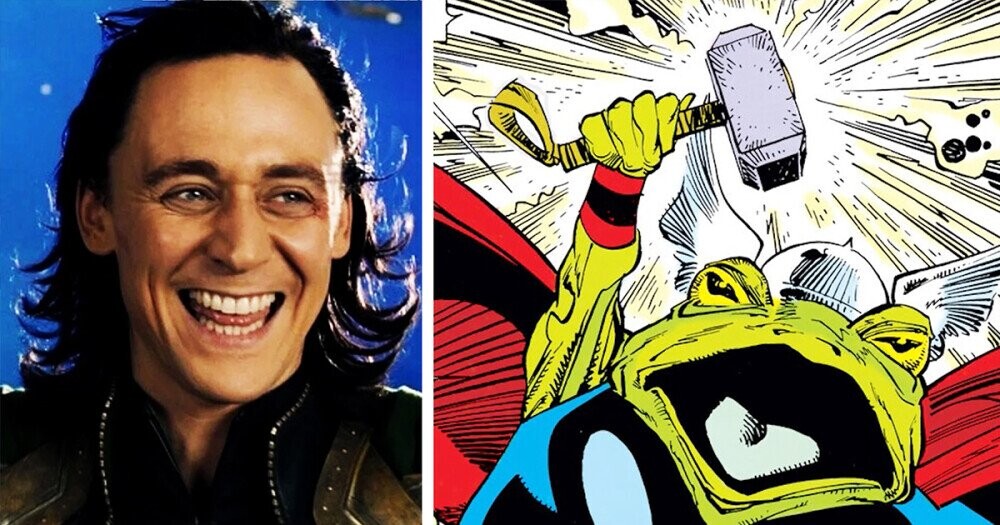
Thor once became a frog. Not metaphorically. Not spiritually. Frog. As in small, green, hopping, and probably furious about pond etiquette. The larger frog mythology eventually includes Throg, also known as Puddlegulp, a heroic frog connected to the legacy of Thor and worthy of a tiny hammer called Frogjolnir. This is ridiculous. It is also magnificent.
The MCU has already nodded to this madness with a tiny trapped frog Thor Easter egg in Loki. That was not enough. Disney+ should adapt the concept properly, because the only thing better than a thunder god is a thunder frog with the emotional intensity of a Shakespearean prince trapped in a terrarium.
Why Throg Deserves More Than an Easter Egg
On paper, Frog Thor sounds like a joke that should last twelve seconds. In practice, it can be surprisingly heroic. The best absurd Marvel ideas work because the storytelling treats the emotional stakes seriously. Alligator Loki was funny, yes, but the show did not wink so hard that the character became meaningless. It let the absurdity exist inside a sincere world.
A Throg episode could be a standalone Disney+ special. Loki accidentallyor “accidentally,” because quotation marks are legally required around that mancreates a frog-sized Asgardian crisis. A tiny kingdom of frogs faces a rat army. Thor is unavailable, because Chris Hemsworth’s schedule is probably guarded by dragons. Kid Loki, Mobius, or a TVA field team must enter this miniature battlefield and discover that heroism is not measured in height, species, or ability to open automatic doors.
This would also give Marvel room to play with animation, practical comedy, and mythic narration. Imagine a full episode told like an epic saga, except the warriors are frogs, rats, and one deeply offended Asgardian spellcaster. It would be weird. It would be meme-friendly. It would sell toys. Most importantly, it would understand that Loki stories should never be afraid of looking silly if the heart is real.
What These Four Plots Have in Common
At first glance, a presidential campaign, a magical promotion, a child trickster redemption arc, and a frog thunder god do not seem to belong in the same conversation. Then again, Loki once made emotional growth out of time bureaucracy, so let us not pretend normal rules apply.
These plots work because each one tests a different version of Loki. Vote Loki tests his relationship with truth and public adoration. Loki: Sorcerer Supreme tests his relationship with power. Journey Into Mystery tests his relationship with redemption. Throg tests whether the MCU is brave enough to let a tiny amphibian carry mythological dignity like a damp little champion.
Together, they show why Loki remains one of Marvel’s most flexible characters. He can lead a political satire, invade a magical thriller, break hearts in a coming-of-age fantasy, and cause amphibian chaos without feeling out of character. That range is rare. It is also why Disney+ should not treat the end of Loki Season 2 as the end of Loki stories. The main Loki may be holding the multiverse together, but variants, flashbacks, animated specials, and side stories can still run wild.
How Marvel Could Make the “Video” Angle Work
Because the title includes “VIDEO,” Marvel could frame these plots as an in-universe TVA briefing. Picture Miss Minutes hosting a cheerful instructional video titled “So You Found a Loki Variant.” The screen glitches. Mobius sighs. A file opens on four unstable timelines. Each segment previews one possible adaptation: President Loki giving a debate speech, Sorcerer Supreme Loki rearranging the Sanctum, Kid Loki stealing a magical key for noble reasons, and Throg raising Frogjolnir while dramatic music takes itself very seriously.
This format would let Marvel test audience interest before committing to a full series. A Disney+ special, animated anthology, or mockumentary-style TVA file could introduce these plots with humor and style. It would also match the brand of the original series, which loved retro training videos, office absurdity, and cosmic dread served under fluorescent lighting.
Experience: Why Loki’s Weirdest Stories Feel So Watchable
Part of the joy of following Loki across movies, Disney+ episodes, comics, and fan discussions is realizing that the character is almost impossible to exhaust. Some heroes become less interesting when they change too much. Loki becomes more interesting. Every version reveals another angle: the jealous brother, the bored prince, the wounded child, the failed conqueror, the reluctant hero, the stylish disaster who would absolutely monologue during a fire drill.
Watching Loki stories also teaches a useful lesson about adaptation. Fans do not always need comic accuracy in a scene-by-scene way. What they want is the flavor. They want the emotional truth, the dramatic mischief, the strange confidence that says, “Yes, this plot is about a frog with a hammer, and yes, you may cry by the end.” Marvel’s strongest Disney+ moments often happen when the studio commits to a risky idea instead of sanding it down into something ordinary.
That is why these four plots feel so promising. Vote Loki would give viewers a funny, uncomfortable look at charisma and truth. Many people have seen public figures turn obvious flaws into selling points, so Loki campaigning with a grin would feel both absurd and weirdly familiar. The story could make audiences laugh while asking why people fall for performance even when they know it is performance.
Loki: Sorcerer Supreme would satisfy viewers who love Marvel’s mystical corner but want it with sharper comedy. Doctor Strange stories can become visually huge, but adding Loki makes the magic personal. He would not just cast spells; he would use magic as theater, armor, and self-justification. Every spell would feel like a confession wearing glitter.
Journey Into Mystery would hit the emotional audience hardest. Kid Loki’s struggle is painfully relatable even without the Asgardian baggage. Plenty of people know what it feels like to be judged by an old version of themselves. The fantasy exaggerates that feeling into gods, prophecies, and cosmic consequences, but the core remains human: Can I become better if nobody believes I can?
And Throg? Throg is the reminder that not every great story has to begin with a grim prophecy carved into a wall. Sometimes joy is enough. Sometimes a tiny frog warrior can carry a whole episode because the creators understand that silliness and sincerity are not enemies. In a franchise full of universe-ending threats, a small heroic tale can feel refreshing. Not every battle needs a sky beam. Some battles need lily pads.
From a viewer’s perspective, Loki’s weird plots are also a cure for superhero sameness. The genre has repeated many formulas: origin story, mirror villain, glowing portal, city destruction, emotional speech, bonus scene. Loki lets Marvel break that pattern. His stories can be strange, talky, magical, political, tragic, or completely unhinged. He is a permission slip for creativity.
The best experience of watching or reading Loki is never knowing whether the next scene will deliver a joke, a betrayal, a philosophical question, or a reptile in horns. That unpredictability is valuable. Disney+ should use it. Give us President Loki shaking hands at a rally. Give us Sorcerer Supreme Loki pretending he definitely read the manual. Give us Kid Loki trying to outrun destiny. Give us Throg, you cowards. The multiverse is already broken; we might as well let the frog have his hammer.
Conclusion
Loki has never been just one thing, and that is exactly why Marvel should keep adapting his strangest comic plots for Disney+. The character can carry satire, fantasy, heartbreak, and full amphibian thunder without losing his identity. Vote Loki, Loki: Sorcerer Supreme, Journey Into Mystery, and Throg each offer a different path forward after the Disney+ series: smarter comedy, bigger magic, deeper redemption, and joyful weirdness.
The MCU does not need to make Loki normal. Normal is what you ask for when you are out of ideas. Loki is at his best when the story is bold enough to be ridiculous and sincere at the same time. If Marvel wants more Disney+ projects that feel fresh, funny, and emotionally sharp, the comics have already handed over the blueprint. It is green, gold, slightly cursed, and possibly covered in pond water.











