
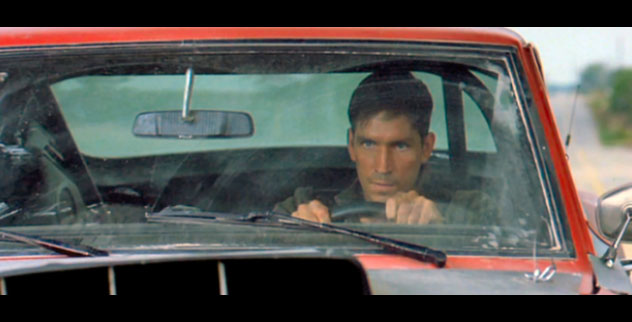
Editorial note: This article uses the word “psychopath” in the common pop-culture sense, not as a medical diagnosis. Real mental health conditions are more complex than movie villains, and most people with mental illness are not dangerous. Cinema, however, loves a chilling character who smiles politely while the audience quietly checks the door locks.
Why Cinematic Psychopaths Fascinate Us
The best cinematic psychopaths do not simply scare us because they are violent, cruel, or unpredictable. They scare us because they understand people. They know how to read a room, charm a stranger, weaponize silence, and turn normal social behavior into a trap. In great films, the villain is not just a person doing terrible things; the villain is a mirror held at a very uncomfortable angle.
That is why characters like Hannibal Lecter, Anton Chigurh, Norman Bates, Patrick Bateman, and Annie Wilkes remain lodged in pop culture. They are not all realistic. Some are almost mythological. Some are theatrical nightmares in designer suits. Some are ordinary-looking people whose danger comes from how normal they seem. Together, they show how cinema turns fear, power, obsession, charm, and moral emptiness into unforgettable storytelling.
For this ranking, the focus is not body count or shock value. That would be lazy, and also a little too much like letting a horror fan organize a wedding seating chart. Instead, this list considers performance, cultural impact, psychological complexity, realism, writing, and how deeply each character shaped the movie around them.
Top 10 Cinematic Psychopaths Ranked
1. Anton Chigurh No Country for Old Men (2007)
Anton Chigurh, played by Javier Bardem, is often discussed as one of the most realistic cinematic psychopaths ever put on screen. He is not flamboyant. He does not perform evil like a circus act. He simply arrives, speaks in a flat calm voice, and makes every scene feel as if the temperature dropped twenty degrees.
What makes Chigurh terrifying is his strange personal code. He treats chance, fate, and consequences as if they are legal documents. The famous coin toss scenes work because they reveal a man who has outsourced morality to a private philosophy that no sane person agreed to join. Bardem’s performance avoids the usual villain fireworks. No wild speeches. No theatrical rage. Just cold focus, patient movement, and a haircut that somehow became its own supporting character.
Chigurh tops this list because he feels less like a movie monster and more like an unstoppable principle. He is death wearing boots, carrying rules, and never asking for applause.
2. Hannibal Lecter The Silence of the Lambs (1991)
Hannibal Lecter, played by Anthony Hopkins, is the velvet-gloved nightmare of cinematic villainy. He is brilliant, cultured, polite, and terrifyingly observant. He can make a conversation feel more dangerous than a chase scene. That is the magic of Lecter: his weapon is not just violence, but attention.
In The Silence of the Lambs, Lecter appears for a surprisingly limited amount of screen time, yet he dominates the film. His conversations with Clarice Starling are psychological chess matches. He notices everything: fear, ambition, trauma, accent, posture, hesitation. He is not simply trying to escape confinement; he is studying the people around him like rare insects in a glass case.
Clinically realistic? Probably not. Cinematically perfect? Absolutely. Lecter is a gothic fantasy of intelligence without conscience. He is what happens when a horror villain reads better wine labels than most restaurant managers.
3. Norman Bates Psycho (1960)
Norman Bates, played by Anthony Perkins, changed screen horror forever. Before Psycho, movie evil often looked dramatic, distant, or supernatural. Norman looked shy. Nervous. Helpful. He ran a motel. He smiled awkwardly. He seemed like the kind of guy who would apologize if your room key squeaked.
That surface innocence is why Norman remains one of cinema’s most disturbing characters. Alfred Hitchcock’s genius was making the audience feel sympathy for him before revealing the full horror of the Bates Motel. Perkins gives Norman a fragile, boyish quality that makes him unpredictable without turning him into a cartoon.
Norman’s place on this list comes from legacy as much as fear. He helped establish the modern psychological thriller. He proved that the scariest person in the movie might not be the obvious monster, but the quiet man behind the desk saying, “We have plenty of rooms.” Travel tip: always read motel reviews.
4. Patrick Bateman American Psycho (2000)
Patrick Bateman, played by Christian Bale, is a monster made of business cards, skincare routines, status anxiety, and moral emptiness. He is funny because he is absurd. He is frightening because he is not as absurd as we would like.
American Psycho works as horror, satire, and social commentary. Bateman is less a realistic criminal profile and more a walking critique of consumer obsession. He has perfect suits, perfect hair, perfect restaurant opinions, and absolutely no stable inner life. He wants to be admired, envied, feared, and remembered, yet he is surrounded by people so shallow they can barely tell one expensive haircut from another.
Bale’s performance is sharp enough to cut glass. He makes Bateman both ridiculous and dangerous, switching from polished charm to barely contained panic in seconds. Bateman earns his spot because he turned narcissism into a horror-comedy art form. Somewhere, a business card is still sweating.
5. Annie Wilkes Misery (1990)
Annie Wilkes, played by Kathy Bates, is one of cinema’s most terrifying examples of obsession disguised as devotion. She begins as a rescuer, a fan, and a caregiver. Then the room slowly gets smaller, the smiles become sharper, and the word “fan” starts sounding less cute and more like a weather warning.
What makes Annie unforgettable is how human she feels. Bates does not play her as a one-note villain. Annie can be warm, funny, lonely, childish, furious, and frightening, sometimes within the same scene. Her mood shifts create a sense of emotional captivity even before the physical danger becomes clear.
Annie also speaks to a very modern fear: possessive fandom. She believes loving an artist gives her ownership over the art and, eventually, the artist. It is the ultimate bad review: five stars for enthusiasm, zero stars for boundaries.
6. The Joker The Dark Knight (2008)
Heath Ledger’s Joker is less a conventional psychopath than a cinematic force of chaos. He has no stable backstory, no clear material goal, and no interest in ruling the world in the usual villain way. He wants to prove a point: that order is fragile, morality is negotiable, and people can be pushed into becoming worse versions of themselves.
Ledger’s performance is full of strange rhythms: the voice, the pauses, the sudden laughs, the unsettling physicality. The Joker is theatrical, but his theatricality has a purpose. He stages moral experiments. He turns Gotham into an audience and Batman into the unwilling lead actor.
The Joker belongs here because he reshaped modern comic-book villainy. He is not scary because he is powerful in the superhero sense. He is scary because he understands systems, symbols, and fear. He is chaos with a marketing department.
7. Nurse Ratched One Flew Over the Cuckoo’s Nest (1975)
Nurse Ratched, played by Louise Fletcher, is a different kind of screen villain. She does not need a mask, a dramatic entrance, or a villain lair. She has a nurse’s uniform, a calm voice, and institutional authority. That is more than enough.
Ratched’s power comes from control. She uses rules, routines, humiliation, and soft-spoken pressure to dominate the patients under her care. She rarely raises her voice, which makes her even more chilling. The horror is not that she looks monstrous. The horror is that she looks professional.
Her inclusion on a list of cinematic psychopaths is complicated, and that is exactly why she matters. She represents the coldness that can hide inside systems when compassion is replaced by procedure. Fletcher’s performance is restrained, precise, and unforgettable. She proves that sometimes the scariest sentence in a movie is delivered in a reasonable tone.
8. Hans Landa Inglourious Basterds (2009)
Hans Landa, played by Christoph Waltz, is terrifying because he is charming. He smiles, jokes, flatters, switches languages, and turns politeness into a weapon. In another universe, he might be the most entertaining guest at a dinner party. In this one, everyone should leave before dessert.
Landa’s genius as a character is his conversational control. The opening sequence of Inglourious Basterds is a masterclass in tension because Landa does not rush. He takes his time. He lets silence work. He makes people participate in their own fear by pretending the conversation is civilized.
Waltz gives Landa a bright, almost playful intelligence that makes him more unsettling. He is not merely cruel; he enjoys being clever about it. He earns his spot because he shows how charisma can become predatory when disconnected from conscience.
9. Amy Dunne Gone Girl (2014)
Amy Dunne, played by Rosamund Pike, is one of the most memorable modern thriller characters because she weaponizes narrative itself. She understands media, marriage, gender expectations, public sympathy, and the power of a perfectly edited story. In a world obsessed with appearances, Amy becomes the director of her own myth.
What makes Amy so fascinating is not just what she does, but how carefully she constructs perception. She knows what people expect a victim, wife, daughter, and “cool girl” to look like. Then she uses those expectations with surgical precision. David Fincher’s sleek direction gives her world a cold, polished surface, while Pike’s performance suggests calculation burning underneath.
Amy deserves a place here because she represents the digital-age psychopath as image manager. She is not only playing people; she is playing the culture that watches them. Honestly, she would be terrifying with a spreadsheet.
10. Max Cady Cape Fear (1991)
Max Cady, played by Robert De Niro in Martin Scorsese’s remake of Cape Fear, is a revenge-driven predator who uses intimidation like a language. He is loud, physical, theatrical, and relentless. Unlike Chigurh’s quiet inevitability or Lecter’s polished intellect, Cady is all pressure.
De Niro’s performance is deliberately excessive, but it works because Cady sees himself as a righteous force. He believes his cruelty is justified. That belief makes him more frightening than a villain who knows he is simply evil. He has turned grievance into identity, and every scene with him feels like a match getting closer to gasoline.
Cady closes the top ten because he represents a classic thriller fear: the person who will not go away. No locked door, courtroom, family dinner, or polite social rule can fully keep him out. He is revenge with muscles and a very aggressive sense of personal branding.
What These Movie Psychopaths Have in Common
The most unforgettable cinematic psychopaths are not identical. In fact, the variety is the point. Anton Chigurh is cold and minimal. Patrick Bateman is vain and frantic. Hannibal Lecter is elegant and monstrous. Annie Wilkes is emotional and possessive. Amy Dunne is strategic and media-aware. The Joker is philosophical chaos in face paint.
Still, they share a few storytelling traits. First, they create tension even when they are not doing anything obvious. A good cinematic psychopath can sit at a table, pour a glass of milk, ask a question, or smile at the wrong time, and suddenly the entire audience needs a snack break for emotional support.
Second, they expose weakness in others. Lecter reveals hidden trauma. Landa exposes fear. Amy exposes public gullibility. Bateman exposes status obsession. Ratched exposes institutional cruelty. These characters are dangerous because they turn the world around them into evidence.
Third, they are memorable because the performances are specific. Bardem’s stillness, Hopkins’ stare, Perkins’ nervous smile, Bates’ sudden emotional turns, Ledger’s unpredictable rhythm, and Waltz’s cheerful menace all prove that great villainy is not about shouting. It is about choices. Small, precise, deeply unsettling choices.
Why We Keep Watching Them
There is a reason audiences return to these characters decade after decade. Cinematic psychopaths allow us to examine danger from a safe distance. We can study manipulation, fear, obsession, and moral emptiness without actually being trapped in a motel, a farmhouse, a hospital ward, or a very awkward Wall Street lunch meeting.
They also make stories sharper. A weak villain creates noise. A great villain creates meaning. Batman becomes more interesting because the Joker tests his ethics. Clarice Starling becomes more compelling because Lecter sees both her vulnerability and her strength. The patients in One Flew Over the Cuckoo’s Nest become more sympathetic because Nurse Ratched’s control reveals what they are up against.
In other words, cinematic psychopaths are not just scary decorations. They are engines. They push plots, reveal themes, and force heroes to define who they are. Without them, many classic films would still be good. With them, they become unforgettable.
Experience Section: Watching Cinematic Psychopaths Without Losing the Plot
Watching movies about cinematic psychopaths is a strange experience because the best ones do not always announce themselves with thunderclaps. Sometimes the scariest moment is quiet. A character pauses a little too long. A question lands with too much weight. Someone smiles when a normal person would look concerned. You realize the movie has not raised its voice, but your shoulders are already somewhere near your ears.
One of the most useful ways to experience these films is to pay attention to control. Who controls the conversation? Who controls the camera’s attention? Who controls the room? In The Silence of the Lambs, Hannibal Lecter is behind glass, physically confined, yet he often controls the emotional rhythm of the scene. In Inglourious Basterds, Hans Landa dominates not by shouting but by making everyone wait for him to finish thinking. In Misery, Annie Wilkes controls space itself: the house, the bedroom, the meals, the schedule, and the emotional weather.
Another rewarding viewing habit is noticing how the hero changes around the villain. Great cinematic psychopaths are not isolated attractions, like theme park rides with better lighting. They alter everyone near them. Clarice becomes more guarded and more courageous around Lecter. Batman becomes morally tested by the Joker. Nick Dunne becomes trapped inside Amy’s narrative machine. The patients under Nurse Ratched become quieter, smaller, and more afraid of being seen.
It also helps to separate “memorable” from “admirable.” Some viewers make the mistake of treating stylish villains as aspirational figures. Patrick Bateman is a perfect example. The point of American Psycho is not that Bateman is cool because he has a nice apartment and strong opinions about music. The point is that his world is so spiritually empty that even horror begins to look like another luxury accessory. If you come away wanting his business card, the satire may have bounced off your forehead.
The same applies to Amy Dunne. She is brilliant as a character because she exposes the way public stories are shaped, consumed, and believed. But brilliance is not goodness. The fun of watching Amy is not cheering for harm; it is recognizing how frighteningly skilled she is at manipulating image and expectation. She is a thriller character built for an age of headlines, hot takes, and carefully curated identities.
For a richer experience, try watching these films in pairs. No Country for Old Men and The Dark Knight make a fascinating double feature about chaos and moral codes. Anton Chigurh believes in fate and rules; the Joker believes rules are jokes waiting to be burned down. Psycho and Misery pair well because both trap the viewer in intimate spaces where hospitality becomes horrifying. American Psycho and Gone Girl work together as sharp social satires about performance, identity, and the masks people wear when they want the world to applaud.
Finally, remember that these characters endure because they are cinematic constructions. Real life is not a thriller script, and real psychology should not be reduced to villain labels. The best way to enjoy these movies is as art: performances, scripts, editing, music, framing, and cultural commentary working together to create dread. You are not just watching “bad people.” You are watching filmmakers turn human fear into structure, style, and story.
Conclusion
The top cinematic psychopaths stay with us because they do more than frighten. They reveal. Anton Chigurh reveals the horror of emotionless certainty. Hannibal Lecter reveals intelligence without empathy. Norman Bates reveals danger hiding behind innocence. Patrick Bateman reveals the emptiness of status worship. Annie Wilkes reveals obsession dressed as love. The Joker reveals how fragile order can feel. Nurse Ratched reveals the cruelty of control. Hans Landa reveals charm without conscience. Amy Dunne reveals the power of narrative manipulation. Max Cady reveals revenge turned into identity.
Together, they prove that cinema’s scariest characters are not always the loudest. Sometimes they are polite. Sometimes they are funny. Sometimes they have excellent taste in suits. And sometimes they simply stand still long enough for us to realize that the real terror is not what they might do next, but how little guilt they will feel after doing it.












