
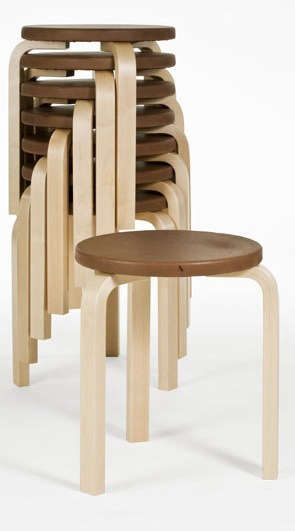
The Monocle Artek Stool is what happens when Finnish modernism puts on a leather jacket, checks its passport, and calmly takes the best seat in the room.
A Small Stool With a Surprisingly Big Reputation
Some furniture arrives like a marching band. It demands attention, eats up floor space, and makes guests wonder whether they are allowed to sit down or simply admire it from a respectful distance. The Monocle Artek Stool does the opposite. It slips into a room quietly, stands on three modest birch legs, and somehow makes everything around it look more considered.
At first glance, it is “just” a stool. Round seat. Three legs. No arms. No back. No dramatic silhouette trying to impersonate a museum staircase. But that simplicity is exactly the point. The Monocle Artek Stool is a special edition of Alvar Aalto’s legendary Stool 60, one of the most recognizable pieces in modern furniture design. Monocle’s version adds a rugged, tactile layer: Finnish elk leather upholstery, brass screws, nailed details, and the collectible charm of a stamped, numbered object.
In other words, it is Scandinavian design with a wink. It is practical enough for daily use, handsome enough for design obsessives, and compact enough for real homes where every square foot has a job description.
What Is the Monocle Artek Stool?
The Monocle Artek Stool is a limited-edition interpretation of Artek’s Stool 60, designed originally by Finnish architect and designer Alvar Aalto in 1933. The collaboration updated the classic birchwood stool with a leather-covered seat and refined hardware details. Earlier product information described it as an anniversary edition released in a limited run of 250 pieces, created to celebrate the stool’s 75th birthday. More recent Artek 2nd Cycle listings identify the Monocle version as a Stool 60 collaboration with an elk leather seat, brass screws, nailed upholstery details underneath, and stamped numbering.
The dimensions are refreshingly human: about 44 centimeters high, with a round seat that feels right beside a sofa, next to a bed, under a desk, or pulled up to a dining table in an emergency. It is not trying to be a throne. It is trying to be useful. That may be why it has aged better than many louder furniture trends.
Key Design Details
The base is birch, a material deeply associated with Aalto and Finnish furniture production. The seat is upholstered in leather, giving the stool a warmer, slightly more luxurious personality than a standard lacquered or painted Stool 60. Brass screws and nailed details add a subtle craft note, the kind of small touch that rewards people who notice things. And yes, those people will notice. They always do.
The Original Stool 60: Why Designers Still Obsess Over It
To understand the Monocle Artek Stool, you have to understand the Stool 60. Designed in 1933, Aalto’s stool became famous because it solved a furniture problem with almost absurd elegance. It used a round seat and three bent wooden legs, creating a piece that was light, stackable, sturdy, and easy to manufacture.
The real innovation was the L-leg. Instead of using complicated joinery or metal supports, Aalto developed a bent birch leg that could connect cleanly to the underside of the seat. This gave the stool strength, visual softness, and a graceful transition from vertical support to horizontal surface. It sounds technical because it is technical, but the result looks effortless. That is the magic trick.
Artek has kept Stool 60 in continuous production since the 1930s, and the form has barely changed. That is unusual in furniture, where trends often burn bright, go viral, and then spend the next decade looking embarrassed in resale listings. Stool 60 survives because it is not merely fashionable. It is useful, democratic, and adaptable.
One Stool, Many Jobs
The classic Stool 60 can act as a seat, side table, plant stand, bedside perch, display surface, or emergency landing zone for a book, coffee mug, or mildly panicked laptop. The Monocle version does the same jobs, but with more texture. Its leather seat makes it feel more like a personal object than a purely utilitarian one.
Why the Monocle Version Feels Different
Monocle has built its identity around global taste, travel, craft, independent retail, city life, and the kind of understated luxury that whispers rather than shouts. Pairing Monocle with Artek makes sense. Both brands admire durability, cultural intelligence, and products that look better when they are used rather than sealed away like rare stamps.
The Monocle Artek Stool adds a touch of magazine-editor confidence to Aalto’s humble classic. The leather seat gives it a richer hand feel. The visible hardware brings out a workshop sensibility. The stamped and numbered detail makes it collectible without turning it into a fragile trophy.
It still looks like Stool 60, which is important. The collaboration does not smother the original design under decorative panic. Instead, it treats Aalto’s work with respect, adding a layer that feels natural: leather on wood, brass against birch, craft over flash. The stool remains quiet, but now it has better shoes.
How to Style the Monocle Artek Stool at Home
The beauty of the Monocle Artek Stool is that it does not need a dramatic interior to work. It can live in a minimalist apartment, a midcentury-inspired living room, a warm Scandinavian bedroom, a home office, or even an entryway where it becomes the dignified place to tie your shoes instead of hopping around like a flamingo with inbox anxiety.
Use It as a Side Table
Place it beside a low sofa or lounge chair and use it for a book, drink, candle, or small lamp. The round top softens boxy furniture, while the leather surface brings warmth. Because the stool is compact, it is especially useful in apartments where a full-size side table would make the room feel crowded.
Use It as Flexible Seating
A great stool should be ready when guests arrive. The Monocle Artek Stool can be pulled into a conversation area without making the space look improvised. It is casual but not sloppy. That balance is difficult to achieve, and it is one reason Aalto’s stool remains so influential.
Use It in the Bedroom
As a bedside surface, the stool has just enough room for essentials: phone, book, glasses, and a glass of water. It encourages discipline. If your nightstand currently supports three chargers, twelve receipts, and a mystery lip balm from 2019, the stool may gently stage an intervention.
Use It as a Design Accent
The Monocle edition works beautifully as a standalone accent. Set it under artwork, beside a bookshelf, or near a reading chair. The leather seat adds a grounded, tactile note that can make a clean room feel less sterile.
Materials: Birch, Leather, Brass, and the Art of Aging Well
The Monocle Artek Stool is appealing because its materials are honest. Birch gives it structure and lightness. Leather adds touch and character. Brass introduces a small glint without turning the stool into jewelry. These materials can age gracefully, especially if the stool is used rather than treated like a museum loan with legs.
Leather will develop marks. That is not a defect; it is the point. Over time, the seat may darken, soften, and record daily life in small ways. Wood may show slight signs of use too. With this kind of furniture, patina is part of the story. The stool is not meant to look frozen. It is meant to participate.
This is where the Monocle Artek Stool separates itself from disposable furniture. Cheap pieces often look worse as soon as life touches them. Better pieces learn how to age. A small scuff on a leather Aalto stool feels like a memory. A similar scuff on a flat-pack laminate cube feels like a cry for help.
Is the Monocle Artek Stool Worth It?
Value depends on what you want from furniture. If you simply need a cheap place to sit for five minutes, there are many stools that cost less. If you want a design classic with collectible interest, beautiful materials, and real historical weight, the Monocle Artek Stool makes a strong case for itself.
It belongs to a rare category: furniture that is practical, iconic, and not too precious for everyday use. The standard Stool 60 already has a serious design pedigree, appearing in museum collections and design shops around the world. The Monocle edition adds scarcity and a distinctive material story. That combination appeals to collectors, but also to people who simply want one excellent object instead of five forgettable ones.
The stool is especially worth considering if you love Scandinavian design, compact furniture, leather accents, or limited-edition collaborations that do not feel gimmicky. It is also ideal for people who move often, live in smaller spaces, or prefer versatile furniture. A stool that can become a seat, table, stand, or sculptural accent is earning its keep.
How It Compares With the Standard Artek Stool 60
The standard Artek Stool 60 is the purist’s choice. It is clean, elemental, and available in several finishes. It stacks easily and fits almost anywhere. The Monocle Artek Stool keeps the same essential DNA but adds a more tactile personality.
Think of the standard Stool 60 as a perfectly tailored white shirt. Think of the Monocle edition as that same shirt under a well-worn leather jacket. Both are timeless. One is more minimal; the other has a little more narrative.
For a dining space or studio where several stools need to stack neatly, the standard version may be more practical. For a reading corner, bedroom, entryway, or living room accent, the Monocle edition feels more special. It is the piece you place where people can see it, use it, and ask about it.
Care Tips for a Leather-Topped Artek Stool
Good furniture care does not need to become a second career. Keep the stool away from long exposure to harsh direct sunlight, which can fade leather and affect wood. Wipe dust with a soft dry cloth. If the leather needs cleaning, use a method appropriate for natural leather and test carefully before applying anything widely. Avoid soaking the seat or treating it with random household products, unless your design goal is “expensive mistake.”
For the birch legs, simple maintenance is usually enough. Tighten hardware gently if needed, avoid dragging the stool aggressively across rough floors, and use felt pads if your flooring is sensitive. Most importantly, use it. A Stool 60 looks best when it is part of daily life.
Experience Notes: Living With a Monocle Artek Stool
The first thing you notice about a stool like this is how quickly it becomes useful. Not in a dramatic way. Nobody brings it home and announces, “At last, my life has structure.” But within a week, it starts migrating. One day it is beside the sofa holding coffee. The next day it is near the door while someone ties boots. Later, it is in the bedroom with a book on top. Eventually, it becomes the piece everyone reaches for without discussing it.
That is the mark of good furniture. It blends into routines. The Monocle Artek Stool has enough visual presence to make a room feel smarter, but not so much ego that it interrupts daily life. It does not require a matching set. It does not demand a full Scandinavian renovation, white oak floors, or a linen wardrobe arranged by mood. It simply works.
In a small apartment, this stool can be a quiet hero. A bulky side table may block movement, and an extra chair may feel like a guest who never leaves. The Monocle Artek Stool solves both problems. It is light enough to move, compact enough to tuck away, and attractive enough to leave visible. When friends come over, it becomes seating. When they leave, it becomes a side table again. If only all houseguests were that adaptable.
The leather seat changes the experience. Sitting on a wooden stool can feel perfectly fine, but leather adds warmth and softness. It also makes the object feel less institutional. A standard birch stool might recall a studio, classroom, or design archive. The leather-topped Monocle version feels more residential, more personal, and slightly more grown-up. It has the relaxed confidence of something that has traveled a bit and knows how to order coffee in several cities.
One of the best uses is beside a favorite reading chair. The stool is low, stable, and just large enough for a stack of books and a drink. Because it is round, it softens the geometry of square shelves, rectangular rugs, and boxy sofas. That may sound like a small thing, but interiors are built from small things. A room becomes comfortable through proportion, texture, and rhythm, not just through one dramatic purchase.
In an entryway, the stool adds instant hospitality. It gives people a place to pause, drop a bag, or remove shoes. Unlike a bench, it does not require much wall space. Unlike a decorative pedestal, it is not secretly useless. The Monocle Artek Stool is handsome enough to greet guests but sturdy enough to do actual work. That combination is rarer than it should be.
For anyone building a more intentional home, the stool also teaches a valuable lesson: buy fewer, better, more flexible pieces. A well-designed stool can outlive trends, survive several moves, and adapt to different rooms. Today it may sit beside a sofa. In five years, it may be in a nursery, studio, hallway, or guest room. The best furniture does not trap you in one layout. It gives you options.
The Monocle Artek Stool is not loud luxury. It is not the kind of object that photographs well only from one angle and then becomes impossible to live with. Its appeal is quieter and more durable. It rewards touch. It rewards use. It rewards people who appreciate the difference between simple and simplistic. Most of all, it proves that a small stool can carry a big design story without wobbling under the weight.
Conclusion: A Collectible Stool That Still Knows How to Work
The Monocle Artek Stool succeeds because it does not try to reinvent Alvar Aalto’s Stool 60. It understands that the original design already did the hard work. Instead, the Monocle edition adds texture, material richness, and collectible character to one of modern furniture’s most enduring forms.
For design lovers, it offers history. For collectors, it offers scarcity. For homeowners, it offers everyday usefulness. For small-space dwellers, it offers flexibility. And for anyone tired of furniture that looks exciting online but awkward in real life, it offers a refreshing reminder: the best pieces do not need to shout. Sometimes they just sit there beautifully, waiting to hold your coffee.
Whether used as a side table, accent piece, bedside surface, or extra seat, the Monocle Artek Stool brings together Finnish birch, leather craftsmanship, modernist heritage, and Monocle’s worldly sensibility. It is compact, clever, and quietly charismaticthe furniture equivalent of someone who packs light, reads print magazines, and somehow always knows the best bakery within walking distance.












