
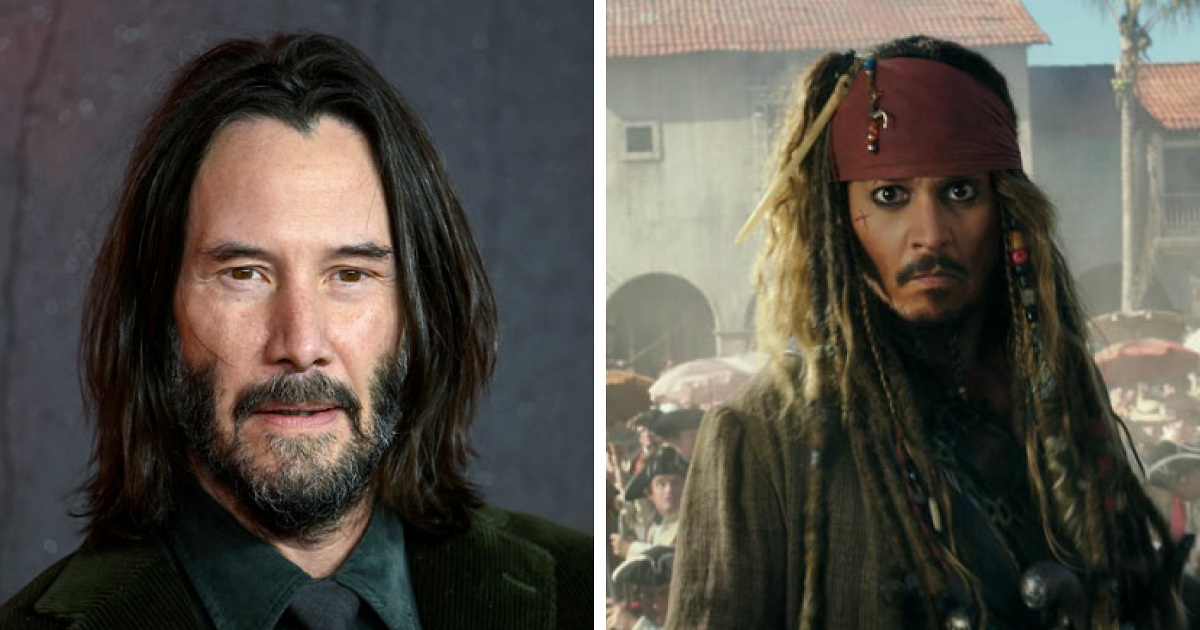
Somewhere on the internet, a digital pirate ship has crashed into the rocks of fandom debate. An AI-made trailer recently imagined Keanu Reeves stepping into the boots, beads, eyeliner, swagger, and questionable rum habits of Captain Jack Sparrow. The result? A viral storm of curiosity, confusion, laughter, and a whole lot of Johnny Depp fans yelling the online equivalent of “Not my captain.”
To be very clear before the cannon fire starts: Keanu Reeves has not officially replaced Johnny Depp as Jack Sparrow. The clip making the rounds is fan-made AI content, not a Disney announcement, not a confirmed movie trailer, and not proof that Hollywood has decided to swap the Black Pearl for a Matrix-style pirate reboot. Still, the reaction says a lot about where entertainment culture is right now. AI can create a convincing fantasy in seconds, but fans are not always ready to accept it, especially when the character involved is as iconic as Captain Jack Sparrow.
The controversy is not really about whether Keanu Reeves is beloved. He is. The internet treats Keanu like a national emotional support actor. The issue is that Jack Sparrow is not just a costume. For millions of viewers, Johnny Depp’s performance is the franchise. Replacing him, even in a fake AI trailer, feels to many fans like drawing a mustache on the Mona Lisa and saying, “Relax, it is just a concept.”
The Viral AI Trailer That Started the Debate
The online buzz began with an AI-generated concept trailer for a fictional Pirates of the Caribbean 6. It presented Keanu Reeves as a new version of Jack Sparrow, complete with pirate styling, moody ocean shots, dramatic narration, and the kind of trailer music that sounds like a thunderstorm joined a gym. The idea was simple: what if Keanu Reeves replaced Johnny Depp in Disney’s most famous pirate role?
As fan-made videos go, the concept was built to travel. It combined three irresistible internet ingredients: a legendary movie character, a beloved actor, and artificial intelligence. That combination practically guarantees clicks. But instead of inspiring universal excitement, the video divided viewers. Some people called it fun, weird, or harmless. Others saw it as proof that AI content is getting too comfortable borrowing famous faces and famous roles without the human magic that made those roles work in the first place.
Why Johnny Depp Fans Are So Protective of Jack Sparrow
Johnny Depp’s Captain Jack Sparrow is not a standard franchise hero. He does not enter scenes like a noble warrior. He wobbles, squints, negotiates, tricks, flirts with disaster, and somehow survives by turning chaos into choreography. When Pirates of the Caribbean: The Curse of the Black Pearl arrived in 2003, the idea of a theme-park-ride movie becoming a blockbuster was risky. Depp’s eccentric performance helped transform that risk into pop-culture gold.
Jack Sparrow became instantly recognizable: the braids, the hat, the slurred genius, the hand gestures, the sudden bursts of strategy hidden under layers of nonsense. It was not just acting; it was character invention. That is why fans react strongly whenever rumors suggest someone else might take over. To them, Jack Sparrow without Johnny Depp is like a guitar solo without strings. Technically, you can try it, but everyone knows something essential is missing.
Keanu Reeves Is Loved But That Is Not the Point
One funny thing about this backlash is that many upset fans still like Keanu Reeves. The objection is not, “Keanu is bad.” The objection is, “Keanu is not Jack.” Reeves has his own cinematic mythology. He is Neo. He is John Wick. He is Ted “Theodore” Logan. He is the quiet, generous action star who somehow makes minimal dialogue feel like a philosophy seminar with better lighting.
But Jack Sparrow requires a different kind of performance. Depp’s version is theatrical, unpredictable, slippery, and cartoonish in a way that still feels strangely human. Reeves, by contrast, is often at his best when he plays restraint, sincerity, stillness, or haunted determination. Put another way: Keanu looks like he would honorably return the cursed treasure. Jack Sparrow would steal it, lose it, win it back, sell it twice, and then act offended when accused of dishonesty.
AI Fan Casting Is Changing Movie Rumor Culture
Fan casting used to be mostly Photoshop posters, forum debates, and “hear me out” posts. Now AI can generate fake trailers that look polished enough to confuse casual viewers. That is a major change. A fan can imagine a new Superman, a new Wolverine, or a new Captain Jack Sparrow and produce a video that feels like it came from a studio marketing department after three energy drinks and a questionable budget meeting.
This is exciting for creativity but messy for truth. Many viewers do not read descriptions carefully. A concept trailer can become “news” once it is reposted, clipped, captioned, and passed around social media. By the time someone adds “confirmed?” to a headline, the rumor has already put on boots and walked into the tavern.
The Keanu-as-Jack-Sparrow clip is a perfect example. It is not official, but it feeds on real uncertainty around the future of Pirates of the Caribbean. Disney has explored new directions for the franchise, producer Jerry Bruckheimer has discussed reboot ideas, and Johnny Depp’s possible return has remained a hot entertainment topic. That real uncertainty creates fertile ground for fake certainty.
The Real Status of Pirates of the Caribbean
The actual future of Pirates of the Caribbean has been complicated for years. The franchise has not released a new theatrical film since Dead Men Tell No Tales in 2017. Since then, reports have pointed to different development paths, including a reboot, a possible Margot Robbie-led spinoff, and ongoing interest in keeping the series alive.
Producer Jerry Bruckheimer has repeatedly indicated that he wants the franchise to continue. He has also suggested that Johnny Depp could return if the script is right. That is very different from saying Depp is officially back, and it is even more different from saying Keanu Reeves has been cast as Jack Sparrow. In Hollywood, “talks,” “interest,” “development,” and “confirmed” are not the same thing. Fans know this, but the internet often treats them like identical twins wearing different hats.
Why AI Replacements Feel Different From Normal Recasting
Movie characters get recast all the time. Batman has changed faces more often than some people change phone cases. James Bond has been reinvented across generations. Even beloved roles can survive new interpretations when the storytelling gives audiences a reason to care.
AI replacement feels different because it skips the normal creative process. There is no actor auditioning, no director shaping a performance, no costume department solving practical problems, no months of physical work, and no human performer taking the emotional risk of making a role their own. Instead, the AI version often feels like a remix of existing fame. It asks: what if we blended this celebrity with that character and waited for the algorithm to applaud?
That is why many viewers find the result hollow, even when it looks impressive. The face may be recognizable. The costume may be accurate. The lighting may be cinematic. But the soul is missing. Jack Sparrow is not just a visual template. He is rhythm, timing, absurd confidence, and human weirdness. AI can imitate the hat. It has a much harder time understanding the joke under the hat.
Johnny Depp, Digital Likeness, and the New Hollywood Anxiety
The backlash also connects to a bigger concern in entertainment: who controls an actor’s likeness? AI tools can now simulate faces, voices, and performances with startling speed. That has raised ethical questions across Hollywood, especially around consent, compensation, and audience disclosure.
Actors and unions have pushed for stronger protections because digital replicas can blur the line between tribute and exploitation. A fake trailer starring a famous actor may seem harmless when made by a fan, but the technology behind it is part of a much larger debate. If AI can place Keanu Reeves into Jack Sparrow’s coat today, it can place any actor into any scene tomorrow. That power is fun until it becomes misleading, commercial, or damaging.
Platforms such as YouTube have introduced disclosure rules for realistic altered or synthetic content, requiring creators to label certain AI-made material. That is a step toward transparency, but enforcement and audience awareness remain ongoing challenges. A label helps only if viewers see it, understand it, and care before sharing.
Why the Clip Went Viral Anyway
Even fans who disliked the idea helped spread it. That is the strange engine of modern entertainment discourse: outrage is marketing with a sword. A person may post, “This is terrible,” and accidentally introduce the clip to thousands of new viewers. Another person replies, “Actually, Keanu would be cool,” and suddenly the fake trailer has a second life as a debate topic.
The clip also taps into nostalgia. Pirates of the Caribbean is one of Disney’s biggest live-action franchises, and Captain Jack Sparrow remains its most marketable figure. People want to know what comes next. They want closure, comeback, reinvention, or at least a clear answer. AI content rushes into that gap and offers a shiny illusion of certainty.
Could Keanu Reeves Ever Work in a Pirates Movie?
Here is where the conversation gets more interesting. Keanu Reeves as Jack Sparrow may not work for many fans, but Keanu Reeves in a Pirates of the Caribbean movie could be a different story. Imagine him as a mysterious cursed swordsman, a quiet sea captain, a retired assassin of the Spanish Main, or a monk-like navigator who speaks in calm wisdom while everything explodes around him. That could be fun.
The problem is not Keanu joining the world. The problem is Keanu replacing the one role fans consider untouchable. Audiences are often more open to expansion than substitution. Add a new legend, and people may listen. Erase the old one, and they grab pitchforks, or in this case, plastic cutlasses from the gift shop.
The Danger of “What If” Becoming “This Happened”
The AI trailer also shows how quickly entertainment misinformation can spread. A viewer sees a realistic thumbnail. A caption says Keanu Reeves replaces Johnny Depp. The trailer looks dramatic. The comments are emotional. Suddenly, a fake concept feels like breaking news.
This matters because entertainment rumors shape public perception. Studios may not have announced anything, but fans begin reacting as if they did. Actors may be dragged into debates they never joined. Online communities may attack or defend decisions that were never made. It is basically a tavern brawl over an imaginary treasure map.
For readers, the best rule is simple: if a trailer seems shocking, check whether it came from an official studio channel, a verified entertainment outlet, or a known fan-concept creator. If the answer is “some channel with dramatic music and twelve exclamation points,” keep your compass handy.
What This Says About Fandom in the AI Era
Fandom has always been emotional. People do not just watch franchises; they adopt them. Characters become part of personal history. A movie watched during childhood, a quote repeated with friends, a Halloween costume worn three years in a rowthese things build loyalty. So when AI casually reshuffles beloved icons, fans can feel like their memories are being treated as raw material.
That does not mean fan-made AI art has no place. Concept videos can be playful, imaginative, and technically impressive. They can help people visualize impossible crossovers and dream casting ideas. But creators should be clear about what is real, what is fictional, and what is generated. Transparency keeps the fun from turning into confusion.
Experience Section: Watching AI Fan Culture Collide With Movie Nostalgia
Anyone who spends time online has probably had the same experience by now: you scroll past a movie poster or trailer that looks almost real, pause for half a second, and think, “Wait, is this actually happening?” That moment is both exciting and annoying. It feels like finding a message in a bottle, only to realize the bottle was generated by software and the message is trying to sell you speculation.
The Keanu Reeves Jack Sparrow debate captures that experience perfectly. At first glance, the idea is entertaining. Keanu has the long hair, the cinematic presence, and the internet goodwill. You can understand why an AI creator would try it. The visual mashup is instantly clickable. It makes the brain curious before the facts have time to put on shoes.
But after the novelty fades, the emotional reaction becomes more complicated. Fans remember Johnny Depp’s first entrance as Jack Sparrow, standing proudly on a sinking boat as if dignity could float. They remember the comic timing, the strange genius, and the way the character turned every scene into controlled chaos. That memory is not easily replaced by a digital face swap, no matter how polished it looks.
There is also a difference between imagining and announcing. If a friend says, “Wouldn’t Keanu be funny as a pirate?” that is a harmless conversation. If a realistic trailer appears online with dramatic framing that implies a studio decision, the mood changes. People feel tricked. They react not only to the casting idea but to the sense that the internet is once again making them fact-check their own eyeballs.
From a viewer’s perspective, AI fan trailers are most enjoyable when they are honest about being fan creations. Label them clearly, celebrate the imagination, and let audiences enjoy the “what if” without confusing it for industry news. The problem is not dreaming. The problem is packaging dreams like press releases.
There is something genuinely fascinating about seeing AI test the boundaries of pop culture. It reveals which characters are flexible and which are sacred. Some roles invite reinvention. Others are guarded like buried treasure. Jack Sparrow clearly belongs to the second category. Fans may accept new pirates, new villains, new ships, and new curses. But replace Johnny Depp with a synthetic Keanu Reeves, and the fandom cannons come out fast.
The best takeaway is not that AI should disappear from fan creativity. It is that AI works better as a sketchpad than a substitute for human performance. Use it to imagine possibilities, not to flatten the history of a role into a clickable illusion. Captain Jack Sparrow became legendary because an actor made strange, risky choices that no algorithm would have safely recommended. That is the magic fans are defending.
Conclusion: AI Can Borrow the Hat, But It Cannot Own the Legend
The AI-made Keanu Reeves Jack Sparrow trailer is a perfect internet storm: funny, strange, impressive, misleading, and controversial all at once. It proves that artificial intelligence can create convincing entertainment fantasies, but it also proves that audiences still care deeply about human authorship, performance, and legacy.
Johnny Depp fans are not angry simply because another actor appeared in pirate eyeliner. They are reacting because Captain Jack Sparrow is one of modern blockbuster cinema’s most distinctive creations. Keanu Reeves may be loved across the internet, but even he cannot casually sail into a role that fans associate so completely with another performer.
As AI fan content becomes more common, the entertainment world will need clearer labels, smarter viewers, and more respect for the difference between playful imagination and fake news. Until then, expect more viral trailers, more confused comment sections, and more fandom battles fought with memes, nostalgia, and the occasional digital parrot.












