
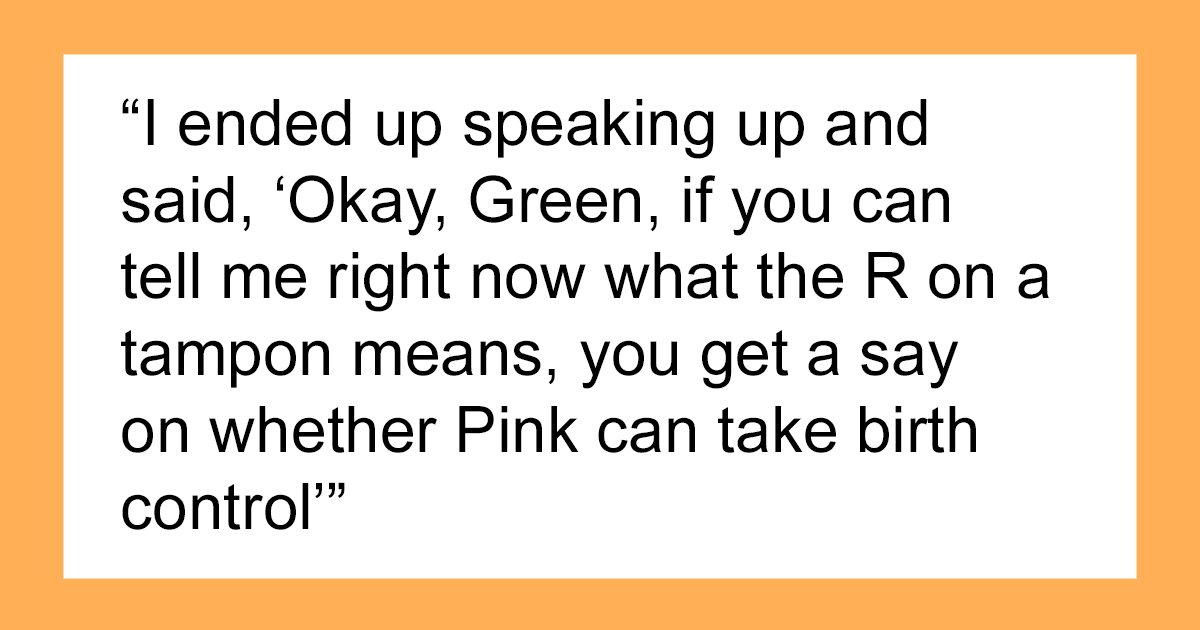
Every family has that one dinner that starts with mashed potatoes and ends with someone reconsidering their entire personality. In this case, the emotional side dish was a confident man explaining periods to his younger sister as if he had personally invented the uterus sometime between appetizers and dessert. Then his fiancée asked one smart, simple question, and suddenly the self-appointed professor of menstrual wisdom looked less like a teacher and more like a guy who had walked into a biology exam with the energy of a podcast comment section.
That is exactly why this story hits such a nerve. It is not just about one awkward family dinner or one overconfident man getting corrected in front of relatives. It is about something much bigger: how often misinformation, embarrassment, and plain old mansplaining show up when people talk about periods. The headline is juicy, sure, but the reason readers keep clicking is because the scene feels familiar. Too many people have sat through some version of it.
And that is what makes this story worth unpacking. Beneath the cringe is a serious issue about menstrual health, period stigma, family communication, and the weird confidence of people who know just enough to be loudly wrong. So let us talk about why the fiancée’s question worked, why the brother’s behavior flopped, and what this says about the way families still handle conversations about menstruation in 2026.
Why This Family Dinner Story Blew Up Online
Stories like this spread fast because they combine three internet catnips into one neat package: family drama, public embarrassment, and a person getting humbled in real time. But the real reason this headline travels is that readers instantly understand the dynamic. Many women and girls have heard someone explain periods with all the confidence of a weather reporter and all the accuracy of a magic eight ball.
That dynamic has a name, of course: mansplaining. It happens when a man explains something in a patronizing or overconfident way, often to someone who knows more about the topic than he does. When the topic is menstruation, the result can swing from annoying to harmful. It is one thing to be clueless. It is another thing to be clueless with a lecture voice.
In a family setting, that can be even worse. A younger sister is already navigating puberty, body changes, privacy, and probably a dozen questions she is not thrilled to ask out loud while someone passes the bread basket. If an older brother turns that moment into a performance, he is not helping. He is taking a vulnerable topic and making it about his own certainty.
The fiancée’s shutdown question matters because it exposed the gap between confidence and competence. In other words, she did not need a dramatic speech. She just needed one question that separated “I know everything” from “I once skimmed a thread online and now consider myself a specialist.” That is the kind of plot twist the internet adores.
The Real Problem Was Not the Dinner Table. It Was the Misinformation.
Periods are still treated like a secret with a dress code
For something that happens routinely and affects daily life, periods are still wrapped in a surprising amount of silence. People whisper about them, joke about them, or reduce them to stereotypes. In many homes, menstrual health is treated like a side topic that should stay vague, quiet, and preferably invisible. That creates the perfect environment for myths to thrive.
And myths thrive because somebody always fills the silence. Sometimes it is a classmate. Sometimes it is social media. Sometimes, apparently, it is a grown man at dinner giving a TED Talk nobody requested.
What accurate period education actually sounds like
Real information is much less dramatic and much more useful. Periods are a normal biological process. Menstrual cycles can vary, especially in adolescence. A young teen’s cycle may be irregular at first, and that does not automatically mean something is wrong. Some people have mild cramps; others have tougher symptoms. Period products are tools, not moral symbols. And no, being on your period does not make someone less rational, less capable, or mysteriously qualified to star in every bad joke ever written.
That is the kind of information a younger sister deserves. Not a lecture designed to show off. Not a bunch of half-remembered “facts” delivered like commandments. Just calm, accurate, shame-free guidance.
Why His Fiancée’s Question Was So Effective
The best shutdowns are not always loud. Sometimes they are surgical.
If the fiancée asked him something specific about how periods work, cycle timing, symptoms, or even basic product use, she was doing more than embarrassing him. She was exposing a pattern. People who mansplain usually rely on broad confidence, not detailed understanding. The moment someone asks for specifics, the whole act starts wobbling like a folding card table.
That is why the question hit so hard. It shifted the conversation from performance to proof. He could not hide behind tone anymore. He had to demonstrate knowledge. And when that did not happen, the room could finally see the difference between being informative and being insufferable.
There is a lesson there for everyone. When someone starts pontificating about a topic they clearly do not understand, you do not always need a full debate. Sometimes a calm follow-up question does the job beautifully. “What do you mean by that?” is powerful. “Can you explain how that actually works?” is even better. It is amazing how fast bluster evaporates under basic curiosity.
What Families Get Wrong About Period Talks
They wait too long
One of the biggest mistakes families make is acting like period education can wait until a first period shows up like a surprise pop quiz. It should not. Kids need age-appropriate, matter-of-fact information before the moment arrives. When adults delay the conversation, they increase the odds that a child will learn from rumor, panic, or a classmate whose credentials include “older cousin said so.”
They make it a “girl issue” instead of a family health topic
Another mistake is treating menstruation like information that only girls should know. That is how ignorance gets protected. Boys, brothers, dads, and male classmates do not become more respectful by knowing less. They become more respectful by understanding that periods are normal, varied, and not comedic material for lazy jokes.
When all genders learn accurate information, the conversation gets less weird. It becomes easier to offer help, easier to avoid stigma, and easier to stop the spread of nonsense. That alone would prevent a lot of dinner-table disasters.
They confuse embarrassment with modesty
Privacy is healthy. Shame is not. A teen may want discretion about period products or symptoms, and that should be respected. But privacy is very different from treating menstruation like a scandal with packaging. If the atmosphere in a home says, “This topic is gross, awkward, or inappropriate,” kids absorb that message fast. Then they hesitate to ask questions, mention pain, or ask for help when something feels off.
The Internet Loves a Comeuppance, But the Bigger Issue Is Period Stigma
Part of the reason this story feels satisfying is obvious: the man who thought he knew everything got corrected. Delicious. Cinematic. Very online. But if we stop there, we miss the more important point.
Period stigma still shapes how people talk, joke, learn, and stay silent. It teaches girls to downplay pain. It teaches boys that ignorance is somehow harmless. It teaches families to tiptoe around a basic health topic until someone says something ridiculous. Then everyone acts shocked that misinformation was in the room the whole time.
The better response is not just “ha, he got owned.” It is asking why so many people still grow up without clear, respectful, medically accurate information about menstruation. Because once you ask that, the dinner scene stops being random. It starts looking like a symptom.
Common Period Myths That Keep This Kind of Story Alive
Myth #1: Every cycle is exactly 28 days
This is the myth that refuses to retire. While a 28-day cycle is common enough to dominate textbooks and apps, real life is messier. Especially for teens, cycle length can vary. Bodies are not assembly lines, and biology does not care about your spreadsheet.
Myth #2: Severe pain is just something to “tough out”
This myth is especially damaging. Mild to moderate discomfort can be common, but severe pain, very heavy bleeding, or symptoms that disrupt daily life deserve attention. Shrugging everything off as normal can delay care and make a teen feel dismissed. Translation: if someone is doubled over and still expected to smile through algebra, the conversation needs an upgrade.
Myth #3: Talking about periods is inappropriate
Nope. Talking about periods in a respectful, age-appropriate way is called health education. The awkwardness does not come from the topic itself. It comes from the social baggage piled on top of it over decades. Once adults start speaking plainly, the mysterious fog disappears fast.
Myth #4: Knowing a little is the same as knowing enough
This may be the myth at the heart of the whole story. A person can know that periods exist and still know almost nothing useful about them. Real understanding includes variability, symptoms, products, hygiene, stigma, and knowing when something might need medical attention. Confidence alone is not educational. It is just louder confusion.
How the Brother Could Have Handled It Better
Let us imagine a version of this dinner where the brother did not turn into the self-appointed Duke of Menstruation.
He could have stayed quiet and listened. Revolutionary, I know.
He could have said, “I do not know a ton about this, but if you need supplies or privacy, I have your back.” That is useful. He could have deferred to someone with actual experience or better information. Also useful. He could have avoided making his little sister feel scrutinized while she was navigating something personal. Extremely useful.
Support does not require expertise. It requires humility. That is what made the fiancée look smart and him look foolish. She understood that real support starts with respect, not a monologue.
What Better Period Conversations Look Like at Home
Good family conversations about periods are not grand speeches. They are normal, practical, and specific. They sound like this:
“If your cycle is irregular at first, that can be normal.”
“If pain feels intense or bleeding seems very heavy, tell an adult or a clinician.”
“Keep supplies where they are easy to reach.”
“No topic is too embarrassing to ask about.”
“Nobody in this house is going to mock you for a normal body function.”
Notice what is missing: smugness, jokes at someone’s expense, and mystery. That is the whole formula.
Why Readers Are Still Talking About This Story
Because beneath the punchline is a universal truth: people are tired of watching girls and women get talked over about their own bodies. They are tired of misinformation dressed up as authority. And they are deeply, spiritually tired of the guy who mistakes volume for expertise.
The fiancée’s question resonated because it represented a small act of correction in a culture that often lets bad information slide for the sake of keeping things “pleasant.” But pleasant for whom? Certainly not for the younger sister being lectured. Sometimes the kindest thing in the room is the person willing to say, “Actually, no. Let’s not do this.”
That is why the headline works. Not because a man got embarrassed, although the internet certainly enjoyed that part. It works because it captures a moment many people have been waiting for: the moment when confidence meets accountability and loses.
Related Experiences: Why This Story Feels So Familiar
A big reason this story landed so hard is that it mirrors experiences people have been having for years. Not always at family dinner, not always with a fiancé, and not always with such a perfectly timed shutdown, but the pattern is recognizable. Someone who does not menstruate decides they understand periods well enough to explain them. Someone who does menstruate is expected to politely absorb the nonsense. Then the room gets uncomfortable when that nonsense is challenged instead of when it is said. If that sounds familiar, congratulations, you have met modern social dynamics.
For many girls, one of the earliest experiences of period stigma happens at school. A student quietly asks to go to the bathroom, and suddenly she is negotiating like she is requesting a three-week yacht vacation. Another hides a pad in her sleeve because carrying it openly feels more embarrassing than carrying a live microphone. Some remember male classmates making jokes. Others remember adult men acting so uncomfortable that the topic became awkward by default. None of this teaches confidence. It teaches concealment.
At home, the experience can go in wildly different directions. In some families, periods are treated like routine health information. Supplies are stocked, questions are answered, and nobody acts like the word “tampon” has summoned a ghost. In other families, the atmosphere gets weird instantly. Voices drop. Euphemisms multiply. A simple request for pads becomes an exercise in code language, hand signals, and emotional espionage. That is how kids learn that even normal body functions can somehow become taboo theater.
Siblings add another layer. Some brothers are wonderfully practical. They will buy supplies, defend privacy, and ask respectful questions when they do not know something. Others go full clown mode because humor is easier than maturity. Then there is the worst category: the confident explainer. This person has just enough information to be dangerous, plus the kind of certainty usually reserved for people assembling furniture without reading instructions. When corrected, he is not embarrassed by being wrong. He is offended that someone noticed.
Adults are not always better. Plenty of women can recall coaches, teachers, managers, or relatives brushing off pain, mocking mood changes, or assuming everyone experiences menstruation the same way. Others remember being told to “deal with it” even when symptoms were disruptive enough to deserve medical attention. Those experiences stick because they send a message: your discomfort is less important than everybody else’s convenience.
That is why stories like this become more than internet entertainment. They feel like tiny acts of justice. The fiancée’s question was not just a clever comeback. It represented a moment many readers wish they had seen sooner in their own lives: someone stepping in, refusing the nonsense, and protecting the person being talked over. That is the fantasy at the center of the story. Not humiliation for its own sake, but relief. Relief that somebody finally said, “No, you do not get to be confidently wrong about this and still run the room.”
Conclusion
The family dinner showdown may read like a comedy of bad timing and worse confidence, but its staying power comes from something real. Period conversations still carry too much stigma, too much misinformation, and too much unnecessary awkwardness. The brother’s mistake was not merely being uninformed. It was turning someone else’s experience into his own performance. His fiancée’s question mattered because it restored the conversation to what it should have been all along: respectful, accurate, and centered on the person actually living it.
If this story does anything useful beyond entertaining readers, it is this: it reminds families that menstrual health does not need a whisper, a wink, or a know-it-all speech. It needs facts, empathy, and the kind of humility that keeps people from explaining a subject they clearly have not mastered. In the end, the biggest lesson was not about who got shut down. It was about who finally spoke with sense.












