
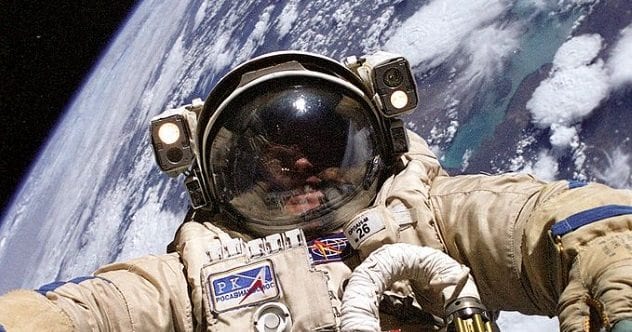
Space history usually gets edited like a prestige movie trailer: giant rockets, triumphant music, and brave people saying cool things while wearing pressure suits that make everyone look ten percent more heroic. What tends to get cut is the strange, unnerving side of human spaceflight: the capsule that sank, the spacecraft that spun like a possessed carnival ride, the training machine that exploded under a future moonwalker, the helmet that nearly turned into a fishbowl, and the return trip that ended with toxic fumes instead of ticker tape.
Everyone remembers the big-name disasters. Fewer people remember the obscure astronaut accidents and near-catastrophes that quietly reshaped spaceflight safety. That is a shame, because these lesser-known mishaps reveal something essential about exploration: progress is often built not just on spectacular success, but on frightening mistakes, close calls, and the kind of bad days that get new checklists written in permanent marker.
In this article, we look at 10 obscure astronaut accidents that deserve a little more attention. Some happened in space. Some happened during training. Some were fatal, some were not, and several were so bizarre they sound like rejected movie scripts. All of them are real, all of them mattered, and every one of them helped change how astronauts fly, train, suit up, and survive.
Note: This article focuses on lesser-known, real incidents and avoids graphic detail so it stays suitable for general web publication.
1. Gus Grissom and the sinking of Liberty Bell 7
The mission ended, but the trouble had just clocked in
Virgil “Gus” Grissom’s 1961 Mercury flight was supposed to be a clean early American success story. The mission itself went well. The trouble arrived after splashdown, when the hatch on Liberty Bell 7 opened unexpectedly and seawater began flooding the capsule. Suddenly, a successful suborbital flight turned into a frantic ocean rescue.
Grissom got out, but the spacecraft sank, and he came dangerously close to drowning while recovery crews tried to sort out the chaos. For years, the public debate fixated on whether Grissom had somehow triggered the hatch himself, which added insult to injury and gave the story a weirdly unfair afterlife. What matters most is that this was one of the earliest reminders that astronauts could survive launch and reentry only to be threatened by the final, supposedly routine part of the mission.
Spaceflight has always loved dramatic endings. Liberty Bell 7 preferred dark comedy: “Congratulations on the mission. Please now try not to drown in the epilogue.”
2. Gemini VIII and the spin that nearly blacked out Neil Armstrong
The first docking in space almost became a funeral in orbit
Gemini VIII is usually remembered for accomplishing the first docking of two spacecraft in orbit. That achievement is correct, impressive, and very nearly followed by catastrophe. After docking with its Agena target vehicle in 1966, the Gemini spacecraft began rolling uncontrollably because of a stuck thruster.
Neil Armstrong and David Scott were suddenly dealing with a life-threatening in-space systems failure instead of enjoying a history-making triumph. Once they undocked, the spin got even worse. Armstrong finally stabilized the spacecraft using the reentry control system, which also meant the mission had to be aborted early.
The incident matters for more than the drama. It taught NASA that a milestone mission can transform into a survival test in minutes, and that calm systems knowledge is worth more than bravado. Armstrong would later become famous for coolness under pressure on Apollo 11, but Gemini VIII was one of the clearest previews. Before he landed on the Moon, he had already proven he could keep a spacecraft from becoming the galaxy’s fastest washing machine.
3. Elliot See and Charlie Bassett died before they ever flew Gemini IX
A training trip became one of NASA’s cruelest what-ifs
Not every astronaut accident happens above the atmosphere. In February 1966, Gemini IX prime crew members Elliot See and Charles Bassett were flying a T-38 jet to St. Louis for simulator work when they encountered poor weather during landing. Their aircraft struck a building at the McDonnell plant where their spacecraft was being prepared.
That detail has always carried a particularly brutal twist: the astronauts were killed while heading to train on the spacecraft they were supposed to fly. Backup crew Tom Stafford and Gene Cernan, traveling in a separate T-38, landed safely and ultimately took over the mission.
The crash underscored a truth that the public often misses when talking about astronaut safety: the danger does not begin at ignition and end at splashdown. Astronauts risked their lives in test jets, helicopters, simulators, pools, centrifuges, and a thousand ordinary-seeming travel days wrapped around the mission itself. Spaceflight, as it turns out, can be dangerously committed to the bit even when it is still on the runway.
4. Neil Armstrong’s lunar landing trainer tried to eliminate the middleman
The Moon landing legend had to eject from practice
In May 1968, Neil Armstrong was flying the Lunar Landing Research Vehicle, a notoriously awkward machine designed to simulate the handling of the lunar module near the Moon’s surface. After only a few minutes of flight, the vehicle went out of control. Armstrong ejected at roughly 200 feet above the ground, and the craft crashed and burned.
He survived without injury and was reportedly back at work the same day, which is either peak professionalism or the most astronaut sentence ever written. The bigger point is that lunar landing practice itself was hazardous. NASA was asking pilots to train in strange, unstable machines because there was no safe, easy way to rehearse landing on another world.
The accident also revealed design and warning issues that engineers had to correct before training resumed. So yes, one of the heroes of Apollo nearly died rehearsing for the thing that later made him immortal. History loves a polished success story; real engineering prefers a stack of incident reports.
5. Michael J. Adams and the X-15’s most tragic flight
Astronaut wings came with test-pilot risk
Michael J. Adams was not a household name in the way Apollo astronauts became household names, but his 1967 X-15 flight belongs in any serious discussion of obscure astronaut accidents. The X-15 program pushed pilots to the edge of space in a rocket-powered aircraft that was part laboratory, part missile, and part argument with physics.
On Adams’s seventh X-15 mission, an electrical disturbance and control problems helped turn the flight into the most tragic one of the program. He reached a space-qualified altitude by U.S. standards, but the vehicle later broke apart during descent. Adams did not survive.
His accident is a reminder that the path to human spaceflight did not run only through capsules and lunar modules. It also ran through experimental aircraft, military test programs, and pilots operating where aviation ended and astronautics began. The X-15 era was brilliant, brave, and frankly built on levels of acceptable risk that would make modern safety offices burst into immediate tears.
6. Gene Cernan crashed a helicopter and nearly lost his shot at Apollo 17
Sometimes “training” is just danger with a clipboard
Long before Gene Cernan became the last man to walk on the Moon, he survived a helicopter crash during lunar-landing-related training in 1971. Flying low over the Indian River, he got into trouble, crashed, and narrowly escaped a much worse outcome. He walked away with relatively minor injuries, but the accident came close to damaging his NASA future.
This mishap is often overshadowed by his later fame, which is exactly why it belongs on a list like this. The Apollo era demanded a mix of test pilot nerve and constant rehearsal, and that meant astronauts were often in risky aircraft even when they were nowhere near a rocket. Cernan later admitted the episode humbled him, which may be the most valuable thing a training accident can do short of not happening in the first place.
It is easy to imagine astronaut preparation as neat and technical. In reality, it was often mud, noise, fuel, rotor wash, exhaustion, and one bad judgment call away from disaster.
7. Apollo-Soyuz ended in celebration and toxic gas
The handshake in space got a very ugly landing
The Apollo-Soyuz Test Project in 1975 is usually remembered as a cheerful Cold War thaw: Americans and Soviets meeting in orbit, shaking hands, smiling for cameras, and proving that space could occasionally behave like a diplomatic reception instead of a competition. The mission itself was a political and technical success.
Then came reentry. During the Apollo crew’s return to Earth, toxic fumes entered the command module cabin during the landing sequence. The exposure hit all three astronauts, and the crew ended up hospitalized for about two weeks after splashdown. That is a fairly rude postscript for a mission supposed to symbolize international harmony.
The incident is obscure partly because the mission’s symbolism tends to dominate the history books. But safety-wise, it was a major lesson in how a small switch sequence and a narrow timing error can turn a mission from triumphant to medically serious in seconds. Space hardware does not care whether your mission patch is historic. It will still punish sloppy sequencing like an unforgiving math teacher with rockets.
8. Soyuz 18a put its crew through a horrifying high-G abort
The rocket failed, gravity overachieved
In April 1975, Vasily Lazarev and Oleg Makarov launched toward orbit aboard what is commonly called Soyuz 18a. They never made it. A booster failure triggered an abort late in ascent, sending the crew back toward Earth on a brutal trajectory that subjected them to more than 20 Gs. That is not a typo. That is the human body being politely informed that today’s schedule has changed.
The capsule came down in the Altai region, where the crew ended up in severe terrain and harsh conditions before rescue. The fact that they survived at all is part of what makes this one of the great underappreciated stories of human spaceflight. It also showed that launch abort systems are not just engineering decorations added for peace of mind. When they are needed, they are needed immediately and absolutely.
If Apollo represented one style of space-age risk and Soyuz another, missions like Soyuz 18a showed that both superpowers were discovering the same hard rule: there is no such thing as a forgiving launch failure.
9. Soyuz 23 landed in a frozen lake and turned recovery into a nightmare
Reentry is only fun if you define fun very aggressively
Soyuz 23 in 1976 failed to dock with the Salyut 5 space station and had to return early. That was disappointing enough. Then the capsule landed in Lake Tengiz during freezing weather, creating one of the strangest and most unnerving recovery stories in crewed spaceflight.
The crew ended up stuck in a capsule floating in terrible conditions while rescuers struggled with fog, cold, darkness, and the practical reality that spacecraft retrieval gets much less glamorous when water, ice, and weather all decide to unionize at once. What should have been a return to Earth became an extended survival episode.
This accident is obscure because it lacks the cinematic recognizability of a launch explosion or an orbital breakdown. But it mattered. It highlighted how dangerous the landing-and-recovery phase can be, especially when a capsule ends up somewhere engineers did not invite it to go. The mission failed in orbit, and then the planet itself added a bonus round.
10. Luca Parmitano’s helmet filled with water during a spacewalk
A modern reminder that space still improvises its threats
By 2013, many people assumed the age of weird astronaut accidents was mostly behind us. Human spaceflight looked more procedural, more mature, and maybe a little less improvised than the Mercury and Gemini years. Then ESA astronaut Luca Parmitano went outside the International Space Station for a routine EVA and discovered that routine is one of the least trustworthy words in engineering.
Water began leaking into his helmet. At first the problem seemed manageable. Then it became a genuine survival emergency. As the amount of water increased, the spacewalk was terminated. Parmitano had to make his way back in darkness with blurred vision, impaired communications, and water covering parts of his face.
NASA later described it as one of the most serious spacewalking mishaps in history, and that assessment feels entirely fair. The incident shocked people precisely because it was not a cinematic explosion. It was worse in a more intimate way: a slow, enclosed, creeping failure inside the one piece of equipment meant to keep an astronaut alive. No dramatic soundtrack required.
Why these obscure astronaut accidents still matter
If you line up these stories side by side, a pattern appears. Astronaut accidents are rarely caused by some cartoonishly obvious villain. Usually, they emerge from tiny failures, weird conditions, awkward timing, or equipment behaving badly in just the wrong moment. A hatch opens early. A thruster sticks. A trainer runs out of control. A switch sequence slips. A strap flies loose. A helmet fills with water. Spaceflight, more than almost any other human activity, punishes small errors with enormous creativity.
That is why these obscure incidents matter so much. They changed suit designs, abort thinking, training practices, recovery planning, and mission rules. They also reveal the human side of astronaut safety. The people involved were not comic-book invincibles. They were highly trained professionals dealing with fear, confusion, pain, and split-second decisions while hoping the engineering underneath them still had one good answer left.
And maybe that is the most important takeaway of all. The history of spaceflight is not just a story of giant leaps. It is also a story of narrow escapes, stubborn machinery, and professionals who kept working anyway.
Experiences Astronauts Carry Away from These Accidents
When people talk about astronaut accidents, they usually focus on the event itself: the spin, the leak, the crash, the landing, the flames, the splashdown, the alarming radio traffic. But the more revealing story is often the experience that follows. What does an astronaut actually learn from surviving something that was never supposed to happen? In many cases, the answer is not cinematic courage. It is something subtler: humility, procedural discipline, and a permanent respect for the fact that danger in space is often weirdly ordinary.
Take the incidents in this list and look at them from the crew’s point of view. Grissom learned that a mission is not over just because the main objective is complete. Armstrong and Scott learned that one stuck thruster can erase a historic first and replace it with a fight to stay conscious. Armstrong’s LLRV crash proved that training for a lunar landing was dangerous enough to deserve its own chapter in astronaut folklore. The Apollo-Soyuz crew learned that a mission can go nearly perfectly and still end in a medical emergency because of a few seconds of bad timing in reentry operations. Parmitano’s EVA showed that modern astronauts are still vulnerable to failures that feel almost absurdly basic: a suit that does not do suit things correctly.
These experiences also change how astronauts think about trust. Human spaceflight depends on trust in hardware, trust in checklists, trust in training, trust in mission control, and trust in the crewmate beside you. After a close call, that trust does not disappear, but it becomes more realistic. Astronauts come away understanding that equipment is brilliant until it is not, procedures are elegant until reality gets opinionated, and survival often depends on recognizing the moment when a textbook situation has stopped being textbook.
There is also the emotional residue. Astronaut memoirs and interviews often show a curious mix of understatement and intensity after accidents. Nobody wants to sound melodramatic, because pilots and astronauts are culturally allergic to melodrama. But the pattern is there. A near miss can sharpen a crew member’s sense of purpose, make them more exacting, and strip away any remaining illusion that space is glamorous in a carefree sense. It is glamorous the way mountain climbing is glamorous: beautiful from a distance, exhausting and unforgiving up close.
Even lesser incidents outside this top 10 reinforce the same lesson. Apollo 12 was struck by lightning during launch and still made it to the Moon. Norman Thagard once injured his eye exercising aboard Mir, because even staying healthy in orbit can turn chaotic. Future astronaut Leland Melvin nearly lost his space career after a training injury long before he ever flew. The pattern is consistent across decades: astronaut experience is shaped not just by grand missions, but by accumulations of risk, recovery, and adaptation.
That may be the real legacy of obscure astronaut accidents. They do not just change spacecraft. They change the people who fly them. Survivors return with stories that become design revisions, cautionary lessons, and cultural memory inside astronaut corps and mission teams. Those stories may not always become blockbuster history, but they help the next crew come home. In a business as unforgiving as human spaceflight, that is not a footnote. That is the whole game.












