
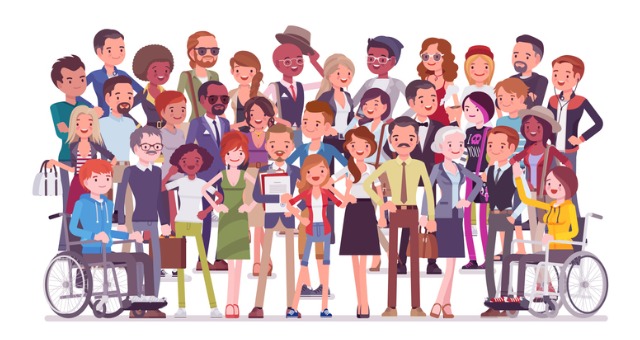
Imagine handing every student the same worksheet, the same textbook chapter, the same timed quiz, and the same “good luck, champ” smile. That may feel fair on paper, but in a real classroom, it is about as practical as giving everyone the same shoe size and calling it equity. Students bring different languages, identities, abilities, interests, communities, questions, and learning histories into school. Culturally Responsive Teaching and UDL, or Universal Design for Learning, help educators design learning that actually fits the learners in the room.
Culturally Responsive Teaching, often shortened to CRT in education conversations, is not about decorating a bulletin board in February and calling the mission complete. It is a serious, research-informed approach that uses students’ cultures, languages, lived experiences, and strengths as resources for academic learning. UDL is a planning framework that helps teachers reduce barriers before students trip over them. When combined, Culturally Responsive Teaching and UDL create classrooms where students are not asked to leave parts of themselves at the door just to access the curriculum.
The main idea is simple but powerful: learning should be rigorous, flexible, relevant, and humane. Teachers still hold high expectations. Students still wrestle with complex ideas. The difference is that the pathway to success is designed with learner variability in mind from the beginning.
What Is Culturally Responsive Teaching?
Culturally Responsive Teaching is an instructional approach that recognizes culture as central to how students think, communicate, participate, and make meaning. Culture is not limited to food, clothing, music, or holidays. It includes communication styles, family roles, language practices, community knowledge, problem-solving habits, beliefs about authority, humor, storytelling, collaboration, and even how students interpret silence. In other words, culture is not a “special topic.” It is already in the classroom, sitting in every chair.
A culturally responsive teacher studies students with curiosity rather than assumptions. Instead of asking, “Why doesn’t this student participate like the others?” the teacher asks, “What forms of participation does this student already know, and how can I connect those strengths to academic expectations?” That shift is huge. It moves instruction away from a deficit mindset and toward an asset-based model.
Core Features of Culturally Responsive Teaching
Strong culturally responsive instruction usually includes several connected practices. Teachers build authentic relationships with students and families. They choose texts, examples, and problems that reflect multiple communities and perspectives. They invite students to use background knowledge as a bridge to new content. They examine bias in curriculum, classroom routines, discipline patterns, and assessment. Most importantly, they treat students’ identities as valuable academic resources, not distractions from “real learning.”
For example, a math teacher introducing ratios might use recipes, music mixing, sports statistics, fashion design, or local transportation data. A history teacher might pair a textbook chapter with oral histories, primary sources from multiple groups, and student-led inquiry questions. An English teacher might allow students to analyze code-switching, dialect, translation, or family storytelling as legitimate language study. The goal is not to make every lesson a cultural festival. The goal is to make learning intellectually honest, personally meaningful, and academically demanding.
What Is Universal Design for Learning?
Universal Design for Learning is a framework for designing instruction that gives students flexible ways to engage with learning, access information, and demonstrate understanding. UDL is often described through three major principles: multiple means of engagement, multiple means of representation, and multiple means of action and expression. In plain English, that means teachers plan for the why, what, and how of learning.
UDL does not mean lowering expectations or letting students do anything they want. It means keeping the learning goal firm while making the route flexible. If the goal is to analyze theme in a novel, students might read print, listen to audio, use vocabulary supports, discuss in small groups, annotate digitally, or demonstrate understanding through writing, presentation, visual mapping, or recorded explanation. The academic target remains clear. The access points multiply.
UDL Is Proactive, Not Reactive
One of the best things about UDL is that it helps teachers stop playing instructional whack-a-mole. Instead of waiting for barriers to appear and then scrambling to fix them, teachers anticipate common barriers in advance. Will some students need vocabulary support? Build it in. Will some students need a model before independent work? Provide it. Will some students need choice to stay motivated? Offer structured options. Will some students process better through visuals, talk, movement, or examples? Plan for those pathways from the start.
This proactive design benefits students with disabilities, English learners, gifted students, students experiencing stress, students who are quiet, students who are energetic, students who love school, and students who would rather befriend a cactus than open a textbook. In short, it benefits humans.
Why Culturally Responsive Teaching and UDL Belong Together
Culturally Responsive Teaching and UDL are not identical, but they are deeply compatible. UDL asks teachers to design flexible environments for learner variability. Culturally Responsive Teaching reminds teachers that culture, language, race, identity, community, and lived experience are major parts of that variability. Without cultural responsiveness, UDL can become a checklist of tools. Without UDL, culturally responsive teaching can become inspiring but inconsistent. Together, they become a practical framework for equity.
Think of UDL as the architecture and Culturally Responsive Teaching as the cultural intelligence that keeps the building from looking beautiful while quietly excluding people. UDL helps teachers ask, “Where are the barriers?” Culturally Responsive Teaching adds, “Whose barriers are we noticing, whose barriers are we ignoring, and whose ways of knowing are already powerful?”
The Equity Connection
Equity in education is not about giving every student the same thing. It is about giving students what they need to access meaningful, challenging learning. Culturally Responsive Teaching and UDL both challenge the myth of the “average learner.” There is no average learner sitting in the back row sharpening a pencil. Students vary by language, background knowledge, confidence, disability, attention, interests, identity, trauma history, family responsibilities, and prior access to opportunity.
When teachers use both approaches, they design classrooms that are more accessible and more affirming. Students see themselves in the curriculum, but they are also introduced to experiences beyond their own. They receive support, but not pity. They get choices, but not chaos. They are invited into rigorous thinking with tools that make success possible.
Practical Strategies for Combining Culturally Responsive Teaching and UDL
The strongest classroom strategies are not complicated. They are intentional. Below are practical ways teachers can blend culturally responsive teaching with Universal Design for Learning in everyday instruction.
1. Start With Student Assets
Before planning a unit, ask what students already know, value, speak, question, create, and care about. Use surveys, interest inventories, family interviews, community walks, quick writes, student conferences, and observation. A student who translates for a grandparent is practicing sophisticated language skills. A student who helps run a family business understands money, negotiation, and responsibility. A student who creates videos, braids hair, repairs bikes, watches siblings, plays games strategically, or participates in faith or community events brings knowledge that can connect to academic content.
In UDL terms, this supports engagement by increasing relevance and authenticity. In culturally responsive terms, it positions students as knowledgeable contributors. That combination can change the emotional temperature of the room.
2. Offer Choice With Clear Boundaries
Choice is powerful, but only when it is structured. “Do whatever you want” is not UDL; it is a tiny classroom tornado. Instead, provide meaningful options connected to the same standard. Students might choose between two texts at different perspectives, three project formats, several discussion roles, or multiple examples to analyze. The teacher defines the learning goal, success criteria, timeline, and quality expectations.
For example, in a science unit on ecosystems, students might investigate a local park, a farm, a coastal environment, an urban neighborhood, or a culturally significant food system. Each student studies interdependence, energy flow, and human impact, but the entry point varies. That is culturally responsive UDL in action.
3. Represent Content in Multiple Ways
Students should not have to rely on one format to understand important ideas. Use text, visuals, diagrams, audio, video, demonstrations, models, gestures, real objects, bilingual resources, and peer explanation. For English learners, students with language-based disabilities, and students unfamiliar with the context of a lesson, multiple representations are not “extra help.” They are the bridge to the content.
A social studies lesson on migration might include maps, personal narratives, data charts, political cartoons, vocabulary previews, short videos, and primary-source excerpts. Students can then compare causes, consequences, and perspectives. The lesson becomes richer for everyone, not just more accessible for some.
4. Make Academic Language Visible
Academic language can be a hidden gatekeeper. Words such as analyze, justify, evaluate, infer, compare, and synthesize are everywhere in school, yet teachers sometimes assume students automatically understand them. Spoiler alert: they do not always. Make these terms visible, model them, translate them when helpful, and connect them to language students already use.
For instance, “justify your answer” can be linked to everyday phrases like “prove it,” “show your receipts,” or “back it up.” This does not water down academic language. It makes the bridge stronger. Students can move from familiar language to formal language with confidence.
5. Use Flexible Assessment
Assessment should measure the target skill, not accidental obstacles. If the goal is to assess understanding of a science concept, does every student need to write a five-paragraph essay? Maybe not. Some might create a labeled model, record an oral explanation, complete a diagram with reasoning, participate in a conference, or write a traditional response. The key is alignment. Different products can still meet the same criteria.
Flexible assessment also helps teachers avoid confusing language proficiency, test anxiety, handwriting speed, or unfamiliar cultural references with lack of understanding. Students deserve assessment that reveals what they know, not assessment that hides it behind unnecessary barriers.
Examples Across Grade Levels
Elementary School Example
In a third-grade reading unit, students study folktales from different cultures. The teacher provides print books, audio versions, illustrated vocabulary cards, partner reading, and story structure maps. Students interview family members about stories they heard growing up, then compare themes such as courage, cleverness, kindness, or fairness. For the final task, students choose to write a comparison paragraph, record a short explanation, or create a visual story map with labels.
This lesson uses culturally responsive teaching by valuing family storytelling and diverse traditions. It uses UDL by offering multiple ways to access text and express understanding. It also avoids the classic mistake of turning culture into a costume parade. The academic work remains focused on theme, structure, and comparison.
Middle School Example
In a seventh-grade math class, students learn proportional reasoning through real-world scenarios. The teacher includes examples from cooking, music playlists, sports performance, map scales, art, and budgeting. Students choose one context to explore in depth and explain their reasoning through a written solution, screencast, poster, or small-group teaching demonstration. Vocabulary and sentence frames help students explain ratios using precise language.
Here, students’ interests and experiences are part of the math, not a break from it. The teacher maintains a firm goal while allowing flexible pathways. That is the sweet spot.
High School Example
In an eleventh-grade U.S. history class, students examine industrialization through textbook excerpts, labor songs, photographs, immigrant narratives, economic data, and local history. Students analyze how industrial growth affected different communities. They may write an argument, create a documentary segment, build a digital timeline, or lead a seminar using evidence. Rubrics emphasize historical reasoning, use of evidence, and explanation of multiple perspectives.
This lesson honors complexity. It gives students access to rigorous content through multiple formats and invites them to examine whose stories are centered, whose are missing, and why that matters.
Common Mistakes to Avoid
Mistake 1: Treating Culture as Decoration
Culturally responsive teaching is not solved by posters, flags, or a once-a-year international food day. Those things can be joyful, but they are not enough. Culture must shape curriculum choices, discussion norms, examples, relationships, feedback, and assessment. Otherwise, it becomes wallpaper.
Mistake 2: Confusing UDL With Unlimited Choice
UDL is not a free-for-all. Students need clarity. They need learning goals, models, rubrics, timelines, and feedback. Flexible design works best when expectations are explicit. Freedom without structure can overwhelm students; structure without flexibility can exclude them. The art is in balancing both.
Mistake 3: Assuming One Strategy Works for Every Student in a Group
No cultural group is a learning-style category. Teachers should never assume that all students from one background prefer the same activities, communication patterns, or materials. Culturally responsive teaching requires humility. Ask, observe, adjust, and keep learning.
Mistake 4: Lowering Rigor in the Name of Support
Support is not the same as simplification. A culturally responsive UDL classroom gives students tools for complex thinking. It does not remove complexity altogether. Students can handle challenging content when teachers provide meaningful scaffolds, relevant connections, and flexible ways to engage.
How School Leaders Can Support This Work
Teachers cannot sustain culturally responsive UDL alone if the school system rewards speed, sameness, and test-prep panic. School leaders play a major role. They can provide professional learning, collaborative planning time, inclusive curriculum materials, family engagement structures, coaching, and data review processes that look for opportunity gaps rather than blaming students.
Leaders should also examine discipline data, advanced course enrollment, special education referrals, English learner access, attendance patterns, and student voice. If certain groups are consistently excluded from challenging opportunities, the issue is not student motivation alone. It may be design. It may be bias. It may be policy. Usually, it is a tangled sweater of all three, and someone has to start gently pulling the threads.
Technology, Culturally Responsive Teaching, and UDL
Technology can support culturally responsive UDL, but it is not magic fairy dust. A boring worksheet on a tablet is still a boring worksheet. However, when used thoughtfully, technology can expand access and voice. Students can use text-to-speech, speech-to-text, translation tools, captions, digital annotation, multimedia creation, adaptive practice, collaborative documents, and audio feedback.
Technology can also help students create products that reflect their identities and strengths. A student might record a bilingual podcast, design an infographic about a community issue, produce a video explanation, or build a digital portfolio. The teacher’s job is to make sure the technology serves the learning goal rather than becoming the learning goal’s loud cousin who takes over the party.
Family and Community Partnerships
Culturally responsive UDL grows stronger when teachers partner with families and communities. Families can share insights about students’ interests, responsibilities, strengths, languages, and goals. Community members can contribute examples, problems, stories, expertise, and audiences for student work. These partnerships help students see that school learning is connected to real life, not sealed inside a classroom container.
Family partnership also requires flexible communication. Not every family can attend a meeting at 3:30 p.m. on a Tuesday. Schools can use translated messages, phone calls, videos, community events, flexible conference times, and multiple ways for families to respond. Respectful communication is part of access.
A Practical Planning Checklist
Before teaching a lesson, educators can ask a few guiding questions:
- What is the firm learning goal?
- What barriers might prevent students from reaching that goal?
- Whose culture, language, and experience are represented in the materials?
- How can students connect prior knowledge to new content?
- What choices can students make without losing academic focus?
- How will students access information in more than one way?
- How will students show learning in more than one way?
- How will I know whether my design is working?
This checklist is not a script. It is a thinking tool. The goal is progress, not perfection. Teachers do not need to redesign their entire career by next Thursday. They can begin with one unit, one assessment, one routine, or one student conference.
Experiences Related to Culturally Responsive Teaching and UDL
In real classrooms, the power of Culturally Responsive Teaching and UDL often appears in small moments before it shows up in test scores or formal reports. One teacher may begin by learning how to pronounce every student’s name correctly and discovering that the classroom mood changes almost immediately. Another teacher may replace a single generic writing prompt with three culturally relevant options and suddenly hear stronger student voice. These shifts may look simple, but they tell students, “You are not invisible here.”
A common experience for educators is realizing that some students were never disengaged from learning; they were disengaged from the way learning was being offered. Consider a student who rarely speaks during whole-class discussion but produces brilliant ideas in a small group or audio reflection. Without UDL, that student might be labeled quiet, passive, or unprepared. With UDL, the teacher recognizes that action and expression can vary. The student’s thinking was present all along. It simply needed a better doorway.
Teachers also discover that culturally responsive examples can make difficult content click faster. A math problem about an unfamiliar ski resort may confuse students who have never seen snow outside a movie. Change the context to a community market, a family recipe, a soccer statistic, a bus route, or a phone data plan, and the mathematical reasoning becomes easier to access. The concept is not easier; the entry point is clearer. That distinction matters.
Another valuable experience involves student identity and confidence. When students see authors, scientists, artists, engineers, activists, and historical figures who share aspects of their background, they often participate with new energy. This does not mean every student only studies people who look like them. It means the curriculum expands so all students encounter both mirrors and windows. Mirrors help students feel seen. Windows help students understand others. Sliding glass doors, as many literacy educators describe them, invite students to step into new perspectives.
Educators using culturally responsive UDL also learn that flexibility benefits classroom management. When students understand the purpose of learning, have choices, receive scaffolds, and feel respected, there are fewer battles over compliance. Not zero battles, of course. This is still school, not a peaceful documentary about dolphins. But many behavior issues shrink when students experience belonging and competence.
One of the most honest experiences teachers report is discomfort. Culturally responsive teaching asks adults to reflect on bias, curriculum gaps, language assumptions, and power. UDL asks teachers to rethink “the way I’ve always done it.” That can feel personal. Growth usually does. The good news is that teachers do not have to be perfect to begin. They need humility, curiosity, evidence, and a willingness to revise.
Over time, the classroom begins to feel different. Students ask better questions. Families become more willing to communicate. Assessments reveal more accurate understanding. Students who once hovered at the edge of participation move closer to the center. Teachers stop seeing diversity as a challenge to manage and begin seeing it as the raw material of excellent teaching. That is the lived experience of combining Culturally Responsive Teaching and UDL: not a trend, not a buzzword sandwich, but a practical way to make learning more human.
Conclusion
Culturally Responsive Teaching and UDL work best when they are treated as connected commitments rather than separate initiatives. Culturally responsive teaching helps educators honor students’ identities, cultures, languages, and communities as assets. UDL helps educators design flexible learning environments that reduce barriers and promote meaningful participation. Together, they support classrooms where rigor and belonging are not enemies. They are teammates.
The work requires planning, reflection, and courage. It asks teachers to know students deeply, question old routines, broaden curriculum, design flexible assessments, and keep expectations high. It also offers a hopeful reminder: equity is not created by one grand gesture. It is built through daily design decisions. Every choice about texts, examples, discussion, assessment, language, technology, and relationships can either narrow or widen the path to learning. Culturally responsive UDL widens the path.











