
Note: This article is based on publicly available information from reputable U.S. government, aviation history, Nevada tourism, and educational sources. Area 51 itself remains a restricted military installation, and visitors should never cross posted boundaries, gates, fences, or warning signs.
Introduction: America’s Most Famous “Do Not Enter” Sign
Area 51 may be the only place in America where a dusty desert road, a warning sign, and a distant mountain range can make people whisper, “So… where are they hiding the aliens?” For decades, this remote military site in southern Nevada has inspired documentaries, road trips, conspiracy theories, late-night jokes, and more alien T-shirts than humanity probably needs. But behind the pop-culture fog is a real place with a real history: a highly classified U.S. Air Force facility connected to Cold War aviation, secret aircraft testing, and restricted national security operations.
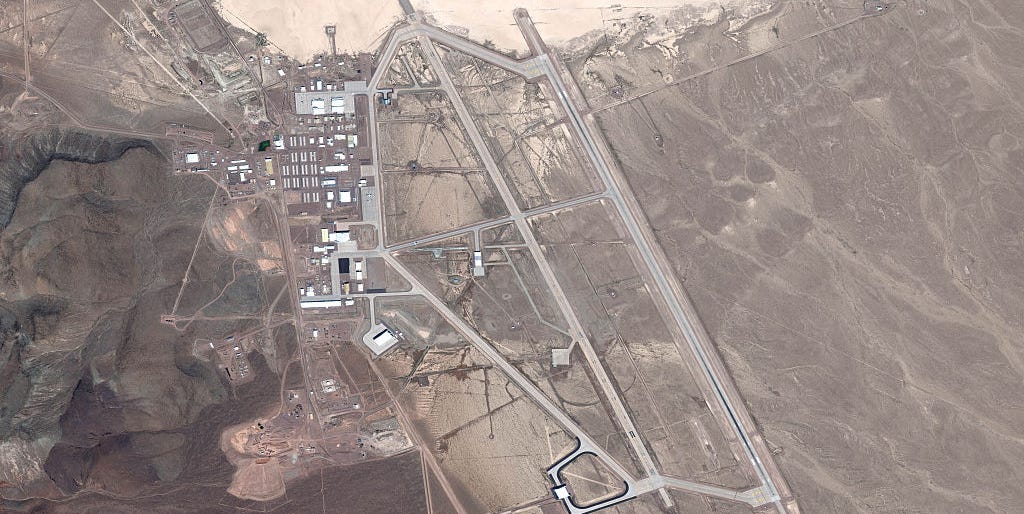
So, what is Area 51? In simple terms, Area 51 is a secretive military installation located near Groom Lake, a dry lakebed in the Nevada desert. It is part of the broader Nevada Test and Training Range, a massive military area used for aircraft testing, weapons development, and advanced training. The base became famous because the U.S. government said very little about it for many years, and nature, as usual, hates a vacuum. When official silence met strange lights in the sky, UFO stories moved in, unpacked their bags, and started selling souvenirs.
This guide explains the real history of Area 51, why it became linked with UFOs, what happens there according to public information, and whether you can visit Area 51 legally. Spoiler alert: you can visit the surrounding region, drive the Extraterrestrial Highway, stop in Rachel, Nevada, and take plenty of quirky photos. You cannot visit the base itself. That part is not a tourist attraction, no matter how persuasive your “I came in peace” bumper sticker may be.
What Is Area 51?
Area 51 is the popular name for a restricted U.S. military facility located at Groom Lake, about 80 to 100 miles north-northwest of Las Vegas, depending on the route. The site sits in a remote section of Nevada surrounded by desert, mountains, restricted airspace, and enough warning signs to make even the boldest road-tripper suddenly remember they have errands elsewhere.
Groom Lake: The Geography Behind the Mystery
Groom Lake is a dry lakebed, also known as a playa. In the early years of jet-age flight testing, that flat surface was extremely useful. A dry lakebed could serve as a natural runway, and the surrounding desert created distance from prying eyes. The location was isolated, difficult to access, and close to other federal testing areas. For a secret aircraft program, that combination was less “creepy alien bunker” and more “excellent project management.”
The facility is often associated with the Nevada Test and Training Range, one of the largest military training spaces in the United States. The broader range supports testing, tactics development, and advanced military training. Area 51 is not a public museum, theme park, or official visitor center. It is a working military site, and much about its current operations is classified.
Why Is It Called Area 51?
The name “Area 51” is believed to come from old mapping designations used around the Nevada Test Site region. Over time, the label stuck. The facility has also been connected with names such as Groom Lake, Paradise Ranch, Watertown, and Homey Airport. “Paradise Ranch” was reportedly used to make the remote test site sound more appealing to workers. That is some impressive marketing, because “remote desert base with extreme secrecy” does not exactly scream vacation package.
The Real History of Area 51
The story of Area 51 begins not with flying saucers, but with spy planes. During the Cold War, the United States needed better ways to gather intelligence about the Soviet Union and other strategic areas. Satellites were not yet the powerful tools they would later become, so high-altitude aircraft played a major role in reconnaissance.
The U-2 Spy Plane and the Birth of the Base
In the 1950s, the CIA and Lockheed’s famous Skunk Works division developed the U-2 spy plane, a high-altitude reconnaissance aircraft designed to fly far above the reach of many threats at the time. The program required secrecy, distance, and a place where test flights could happen without attracting too much attention. Groom Lake checked all the boxes.
Testing began in the mid-1950s. The U-2’s long wings and unusual appearance made it unlike most aircraft people had seen. It could fly at altitudes that were extraordinary for that era. To airline pilots, military personnel, and people on the ground, a bright object moving high in the sky could look mysterious. Many reported UFO sightings from that period were likely connected to high-altitude test flights of aircraft such as the U-2.
Project OXCART and the A-12
After the U-2 came even more advanced aircraft, including the A-12, developed under Project OXCART. The A-12 was a high-speed, high-altitude reconnaissance aircraft and an important predecessor to the better-known SR-71 Blackbird. These aircraft were designed to fly incredibly fast and high, pushing the limits of engineering, materials, propulsion, and pilot endurance.
Testing machines like the A-12 required secrecy for obvious reasons. During the Cold War, technological advantage could shape global strategy. If a new aircraft could fly higher, faster, or with a smaller radar signature, the details mattered. Groom Lake offered a controlled environment where engineers and pilots could test radical designs away from public airports, reporters, and foreign intelligence observers.
Stealth Technology and Experimental Aircraft
Area 51 is widely associated with experimental aircraft and stealth technology. Publicly known aircraft connected to secretive testing culture include the U-2, A-12, SR-71-related developments, and stealth aircraft such as the F-117 Nighthawk. Not every famous aircraft was necessarily “born” at Area 51 in the simple way pop culture suggests, but the facility is strongly linked with the broader world of classified aviation research.
This history helps explain why the base became legendary. Imagine living in rural Nevada decades ago and seeing silent, strange-looking aircraft or unusual lights moving across the sky at unfamiliar speeds and altitudes. Without public explanations, people filled in the blanks. Some guessed experimental aircraft. Others guessed visitors from another galaxy with questionable parking habits.
Why Do People Think Area 51 Has Aliens?
The alien connection is the part of Area 51 that made it world-famous. The truth is more complicated than “aliens definitely live there” or “nothing weird ever happened.” Area 51 became a UFO magnet because secrecy, strange aircraft, Cold War anxiety, and American pop culture all collided in one very dusty corner of Nevada.
UFO Sightings and Secret Aircraft
Many early UFO reports around Nevada can be understood in the context of secret flight testing. Aircraft such as the U-2 and A-12 operated at altitudes and speeds that were unusual for their time. Sunlight reflecting off a high-flying aircraft after sunset could create a dramatic visual effect. To observers who had no idea such planes existed, the sight may have looked otherworldly.
That does not mean every UFO report has a neat explanation, and it does not mean every witness was making things up. “UFO” simply means unidentified flying object. Something can be unidentified to the observer and still be human-made. In Area 51’s case, the government’s need to protect secret programs made it difficult to explain sightings honestly in real time. Silence kept secrets safe, but it also poured rocket fuel on rumors.
Roswell, Pop Culture, and the Area 51 Myth Machine
Area 51 is often mixed together with the 1947 Roswell incident in New Mexico, even though they are different places with different histories. In movies, television, video games, and internet lore, Area 51 became the default storage unit for every alien theory: crashed spacecraft, alien bodies, reverse-engineered technology, secret tunnels, and possibly a vending machine that accepts moon rocks.
The image of Area 51 as a hidden alien laboratory became especially powerful because it was flexible. People could project almost anything onto it. The fewer details officials released, the more exciting the story became. A classified aircraft testing site is interesting. A classified aircraft testing site that might also include extraterrestrial visitors with giant eyes and terrible social skills is irresistible.
The 2019 “Storm Area 51” Event
In 2019, a joke Facebook event called “Storm Area 51, They Can’t Stop All of Us” went viral. Millions of people clicked that they were interested or planned to attend, though the actual turnout near the site was much smaller. The event became a global meme and reminded everyone that Area 51 lives rent-free in the internet’s imagination.
Authorities strongly warned people not to trespass. The lesson was simple: memes are fun; federal trespassing charges are less fun. The event ultimately became more of a quirky desert gathering than an invasion. Still, it proved that Area 51 remains one of the most recognizable mystery locations in the world.
Can You Visit Area 51?
The honest answer is yes and no. You can visit the region around Area 51. You can drive the Extraterrestrial Highway, stop in nearby towns, take photos at alien-themed roadside attractions, and enjoy the strange beauty of the Nevada desert. You cannot visit the actual Area 51 base. The installation is restricted, guarded, monitored, and closed to the public.
You Cannot Enter the Base
Area 51 is not open for tours. There is no ticket booth, no gift shop inside the gate, and no friendly alien ambassador offering maps. Roads that approach restricted boundaries are marked with warning signs. Crossing those boundaries can lead to fines, arrest, vehicle searches, or other serious consequences. Photography may also be restricted in certain areas near security boundaries.
Visitors should take posted signs seriously. The desert may look empty, but restricted zones are monitored. Security personnel, surveillance systems, and law enforcement may respond if someone crosses the line. A good rule: if a sign says not to enter, believe it. The sign is not flirting.
What You Can Visit Instead
The surrounding region has become a destination for curious travelers. Instead of trying to enter the restricted base, visitors can explore legal roadside stops and nearby communities. The most famous route is Nevada State Route 375, officially known as the Extraterrestrial Highway. The road passes through wide-open desert landscapes and has become a pilgrimage route for UFO fans, aviation history buffs, photographers, and anyone who enjoys weird Americana.
Rachel, Nevada, is the best-known town associated with Area 51 tourism. It is small, remote, and famous for alien-themed businesses, especially the Little A’Le’Inn. Travelers often stop for food, souvenirs, photos, and stories. The area also includes photo opportunities such as the Extraterrestrial Highway sign and desert viewpoints where visitors can experience the vastness that makes this region so memorable.
How to Plan an Area 51 Road Trip Legally
An Area 51 road trip is less about “visiting the base” and more about visiting the legend. The appeal comes from the drive, the empty horizon, the oddball roadside stops, and the feeling that you are traveling through a landscape where fact and folklore share the same passenger seat.
Start from Las Vegas
Most travelers begin in Las Vegas because it has the nearest major airport, rental cars, hotels, restaurants, and supplies. From there, visitors can drive north toward the Extraterrestrial Highway. The journey takes you away from neon lights and into classic high-desert scenery. The contrast is part of the fun: one minute you are near casino fountains, and a few hours later you are wondering whether that blinking light is an aircraft, a satellite, or your overactive imagination asking for snacks.
Drive the Extraterrestrial Highway
Nevada State Route 375 is officially branded the Extraterrestrial Highway. It is a remote road, so plan carefully. Gas stations can be far apart, cell service may be unreliable, and desert weather can be unforgiving. Bring water, snacks, a full tank of fuel, sun protection, and a practical attitude. The desert rewards prepared travelers and humbles people who think flip-flops count as survival gear.
The highway offers open views, lonely stretches of pavement, and plenty of opportunities for photos. It is also a normal road used by residents, workers, and travelers, so drive safely and respectfully. Do not stop in dangerous places, block traffic, trespass on private property, or treat local communities like movie sets.
Visit Rachel, Nevada
Rachel is often described as the closest town to Area 51. It has embraced its place in UFO culture with humor and hospitality. The Little A’Le’Inn is a popular stop for travelers looking for food, souvenirs, and alien-themed photo opportunities. The town is tiny, so visitors should manage expectations. This is not a polished amusement park. That is exactly why people like it. Rachel feels like a real desert outpost that accidentally became a global symbol of curiosity.
Respect the Desert and the Locals
Area 51 tourism can be fun, but it should be responsible. Stay on public roads, pack out trash, avoid vandalism, and respect local property. Many people live and work in these remote communities. For them, the alien jokes are part of the landscape, but so are everyday concerns like road safety, privacy, and limited services.
What Happens at Area 51 Today?
The current operations at Area 51 are classified, so any confident claim about what happens there today should be treated carefully. Public information supports the idea that the broader region is used for military aviation, testing, training, and national defense activities. Beyond that, details are limited.
It is reasonable to assume that advanced aerospace technologies may be tested in restricted parts of the Nevada desert, because that is consistent with the site’s known history and the purpose of the Nevada Test and Training Range. But “reasonable assumption” is not the same as proof. The internet often skips that distinction, puts on sunglasses, and declares everything a cover-up.
Why Secrecy Still Matters
Military secrecy is not automatically suspicious. Some technologies, tactics, aircraft capabilities, sensors, and defense systems must remain classified to protect national security. During the Cold War, secrecy around the U-2 and A-12 programs helped preserve important intelligence advantages. Today, similar logic may apply to modern systems.
At the same time, secrecy naturally attracts curiosity. People want to know what they are not allowed to know. Area 51 sits at the intersection of legitimate national security and public fascination. That tension is why the story has lasted so long.
Area 51 and UFOs: What We Know, What We Don’t
Modern discussions about UFOs, now often called UAPs, or unidentified anomalous phenomena, have become more serious in recent years. U.S. officials have acknowledged that some aerial observations remain unexplained after initial review. However, that does not prove extraterrestrial life is stored at Area 51. Unidentified means unidentified, not automatically interstellar.
Area 51’s UFO reputation is partly historical. Secret aircraft testing created unusual sightings, and official silence helped those sightings grow into legend. The base became a symbol of hidden knowledge. Whether someone believes in alien visitation or not, Area 51 remains a fascinating case study in how secrecy shapes public imagination.
Healthy Skepticism Is Your Best Travel Companion
The best way to approach Area 51 is with curiosity and skepticism in the same backpack. Enjoy the stories. Take the photos. Laugh at the alien murals. Read the aviation history. Look at the night sky. But separate documented facts from entertaining speculation. A mysterious light may be a satellite, aircraft, drone, planet, weather phenomenon, or something else. It does not have to be a spaceship looking for a drive-through.
Practical Safety Tips for Visiting the Area 51 Region
If you are planning a legal Area 51-themed road trip, preparation matters. This is remote desert country, not a casual stroll between coffee shops.
Bring Supplies
Carry more water than you think you need. Bring food, sunscreen, sunglasses, a hat, and basic emergency supplies. Make sure your vehicle is in good condition, especially the tires. Fill your gas tank before heading into remote stretches. A paper map or offline map can be useful because cell service may be limited or unavailable.
Watch the Weather
Desert temperatures can be extreme. Summer heat can be dangerous, and winter nights can be cold. Wind, dust, and sudden weather changes can affect visibility and driving conditions. Check conditions before leaving and avoid risky backroads if you are not prepared.
Do Not Trespass
This is the most important tip. Do not cross gates, fences, warning signs, or restricted boundaries. Do not fly drones near restricted military areas. Do not attempt to photograph secure facilities from prohibited locations. The legal and safety risks are real. There are plenty of ways to enjoy Area 51 lore without turning your vacation into paperwork.
Best Things to Do Near Area 51
The Area 51 region is more than a forbidden base. It is a destination for travelers who enjoy strange stories, desert landscapes, and roadside Americana.
Take a Photo at the Extraterrestrial Highway Sign
The Extraterrestrial Highway sign is one of the classic photo stops. It captures the playful spirit of the region and makes a perfect “yes, I went there” image. Just be respectful. Do not deface signs or add stickers. Future travelers want the same photo, and nobody wants their vacation memory ruined by someone’s questionable marker art.
Stop at Alien-Themed Roadside Attractions
Alien-themed shops, diners, and displays are part of the fun. These places keep the legend alive with humor. Buy a souvenir, grab a meal, and enjoy the weirdness. A foam alien head may not be historically necessary, but neither is whipped cream on hot chocolate, and yet society wisely allows it.
Enjoy Stargazing
The remote Nevada desert can offer excellent night-sky viewing when conditions are clear. Far from city lights, the stars can feel startlingly close. Many travelers find that the real wonder of the Area 51 region is not what might be hidden underground, but what is visible overhead.
Explore Broader Nevada History
Southern and central Nevada are full of mining history, ghost towns, military history, desert wildlife, and unusual landscapes. Travelers can combine an Area 51-themed drive with stops connected to state parks, historic towns, or other scenic routes. The region rewards people who slow down and look beyond the headline mystery.
Common Myths About Area 51
Myth 1: You Can Take an Official Tour of Area 51
No public tour enters the base. Some commercial tours visit the surrounding region, roadside attractions, and viewpoints, but they do not take you inside Area 51. If someone claims they can casually get you through the gate, your scam detector should start making spaceship noises.
Myth 2: Area 51 Is Only About Aliens
The documented history of Area 51 is strongly connected to aircraft testing, reconnaissance programs, and national defense. The alien reputation is part of the cultural story, but the proven history is aviation history.
Myth 3: Nothing Real Ever Happened There
Area 51 is not just a myth. It is a real restricted facility with a significant role in U.S. aerospace history. The U-2 and A-12 programs alone make it historically important, even without adding a single green alien to the guest list.
Myth 4: If You See a Strange Light, It Must Be Extraterrestrial
Remote skies can be deceptive. Aircraft, satellites, planets, military exercises, atmospheric effects, and human imagination can all contribute to unusual sightings. A strange light is interesting, but it is not automatically proof of alien life.
500-Word Experience Section: What an Area 51-Themed Trip Feels Like
An Area 51-themed trip is less like visiting a traditional landmark and more like driving through a question mark. The experience begins before you see anything famous. Leaving Las Vegas, the landscape opens up, traffic thins, and the desert starts doing what the desert does best: making humans feel small, dramatic, and slightly under-hydrated. The road stretches ahead in long, quiet lines. Mountains sit in the distance like they know secrets but signed nondisclosure agreements.
The closer you get to the Extraterrestrial Highway, the more the mood shifts. Ordinary travel becomes playful. Road signs, souvenir stops, and alien-themed businesses turn the journey into a treasure hunt. You may find yourself scanning the horizon even if you are normally the practical type who alphabetizes receipts. That is the charm of Area 51 lore. It gives adults permission to wonder, speculate, and say things like, “What if that cloud is suspicious?” without being immediately removed from the group chat.
Stopping in Rachel, Nevada, can feel like stepping into a tiny community that became famous by standing near a mystery. It is not glossy, crowded, or overdesigned. It is remote, quirky, and memorable. You might meet travelers from different states or countries who came for the same reason: curiosity. Some are aviation fans who know the history of the U-2, A-12, and stealth programs. Others are UFO believers hoping for a glimpse of something unexplained. Many are simply road-trippers who enjoy unusual places. The mix creates a fun atmosphere, like a history field trip hosted by someone wearing an alien baseball cap.
One of the strongest impressions is the silence. Away from major cities, the desert has a huge, open quiet. During the day, sunlight sharpens every ridge and shadow. At night, the sky can become the main attraction. Stars appear in numbers that city dwellers may have forgotten were possible. You may not see a UFO, but you may see the Milky Way, satellites, aircraft lights, and a horizon so wide it makes your everyday worries feel temporarily ridiculous.
The restricted boundary areas add a different feeling. Even from legal public roads, the warning signs and distant surveillance reminders make it clear that the mystery has limits. This is where responsible travel matters. The thrill comes from being near the legend, not from breaking rules. In fact, staying legal makes the trip better because you can enjoy the experience without worrying about fines, law enforcement, or explaining to your family why your vacation album includes a mugshot.
The best Area 51 experience combines humor, preparation, and respect. Bring water, fuel, snacks, and a flexible attitude. Take photos. Talk to locals if they are open to conversation. Buy the silly souvenir. Read the real history before you go, because knowing about Cold War aircraft makes the landscape more meaningful. Most of all, enjoy the blend of fact and folklore. Area 51 is fascinating not because it gives easy answers, but because it shows how powerful a mystery can become when history, secrecy, technology, and imagination meet in the middle of the Nevada desert.
Conclusion: Area 51 Is Real, the Mystery Is Real, and the Gate Is Still Closed
Area 51 is one of the most famous restricted places on Earth, but its real story is even more interesting than many myths. It began as a secret testing site for advanced aircraft during the Cold War and became a symbol of hidden technology, government secrecy, and UFO imagination. Its connection to spy planes such as the U-2 and A-12 explains many early sightings and gives the site a major place in aviation history.
Can you visit Area 51? You can visit the surrounding region, drive the Extraterrestrial Highway, stop in Rachel, take photos, enjoy alien-themed attractions, and experience the Nevada desert. You cannot enter the base. The boundary is real, the restrictions are serious, and no selfie is worth legal trouble.
In the end, Area 51 works because it offers two stories at once. One is documented: secret aircraft, Cold War innovation, and national defense. The other is cultural: UFOs, aliens, memes, and the human love of mystery. Put them together, and you get a destination that continues to fascinate travelers, researchers, skeptics, believers, and anyone who has ever looked at a strange light in the sky and thought, “Well, that’s probably nothing… but what if?”











