
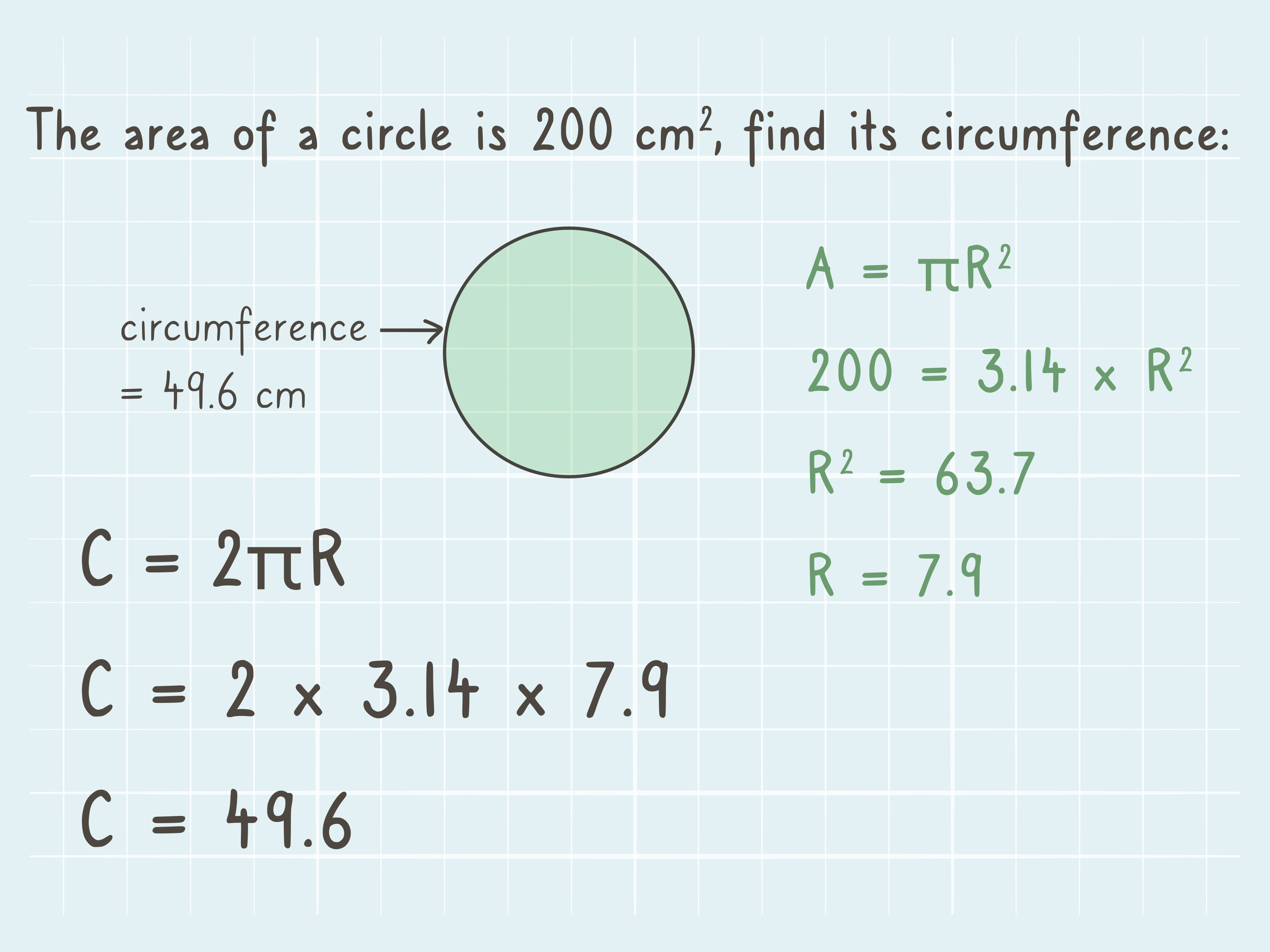
Finding the circumference of a circle when you already know its area may sound like a geometry magic trick. One moment you have the amount of space inside the circle, and the next moment you know the distance around its edge. No wand required. Just a little algebra, a square root, and the mighty number pi doing what pi does best: showing up everywhere circles are invited.
The good news is that this process is easier than it looks. If you know the area of a circle, you can work backward to find the radius, then use that radius to calculate the circumference. In other words, you are not guessing the distance around the circle. You are using the circle’s own measurements to reveal it.
This guide explains how to find the circumference of a circle using its area in 10 clear steps. You will learn the formulas, see worked examples, avoid common mistakes, and understand why the method works. Whether you are studying for a test, helping with homework, building something round, or simply trying to prove that geometry is not out to ruin your afternoon, this article has you covered.
What Does Circumference Mean?
The circumference of a circle is the distance around the outside edge of the circle. Think of it as the circle’s perimeter. If you placed a string perfectly around a round table and then stretched that string into a straight line, the length of the string would be the circumference.
The standard circumference formula is:
C = 2πr
In this formula, C means circumference, π is pi, and r is the radius. The radius is the distance from the center of the circle to any point on its edge. You may also see circumference written as:
C = πd
Here, d means diameter. The diameter is the full distance across the circle through the center, and it is twice the radius. Both circumference formulas are correct. When you are given area, however, the radius formula is usually the most convenient path.
What Does Area Mean?
The area of a circle is the amount of flat space inside the circle. If circumference is the fence around a circular garden, area is the soil inside the fence. The area formula is:
A = πr²
In this formula, A means area. The radius is squared, which means it is multiplied by itself. That tiny exponent is important. Ignore it, and your answer will wander off like a shopping cart with one bad wheel.
Because area and circumference both depend on the radius, knowing the area lets you find the radius. Once you have the radius, the circumference is only one formula away.
The Main Formula: Circumference from Area
If the area of a circle is known, you can find the circumference with this combined formula:
C = 2π√(A/π)
That may look a little dramatic at first, but it is just two familiar formulas working together. First, solve the area formula for radius:
A = πr²
Divide both sides by π:
A/π = r²
Take the square root:
r = √(A/π)
Then place that radius into the circumference formula:
C = 2πr
So the full shortcut becomes:
C = 2π√(A/π)
You can use either the two-step method or the shortcut formula. For beginners, the two-step method is often easier because it shows exactly what is happening.
How to Find the Circumference of a Circle Using Its Area: 10 Steps
Step 1: Write Down the Given Area
Start by identifying the area of the circle. The problem might say, “The area of a circle is 64π square inches,” or “A circle has an area of 78.5 square centimeters.” Write this value clearly before doing anything else.
For example:
A = 78.5 square centimeters
Keeping the area visible helps prevent one of the most common errors: accidentally using the area as if it were the radius. Area is not radius. Area is the space inside the circle. Radius is a straight-line distance from the center to the edge. They are relatives, but they are not twins.
Step 2: Remember the Area Formula
The area formula is:
A = πr²
This formula is the key to unlocking the radius. Since circumference depends on radius, you first need to reverse the area formula. Think of the area as a locked box and the radius as the thing inside. Algebra is the key, and yes, it is less exciting than a treasure map but far more reliable.
Step 3: Divide the Area by Pi
To isolate the squared radius, divide the area by π:
r² = A/π
If the area is 78.5 square centimeters and you use π ≈ 3.14, then:
r² = 78.5 ÷ 3.14 = 25
Now you know that the radius squared is 25. You do not yet know the radius itself, but you are close. This is the moment in the math movie where the hero finds the hidden door.
Step 4: Take the Square Root
To get the radius, take the square root of both sides:
r = √25 = 5
So the radius is:
r = 5 centimeters
This step matters because the area formula uses r², not just r. The square root reverses the square. If you skip this step, your circumference will be much too large.
Step 5: Write the Circumference Formula
Now that you have the radius, use the circumference formula:
C = 2πr
This formula tells you that the circumference is two times pi times the radius. Since the radius is 5 centimeters, substitute 5 for r.
Step 6: Substitute the Radius
Place the radius into the formula:
C = 2π(5)
Now simplify:
C = 10π
If your teacher, worksheet, or project allows an exact answer, you can stop here and write:
C = 10π centimeters
Exact answers are often preferred in math classes because they avoid rounding too early.
Step 7: Convert to a Decimal If Needed
If you need a decimal answer, multiply by π. Using π ≈ 3.14:
C = 10 × 3.14 = 31.4
So the circumference is:
C ≈ 31.4 centimeters
When using a calculator, you can use the π button for a more accurate result. If you are doing homework by hand, 3.14 is usually acceptable unless your instructions say otherwise.
Step 8: Keep the Units Straight
Area is measured in square units, such as square inches, square feet, or square centimeters. Circumference is measured in regular linear units, such as inches, feet, or centimeters.
If the area is given in square centimeters, the circumference will be in centimeters. If the area is given in square feet, the circumference will be in feet. Do not write “square centimeters” for circumference. The circle will not explode, but your answer may lose points.
Step 9: Check Whether the Answer Makes Sense
A quick reasonableness check can save you from sneaky mistakes. If the area is large, the circumference should also be fairly large. If the area is tiny, the circumference should be smaller. The relationship is not one-to-one, but the general trend should make sense.
For example, a circle with an area of 78.5 square centimeters has a radius of 5 centimeters and a circumference of about 31.4 centimeters. That feels reasonable. A circumference of 314 centimeters would be suspiciously huge, like ordering a personal pizza and receiving a tractor tire.
Step 10: Practice With Another Example
Let’s try a second example. Suppose a circle has an area of 154 square inches. Find the circumference.
Start with the area formula:
A = πr²
Substitute the area:
154 = 3.14r²
Divide by 3.14:
r² = 154 ÷ 3.14 ≈ 49
Take the square root:
r = √49 = 7
Now find circumference:
C = 2πr
C = 2π(7)
C = 14π
Using 3.14 for π:
C ≈ 43.96 inches
Final answer:
The circumference is about 43.96 inches.
Shortcut Method: Use One Formula
Once you understand the two-step method, you can use the direct formula:
C = 2π√(A/π)
For an area of 78.5 square centimeters:
C = 2π√(78.5/π)
Using π ≈ 3.14:
C = 2π√25
C = 2π(5)
C = 10π ≈ 31.4 centimeters
The shortcut is efficient, but it can be intimidating if you are still learning. The two-step version is usually better for showing work because it demonstrates that you found the radius first.
Exact Answers vs. Rounded Answers
Sometimes your answer will include π, and sometimes it will be a decimal. Both can be correct depending on the instructions.
An exact answer keeps π in the result, such as:
C = 12π inches
A decimal approximation replaces π with a number, such as:
C ≈ 37.7 inches
Exact answers are cleaner in algebra and geometry. Decimal answers are useful in real-world situations, such as measuring fabric, edging a garden, cutting wire, or ordering materials. Nobody at the hardware store wants you to ask for “12π inches of trim,” unless they are unusually committed to mathematical drama.
Common Mistakes to Avoid
Mistake 1: Forgetting the Square Root
After dividing the area by π, you get r², not r. Always take the square root before using the circumference formula.
Mistake 2: Mixing Up Radius and Diameter
The radius is half the diameter. If you use C = 2πr, use the radius. If you use C = πd, use the diameter. Do not use the diameter in the radius formula unless you enjoy answers that are twice as large as they should be.
Mistake 3: Rounding Too Early
Rounding during the middle of a problem can make your final answer less accurate. Keep extra decimal places until the end, then round according to the instructions.
Mistake 4: Using Square Units for Circumference
Area uses square units. Circumference uses linear units. If area is in square meters, circumference is in meters.
Why This Method Works
The reason this method works is that area and circumference are both connected to radius. The area tells you how much space the circle covers, and the circumference tells you how far it is around the outside. The radius acts like the bridge between the two.
When you know the area, you can reverse the area formula to find that bridge. Once you have the radius, the circumference formula becomes simple. This is a great example of how formulas are not separate little islands. They connect, overlap, and help solve problems together.
Real-Life Uses for Finding Circumference from Area
This skill is not limited to worksheets. It can be surprisingly useful in real life. If you know the area of a circular rug, you can estimate the length of binding around its edge. If you know the area of a round garden bed, you can estimate how much border material you need. If you know the area of a circular table top, you can estimate the length of trim required around it.
Architects, landscapers, engineers, designers, and builders often move between area and perimeter-style measurements. A circular feature may be described by its area in one document, while the material needed around its edge depends on circumference. Knowing how to convert from one to the other makes the numbers more useful.
Quick Reference Formula Box
Use this mini cheat sheet when solving problems:
Area of a circle: A = πr²
Radius from area: r = √(A/π)
Circumference from radius: C = 2πr
Circumference from area: C = 2π√(A/π)
Diameter from radius: d = 2r
More Practice Problems
Practice Problem 1
A circle has an area of 28.26 square feet. Find the circumference.
Divide by 3.14:
r² = 28.26 ÷ 3.14 = 9
Take the square root:
r = 3
Find circumference:
C = 2π(3) = 6π ≈ 18.84 feet
Practice Problem 2
A circle has an area of 201.06 square meters. Find the circumference.
Divide by 3.14:
r² = 201.06 ÷ 3.14 ≈ 64
Take the square root:
r = 8
Find circumference:
C = 2π(8) = 16π ≈ 50.24 meters
Experience-Based Tips for Learning This Topic
One of the best ways to learn how to find the circumference of a circle using its area is to stop treating the formulas like random symbols floating in space. Many students memorize A = πr² and C = 2πr, but they do not immediately see how the formulas talk to each other. The breakthrough usually happens when you realize that both formulas share the radius. Once the radius is found, the rest of the problem becomes much friendlier.
A useful learning habit is to write the formulas before plugging in numbers. This may feel slow at first, especially if you are eager to finish the problem and escape into snacks, games, or literally anything else. But writing the formulas gives your brain a map. Instead of guessing what to do next, you can follow the structure: area first, radius second, circumference third.
Another helpful experience is using real circular objects. Measure or estimate the area of something round, such as a coaster, plate, flower pot, or table. Then calculate the circumference using the method in this article. Afterward, wrap a flexible measuring tape or string around the object and compare your result. The answer may not be perfect because real objects are not always perfect circles, and measuring can get messy, but the activity makes the formula feel real.
Students often improve quickly when they practice with areas that create clean square roots. For example, areas like 25π, 36π, 49π, or 100π are great because dividing by π gives perfect squares. If A = 49π, then r² = 49, so r = 7. That makes the circumference 14π. Clean examples build confidence before decimals enter the room wearing muddy boots.
When decimals are involved, calculators are useful, but they should not replace understanding. Type carefully, use parentheses when needed, and avoid rounding too soon. For example, if the area is not a neat number, keep several decimal places after finding the radius. Rounding the radius too early can slightly change the final circumference. In schoolwork, that may be the difference between a correct answer and a tiny red mark that says, “Almost.”
Another practical tip is to label every line with units. If you start with square inches, write square inches next to the area. When you find the radius, switch to inches. When you find circumference, keep inches. This habit prevents unit confusion and makes your work easier for someone else to follow. It also makes your answer look more polished, which never hurts.
If you get stuck, ask yourself one simple question: “Do I know the radius yet?” If the answer is no, use the area formula to find it. If the answer is yes, use the circumference formula. That question cuts through most of the confusion. Geometry becomes much less intimidating when every problem has a next step.
Finally, remember that mistakes are part of learning. Forgetting the square root, mixing up radius and diameter, or writing square units for circumference are common errors. They do not mean you are bad at math. They mean you are practicing. Circles have been confusing people for thousands of years, mostly because pi refuses to be a nice simple number. With a few examples and a calm approach, you can handle this topic confidently.
Conclusion
Finding the circumference of a circle using its area is a simple three-part process: start with the area, solve for the radius, and use the radius to calculate circumference. The key formulas are A = πr² and C = 2πr. When combined, they create the direct formula C = 2π√(A/π).
The method works because both area and circumference are connected through the radius. Once you understand that relationship, the problem stops feeling like a trick and starts feeling like a logical chain. Area tells you the radius; radius tells you the circumference. Geometry may still have its dramatic moments, but this one is perfectly manageable.












