
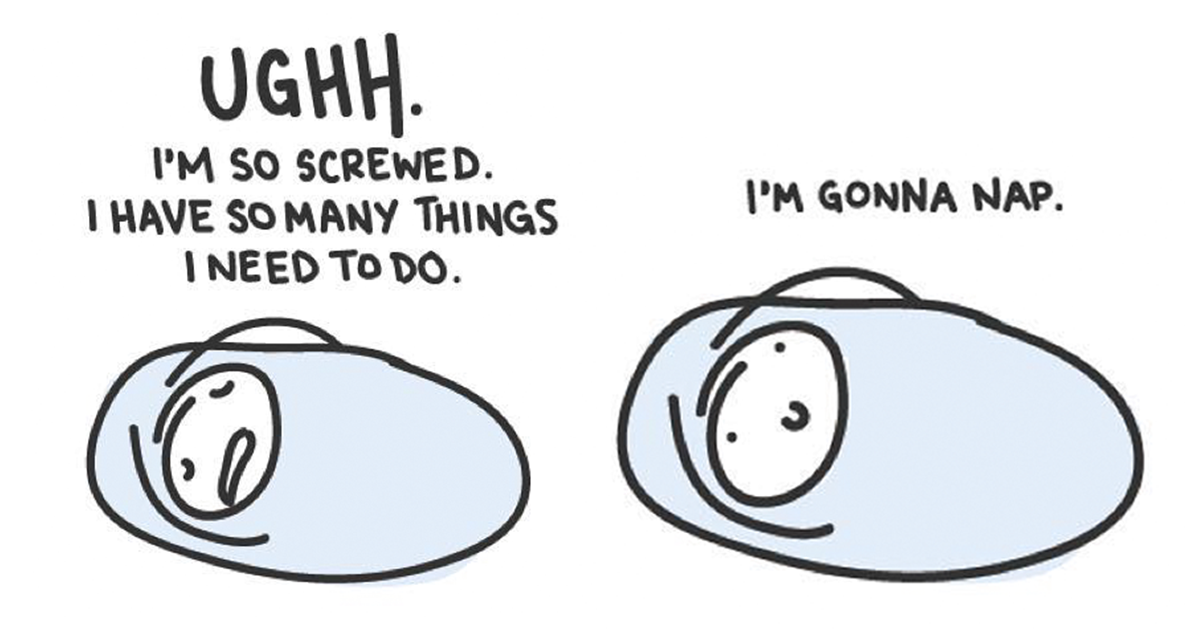
Adulthood has a suspicious marketing department. As kids, we were told it meant freedom, staying up late, eating whatever we wanted, and finally being in charge. Nobody mentioned the mysterious drawer full of unpaid-looking envelopes, the emotional damage of checking a bank balance, or the deeply personal betrayal of laundry becoming dirty again. That is exactly why “73 Comics Showing The Daily Struggles Of A Barely Functional Adult” hits such a sweet, painfully accurate nerve.
The idea behind these comics is simple: being a grown-up is not always a polished montage of productivity, meal prep, and a spotless apartment glowing in afternoon sunlight. Sometimes it is eating cereal for dinner because the stove feels emotionally aggressive. Sometimes it is opening one email, needing a recovery nap, and calling that “professional development.” These comics capture the everyday chaos of modern adulting with humor, honesty, and the kind of emotional precision that makes readers say, “Who installed a camera in my kitchen?”
Created around the relatable world of Barely Functional Adult, the comic style speaks to anyone who has ever felt technically grown but spiritually still waiting for a responsible adult to arrive. Spoiler: the responsible adult is apparently us. Bad news, team.
What Makes Barely Functional Adult Comics So Relatable?
The magic of these comics comes from the gap between what adulthood is supposed to look like and what it actually feels like. On paper, an adult pays bills, makes appointments, buys vegetables before they become soup in the fridge, and answers messages within a socially acceptable time frame. In reality, many people are improvising wildly while hoping nobody notices the smoke coming from the metaphorical toaster.
Daily struggles comics work because they transform tiny private failures into shared jokes. Forgetting laundry in the washer for the third time? Comic material. Pretending to understand insurance? Comic material. Feeling proud because you cooked one actual meal and only used two pans? That deserves a parade, or at least a sticker.
Barely Functional Adult comics often use soft humor instead of cruel mockery. The joke is not “look how useless this person is.” The joke is “look how human this person is.” That distinction matters. Readers are not laughing at failure; they are laughing with recognition. The panels make adulthood feel less like an individual flaw and more like a group project where everyone forgot to read the instructions.
The Rise of “Adulting” Humor
The word “adulting” became popular because it names a very specific emotional experience: doing normal grown-up tasks while feeling strangely underqualified for all of them. Paying rent, scheduling a dentist appointment, cooking dinner, building a career, maintaining friendships, cleaning the bathroom, remembering passwords, and somehow staying hydratedeach task is manageable alone. Together, they form a boss level nobody asked to play.
This is why adulting comics have become so popular online. They take the boring machinery of everyday life and turn it into something funny enough to survive. In a digital world full of perfect apartments, perfect routines, and perfect morning smoothies arranged like museum exhibits, comics about barely functioning feel refreshing. They say, “Relax. Some of us are also living among clean laundry piles that have not yet evolved into folded laundry.”
These comics also reflect a real cultural shift. Younger adults are often navigating financial pressure, uncertain career paths, rising living costs, online comparison, and the constant expectation to optimize every corner of life. You are not just supposed to have a job; you are supposed to have a passion. You are not just supposed to rest; you are supposed to practice intentional recovery. You are not just supposed to eat lunch; you are supposed to hit your protein goal while using a reusable container and somehow not crying near the microwave.
Why 73 Comics Feel Better Than One Long Pep Talk
A long motivational speech can be nice, but sometimes what people really need is one drawing of a tired person staring into the fridge like it contains the meaning of life. Comics communicate quickly. A facial expression, a slumped posture, a messy room, or a tiny line of dialogue can say more than a thousand-word essay about burnout, procrastination, and the spiritual burden of dishes.
The number 73 matters because it suggests variety. The daily struggles of adulthood are not limited to one category. There are money struggles, work struggles, social struggles, food struggles, sleep struggles, cleaning struggles, and the uniquely modern struggle of needing to respond to a message while also needing seven to nine business days to become emotionally available.
A collection of 73 comics gives readers a buffet of recognition. One panel may capture the horror of realizing groceries cost actual money. Another may focus on the weird shame of canceling plans even though staying home is the plan your soul requested. Another may show how one small errand can drain the entire day’s battery. Together, the comics become a survival manual disguised as jokes.
The Biggest Daily Struggles These Comics Capture
1. Laundry: The Villain With No Final Form
Laundry is not a chore. Laundry is a lifestyle. You wash it, dry it, fold some of it, forget the rest, wear the same hoodie again, and somehow the basket is full by sunset. Barely functional adult comics understand that laundry is never “done.” It simply changes locations: floor, chair, bed, basket, machine, chair again. The chair is not furniture anymore. It is a textile management facility.
2. Grocery Shopping and the Myth of Meal Planning
Every adult has entered a grocery store believing they are about to become a better person. The cart starts with spinach, oats, and responsible intentions. Ten minutes later, it contains frozen pizza, coffee, three snacks, and one vegetable purchased out of guilt. These comics celebrate that familiar cycle: ambition at the produce aisle, defeat near the checkout, and dinner made from whatever requires the least emotional paperwork.
3. Work Emails and the Fear of “Just Following Up”
Modern work has turned email into a psychological obstacle course. “Quick question” is rarely quick. “Circling back” sounds polite but feels like a hawk returning to the field. “Per my last email” could power an entire courtroom drama. A barely functional adult does answer emails, eventually, but only after reading them four times, opening a new tab, forgetting why the tab exists, and returning with the courage of a small but determined squirrel.
4. Money Stress: The Subscription Goblin
One of adulthood’s great surprises is that money has exits everywhere. Rent leaves. Utilities leave. Internet leaves. Insurance leaves. A forgotten subscription leaves quietly in the night like a raccoon with your wallet. Comics about adult money stress resonate because they do not need complicated financial language. One character looking at a bank account with the expression of a haunted lighthouse keeper says enough.
5. Social Energy and the Art of Canceling Plans
Friendship as an adult is beautiful, important, and logistically absurd. Everyone is tired. Everyone has work. Someone has a dentist appointment. Someone’s dog has anxiety. Someone saw the calendar invite and simply lost the will to wear pants with a waistband. Barely Functional Adult-style humor understands that canceling plans can bring both guilt and relief, sometimes in the same five-second emotional smoothie.
6. Cleaning: The Eternal Reset Button
Cleaning looks easy until you realize every surface is a trap. You start with one plate and end up reorganizing a drawer full of batteries, receipts, mystery screws, and a charger for a device nobody owns anymore. These comics often find comedy in the false confidence of “I’ll clean for 20 minutes,” followed by three hours of chaos and one sparkling sink that now feels like a personal achievement award.
The Humor Is Funny Because It Is Emotionally Honest
The best relatable comics about adulthood do not pretend every problem is solved with a planner and a glass of lemon water. They understand that people can be smart, kind, hardworking, and still overwhelmed by ordinary tasks. That honesty is what makes the jokes land. A comic about lying on the floor after doing one errand is funny because it exaggerates a feeling many people already know.
Humor also makes difficult feelings easier to approach. Stress, uncertainty, self-doubt, loneliness, and exhaustion can feel heavy when described directly. But when a comic turns them into a tiny character battling a mountain of dishes, the emotional weight becomes easier to hold. It is still real, but now it has a punchline. Sometimes a punchline is enough to create breathing room.
This is not about glorifying helplessness. It is about admitting that adulthood is complicated, and nobody is executing it perfectly. In fact, the people who seem to have everything together may simply own better storage containers.
Why Simple Art Can Hit Harder Than Realistic Detail
Many slice-of-life comics use clean lines, expressive characters, and minimal backgrounds. That simplicity is not a limitation; it is part of the power. When a comic removes visual clutter, the emotion becomes the main event. A blank stare, a tiny sweat drop, or a dramatic collapse onto the couch can carry the whole joke.
In Barely Functional Adult comics, the character often becomes a stand-in for the reader. The more universal the expression, the easier it is to project your own disastrous Tuesday onto the panel. The art does not need to show every detail of your apartment, because your brain will fill in the laundry chair, the unopened mail, and the cup you keep using because washing another one feels legally impossible.
What These Comics Say About Modern Adulthood
Under the jokes, these comics reveal something important: many adults are tired not because they are lazy, but because life requires constant invisible management. There is the mental list of things to buy, schedule, fix, clean, pay, cancel, renew, return, answer, remember, and pretend not to forget. This invisible work can make even quiet days feel crowded.
The comics also challenge the polished image of success that dominates social media. A person can be successful and still eat dinner over the sink. A person can have goals and still procrastinate. A person can love their friends and still need to become a cave creature after 8 p.m. The daily struggles of a barely functional adult are not proof of failure. They are proof that modern life asks a lot from people who are also expected to floss.
Specific Examples Readers Instantly Recognize
Imagine a comic where the character announces, “Today I will change my life,” then spends 40 minutes choosing a playlist for cleaning and never begins. That is not just laziness; that is the ritualistic theater of self-improvement. Or picture a panel where the character buys fresh vegetables, places them in the fridge, and whispers, “Become soup or become guilt.” That is grocery realism.
Another classic adulting scenario: making a phone call. For some people, calling a doctor, landlord, bank, or customer service line requires a full emotional warm-up. First comes pacing. Then rehearsing. Then checking the office hours. Then discovering the office closed three minutes ago. Tragedy. Comedy. Art.
Or consider the modern bedtime routine. The adult says, “I need sleep,” then scrolls through short videos until time becomes soup. At midnight, they calculate how many hours remain before the alarm. At 1 a.m., they recalculate. At 2 a.m., they become a philosopher. The comic practically draws itself.
Why Readers Love Seeing Themselves in the Mess
People enjoy these comics because they create permission to be imperfect. They turn embarrassment into community. When thousands of readers relate to the same joke, the message becomes clear: maybe you are not uniquely bad at life. Maybe adulthood is simply a chaotic operating system with too many updates and no clear user manual.
This is why funny adulting comics are so shareable. A reader sees a panel about avoiding chores, sends it to a friend, and says, “This is us.” The comic becomes a tiny social bridge. It is not only entertainment; it is a way of checking in without writing a dramatic paragraph. One image can say, “I am tired, you are tired, let us laugh before the dishes unionize.”
How Barely Functional Adult Humor Helps Us Cope
Good humor does not erase responsibilities, but it changes the emotional angle. The bill still exists. The sink still contains a suspicious spoon. The appointment still needs to be scheduled. But after laughing, the task may feel slightly less monstrous. That small shift matters.
Comics can also help readers name feelings they have not fully admitted. Maybe the joke is about procrastination, but underneath it is fear of failure. Maybe the joke is about canceling plans, but underneath it is burnout. Maybe the joke is about buying a planner and not using it, but underneath it is the pressure to constantly reinvent yourself. The humor opens the door gently, wearing slippers.
That is the emotional intelligence of Barely Functional Adult-style comics. They do not lecture. They wink, point at the mess, and say, “Yep. Same.”
500-Word Experience Section: Living Like a Barely Functional Adult and Somehow Surviving
Anyone who has lived through the early years of adulthood knows the experience is less like climbing a majestic mountain and more like assembling furniture without instructions while someone keeps asking what your five-year plan is. The day begins with ambition. You wake up convinced that this will be the morning you become organized. You will answer emails early, drink water, eat something with fiber, clean one corner of your room, and maybe even become the kind of person who owns matching socks. Then the alarm rings again, and suddenly the first major task is negotiating with your own blanket.
The barely functional adult experience is full of tiny victories that would sound ridiculous to a child. You made a dentist appointment? Incredible. You remembered to bring reusable bags to the grocery store? Put that on your résumé. You cooked dinner and saved leftovers in an actual container instead of leaving the pot in the fridge like a medieval cauldron? Somebody call the mayor. These are not glamorous accomplishments, but they are real. They are the quiet infrastructure of being alive.
One of the funniest parts of adulthood is realizing that nobody feels fully prepared. Even people who look composed are often running on coffee, calendar alerts, and the fear of missing a deadline. The person with the nice coat may also have three unanswered texts, a pile of laundry named “Mount Fabric,” and a fridge containing mustard, one lemon, and vibes. This is why comics about adult struggles feel so comforting. They expose the backstage area. The audience sees that everyone’s costume is held together with safety pins.
There is also a strange tenderness in learning to care for yourself badly, then slightly better, then badly again, then better on average. You forget to meal prep, so you buy a sandwich. You overspend one week, so you make a budget the next. You ignore a task until it becomes urgent, then swear you have learned your lesson, then repeat the cycle with a different task wearing a fake mustache. Growth is not always elegant. Sometimes growth is realizing that future-you deserves clean sheets, even if present-you is deeply offended by the concept of effort.
The daily life of a barely functional adult teaches humility. It teaches that rest matters, systems help, humor saves, and perfection is a scam wearing expensive shoes. Most importantly, it teaches that being overwhelmed does not mean you are failing. It means you are human, living in a world where the dishes, emails, bills, emotions, and laundry all respawn like enemies in a video game. If you can laugh, ask for help, try again, and occasionally eat a vegetable before it becomes a science project, you are doing better than you think.
Conclusion: The Beautiful Disaster of Being Grown
“73 Comics Showing The Daily Struggles Of A Barely Functional Adult” is more than a funny collection of relatable panels. It is a small celebration of survival in the messy middle of modern adulthood. These comics understand that growing up does not magically turn people into calm, efficient life managers. It turns them into people who own a mop, fear tax forms, and still sometimes need a snack before making a phone call.
The reason these comics work so well is that they are honest without being hopeless, funny without being mean, and specific enough to feel personal while remaining universal. They remind readers that imperfection is not a private shame. It is basically the group chat of humanity.
So if you have ever stared at laundry with resentment, avoided an email like it was a cursed artifact, or called eating toast over the sink “dinner,” congratulations. You are not alone. You may be barely functional, but you are still functioning. Around here, that counts.
Note: This article is an original, human-style SEO rewrite synthesized from real public information about Barely Functional Adult, Meichi Ng’s comic work, adulting culture, webcomic humor, stress, household routines, and modern young-adult life. It contains no copied comic text, no source-code references, and no unnecessary publishing artifacts.











