
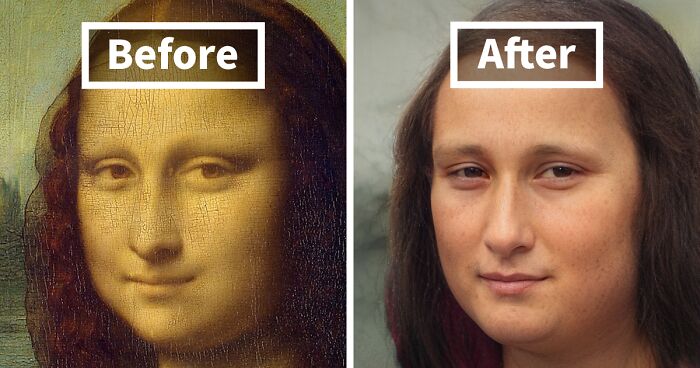
Artificial intelligence has officially walked into the art studio, picked up a digital paintbrush, and asked, “What if Rembrandt had a LinkedIn headshot?” That playful question sits at the heart of “21 Artificial Intelligence Recreations Of Famous Paintings, Historical Figures, And Cartoons By This Artist,” a fascinating look at how artist and creative technologist Nathan Shipley used AI to transform familiar cultural icons into realistic, modern-looking faces.
The project is not just a gallery of “cool AI images.” It is a conversation starter about art history, machine learning, nostalgia, copyright, human imagination, and our irresistible habit of wondering what fictional or long-dead people might look like if they stood in front of us today. From famous paintings to historical figures and cartoon characters, these AI recreations blur the line between portrait, remix, restoration, and digital daydream.
Who Is the Artist Behind These AI Recreations?
The artist most commonly associated with this viral series is Nathan Shipley, a San Francisco-based technical director, creative technologist, visual effects supervisor, and motion graphics artist. His work explores the intersection of art and artificial intelligence, especially through tools such as StyleGAN, diffusion models, CLIP-based systems, and other machine learning techniques used to generate or transform images.
Shipley’s background matters because these results are not random “type a prompt, get a picture” experiments. They come from someone with a deep understanding of image-making, visual effects, faces, lighting, realism, and cinematic polish. In other words, the AI may be the engine, but the artist is still steering the carand occasionally tapping the dashboard when the machine gets weird.
The original collection gained attention because it translated well-known subjects into something strangely intimate. Instead of looking at a flat historical portrait or a cartoon character designed with exaggerated features, viewers were invited to imagine a real person behind the icon. That is where the magicand the mild existential crisisbegins.
What Makes These Artificial Intelligence Recreations So Compelling?
AI recreations of famous paintings, historical figures, and cartoons work because they activate two emotions at once: recognition and surprise. You already know the source image, whether it is the Mona Lisa, George Washington, Rembrandt, Miles Morales, or another familiar character. But the AI version changes the rules. Suddenly, the subject has skin texture, modern lighting, eye depth, facial asymmetry, and a “this person might be behind me in line for coffee” quality.
1. They Make Art History Feel Less Distant
Traditional portraits can feel formal, stiff, and coated in museum dusteven when they are masterpieces. AI recreations remove some of that distance. A monarch painted in royal costume becomes a person with cheeks, pores, hair, and a very human expression. The effect can be charming, unsettling, or both.
For historical figures who lived before photography, this kind of AI art is especially fascinating. We do not have camera evidence of what many of them looked like, only paintings, engravings, sculptures, coins, or written descriptions. AI cannot magically recover the truth, but it can generate a plausible interpretation based on available visual clues.
2. They Turn Cartoons Into “Almost People”
Cartoons are built on exaggeration. Big eyes, tiny noses, impossible hair, and perfectly symbolic shapes help audiences recognize characters instantly. When AI tries to make them realistic, the result can be hilarious, impressive, or slightly haunted. A cartoon face becoming human is like watching a mascot take off its headbut the mascot underneath is also wearing a face made by a neural network.
That is part of the fun. These artificial intelligence recreations do not simply copy cartoons. They interpret them. They ask: what would this character’s bone structure be? What would the hairstyle look like in real life? How can the color palette or expression survive when the design becomes photorealistic?
3. They Reveal the Power of Human Curation
One of the biggest misconceptions about AI art is that the computer does everything. In reality, the strongest AI image projects usually involve careful selection, editing, reference preparation, iteration, and judgment. A machine can generate dozens or hundreds of possibilities, but a human artist decides what feels believable, respectful, expressive, and visually strong.
That is especially important when dealing with famous paintings or historical figures. A careless recreation can flatten cultural meaning. A thoughtful one can encourage viewers to look again at the original artwork with fresh curiosity.
How AI Recreates Famous Paintings and Historical Faces
Behind the scenes, projects like this often rely on generative models trained to understand patterns in faces and images. One important family of tools is StyleGAN, a generative adversarial network architecture developed by NVIDIA researchers. In simple terms, a GAN uses two competing systems: one creates images, and the other judges whether those images look convincing. Through repeated training, the generator improves until it can create remarkably realistic faces.
StyleGAN became famous for producing synthetic human portraits that looked real but represented people who never existed. Artists like Shipley pushed that technology into more imaginative territory: transforming old portraits, paintings, drawings, and stylized characters into modern, realistic interpretations.
Today, diffusion models have expanded those possibilities even further. Unlike earlier systems that were often more difficult to control, modern AI image tools can combine text instructions, reference images, style cues, and editing workflows. The result is a much broader creative playground. Of course, playgrounds need rules, especially when copyright, likeness, and historical accuracy are involved. More on that shortly.
Examples That Make the Concept Click
The most memorable AI recreations tend to fall into three groups: famous paintings, historical personalities, and cartoons or comic characters. Each group creates a different kind of viewer reaction.
Famous Paintings: From Canvas to “Camera”
When AI recreates someone like the Mona Lisa, the goal is not to replace Leonardo da Vinci’s painting. That would be like replacing a cathedral with a screensaver. Instead, the AI version becomes a speculative companion piece. It asks what the sitter might look like under photographic lighting, with more natural skin texture and modern realism.
The same is true for recreations inspired by Rembrandt or other artists known for expressive portraiture. AI can exaggerate the feeling that the person in the painting was once alive, breathing, bored, tired, amused, or quietly judging your outfit.
Historical Figures: A Fresh Face for the Past
AI portraits of people such as George Washington, Marie Antoinette, Shakespeare, Beethoven, or Queen Elizabeth I are popular because they challenge the polished images we inherited from history books. Many historical portraits were shaped by politics, fashion, wealth, and flattery. A royal painter was not exactly encouraged to say, “Your Majesty, today I shall capture your bad side.”
AI recreations can soften that official distance. They imagine these figures as real individuals rather than marble statues in human form. Still, it is important to remember that these images are not historical proof. They are informed artistic interpretationsnot time machines with cheekbone detection.
Cartoons and Comic Characters: Nostalgia Gets a Makeover
Cartoon recreations may be the most shareable because they tap directly into pop culture nostalgia. When a beloved animated character becomes realistic, people react instantly. Some viewers say, “That is exactly how I imagined them.” Others say, “Please put it back.” Both reactions are valid. AI art has a talent for making the familiar feel slightly new and the new feel slightly suspicious.
For comic characters such as Miles Morales, the transformation can be especially interesting because the source material already exists across comics, animation, and film. AI adds one more layer to the character’s visual identity, showing how flexible modern icons can be across media.
Why This Project Matters in the Larger AI Art Conversation
AI recreations of famous paintings and historical figures are more than internet candy. They sit inside a much larger cultural shift. Museums, artists, designers, legal experts, and technology companies are all wrestling with the same questions: Who owns AI-assisted art? What counts as authorship? How should artists credit source material? Can AI help preserve cultural memory, or does it risk distorting it?
Museums Are Already Thinking About AI
Major cultural institutions have been exploring artificial intelligence in different ways. The Museum of Modern Art has presented AI-driven work such as Refik Anadol’s “Unsupervised,” which used machine learning to interpret the museum’s collection. The Getty Museum has acquired AI-generated photographic work, signaling that AI art is no longer just an online novelty. Meanwhile, institutions like The Met and the National Gallery of Art have made large public-domain image collections available, helping artists, researchers, and educators engage with art history in digital form.
This matters because AI art depends heavily on access to images, data, and archives. When museums digitize collections and clearly mark public-domain materials, they create more ethical pathways for artists to study, remix, and reinterpret cultural heritage.
Copyright and Human Authorship Still Matter
The U.S. Copyright Office has repeatedly emphasized that human authorship remains central to copyright protection. In practice, that means purely machine-generated output may not receive the same protection as work that includes meaningful human creative input. For artists using AI, this makes process important. Prompting alone may not be enough. Selection, arrangement, editing, transformation, and original contribution all become part of the creative record.
For a project like Shipley’s, the artistic value is not simply that AI generated faces. The value comes from concept, reference choices, visual direction, iteration, taste, and the final presentation. AI is a toolbut a very dramatic one, like a paintbrush that occasionally invents a cousin you never asked for.
The Ethics of Reimagining Real People and Cultural Icons
Artificial intelligence recreations are exciting, but they also come with ethical responsibilities. Turning historical figures into realistic portraits can help people connect with the past, yet it can also create false confidence. A viewer may see a polished AI face and assume, “So that is what they really looked like.” Not exactly.
Every historical recreation should be understood as a visual hypothesis. It depends on the quality of the source image, the assumptions of the model, the artist’s decisions, and the cultural context surrounding the subject. Paintings can lie. Coins can flatter. Sculptures can idealize. AI can confidently blend all those distortions into one very convincing face.
Cartoon and pop-culture recreations raise a different issue: intellectual property. Many characters are protected by copyright or trademark. Fan art and commentary exist in a complex ecosystem, and commercial use can be risky without permission. Responsible creators should be transparent about inspiration, avoid misleading audiences, and respect the rights of living artists and studios.
Why Audiences Love AI Recreations
There is a reason these images spread quickly online. They are easy to understand at a glance, but they also invite deeper thought. You do not need a PhD in art history to enjoy seeing a famous portrait turned into a lifelike face. But after the first reaction, bigger questions appear.
What makes a face believable? How much of identity lives in costume, pose, and expression? Why do we trust photographic realism more than painted symbolism? Why does a cartoon character feel “real” when the AI gives them skin texture and eyelashes? And why, after seeing one AI recreation, do we immediately want twenty more?
The answer is simple: humans are face-reading machines. We search faces for emotion, intention, personality, and story. AI recreations feed that instinct. They take images we already know and give us a new face to study.
SEO Takeaway: Why This Topic Performs Well Online
From a content strategy perspective, “21 Artificial Intelligence Recreations Of Famous Paintings, Historical Figures, And Cartoons By This Artist” is a strong topic because it combines several high-interest search categories: AI art, famous paintings, historical figures, cartoon characters, digital art, and creative technology. It also has built-in curiosity. Readers do not just want an explanation; they want to see how imagination, history, and technology collide.
The topic also benefits from visual storytelling. Even without embedding images, an article can describe the process, explain the cultural context, and guide readers through the meaning behind these AI transformations. The best SEO approach is not to repeat “AI recreations” until the sentence needs a nap. Instead, use related phrases naturally: machine learning art, digital portraiture, generative AI, historical portrait recreations, famous painting reinterpretations, realistic cartoon characters, and AI-generated faces.
What Artists Can Learn From This AI Recreation Trend
The biggest lesson is that tools do not replace taste. AI can produce endless variations, but endless variation is not the same as a finished artwork. Artists still need a point of view. They need to decide why a subject matters, what emotional tone the image should carry, and how far the transformation should go.
For beginners, AI recreation projects can be a useful exercise in observation. Try comparing an original portrait with a modern interpretation. Notice the nose shape, jawline, lighting, clothing, eye direction, and facial expression. Ask what changed and what stayed recognizable. That is where visual literacy grows.
For professional artists, the lesson is more strategic. AI can accelerate concept development, help explore impossible images, and turn archives into new creative material. But the strongest work still depends on ethics, originality, and craft. The internet may reward shock value, but lasting art usually needs more than “I made SpongeBob look like a tax accountant.” Although, to be fair, that might still get clicks.
Experiences Related to AI Recreations of Famous Paintings, Historical Figures, and Cartoons
Experiencing AI recreations for the first time feels a little like opening a secret door in a museum. You walk in expecting quiet frames and serious wall labels, then suddenly George Washington looks like he could be hosting a podcast, Marie Antoinette looks ready for a luxury skincare campaign, and a cartoon character has become someone you might accidentally make eye contact with at the grocery store. It is funny, strange, and oddly emotional.
One of the most interesting experiences is comparing the AI recreation with the original image side by side. At first, you notice surface details: smoother skin, realistic eyes, modern lighting, sharper hair. But after a few seconds, you start noticing deeper choices. Did the AI preserve the character’s mood? Did it understand the dignity of a historical portrait? Did it accidentally turn a powerful queen into a friendly neighbor who makes excellent banana bread? These small shifts reveal how much interpretation happens between source and output.
Another experience is the debate these images spark. Show the same AI recreation to five people and you may get five reactions. One person may call it brilliant. Another may call it creepy. Someone else may ask whether it is historically accurate, while another simply says, “Why does Beethoven look like he knows my Wi-Fi password?” That range of responses is part of the appeal. AI art does not sit quietly. It starts conversations.
For art lovers, AI recreations can become a gateway back to the originals. A realistic Mona Lisa might make someone curious about Leonardo’s technique, Renaissance portraiture, or the mystery of the sitter’s expression. A modern-looking Shakespeare might send readers back to Elizabethan theater. A recreated cartoon character might remind viewers how powerful simple design can be. In that sense, AI does not have to compete with traditional art. It can act like a neon sign pointing back toward it.
For creators, working with AI can feel both empowering and humbling. The machine can generate an impressive result quickly, but it can also misunderstand the assignment in spectacular fashion. Hands may look strange, expressions may drift, historical clothing may become nonsense, and a dignified subject may suddenly look like an extra from a shampoo commercial. The artist’s job is to refine, reject, adjust, and guide. The best results usually come from patience, not button-mashing.
Perhaps the most valuable experience is learning to look more carefully. AI recreations remind us that every portrait is already an interpretation. Painters interpreted their subjects. Photographers choose angles and lighting. Historians choose which images become official memory. AI adds another layer to that long chain of interpretation. It is not the final word on what famous paintings, historical figures, or cartoons “really” look like. It is a fresh visual questionand a very entertaining one.
That is why this topic continues to attract attention. It combines education, humor, nostalgia, and technological wonder in one package. It lets readers enjoy the fun of transformation while thinking seriously about authorship, memory, and creativity. And in a digital world crowded with forgettable images, that combination is powerful.
Conclusion
“21 Artificial Intelligence Recreations Of Famous Paintings, Historical Figures, And Cartoons By This Artist” is more than a viral art collection. It is a snapshot of a creative turning point. Nathan Shipley’s AI-assisted portraits show how machine learning can reframe familiar images, making the past feel closer and pop culture feel newly alive.
These recreations are not replacements for paintings, historical research, or original cartoons. They are imaginative reinterpretationspart technology demo, part digital portrait studio, part cultural mirror. At their best, they invite us to look harder at the images we thought we already knew.
The future of AI art will depend on more than powerful software. It will depend on human judgment, ethical sourcing, clear disclosure, and creative purpose. The machine can generate the face, but people still decide what the face means. And honestly, that is reassuring. Because if AI ever becomes the sole art critic, every museum label might simply read: “Interesting cheekbones. Needs more pixels.”
Note: This article is an original, rewritten synthesis based on reputable U.S. art, technology, museum, copyright, and digital culture references. Source links are intentionally not included to keep the HTML clean for web publishing.












