
Some projects are practical. Some are pretty. And some walk into the room wearing both qualities like they own the place. A vintage camera flash turned OLED desk clock belongs firmly in the third category. It is the kind of build that makes people stop mid-sentence, squint a little, and ask, “Wait… is that an old flash unit?” Then, three seconds later: “Okay, that is ridiculously cool.”
That reaction is exactly why this idea works so well. It combines two things people already love: mid-century photographic gear and crisp modern display technology. The result is a desk clock that feels more like functional sculpture than a generic gadget bought during a late-night scrolling session. Instead of another black plastic rectangle muttering the time from a corner, you get a conversation piece with personality, texture, and just enough retro-futurist swagger to make your workspace feel smarter than it probably is.
At first glance, the concept sounds wildly niche. But look closer and it makes perfect sense. Old camera flash housings often have sturdy bodies, distinctive shapes, translucent diffusers, and mechanical details that beg to be reused. OLED displays, meanwhile, are thin, sharp, high-contrast, and perfect for low-profile embedded projects. Put the two together and you get a build that feels custom, intentional, and oddly timeless. That is not easy to pull off in the age of disposable electronics and suspiciously cheerful smart clocks.
Why This Mashup Works So Well
A vintage flash unit already comes preloaded with visual drama. It has chrome accents, textured plastic, old-school switches, and the kind of industrial design that makes modern gadgets look like they were optimized by committee. Even before you add a circuit board, it has presence. It was built in an era when everyday objects were allowed to look a little theatrical.
An OLED display solves the other half of the puzzle. Unlike a bulky LCD with a backlight, OLED pixels emit their own light. That means deep blacks, bright digits, excellent contrast, and a clean visual effect behind a diffuser or lens. In a repurposed flash housing, that matters. You do not want the display to look like it was simply stuffed inside an antique shell. You want it to feel as if the object was always meant to glow.
That is why this type of desk clock hits such a sweet spot for makers, collectors, and design nerds alike. It is nostalgic without becoming dusty, modern without looking sterile, and clever without screaming for attention. It whispers, “I know exactly what I’m doing,” which is more than most alarm clocks can say.
A Real Maker Example That Brought the Idea to Life
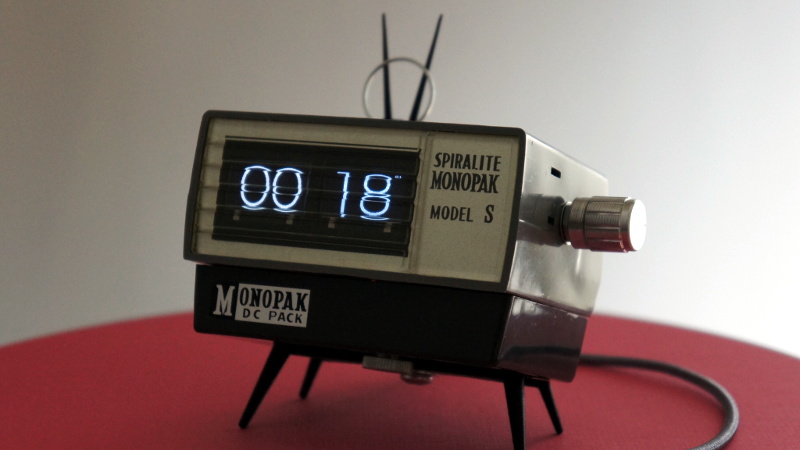
One of the best-known examples of this concept used a Spiralite Monopak Model S photographic flash unit as the enclosure for a desk clock. The build stood out because it did not just reuse the shell; it respected the shell. The translucent flash cover was kept in place, and the glowing digits behind it produced a soft, slightly diffused effect that felt somewhere between a vintage CRT and a tiny piece of sci-fi theater.
The project also leaned into styling rather than stopping at electronics. Mid-century-inspired legs gave the body a television-like stance, and decorative antenna-style details helped complete the illusion. Inside, the maker used a Pro Micro and two 0.96-inch OLED screens. Because dual I2C displays can run into address conflicts, one display needed its addressing adjusted so both could live on the same bus without a tiny electronic turf war. A rotary encoder handled manual setting, and the time could also be pushed from a computer. In other words, it looked old, but behaved politely like a modern device should.
That balance is the secret sauce. The project was not successful because it turned a flash into a clock. It was successful because it turned a flash into a clock without flattening the original object’s character. The old diffuser, proportions, and physical quirks became assets, not obstacles.
What Makes Vintage Flash Units Great Clock Enclosures
They already have a built-in “screen area”
Many old flash units feature a diffuser, lens, or translucent front panel designed to spread light. For a clock build, that part becomes visual gold. Position an OLED behind it and the digits gain depth, softness, and a little mystery. That is far more charming than exposing a bare module and pretending the wires are part of the aesthetic.
They have mechanical personality
Vintage flashes usually include switches, knobs, seams, trim, labels, and mounting hardware. Even if some original controls are no longer functional, they can inspire the layout of modern controls. A rotary encoder can take the place of an old dial. A period-style switch can become the power toggle. Suddenly, the enclosure is not just a box. It is part of the user experience.
They make upcycling look intentional
Repurposing old electronics can sometimes slide into “junk drawer with ambition.” This idea avoids that trap. A flash housing has enough design integrity to carry the project visually. The result feels curated rather than cobbled together, even when the maker has done some serious improvising behind the scenes.
How the Electronics Usually Come Together
Display choice
Small monochrome OLED modules are a natural fit. They are compact, bright, and easy to drive with common microcontrollers. They also tend to support common I2C addresses such as 0x3C and 0x3D, which is handy when using two displays in one build. That flexibility makes them ideal for split readouts, mirrored layouts, or custom visual effects.
Microcontroller
Builders often use Arduino-compatible boards, compact Pro Micro-style boards, or similar microcontrollers that can fit inside small enclosures. The best option is usually the one that disappears into the build without demanding attention. In a project like this, the enclosure is the star. The controller is the stagehand in black clothes moving props around.
Timekeeping
A proper clock needs reliable timekeeping, and that usually means adding a real-time clock module. Battery-backed RTC boards are popular because they keep track of time even when the main power is off. That saves you from resetting the clock every time someone unplugs it to vacuum or dramatically rearrange their desk for the fifth time that week.
Controls
A rotary encoder is a smart match for this style of project. It lets users set the time, flip display modes, or adjust brightness without cluttering the design with multiple buttons. Better yet, a knob feels right on vintage-inspired hardware. Touch controls would work, sure, but they would also feel like sneakers worn with a tuxedo.
Why OLED Is the Right Display for This Job
OLED is especially well suited to retro enclosure projects for three big reasons. First, it offers high contrast and deep blacks, so the digits look crisp even through tinted plastic or patterned diffusers. Second, the modules are thin, which is extremely helpful when fitting parts into an enclosure that was never designed for modern boards. Third, OLEDs look premium. Even a simple monochrome readout has a clean, jewel-like quality that pairs beautifully with polished metal and old translucent plastics.
There is also the visual mood. A good OLED clock does not just show time; it glows with intention. White, blue, or amber-toned digits can echo the feel of old instrument panels, tube-era indicators, or early lab equipment. If the diffuser has texture, the light can pick up a slightly analog character. That little imperfection is not a flaw. It is the charm.
The Challenges Nobody Mentions Until the Soldering Starts
Static screens and burn-in
OLEDs look great, but they are not magic. Static elements left on screen too long can contribute to image retention or burn-in. For a desk clock, that means builders should think carefully about brightness, dimming behavior, sleep modes, or subtle motion. A display that shifts the position of digits slightly, idles when the room is dark, or turns off when nobody is nearby will generally age more gracefully than one blasting the same layout at full brightness all day.
Flicker and redraw issues
A low-quality refresh routine can make an otherwise elegant clock look cheap. If the screen constantly clears and redraws large sections, viewers may notice flicker. Smarter redraw techniques, especially on small microcontroller displays, help keep the time readable and the illusion intact. Nobody wants their lovingly restored flash clock to behave like it is nervous.
Space constraints
Vintage enclosures are gorgeous, but they are also stubborn. Internal mounting points may not line up with anything useful. Metal parts may need insulation. Old plastics may be brittle. The display window that looked generous from the outside can suddenly seem tiny once you start measuring brackets, standoffs, and cable bend radius. Half of the build is engineering. The other half is diplomacy with a very opinionated object from another century.
Preserving the look
The easiest way to ruin a project like this is to over-modernize it. Bright RGB lighting, oversized logos, obvious USB cutouts, or mismatched hardware can break the spell. The best versions preserve the original silhouette, materials, and proportions while hiding the modern guts as cleanly as possible. The goal is not to show off every component. The goal is to make the finished object feel inevitable.
Why People Love It on a Desk
A vintage camera flash turned OLED desk clock does something rare: it earns its square inches. It tells time, yes, but it also changes the emotional temperature of a space. A normal clock sits there. This one participates. It adds texture to a home office, warmth to a studio, and a little cinematic weirdness to a bookshelf. It looks equally at home next to film cameras, mechanical keyboards, fountain pens, drafting tools, or a mug that claims the owner is “definitely not buying more gadgets this month.”
It also invites interaction. People want to touch the switch, look through the diffuser, and ask how it was made. That matters. Great desktop objects are not just useful; they spark curiosity. This build has the same appeal as a restored typewriter or a tube radio converted into a speaker. It bridges generations of technology in a way that feels personal rather than purely technical.
Who This Idea Is Perfect For
This project is a natural fit for makers who enjoy restoration, upcycling, and embedded electronics. It also appeals to photographers who love old gear but do not want every collectible sitting lifeless on a shelf. Interior design fans like it because it adds narrative to a room. And gift-givers love it because it feels custom, memorable, and wildly more thoughtful than another generic smart-home gadget wrapped in sadness-colored plastic.
In SEO terms, it also hits a tasty cluster of related interests: vintage camera decor, DIY desk clock ideas, OLED clock projects, retro tech upcycling, maker electronics, and office design accessories. That combination gives it broad appeal without losing its niche identity. It is specific enough to be memorable and flexible enough to inspire endless variations.
500 More Words of Real-World Experience, Mood, and Inspiration
Living with an object like this is different from owning a standard desk clock because it never feels temporary. A cheap digital clock usually exists in the emotional category of “fine, I guess.” It tells the time, maybe glows too brightly at night, and one day quietly dies in a drawer under a pile of charging cables. A vintage flash clock feels more permanent. It has weight. It has a backstory. Even if you did not build it yourself, it gives off the energy of something that was rescued, understood, and given a second career instead of being tossed aside.
That emotional layer matters more than most people admit. We spend a lot of time staring at our desks, home offices, workshops, and reading corners. The objects in those spaces either flatten the mood or enrich it. A repurposed photographic flash with an OLED heart enriches it. In daylight, it looks like a well-chosen vintage object. In the evening, when the digits come alive behind the old diffuser, it starts to feel almost theatrical. Not loud. Not tacky. Just quietly dramatic in the best way.
There is also something deeply satisfying about the contradiction built into the object. The shell comes from a time when cameras clicked, bulbs popped, and electronics were chunky enough to look trustworthy. The display technology comes from a very different design philosophy: compact, efficient, sharp, and minimal. Instead of fighting each other, those eras complement each other. The old housing contributes warmth and material character. The OLED contributes precision. Together they create a piece that feels both nostalgic and current, which is exactly why people keep falling for retro-modern builds.
If you are the kind of person who likes objects with stories, this project is basically catnip. You can imagine the flash unit’s first life attached to a film camera at a birthday party, wedding reception, or roadside vacation stop. Decades later, it returns as a clock on a desk, still making light, still serving a human routine, just in a calmer and much more stylish way. That continuity is part of the magic. It transforms old hardware from a relic into a participant in everyday life.
There is room for personal expression, too. Some builders will keep the restoration clean and museum-like, preserving every scratch and label. Others will lean harder into retro-futurism with custom legs, accent trim, tinted diffusers, or typography that feels like a 1960s appliance ad wandered into the future. Either approach can work, as long as the design stays coherent. The strongest versions do not ask, “What else can I add?” They ask, “What should I leave alone?” That restraint is often what makes the final piece look expensive, even when it began as a flea-market find and a handful of parts.
And perhaps that is the biggest reason the idea sticks. It is not just a DIY electronics project. It is a tiny argument against disposable design. It says old objects can evolve. It says functional decor does not have to be boring. It says timepieces can still surprise us. In a world flooded with flat, identical screens, a vintage camera flash turned OLED desk clock feels delightfully human. It glows, it tells time, and it reminds us that good design never really goes out of style. It just waits for someone with imagination, patience, and probably a soldering iron to wake it up again.
Conclusion
A vintage camera flash turned OLED desk clock is one of those rare builds that succeeds on every level. It is practical enough to use every day, interesting enough to become a conversation starter, and beautiful enough to justify the effort. It turns outdated photographic hardware into something relevant without stripping away the original charm. That is not just smart upcycling. It is design with a pulse.
Whether you are drawn to the maker challenge, the retro aesthetic, or the idea of giving old technology a new life, this project proves that the best desk accessories do more than serve a function. They tell a story. And in this case, the story glows softly through a vintage diffuser and politely reminds you that you are late for your next meeting.












