
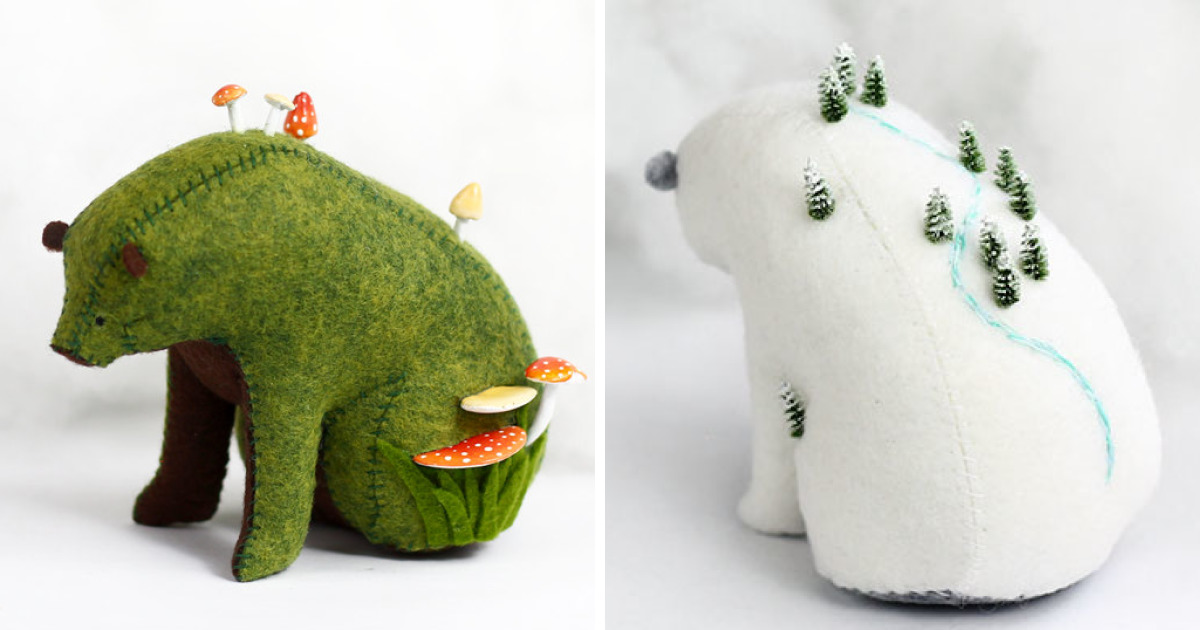
Some animals enter a landscape. Bears, somehow, arrive like weather. They do not merely walk through forests, mountains, tundra, or salmon rivers. They seem to bring entire systems with them: hunger, memory, caution, rebirth, and the faint, old rumor that the wild world is still running its own government.
That is why the phrase I felt bears that carry tiny worlds on their shoulders works so well. It sounds dreamy, yes, but it also feels strangely accurate. Bears carry ecosystems in the literal sense, reshaping habitats and moving nutrients. They carry stories in the cultural sense, appearing in place names, oral traditions, literature, and ritual. And they carry something emotional too: the heavy, quiet feeling that nature is never just scenery. Sometimes it is a presence with opinions.
This article explores why bears feel so much larger than their bodies. We will look at bear ecology, symbolism, conservation, and the almost unfair amount of meaning humans have piled onto these fur-coated powerhouses. Think of it as wildlife analysis with a poetic flashlight.
Why Bears Feel Bigger Than Bears
Most people do not describe a rabbit, deer, or raccoon as “carrying a world.” Bears get that treatment because they occupy an unusual place in our imagination. They are mammals like us, expressive in posture, oddly relatable in appetite, and eerily familiar in how they stand, forage, nurture cubs, and defend space. At the same time, they remain undeniably untamed. That mix of familiarity and distance is powerful. It makes them feel like neighbors from another civilization.
Science strengthens that impression. The National Park Service describes bears as ecosystem engineers because they modify their environment through foraging, seed dispersal, and nutrient movement. In places where bears feed on salmon, they help transfer marine-derived nutrients into forests. The Park Service also notes that bears influence food webs and prey populations, which means a bear is never just “one animal” in the frame. It is part gardener, part predator, part delivery system, and part ecological accountant.
That is the first tiny world on a bear’s shoulders: the living network around it. A bear digging, feeding, traveling, and denning changes what grows, what scatters, what survives, and what pays attention. It is difficult to look at that and call a bear merely “large wildlife.” It is closer to a moving event.
Bears as Living Infrastructure
They Move Food, Seeds, and Energy
Brown bears and black bears are famously omnivorous, eating mixed diets that can include berries, plants, fish, insects, and small mammals. That flexible feeding behavior is one reason bears have such broad ecological influence. They do not interact with just one corner of a habitat. They touch many of them, crossing between streambanks, berry patches, forest edges, alpine meadows, and denning sites.
When a bear consumes berries, fish, roots, or carrion and then moves elsewhere, it is redistributing energy across the landscape. The bear is not trying to be a landscape architect, of course. It is simply having lunch. But nature has always been comfortable turning appetite into infrastructure. That is one reason the metaphor of a bear carrying tiny worlds works so well: worlds are often built by creatures that think they are just looking for a snack.
They Carry the Shape of a Place
Habitat is not a decorative background for bears. It determines how they move, den, feed, and survive. The U.S. Fish and Wildlife Service notes that grizzly bears use a variety of habitats, and their daily movement is largely driven by the search for food, water, mates, cover, security, and den sites. The same agency emphasizes that human activity is a primary factor affecting habitat security and access to those essentials.
That fact matters because it shifts the conversation from “Where are the bears?” to “What kind of world are we leaving for them to carry?” Fragmented habitat, roads, garbage, development pressure, and poorly managed human access do not just inconvenience bears. They distort the ecological worlds those bears sustain. In other words, damage the shoulder, and the tiny world slips.
Yellowstone Taught the Hard Lesson
Yellowstone is one of the clearest examples of how human choices can reshape bear behavior. The National Park Service explains that before the 1970s, many visitors remember seeing bears near roadsides and developed areas. In 1970, the park began intensive management to return grizzly and black bears to more natural food sources and reduce injuries and property damage. The U.S. Geological Survey also notes that the Interagency Grizzly Bear Study Team was formed in 1973 in the wake of controversy around the closure of open-pit garbage dumps in Yellowstone.
It is a sobering story. When people fed bears, photographed them near trash, or treated them like roadside entertainment, the result was not charming wilderness theater. It was conflict. The bear’s tiny world had been replaced by ours, and neither side handled the merger well. Yellowstone’s history reminds us that admiration without boundaries is just chaos in a nicer outfit.
The Seasonal World a Bear Carries
Hibernation Is Not Laziness in a Fur Coat
Bears also seem to carry time itself. Their bodies are tuned to seasons in ways that feel almost mythic. Modern bear research recognizes black and grizzly bears as hibernators, with profound metabolic changes allowing them to stay in dens for long periods without normal eating and drinking patterns. Additional educational resources note that bears move through annual phases tied to food availability, including normal activity, hyperphagia, fall transition, and hibernation.
That seasonal rhythm makes bears feel like clocks made of muscle and memory. In late summer and fall, they feed with astonishing urgency. Recent National Wildlife Federation reporting notes that black bears can consume up to 20,000 calories a day during hyperphagia as they prepare for winter, and once in dens they rely on stored fat while their heart rates drop dramatically.
So when we say a bear carries a tiny world, we also mean it carries a calendar. It bears the logic of scarcity and plenty. It teaches that survival is not about constant motion but about timing, restraint, and readiness. Nature does not always reward the busiest creature. Sometimes it rewards the one that knows when to vanish into a den and wait out the snow like a professional philosopher.
The Cultural Weight Bears Have Always Carried
Bears Are Not Just Animals in Human Stories
Bears matter culturally because they have rarely been treated as mere background fauna. In many traditions, they stand close to the border between animal life and moral meaning. Smithsonian writing on Bears Ears highlights how place names carry identity, memory, and relationships to land, and how the monument’s naming acknowledged multiple Indigenous traditions and languages tied to that sacred landscape.
That connection between bear imagery and place is not accidental. Bears are easy to turn into symbols because they are already so symbolically loaded in lived experience. They are powerful but not machine-like. They are solitary but not empty. They are fierce, yet often associated with endurance, kinship, and seasonal renewal rather than simple aggression. Britannica’s overview of Indigenous mythologies of the Americas notes that in various cultures, the bear is addressed in kinship terms rather than killed wantonly. Library of Congress material on Native American music also describes the Ute Bear Dance as linked to reawakening, rebirth, and the cycle of life.
That is the second tiny world bears carry: a symbolic one. They hold human meanings about family, danger, renewal, and respect. We see them and imagine not just teeth and claws, but teachings. A wolf may suggest strategy, an eagle may suggest vision, but a bear often suggests a whole moral atmosphere: rest, return, strength, and the responsibility of power.
Why Artists Keep Coming Back to Bears
Artists, writers, photographers, and filmmakers return to bears for a simple reason: bears already arrive with narrative gravity. A bear in a story does not need much introduction. It can represent wilderness, memory, motherhood, appetite, isolation, sacredness, old power, climate anxiety, or survival. Few creatures enter a sentence carrying that much symbolic luggage.
And yet the bear’s artistic power does not come from fantasy alone. It comes from observation. The animal’s ecological role is so substantial that symbolism grows naturally around it. When people describe a bear as carrying a forest, a season, a river, or a mountain on its back, the exaggeration is not ridiculous. It is just metaphor trying to keep up with biology.
Bears and the Future of the Wild
Conservation Is Really About Whole Systems
Protecting bears often means protecting far more than bears. World Wildlife Fund notes that brown bears are important management indicators for other wildlife species and play roles as predators and seed dispersers. U.S. Geological Survey research in the Bitterroot ecosystem similarly found that future grizzly habitat use would likely favor large wilderness areas and extensive public lands.
This is why bear conservation matters to people who may never see a bear outside a documentary or a zoo. When a species requires large, functioning, connected landscapes, safeguarding that species can preserve broader ecological integrity. Protect the bear, and you often protect streams, forests, travel corridors, prey dynamics, berry-producing habitat, and the more fragile species sharing the same ground. It is the conservation version of buying one sturdy shelf and accidentally organizing the whole room.
Climate Change Has Made the Bear Even More Symbolic
Polar bears have become a global emblem of climate change, but not just because they photograph well against ice. The science is direct. WWF explains that polar bears rely heavily on sea ice for traveling, hunting, mating, resting, and in some places maternal denning, while the U.S. Geological Survey’s polar bear research focuses on how Alaska-linked subpopulations respond to rapid Arctic change.
In other words, when sea ice changes, the bear’s world changes. And because the bear carries so much symbolism, that loss does not feel abstract to people. It feels visible, embodied, and immediate. The bear becomes a messenger nobody invited but everybody understands.
Even black bear hibernation patterns are being discussed through the lens of shifting seasonal conditions. That makes the old image of the bear as keeper of cycles newly urgent. If the cycles wobble, the keeper does too. The tiny world on the shoulders starts to tilt, and we suddenly realize how much of our own world was resting there beside it.
What “Tiny Worlds on Their Shoulders” Really Means
At its core, the phrase is a way of naming scale. Bears are singular animals that reveal plural realities. See one bear and you are also seeing the berry crop, the salmon run, the denning slope, the autumn calorie rush, the spring thaw, the human boundary problem, the long memory of Indigenous place names, and the modern conservation debate about how much room the wild is still allowed to occupy.
That is why bears feel emotionally oversized. They gather facts, symbols, fears, and hopes into one moving body. They are not abstractions, but they generate them easily. They are not myths, but they attract them. They are not moral lessons, but they provoke them. A bear does not need to carry a globe to look like it carries a world. It only needs to keep being a bear in a landscape complicated enough for humans to finally notice.
Experiences Related to “I Felt Bears That Carry Tiny Worlds On Their Shoulders”
There is a particular feeling that arrives when you encounter a bear, even indirectly. It might happen through a trail sign, a distant silhouette in a documentary, a museum diorama, a child’s picture book, or a quiet zoo habitat where the animal appears less like an exhibit and more like a resident who tolerates your visit with diplomatic patience. The feeling is not always fear. Often it is scale. Suddenly the world seems older than your errands.
That is the experience this title captures for me. Not the cartoon bear, not the plush bear, not the cereal mascot performing for the breakfast table like it pays taxes. I mean the bear that makes you think about what else is happening beyond the edge of your organized life. The one that suggests there are still rivers deciding things, forests keeping records, and mountains refusing customer service.
When I think about bears carrying tiny worlds on their shoulders, I think of the emotional layering that happens in a single instant. First you notice the body: the size, the gait, the astonishing combination of bulk and control. Then you notice what follows behind it in the mind. A cub, perhaps. A den. A winter. A slope full of berries. A stream choked with salmon. A ranger warning. A sacred story. A thousand years of humans deciding this animal means more than it can possibly know.
That is what makes the experience so powerful. Bears trigger memory even when the memory is borrowed. You may never have stood in Alaska during a salmon run or watched a grizzly move through dawn light, yet the image still feels familiar. Bears live in our collective imagination as creatures of threshold spaces: between sleep and waking, forest and meadow, caution and awe, animal fact and human meaning.
There is also something humbling about the way bears ignore our narratives while accidentally improving them. We write essays, film documentaries, issue conservation plans, and compose symbolic interpretations. The bear, meanwhile, is busy doing bear business: smelling, digging, feeding, traveling, resting. And still, through those ordinary acts, it carries entire conversations about coexistence, climate, land use, and reverence. That is almost funny if you think about it. Humans spent centuries inventing philosophy, and then a bear walked by eating berries and made a better point.
I think many people feel this without saying it out loud. That strange mix of comfort and discomfort. Bears can look soft from a distance and deeply un-negotiable up close. They remind us that nature is beautiful, but not decorative; meaningful, but not arranged for our convenience. In an age where so much of life arrives filtered, scheduled, and optimized, the bear still feels gloriously unsimplified.
Maybe that is why the image stays with us. A bear carrying tiny worlds on its shoulders is really a way of saying that some beings hold more than themselves. They hold habitats, stories, warnings, and ways of seeing. They hold the proof that life is interconnected even when we pretend it is compartmentalized. They hold the possibility that strength can be quiet, that survival can be cyclical, and that awe still has work to do.
And once you feel that, even for a moment, bears never look small again. They look like the wilderness gave itself a body and decided to keep walking.











