
Programming language history is full of heroes, villains, eccentric relatives, and at least one uncle who still insists that postfix notation is “perfectly natural.” The title “No Pascal, Not A SNOBOL’s Chance. Go Forth!” sounds like a joke you would hear in a computer science lounge after the coffee machine breaks, but it points to something genuinely important: the way older programming languages shaped the tools developers still use today.
Pascal, SNOBOL, and Forth came from a period when programming was still deciding what kind of personality it wanted. Should code be structured and readable? Should text processing feel like a language of its own? Should a program be small enough to live comfortably in a machine with less memory than a modern profile picture? These languages answered those questions in very different ways. Some became classroom staples. Some became niche legends. Some survived like technical houseplants: small, stubborn, and surprisingly hard to kill.
This article explores the history, ideas, strengths, and legacy of Pascal, SNOBOL, and Forth. It is not a museum tour with velvet ropes. It is more like opening an old toolbox and realizing that half the tools still workand one of them may be better than the shiny thing you bought last week.
The Golden Age of “What If Programming Worked Differently?”
During the 1950s, 1960s, and 1970s, programming languages were not merely products; they were arguments. FORTRAN argued that scientists needed a practical way to express formulas. COBOL argued that business data should be readable by people wearing ties. LISP argued that code and data could dance together in parentheses until everyone else got dizzy. ALGOL influenced the way computer scientists described algorithms. Then came a wave of languages that tried to fix specific pain points.
Pascal, SNOBOL, and Forth belong to that wave. They were not interchangeable. Pascal wanted order. SNOBOL wanted powerful text manipulation. Forth wanted direct control, interactive development, and compactness. If these languages were dinner guests, Pascal would bring labeled containers, SNOBOL would analyze the menu for patterns, and Forth would build a working toaster out of the cutlery before dessert.
Pascal: Structured Programming With a Neatly Pressed Shirt
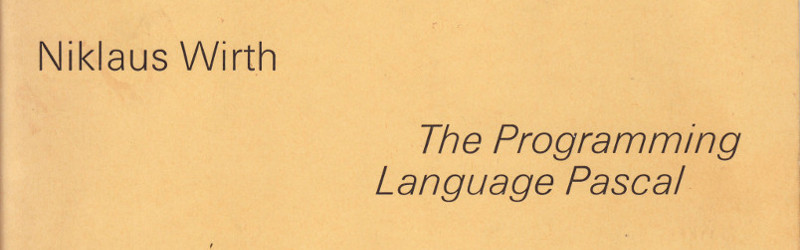
Pascal was designed by Niklaus Wirth around 1970 and became one of the most influential teaching languages in computing. Its mission was not just to run programs, but to teach people how to think clearly about programs. In an era when “go to” statements could turn code into spaghetti with extra sauce, Pascal encouraged structure, strong typing, procedures, functions, records, arrays, and disciplined control flow.
The beauty of Pascal was its readability. A beginner could look at a Pascal program and see the bones of the logic. Blocks began and ended clearly. Variables had declared types. Procedures organized work into named sections. Pascal did not remove all complexity, but it made many bad habits less convenient. That alone earned it a place in countless college classrooms.
Why Pascal Mattered
Pascal helped popularize structured programming at a time when software development needed better habits. Its syntax made programs feel like carefully written instructions rather than a pile of machine-friendly incantations. It also influenced later languages and language designers by showing that simplicity and rigor could coexist.
Pascal’s descendants and dialects extended its reach. UCSD Pascal helped spread it on personal computers. Turbo Pascal, released by Borland in the 1980s, made fast compiling and affordable development tools feel revolutionary. Delphi later carried Object Pascal into visual application development. Even if modern developers do not write Pascal daily, many still live in a world shaped by its ideas: structured code, clear types, and readable program organization.
Where Pascal Fell Short
Pascal’s strengths were also sometimes its limits. The original language was elegant for teaching, but not always flexible enough for messy real-world systems programming. Dialects solved many of these problems, but fragmentation followed. A Pascal program written for one environment might not behave exactly like one written for another. Developers who wanted more direct control often moved toward C. Developers who wanted commercial application frameworks often followed newer ecosystems.
Still, Pascal deserves respect. It taught generations of programmers to write code with a beginning, middle, and end. In a universe of mysterious scripts named “final_final_real_version2,” that is no small achievement.
SNOBOL: The String Wizard With a Strange Name
SNOBOL, short for StriNg Oriented and symBOlic Language, was developed at Bell Labs in the 1960s by David J. Farber, Ralph E. Griswold, and Ivan P. Polonsky. SNOBOL4 became its best-known form. Unlike Pascal, which focused on structured programming, SNOBOL specialized in symbolic computation, string processing, and pattern matching.
Today, when developers need to search text, they usually reach for regular expressions, Perl-style pattern tools, Python string methods, or parser libraries. SNOBOL was exploring similar territory long before modern scripting languages became daily tools. It treated patterns as serious objects, not just decorations sprinkled into a search function.
SNOBOL’s Big Idea: Text Is Not an Afterthought
In many early languages, text handling felt bolted on. SNOBOL made it central. It could match, transform, and analyze strings in ways that were unusually expressive for its time. This made it useful for language processing, symbolic manipulation, data conversion, and experimental computing.
SNOBOL’s pattern matching was more flexible than the simple search-and-replace operations many programmers were used to. It could describe complex structures and backtrack through alternatives. That made it powerful, but also gave it a reputation for being unusual. Reading SNOBOL could feel like watching a magician do card tricks while explaining only every third step.
Why SNOBOL Did Not Become Everyday Mainstream
SNOBOL had real strengths, but timing and ecosystem matter. Later tools such as AWK, sed, Perl, and regular expressions became deeply embedded in Unix culture and developer workflows. They were available where programmers needed them, integrated into command lines, and supported by growing communities. SNOBOL remained admired, but its niche narrowed.
That does not make SNOBOL a failure. A language can be historically important without becoming the default tool on every laptop. SNOBOL helped prove that text processing deserved specialized language design. In that sense, every developer who has ever wrestled a log file into submission owes SNOBOL at least a respectful nod.
Forth: Tiny, Fast, Weird, and Proud of It
Forth was created by Charles H. “Chuck” Moore and developed through practical use in environments where resources were limited and responsiveness mattered. It became associated with interactive development, embedded systems, astronomy, instrumentation, control systems, and small computers. Forth is stack-based, extensible, and famously minimal. It does not ask, “How many features can we add?” It asks, “How much can we remove before the machine starts laughing?”
Forth programs are built from small units called words. A developer defines new words in terms of existing words, gradually creating a vocabulary suited to the problem. Instead of writing expressions in the familiar infix style, Forth commonly uses Reverse Polish Notation. For example, instead of writing 3 + 4, you write 3 4 +. The numbers go onto a stack; the operator consumes them and leaves the result.
The Stack: Forth’s Favorite Place to Put Everything
The stack is central to Forth. Values are pushed onto it, words operate on those values, and results are left for the next word. This can be elegant, efficient, and compact. It can also make beginners feel as if someone turned arithmetic sideways.
A tiny Forth-style example might look like this:
The word SQUARE duplicates the top stack value and multiplies the two copies. The result is 25. It is short, direct, and once you understand the stack, pleasantly logical. Until then, it may look like a calculator having a philosophical episode.
Why Forth Survived
Forth survived because it solves real problems in a distinctive way. It is interactive, so developers can test small pieces immediately. It is compact, which made it valuable on machines with tight memory constraints. It is extensible, allowing programmers to build a domain-specific language from the inside out. In embedded systems and hardware-adjacent work, those traits can be extremely useful.
Forth also developed standards over time, including influential community standards and later ANS Forth in the 1990s. Standardization helped reduce fragmentation while preserving the language’s unusual spirit. Unlike languages that became popular by being fashionable, Forth stayed alive by being useful to people who needed small, interactive, efficient systems.
Pascal vs. SNOBOL vs. Forth: Three Different Answers
These languages are fascinating because each represents a different answer to the question, “What should a programming language optimize for?”
Pascal Optimized for Clarity
Pascal prioritized readability, structure, and disciplined thinking. It was ideal for teaching because it guided beginners toward good habits. Its influence appears in the way later languages value block structure, type systems, and organized program design.
SNOBOL Optimized for Pattern Power
SNOBOL treated strings and patterns as first-class concerns. It was not trying to be a general-purpose classroom language like Pascal. It was trying to give programmers serious tools for symbolic and text-heavy work. That made it ahead of its time in spirit, even if later tools became more popular.
Forth Optimized for Control and Extensibility
Forth gave programmers a compact language, an interactive environment, and the ability to grow custom vocabularies. It rewarded careful factoring and mental discipline. It also punished sloppy stack thinking with the cold indifference of a vending machine that just ate your dollar.
What Modern Developers Can Learn From These Older Languages
Older programming languages are not just trivia. They are design lessons with semicolons. Pascal reminds us that readable code matters. SNOBOL reminds us that text processing is deep enough to deserve serious language support. Forth reminds us that small systems can be powerful when the abstractions match the hardware and the problem.
Modern development often swings between giant frameworks and tiny scripts. We install packages to solve problems that older programmers sometimes handled with a few carefully designed primitives. That does not mean older is always better. Nobody needs to debug a production system by candlelight just to prove character. But old languages can sharpen our taste.
Pascal asks, “Is your code clear?” SNOBOL asks, “Do you understand the patterns in your data?” Forth asks, “Can you factor the problem into small words that work together?” Those are still excellent questions.
Why Retro Programming Languages Still Attract Curious Developers
Retro programming languages offer something modern tools sometimes hide: visible design choices. In a large framework, it can be difficult to see where the language ends, the library begins, and the build system starts making ominous noises. In Pascal, SNOBOL, and Forth, the ideas are closer to the surface.
Learning them can make developers better even if they never use them professionally. Pascal improves appreciation for structured design. SNOBOL expands thinking about text and symbolic patterns. Forth forces attention on data flow, naming, factoring, and the cost of abstraction. These lessons transfer surprisingly well to modern languages such as Python, JavaScript, Go, Rust, and C.
There is also joy in exploring tools that do not behave like everything else. Forth feels alien at first, then oddly liberating. SNOBOL feels like a forgotten laboratory instrument built for linguistic mischief. Pascal feels like a disciplined teacher who wants you to stop naming variables x1, x2, and thingy. Together, they show how creative programming language design can be.
Practical Examples: How the Ideas Echo Today
Pascal’s Echo in Modern Code Style
When a modern team insists on clear types, consistent structure, and readable control flow, it is working in a tradition Pascal helped strengthen. TypeScript, Go, Swift, Java, and many other languages reflect the belief that readable structure reduces mistakes. Pascal did not invent every one of these ideas, but it helped teach them to generations of programmers.
SNOBOL’s Echo in Text Processing
When a developer writes a regular expression, builds a parser, processes logs, extracts tokens, or transforms text files, the spirit of SNOBOL is nearby. Modern tools may look different, but the problem remains the same: real data is messy, and strings are where the mess likes to throw a party.
Forth’s Echo in Embedded Systems and DSLs
Forth’s influence appears in stack machines, concatenative languages, boot firmware concepts, embedded tools, and domain-specific language design. Any time developers create a compact vocabulary tailored to a specific problem, they are walking a path Forth explored deeply.
Experience Notes: What It Feels Like to Go Forth, Visit Pascal, and Survive SNOBOL
Spending time with Pascal, SNOBOL, and Forth is like visiting three different workshops. Pascal’s workshop has labeled drawers, a clean bench, and a sign that says, “Please declare your intentions before touching the tools.” It feels orderly. You write a procedure, define your variables, compile the program, and the language gently nudges you toward structure. For someone learning programming fundamentals, that structure is comforting. Pascal makes the invisible architecture of a program easier to see. You can almost hear it saying, “Let us solve this properly,” while handing you a ruler.
SNOBOL’s workshop is stranger. The shelves are full of pattern-matching devices, symbolic gadgets, and text-processing contraptions that look homemade but powerful. At first, SNOBOL feels less obvious than Pascal. Instead of thinking mainly about loops and records, you think about patterns, alternatives, matches, failures, and transformations. The language rewards a different mental model. You stop asking, “What step comes next?” and start asking, “What shape does this text have?” That shift is valuable. Modern developers who spend their days cleaning CSV files, parsing logs, scraping reports, or fighting regular expressions can appreciate SNOBOL’s obsession. It understood early that text is not simple just because it is made of characters.
Forth’s workshop is the most intimidating and the most fun. There is no giant manual on the table, because the table itself may have been implemented in Forth. The language invites you to build small words, test them immediately, and combine them into larger ideas. At first, stack-based thinking can feel like trying to do algebra while carrying groceries. You must remember what is on the stack, what each word consumes, and what it leaves behind. Then something clicks. You define a useful word, then another, and suddenly the program reads like a tiny language built for your problem. That is Forth’s magic trick: it turns programming into vocabulary design.
The biggest practical lesson from these experiences is that languages shape thought. Pascal trains discipline. SNOBOL trains pattern awareness. Forth trains decomposition. Each language makes certain mistakes obvious and other mistakes easier to make. Pascal may feel too strict when you want freedom. SNOBOL may feel too unusual when you want familiar syntax. Forth may let you create a brilliant miniature universe and then forget which planets are on the stack. But each one teaches a valuable habit.
For modern programmers, exploring these languages is not nostalgia for nostalgia’s sake. It is cross-training. A JavaScript developer can learn clarity from Pascal. A Python developer can learn deeper text-processing ideas from SNOBOL. A C or embedded developer can learn compact factoring from Forth. Even a web developer buried under build tools can benefit from seeing how much can be done with a small, coherent language. The experience is humbling, occasionally weird, and often delightful. In other words: no Pascal? Not a SNOBOL’s chance. Go Forth.
Conclusion
“No Pascal, Not A SNOBOL’s Chance. Go Forth!” is more than a clever title. It is a doorway into a time when programming languages were bold experiments in how humans should talk to machines. Pascal gave generations of students a disciplined foundation. SNOBOL treated text processing as a serious and expressive craft. Forth proved that tiny, interactive, stack-based systems could be powerful enough for real work.
These languages may not dominate today’s popularity charts, but popularity is not the same as importance. The ideas they carried still matter: structured programming, symbolic pattern matching, interactive development, compact systems, and domain-specific thinking. Learning about them is like studying old architecture. You may not build a house exactly that way now, but you will understand why the walls stand up.












