
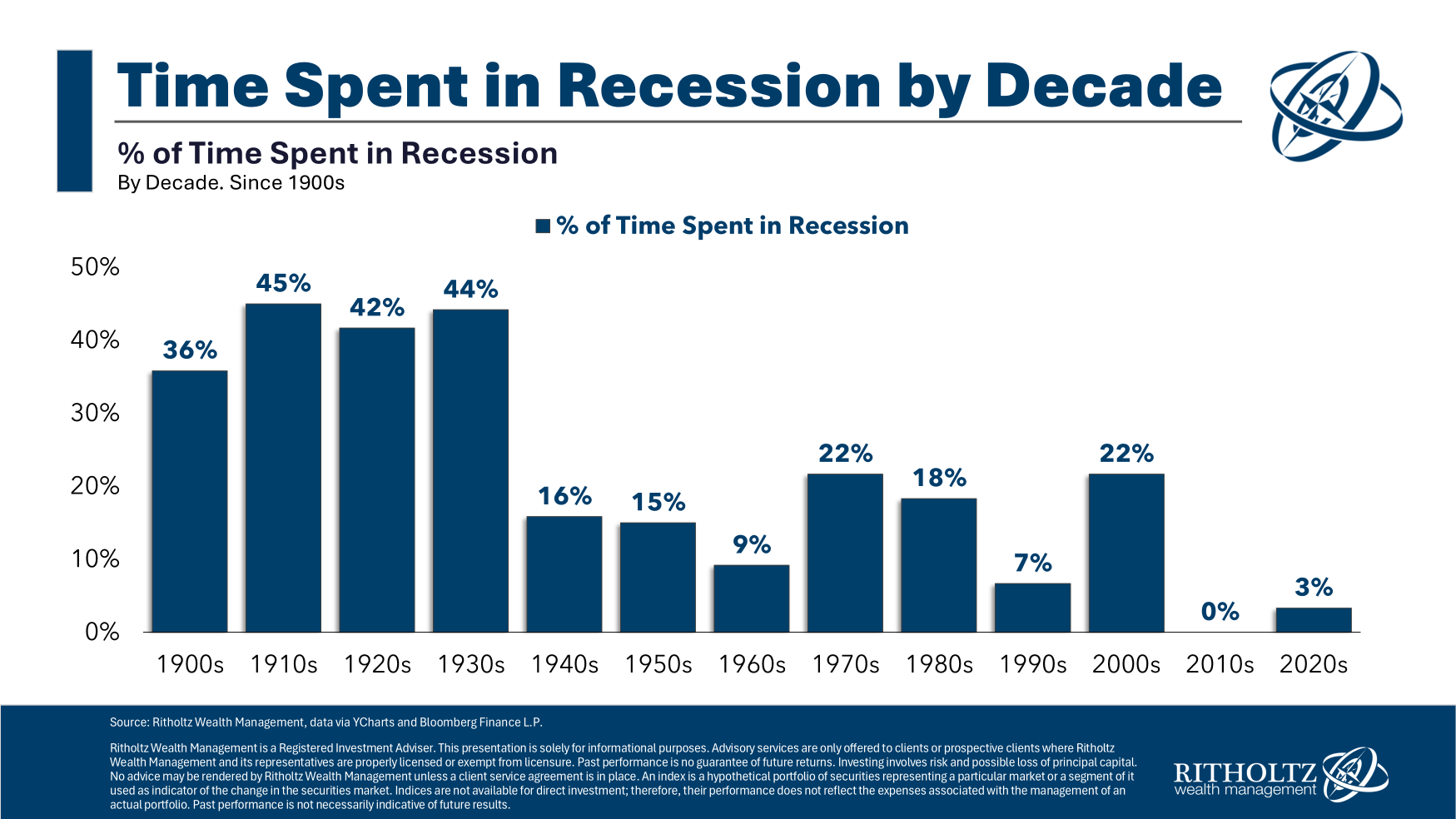
If financial headlines had a favorite hobby, it would be dramatic sighing. One week it is “recession fears,” the next week it is “bear market panic,” and by Friday your phone is acting like the economy personally keyed its car. But history is far less theatrical than the headlines. Recessions and bear markets do happen, and they matter, yet they are not constant roommates in the American story. They are more like loud, inconvenient guests who show up, eat all the snacks, and eventually leave.
That distinction matters because people often use recession and bear market as if they mean the same thing. They do not. A recession describes what is happening in the economy. A bear market describes what is happening in the stock market. Sometimes they overlap. Sometimes they merely wave at each other from across the street. And when you understand how often each one tends to show up, the whole subject gets a lot less mysterious and a lot more useful.
Recession vs. Bear Market: Same Storm, Different Forecast
A recession is an economy-wide slowdown. Think weaker business activity, softer hiring, shakier consumer confidence, and slower spending. In the United States, the official referee is the National Bureau of Economic Research, or NBER. That is why the old rule of thumb about “two straight quarters of negative GDP” is helpful but incomplete. It can be a clue, but it is not the official final call.
A bear market, on the other hand, is a market event. The usual shorthand is a drop of about 20% or more from a recent high in a broad stock index. It is less about payrolls and factory output and more about investors looking at earnings, interest rates, policy, geopolitics, and future growth prospects, then collectively deciding to hit the “yikes” button.
So, right away, we have the answer to a common confusion: a recession is about the real economy, while a bear market is about financial prices. They are related, but they are not identical twins. More like cousins who sometimes wear the same jacket.
How Often Are We in a Recession?
If you zoom out instead of doom-scroll, recessions are not actually the economy’s default setting. Expansions are. Historically, the United States spends far more time growing than shrinking. That is the first big reality check.
Post-World War II data show that U.S. recessions have generally been short compared with expansions. A typical recession has lasted around 10 to 11 months, while expansions have lasted many years on average. Put differently, recessions tend to appear roughly every six to six-and-a-half years, not every other Tuesday as social media might suggest.
What that looks like in real life
Here are three memorable examples:
The 2001 recession was relatively short, lasting eight months. It followed the bursting of the dot-com bubble and was worsened by the shock of the September 11 attacks.
The Great Recession of 2007–2009 was much more severe. It lasted 18 months and came with a housing crash, credit crisis, bank failures, and deep labor-market pain.
The 2020 COVID-19 recession was unusually brief at just two months, but it was also extremely sharp. It proved that a recession can be short on paper while still feeling enormous in real life.
That history tells us something useful: recessions are not rare enough to be shocking, but they are not common enough to be considered normal background noise. They are recurring episodes, not permanent conditions.
How Often Are We in a Bear Market?
Bear markets show up more often than recessions, which is one reason people confuse the two. Stocks are forward-looking, emotional, and occasionally as stable as a shopping cart with one bad wheel. Markets can fall long before the economy officially weakens, and they can recover long before the economic headlines improve.
Here is where it gets interesting: the exact answer depends on which historical window you use.
Using long-run S&P 500 history since 1928, bear markets have happened about every 3.5 years on average. That number looks surprisingly frequent because the 1930s and early 1940s were packed with market damage. If you focus on the post-World War II era instead, bear markets have been less frequent, landing closer to every five years or so. Some broader, longer-run market studies land nearer to once every six years. In plain English, the stock market gets seriously rattled more often than the economy officially slips into recession.
Typical bear market behavior
Again, depending on the dataset, the average bear market lasts around 9 to 11 months. The average decline usually lands somewhere around 30% to 35%. That is painful, yes. But it is also shorter than many people fear in the middle of the mess, when every trading day feels like it has been written by a very moody screenwriter.
One more wrinkle: smaller market drops happen even more often. A correction, which usually means a decline of 10% to 19.9%, is much more common than a full-blown bear market. Some market history sets show a 10% decline showing up roughly every 18 months. That is a big reason investors feel like “the market is always falling,” even when the official bear-market threshold has not been reached.
Do Recessions and Bear Markets Always Happen Together?
Nope. They are famous for hanging out together, but they are not legally required to attend the same event.
History shows that bear markets are more numerous than recessions. That means some bear markets happen without an official recession, and some recessions come with stock market declines that are less dramatic than investors expected. In other words, a falling market does not automatically mean the economy is doomed, and an economic slowdown does not always turn the market into a trapdoor.
This is one of the most important takeaways for anyone trying to understand recession frequency and bear market history. The market is a prediction machine, not a mirror. It can overshoot, undershoot, panic early, recover early, or throw a tantrum over things that never fully materialize. That is annoying, but it is also normal.
That is why you will sometimes hear economists say the stock market has predicted nine of the last five recessions. The line is old, but the point survives: markets can be very informative and very dramatic at the same time.
Why It Feels Like We Are Always on the Edge
If recessions happen roughly every six years and bear markets every few years rather than every few months, why does it feel like we are constantly one bad headline away from catastrophe?
1. Corrections are common
Not every scary market drop becomes a bear market. But even smaller declines can feel awful when your retirement account suddenly looks like it tried a crash diet.
2. News is always urgent
Modern financial coverage has one setting: “breaking.” A mild slowdown does not get clicks. “Everything is collapsing” gets clicks, shares, comments, reaction videos, and someone yelling into a microphone thumbnail.
3. Markets move before the economy does
The stock market often turns down before a recession begins and turns up before a recession ends. So the emotional experience of a downturn can start early and linger long after official dating says the episode was over.
4. Your money feels personal
When GDP falls, it sounds abstract. When your portfolio falls, it feels like an insult. That emotional intensity makes downturns feel more frequent than they really are.
What History Says About Recovery
Here is the part that rarely gets equal headline space: downturns have historically been temporary, while recoveries have tended to be longer and stronger. Bull markets generally outlast bear markets. Expansions generally outlast recessions. That does not make downturns fun, but it does make them easier to place in context.
Long-run market data show that bull markets have typically lasted years, not months, and have delivered gains far larger than the losses seen in the average bear market. That is why the long-term investor’s biggest enemy is often not the downturn itself, but the panicked decision made in the middle of it.
That is also why staying invested gets repeated so often it starts sounding like wallpaper. Yes, it can feel boring. Yes, it can sound annoyingly reasonable. But history keeps backing it up. The best market days often cluster around the worst market days, and missing the rebound can do real damage to long-term returns.
What Should Households and Investors Actually Do With This Information?
Build your recession plan before you need it
If you wait until layoffs are in the news to think about emergency savings, you are already late. A solid cash cushion matters because recessions hit the real economy through jobs, hours, confidence, and spending.
Know your risk before the bear arrives
Lots of people believe they are “long-term investors” until their account drops 23% and suddenly they are amateur meteorologists tracking every cloud. Asset allocation should be built for the bad years, not just the easy ones.
Do not confuse market volatility with life failure
A bear market does not mean your long-term plan is broken. It usually means the market is doing what markets have always done from time to time: overreacting, repricing, and eventually moving on.
Use history as a thermostat, not a crystal ball
History can tell you what is common. It cannot tell you the exact date of the next recession or the precise bottom of the next stock market downturn. It is useful for setting expectations, not for winning the world’s most stressful guessing game.
So, How Often Are We in a Recession or Bear Market?
Here is the clean answer:
Recessions: roughly every six to six-and-a-half years in postwar U.S. history, usually lasting around 10 to 11 months on average.
Bear markets: more frequent than recessions, with long-run estimates ranging from about every 3.5 years in the full 1928-era S&P 500 record to roughly every five to six years in more modern datasets, typically lasting around 9 to 11 months.
So no, we are not always in one. It just feels that way when your news feed, your brokerage app, and your group chat all decide to cosplay as an emergency siren at the same time.
The bigger truth is that downturns are recurring features of capitalism, not evidence that the whole system has permanently fallen down the stairs. Recessions happen. Bear markets happen. Recoveries happen too. And historically, the recoveries have taken up much more of the calendar than the panic phases do.
Real-World Experiences During Recessions and Bear Markets
Statistics are helpful, but experiences are what people actually remember. Most people do not say, “Ah yes, that was a 10.3-month contraction.” They say, “That was the year I stopped checking my retirement account because it was starting to feel like emotional self-harm.” So here are some common experiences people go through when a recession or bear market rolls in.
The worker experience: quiet anxiety before loud headlines
For employees, downturns often begin quietly. Hiring freezes appear before layoffs. Overtime disappears. Managers start saying things like “being more efficient” in a tone that makes everyone suddenly very interested in updating their resume. Even before the official recession label arrives, households often feel a slowdown through delayed promotions, reduced bonuses, and a general sense that companies are clutching their wallets tighter than usual.
The investor experience: the phone becomes a stress device
During a bear market, many people discover that checking their portfolio 14 times a day does not improve performance. Shocking, really. A 20% or 30% decline can make even patient investors wonder whether this time is different. The weird part is that the emotional pain is usually sharpest near the moment when long-term discipline matters most. That is why investors who have a plan tend to fare better than investors who have vibes.
The retiree experience: fear shifts from wealth to durability
For retirees or near-retirees, a downturn often feels less like drama and more like math. They are not just asking whether the market will bounce back. They are asking whether withdrawals, bills, and healthcare costs will still line up with the plan. A recession can make people feel vulnerable because the market is falling at the same time they are drawing money from their savings. That is why cash reserves, bond exposure, and realistic spending plans matter so much.
The small-business experience: uncertainty is often worse than the data
Small-business owners frequently describe downturns as a fog. Orders may not collapse overnight, but customers delay decisions, lenders become more cautious, and forecasting gets harder. You can handle bad news. What is harder is not knowing whether next quarter will be mildly annoying or absolutely feral. In many cases, it is uncertainty itself, not just lower sales, that creates the most stress.
The disciplined saver experience: boring habits become superpowers
One of the most consistent lessons from downturns is that boring behavior suddenly looks brilliant. The person who kept contributing to a 401(k), maintained an emergency fund, avoided panic selling, and stayed diversified often feels foolish in the middle of the storm and wise a few years later. Recessions and bear markets have a sneaky way of rewarding habits that looked unexciting when everything was going well. That may be the least glamorous lesson in personal finance, but it is one of the most useful.
Conclusion
Recessions and bear markets are real, recurring, and worth preparing for, but they are not the permanent state of either the U.S. economy or the stock market. Historically, recessions have been relatively brief interruptions in longer expansions, and bear markets have been shorter than the bull markets that followed them. That does not make them painless. It does make them understandable.
If you remember just one thing, remember this: downturns feel endless while they are happening, but history shows they are episodes, not forever. And that perspective can be worth a lot more than the average hot take in your timeline.











