
Most people occasionally imagine themselves as the hero of their own movie. A great playlist begins, the sunlight hits just right, and suddenly a routine walk to the grocery store feels like the opening scene of an award-winning drama. That harmless burst of main character energy can make life more enjoyable.
The problem begins when someone forgets that everybody else has a storyline too.
Instead of treating friends, relatives, coworkers, and strangers as complete human beings, a person with so-called main character syndrome may behave as though everyone nearby is a supporting actor, unpaid assistant, audience member, romantic interest, or conveniently available villain.
The 30 stories below are original summaries and composite retellings inspired by publicly shared experiences. Names and minor details have been changed or combined for clarity. What remains consistent is the extraordinary ability of certain people to enter an ordinary situation and announce, through words or behavior, “Excellent news, everyone. This is about me now.”
What Does Main Character Syndrome Mean?
Main character syndrome is an informal cultural term, not a recognized medical diagnosis. It generally describes a pattern in which someone views life as a personal narrative that revolves around their feelings, goals, struggles, and image. Other people may be treated as side characters whose primary purpose is to provide admiration, assistance, conflict, or emotional development.
Psychologists distinguish this behavior from narcissistic personality disorder, which requires a professional evaluation and involves persistent patterns across multiple areas of life. Someone can act selfishly, dramatically, or inconsiderately without having a personality disorder. Throwing a tantrum at brunch is poor behavior, but it is not a clinical assessment.
Main character behavior can also grow from insecurity, anxiety, low self-esteem, or a strong need for approval. Social media may amplify it by encouraging people to package their lives as continuous entertainment, measure reactions, and present carefully edited highlight reels. Research has found associations between certain narcissistic traits and self-focused social-media behavior, although the relationship is complex and does not prove that posting selfies turns someone into a cartoon villain.
30 Unforgettable Cases of Main Character Syndrome
Some of these experiences are funny in retrospect. Others show how attention-seeking behavior can damage weddings, friendships, workplaces, and families. All of them demonstrate the importance of occasionally stepping out of the spotlight.
-
1. The Mother-in-Law Who Outdressed the Bride
A bride planned a relaxed backyard wedding with fewer than 25 guests. Her mother-in-law arrived in a floor-length sequined gown, dramatic jewelry, and enough sparkle to guide aircraft through heavy fog. She then spent the reception discussing her recent cosmetic procedure. The bride had apparently booked a wedding without realizing it was somebody else’s red-carpet premiere.
-
2. The Guest Who Needed the Wedding to Be About Her
One invited guest brought a roommate as her plus-one. The roommate arrived heavily intoxicated, interrupted conversations, and eventually began shouting that nobody was paying enough attention to her. She was escorted out while protesting that the couple’s wedding day should have included more recognition of her personal journey.
-
3. The Parent Who Wanted the Entire School Schedule Changed
A parent complained that the school’s scheduled lunch break did not match the precise moment her daughter became hungry. Rather than packing a snack or accepting that hundreds of students followed the same timetable, she demanded that the whole school postpone lunch. Apparently, the cafeteria clock had failed to consult its executive producer.
-
4. The Boyfriend Casting a “Quirky” Supporting Actress
A woman realized her boyfriend did not want a real partner. He wanted a charmingly eccentric companion from an independent moviesomeone who would wear unusual hats, rescue him from boredom, and provide personal growth without having inconvenient needs. He even criticized her for not behaving “quirkily” enough. She declined the role and eventually canceled the series.
-
5. The Pregnancy Announcement With Terrible Timing
After a coworker experienced a miscarriage, another pregnant employee learned she was expecting twins. She immediately insisted on personally calling the grieving woman to announce the news. The announcement could not wait because, in her mind, the emotional importance of revealing twins outweighed another person’s need to recover privately.
-
6. The Relative Who Hijacked a Graduation
At a graduation ceremony, a relative demanded that the graduate leave the stage and escort her to a seat. Other family members offered assistance, but that would not create the desired spectacle. She rejected their help and dramatically crawled toward the seating area while relatives begged her to stand. The graduate’s achievement became background scenery for an improvised one-woman production.
-
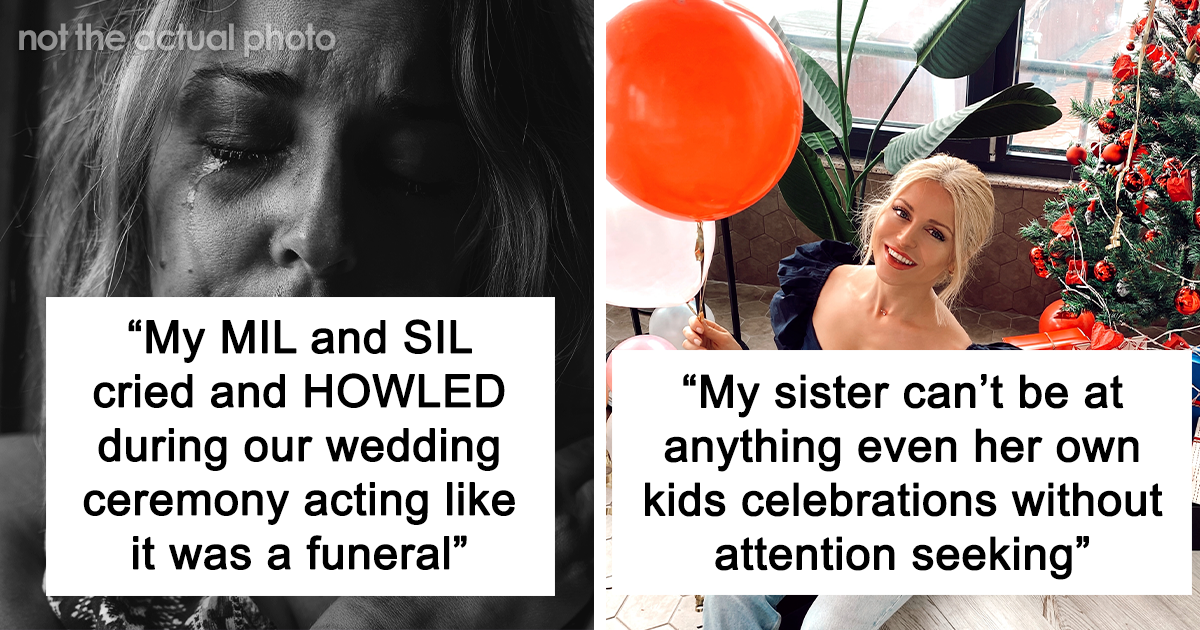
7. The Family Members Who Treated a Wedding Like a Funeral
During one ceremony, two relatives began loudly sobbing and wailing as though the couple had disappeared at sea. Their performance was so dramatic that guests could barely hear the vows. Whether the tears came from jealousy, disapproval, or a desire to be noticed, the result was the same: the emotional focus moved away from the people getting married.
-
8. The Spouse Requesting Dating Advice Before Moving Out
A husband announced that he wanted a divorce but continued living in the shared home while preparing to leave. During that period, he asked his stunned wife to teach him how to flirt with new women. He seemed genuinely surprised that she did not want to become the supportive relationship coach for the romantic sequel he was already planning.
-
9. The Student Auditioning as an Anime Protagonist
A college admissions employee encountered applicants who did not simply answer questions. They delivered mysterious monologues, lowered their voices dramatically, smirked at strategic moments, and adjusted their glasses as though preparing to reveal forbidden knowledge. Confidence can help in an interview. Behaving as though the admissions counselor is your defeated rival usually does not.
-
10. The Bar Patron Who Assumed He Had Plot Armor
A bouncer repeatedly watched smaller, intoxicated customers challenge groups of much larger people. These would-be action heroes appeared convinced that confidence, loud dialogue, and one dramatic finger point made them invincible. Real life provided no background music, stunt coordinator, or guarantee that the hero would awaken in time for the final scene.
-
11. The Man Who Claimed He Invented Pop-Up Ads
One woman’s former partner regularly told people that he had invented pop-up advertising as a teenager. He offered no evidence, technical history, patent, or explanation for why the world had failed to recognize his contribution. Still, he repeated the story well into adulthood, apparently accepting personal responsibility for one of the internet’s least beloved features.
-
12. The Stranger Who Joined a Championship Celebration
After a major sporting victory, a famous personality pushed into the players’ celebration, handled awards, posed for photographs, and behaved as though years of training had somehow culminated in his arrival. It was a perfect demonstration of main character syndrome: seeing someone else’s historic moment and identifying an urgent shortage of oneself.
-
13. The Parents Who Saw Their Children as Accessories
Several people described parents who treated adult children and grandchildren as extensions of the family brand. Careers, partners, clothing, and parenting decisions were expected to reflect well on the parents. Independent choices were framed as betrayal because the children were never viewed as separate protagonistsonly recurring characters expected to follow the original script.
-
14. The Father Waiting for His Children to Become Interesting
A father told his partner that he did not enjoy interacting with their young twins. He planned to wait until they were older and capable of discussing his specialized interests. Feeding curiosity, playing games, and learning what delighted them apparently sounded less appealing than waiting for two small audience members to become qualified podcast guests.
-
15. The Talent-Show Performer Who Dismissed Everyone Else
During a school talent show, one participant grabbed the microphone and announced that nobody cared about the other acts because everyone had come to see him. It was the kind of statement that requires either extraordinary talent or extraordinary confidence. Witnesses reported plenty of the second category.
-
16. The Woman Who Called Real People “NPCs”
One woman casually referred to acquaintances as “non-player characters,” borrowing a video-game term for figures controlled by software. She did not mean it literally, but her behavior matched the metaphor: strangers were obstacles, friends were assistants, and service workers existed to respond instantly to her requests.
-
17. The Mother Certain She Would Have Been Royalty
A woman repeatedly insisted that, had she been born during medieval times, she would unquestionably have belonged to the royal family. She never considered the far greater statistical likelihood of farming, carrying water, and developing a deep personal relationship with mud. Her imagination had apparently abolished both mathematics and the peasant class.
-
18. The Airport Customer Performing for an Invisible Camera
An airport traveler asked restaurant employees about a pizza place in another terminal. After receiving directions, he loudly explained why he would not be eating at their establishment, as though filming a restaurant-review show. The workers had merely answered a question, but he supplied a full rejection speech, character motivation, and imaginary closing credits.
-
19. The Perpetual Victim Who Rewrote Every Conversation
A former friend constantly claimed that others were conspiring against her. She exaggerated conversations, invented insulting remarks, and carried edited versions of private discussions between people. In every conflict, she was the misunderstood heroine. Everyone else rotated between villain, betrayer, jealous rival, and temporarily useful assistant.
-
20. The Husband Controlling His Wife’s Birthday Dinner
A husband refused to let his wife order pizza on her own birthday because he disliked it. He would not agree to separate meals or a compromise. The birthday belonged to her according to the calendar, but all culinary decisions apparently remained under the authority of His Majesty, Director of Cheese and Toppings.
-
21. The Friend Who Announced Her Engagement at Another Wedding
During a reception, a guest gathered friends around and revealed her own engagement. She then requested photographs, displayed the ring, and discussed possible venues while the newly married couple stood nearby. She could have waited one day. Instead, she saw an assembled audience, professional decorations, and a photographer and concluded that the universe had provided a free launch event.
-
22. The Funeral Livestreamer
At a memorial service, a guest recorded herself crying, adjusted the camera angle, and posted updates describing her grief. Relatives noticed that the tears paused whenever she checked the screen. Grief takes many forms, but producing multiple takes beside a floral arrangement may suggest that mourning has accidentally wandered into content creation.
-
23. The Sidewalk Dance Crew Blocking Commuters
A group placed phones, lights, and speakers across a busy walkway to film a dance. Pedestrians were expected to stop, wait, or walk into traffic rather than disturb the shot. When someone crossed through, the performers became angry. Public space had been transformed into a private studio without the inconvenience of permits, rent, or consideration.
-
24. The Coworker Who Turned Every Meeting Into a Monologue
One employee answered every question, including those directed at other departments. She interrupted project updates with personal stories and summarized decisions that had already been made. Meetings scheduled for 20 minutes regularly became hour-long episodes of her workplace documentary, provisionally titled I Also Have Thoughts About That.
-
25. The Friend Who Competed With Every Medical Problem
Whenever someone mentioned an illness, one friend immediately presented a worse symptom, longer hospital stay, rarer condition, or more dramatic recovery. A headache became her migraine. A broken wrist became the time she “almost lost an arm.” Concern was replaced by competition, making honest conversations feel like qualifying rounds for the Suffering Olympics.
-
26. The Birthday Guest Who Expected a Surprise for Herself
At another person’s birthday party, a guest became upset that nobody had purchased her favorite cake or planned an activity she preferred. She argued that friends should have considered what would make the evening enjoyable for everyone“everyone” being a remarkably small category containing only herself.
-
27. The Volunteer Who Needed Photographic Evidence
A volunteer spent more time arranging photographs than completing the work. She repeatedly asked others to pause, hand her tools, and recreate moments for social media. When cameras disappeared, so did her enthusiasm. Helping people was apparently rewarding, but helping people while looking candidly inspirational was the premium package.
-
28. The Dinner Guest Who Ordered for the Entire Table
Without asking, one guest selected appetizers, criticized other people’s choices, and told the server how everyone wanted their food prepared. When corrected, he said he was merely “taking charge.” Leadership usually involves consent, responsibility, and awareness. Ordering six plates of calamari because you personally enjoy calamari is closer to maritime dictatorship.
-
29. The Person Who Made Someone Else’s Breakup About Them
After a friend ended a painful relationship, another member of the group became offended that she had not been consulted first. She complained that the breakup changed group plans and made social events awkward for her. The heartbroken friend was expected to apologize for failing to schedule emotional devastation around the group calendar.
-
30. The Friend Who Could Never Be Wrong
One person described a friendship with someone who never accepted responsibility. Every disagreement was persecution, every boundary was cruelty, and every consequence proved that others were jealous. She used friends when convenient and discarded them when challenged. Eventually, most people leftnot because they hated the main character, but because they were exhausted from being miscast.
Why Main Character Behavior Damages Relationships
The central problem is not confidence. Confidence allows a person to occupy space while recognizing that others deserve space too. Main character syndrome becomes harmful when self-expression turns into entitlement and other people’s needs become irrelevant.
Healthy relationships require empathy, including the ability to recognize emotions and imagine another person’s perspective. When that process disappears, conversations become performances instead of exchanges. Friends stop sharing good news because it will be overshadowed. Coworkers stop contributing because they expect to be interrupted. Relatives establish distance because every celebration or crisis risks being hijacked.
Social platforms can complicate the situation by making attention measurable. Likes, shares, comments, and views can reward behavior that produces a reaction, even when that reaction is annoyance. Pew Research Center surveys have found that users frequently encounter online drama and exaggeration, while some young people report pressure to create posts that attract engagement.
How to Deal With Someone Who Makes Everything About Them
Use Clear, Specific Boundaries
Do not deliver a 40-minute speech about their personality. Address the immediate behavior: “Please do not interrupt while I’m speaking,” or, “We are celebrating Jordan tonight, so your announcement needs to wait.” Assertive communication protects your needs while respecting the rights of others.
Avoid Rewarding Every Performance
Some attention-seeking behavior continues because it reliably produces an audience. You do not need to argue with every exaggerated claim, rescue every manufactured emergency, or provide unlimited reassurance. A calm response is often more useful than joining the drama.
Redirect the Conversation
When someone hijacks another person’s story, redirect it: “We’ll come back to that, but I want to hear how Maya’s appointment went.” This restores the original speaker’s place without creating an unnecessary showdown.
Notice Patterns, Not Isolated Mistakes
Everyone interrupts, overshares, or behaves selfishly occasionally. Look for repetition. Does the person routinely dominate celebrations, minimize other people’s experiences, ignore boundaries, and react badly when the spotlight moves? A consistent pattern matters more than one embarrassing evening.
Reduce Contact When Necessary
If respectful requests repeatedly fail, limiting access may be reasonable. You can shorten conversations, decline invitations, protect private information, or step away from the relationship. Boundaries are not punishments; they clarify what behavior you will and will not participate in.
Extended Experiences: What It Feels Like to Live Around a “Main Character”
People who have spent years around extreme main character behavior often say the exhausting part is not one dramatic incident. It is the constant anticipation. Before a birthday, wedding, vacation, or family dinner, everyone quietly wonders what the person will do. Will they arrive late and demand a grand entrance? Will they reveal private news? Will they begin an argument when attention moves elsewhere?
That anticipation changes how groups function. Friends may create separate message threads to plan around the person. Relatives assign someone to supervise them at major events. Coworkers rehearse ways to interrupt their interruptions. Instead of enjoying an occasion, everyone manages the emotional weather system generated by one individual.
Another common experience is conversational invisibility. You begin describing a job loss, medical concern, or relationship problem, only to hear, “That reminds me of what happened to me.” A brief attempt to relate is normal. The problem appears when your story vanishes completely. Ten minutes later, you are comforting the person who was supposedly listening to you.
Positive news may receive similar treatment. Announce a promotion, and they explain why their job is more demanding. Mention an engagement, and they begin discussing their ideal wedding. Share a photograph from vacation, and they list better destinations they have visited. The conversation is not openly hostile, yet you leave feeling strangely reduced.
Public behavior can be even more uncomfortable. A person with strong attention-seeking habits may argue with restaurant employees, film strangers without permission, or block shared spaces for content. Companions then face an unpleasant choice: challenge the behavior and risk a scene, or remain silent and appear to approve.
Many people initially cope by laughing. Humor makes the absurdity easier to tolerate. Friends exchange glances when the familiar monologue begins. Family members joke about the inevitable dramatic entrance. Over time, however, the laughter may conceal resentment. Constantly surrendering the spotlight is not generosity when surrender is compulsory.
The most effective shift often comes when the group stops treating the behavior as an unchangeable law of nature. Someone calmly refuses to alter the birthday menu. A bridesmaid says the engagement announcement must wait. A coworker finishes speaking despite repeated interruptions. Nothing explodes, the earth continues rotating, and the alleged main character discovers that supporting actors have unionized.
Not every confrontation produces insight. Some people apologize and adjust; others accuse everyone of cruelty. The goal is not to force a dramatic redemption arc. It is to create relationships in which attention, care, and respect can move in more than one direction.
There is also value in examining our own behavior. Most of us have redirected a conversation, overestimated our importance, or performed for an imaginary audience. Self-awareness means noticing those moments without turning the realization into another production. Apologize, ask a question, listen to the answer, and remember that sometimes the kindest role is simply being present in someone else’s scene.
Conclusion: Be the Hero Without Treating Others Like Extras
There is nothing wrong with approaching life with confidence, imagination, and a strong sense of personal direction. Romanticize your morning coffee. Wear the dramatic coat. Play the soundtrack. Pursue the goal that makes you feel courageous.
Just remember that confidence and consideration can exist together.
The healthiest version of main character energy does not require stealing someone’s wedding, controlling a birthday dinner, or turning every conversation into a personal documentary. It means taking responsibility for your choices while recognizing that every person you meet is living a complicated story of their own.
Be memorable, but let other people speak. Celebrate your victories, but applaud theirs too. And before making a grand entrance, check whether you have accidentally walked onto somebody else’s stage.













