
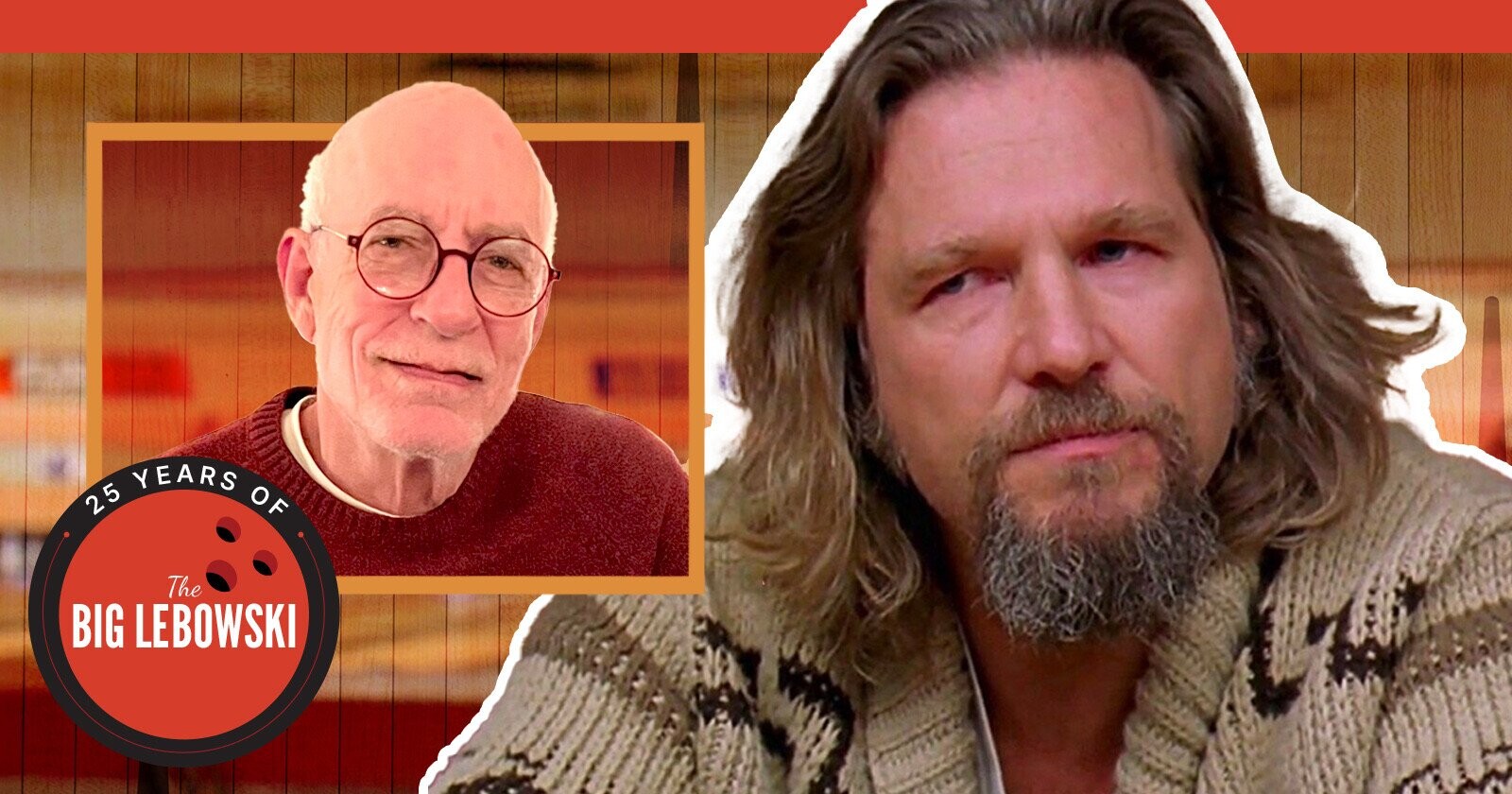
Peter Exline is not the guy most fans picture when they hear “the real Dude.” But his battered-car story, borrowed rug, and gift for spinning a good yarn supplied some of the funniest DNA in the Coen brothers’ cult classic.
When people talk about the real-life inspiration for The Big Lebowski, one name usually comes first: Jeff Dowd, the independent-film promoter and former activist whose nickname, relaxed manner, and counterculture aura helped shape Jeff Bridges’ hero. That credit is deserved. But it is not the entire story. The film’s most enduring odditiesthe rug, the stolen-car mystery, and the homework that becomes a very strange noir cluealso lead back to another friend of the Coens: Peter Exline.
Exline is the “other Dude” in the most useful sense. He was not a one-to-one template for Jeffrey Lebowski, nor was he secretly Walter Sobchak with different sunglasses. He was a storyteller, a former Hollywood executive and film-school professor whose experiences gave Joel and Ethan Coen exactly the kind of real-life fragment they love: specific, funny, faintly sad, and weird enough that no screenwriter should be allowed to improve it much.
The Big Lebowski was never a biopic in a bathrobe. It was a comic collage assembled from friends, noir traditions, Los Angeles folklore, and the Coens’ talent for noticing that a person’s strangest anecdote can become the doorway to an entire movie.
Peter Exline: The Man Behind Some of the Movie’s Best Details
Peter Exline’s route into the story began long before the film arrived in 1998. He served in Vietnam, studied at New York University, worked in the film business, and became friends with the Coens through their early Hollywood circle. Barry Sonnenfeld, then an emerging cinematographer, helped connect that world.
Unlike the fictional Dude, Exline was no permanent couch ornament with a schedule cleared for league night. He worked in development and production, later taught at the University of Southern California, and understood how stories are built. More importantly, he had a life that had generated a few spectacularly usable complications.
His contribution was not a screenplay outline. It was better: a bundle of incidents with texture. A shabby apartment. A rug important enough to defend in conversation. A stolen car. A kid’s homework. A friend intense enough to turn a basic complaint into a full-scale investigation. Give that material to ordinary filmmakers and you might get a procedural. Give it to the Coens and you get a detective comedy in which every clue seems to have wandered in from a different movie.
The Rug Was More Than a Decorating Choice
The famous rug is central to the film’s comic machinery because it is so modest. In a world of wealthy men, ransom money, dream sequences, and grand declarations, the Dude’s emotional North Star is a piece of floor covering. Exline’s real-life connection to the detail is less glamorous but more revealing: he had a rug in his apartment that he felt gave the place coherence. Published accounts describe it as having been acquired from a neighbor, which makes the whole thing even more appropriately scruffy.
The movie understands that objects become valuable because they carry a person’s sense of order. A rug may not impress a banker or an art dealer, but it can make a cluttered room feel like home. Anyone who has defended a battered chair, a chipped mug, or a mysteriously essential hoodie already understands the Dude’s position. The object is not important to everyone. That is precisely why it is important.
The Stolen-Car Story That Became Movie Gold
The clearest Peter Exline fingerprint appears in the movie’s homework subplot. In real life, Exline’s car was stolen and later recovered. Inside was a student’s homework, a clue so perfectly mundane that it becomes surreal. Exline and his friend Lewis Abernathy followed the lead and confronted the young person connected to the papers. Accounts of the episode include a piece of homework preserved in a plastic bag as evidence and an awkward meeting at the student’s home.
Onscreen, that seed grows into one of the film’s defining sequences. The Dude and Walter discover Larry Sellers’ homework in the recovered car, treat it as a key to the missing ransom, and head off to question the teenager. The result is not exactly a triumph of detective work. It is a master class in how certainty and impatience can turn an already bad afternoon into a lesson on false assumptions.
In conventional mysteries, a notebook page points the hero toward justice. Here, the homework points the characters toward an address, an accusation, and a spectacularly wrong conclusion. The supposedly practical evidence becomes a trap because Walter sees only the story he wants it to prove. It is very funnyand a sharp observation about what happens when people mistake a hunch for a verdict.
From a Real Anecdote to a Fake Detective Story
The Exline story also helped the Coens find their version of Los Angeles noir. The Big Lebowski borrows the atmosphere of Raymond Chandler: a confused investigator, a wealthy household, a missing person, a mysterious woman, crooked schemes, and enough side characters to make a corkboard nervous. But the movie swaps the hard-boiled detective for a man who would rather resolve the whole matter without standing up too quickly.
That switch is the magic trick. The plot keeps handing the Dude classic noir material, but he processes it with almost no urgency. Exline’s homework anecdote gave the filmmakers a Chandler-ish clue, grounded in life but bizarre enough to feel invented. A school assignment in a stolen car is not merely evidence; it is a tiny absurdist poem about how crime often leaves behind the least cinematic thing imaginable.
Why There Was Never Just One “Real Dude”
Calling Peter Exline the other Dude should not erase Jeff Dowd, whose influence on the title character remains fundamental. Dowd contributed the name, much of the look and vibe, and the easygoing spirit that Jeff Bridges transformed into something iconic. Exline contributed incidents and character texture. Filmmaker John Milius is widely associated with parts of Walter’s volcanic militarism, while Lewis Abernathy helped inform the character’s investigative intensity.
This is how character creation often works at its best: not through photocopying a person, but through collage. A writer borrows a rhythm of speech from one friend, a recurring complaint from another, and an unforgettable mistake from a third. Then the fictional character begins doing things none of the originals would do. By the time the cast brings those figures to life, the source material has become something new.
Exline himself has been careful not to claim ownership of the movie. His role was not to hand the Coens a finished masterpiece in a manila envelope. It was to give them raw material with life still on it. The brothers did the alchemy, but the ingredients mattered. A story about an impounded car and a homework assignment might sound too small for film history. In the right hands, it becomes a scene fans quote for decades.
Why the Peter Exline Connection Makes the Film Better
Knowing the Peter Exline backstory does not shrink The Big Lebowski; it makes the movie feel more human. The Coens’ style is famously precise, from Roger Deakins’ cinematography to the dreamlike musical detours and dialogue engineered for comic voltage. Yet the film also feels loose because its best details are the kinds of details people remember from their friends’ stories.
A ruined rug. A car that vanishes. A paper clue that should be useful but somehow makes everything worse. A friend whose idea of calm problem-solving is escalating the situation until the neighborhood has a story for years. Those are not just gags. They are recognizable social experiences, exaggerated until they become mythic.
That is why the film can combine elaborate noir parody with an oddly tender view of friendship. The Dude, Walter, and Donny are not held together by competence. They are held together by routine, shared space, mutual annoyance, and the quiet fact that they keep showing up. Critics and scholars have read the film as a comic argument for community and contentment, even when the community includes one person who is always loudly defending the rules.
A Cult Classic Built From Tiny, Unforgettable Truths
The Big Lebowski did not arrive as an instant unanimous classic. Its reputation grew through repeat viewing, quotation, fan gatherings, and the slow realization that the movie’s casual surface is packed with durable details. The rise of Lebowski Fest and related traditions shows that the film became a shared language for people who enjoy finding cosmic importance in extremely local disasters.
Peter Exline’s place in that history is a reminder that a movie does not need a single, tidy origin story. Sometimes it comes from several real people, a detective-novel skeleton, a joke about interior design, and one old tale told well over dinner. The lesson for writers is not to steal every friend’s rug. It is to pay attention. Somewhere in the stories people casually repeatespecially the ones with too many detailsthere may be a scene waiting to happen.
Experiences That Make the “Other Dude” Story Feel So Familiar
The Peter Exline connection lands because it resembles the way ordinary life becomes a story long before anyone puts a camera on it. Most people remember the weird chain reaction: a missing item that led to an awkward conversation, a friend who became intensely committed to solving a small problem, or a household object that briefly became the center of the universe.
Consider the rug experience. A roommate moves out and leaves behind a wobbly lamp nobody wants. Months later, you realize it is the only thing that makes a corner of the room feel normal. It need not be valuable or beautiful; it belongs to the emotional map of the place. If somebody “helpfully” removes it, your reaction may exceed its resale value. That is the logic of the rug.
The homework episode feels equally true because people are terrible at handling clues. A parking receipt, a half-heard conversation, or an unfamiliar name on a delivery notification can make an ordinary person feel like a detective for about twelve minutes. The danger is that the detective story in your head becomes more convincing than the evidence. The film turns that impulse into comedy, but the recognizable part is the speed with which we fill in blanks. One clue becomes a theory; the theory becomes certainty; certainty becomes someone else’s very long Tuesday.
There is also the friendship experience. Almost everyone knows a Walter-ish person, though hopefully one with less volume. This is the friend who hears about a minor inconvenience and immediately starts drafting a campaign plan. You mention unhelpful customer service; they are ready to produce a timeline, a case file, and a strategy for confronting management. Their intensity can be exhausting, but it often comes from loyalty. They care so much about your small injustice that they accidentally create a larger one.
Then there is the quieter Dude-like response: the friend who keeps the room from overheating. They may not solve the problem either, but they remind everyone to eat something, sit down, and consider the possibility that nobody needs a full investigation before sunset. The balance between those personalities is one reason The Big Lebowski remains comforting beneath all its chaos. Life is full of incomplete information and people certain they know what is happening. Having friends who can laugh, apologize, and return to a shared routine may be the closest thing most of us get to a happy ending.
Exline’s experiences became memorable because they were not polished. They had loose ends, embarrassment, misplaced confidence, and mundane evidence. The movie amplifies those qualities until they become comedy, but it does not erase their humanity. A rug can be a home. A crumpled homework page can be a clue. A terrible plan can become a great story laterprovided nobody mistakes a parked car for a criminal mastermind.












