
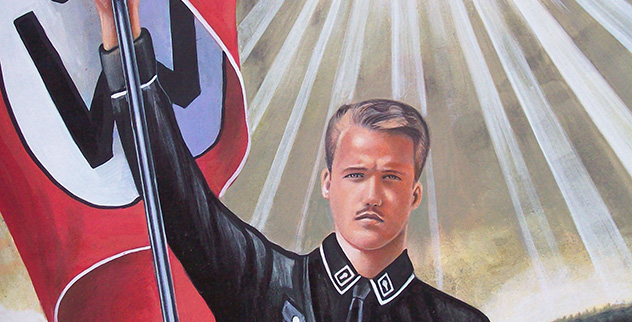
Neo-Nazi organizations do not all look alike. Some parade in uniforms, some hide behind polished “patriotic” branding, and others operate as small online networks obsessed with provoking social collapse. This guide examines ten groups that shaped or continue to influence American neo-Nazism, separating historical organizations from active or recently active networks while focusing on ideology, documented conduct, recruitment, and consequences.
Editorial note: This is not a ranking, and inclusion does not imply that every group remains active today. Extremist organizations frequently split, rebrand, shrink, or migrate online. The descriptions below emphasize documented history and publicly reported activity rather than repeating propaganda.
What Makes an Organization Neo-Nazi?
Neo-Nazism is more than generic prejudice. It revives or adapts central features of Hitler’s National Socialism, including racial hierarchy, antisemitism, authoritarian rule, ethnic cleansing, Holocaust denial, or admiration for the Third Reich. American groups often mix those ideas with Christian Identity theology, racist skinhead culture, conspiracy theories, anti-LGBTQ+ agitation, or “accelerationism”the belief that chaos and violence can speed the collapse of democratic society.
The organizations below vary enormously in size and structure. A group can be dangerous without having thousands of dues-paying members. A few committed people can harass families, vandalize houses of worship, spread recruitment material, or inspire lone offenders. That is why serious analysis looks beyond theatrical rallies and asks what a group teaches, whom it targets, how it recruits, and whether its rhetoric crosses into criminal conduct.
1. American Nazi Party
The Original Postwar Template
Founded in 1959 by George Lincoln Rockwell, the American Nazi Party was the first durable, nationally recognizable neo-Nazi organization in the United States. It borrowed Nazi symbols, uniforms, antisemitic claims, and leader-centered politics with very little subtlety. Rockwell’s followers were never a mass movement, but the organization created a template that later American groups repeatedly copied: publicity stunts, provocative marches, carefully staged confrontation, and the presentation of racial hatred as a supposedly disciplined political program.
After Rockwell was killed by a former follower in 1967, the party splintered. Its significance lies less in organizational survival than in lineage. Later formationsincluding the National Socialist Movementtrace their roots to personnel and factions that emerged from the American Nazi Party’s collapse. The name changed; the ideological recycling bin remained open.
2. Aryan Nations
A Compound, a Theology, and a Violent Legacy
Aryan Nations became one of the best-known American white supremacist organizations under Richard Butler. Based for years near Hayden Lake, Idaho, it combined neo-Nazism with Christian Identity, a racist religious doctrine that falsely casts white Europeans as the true descendants of biblical Israel while demonizing Jewish people and people of color.
The organization’s compound functioned as a gathering place for extremists and helped connect propagandists, criminals, and violent militants. A major civil lawsuit ultimately stripped the organization of its Idaho property after an assault involving security guards at the compound. Butler’s death in 2004 accelerated fragmentation, leaving rival factions that claimed his legacy.
Later Aryan Nations offshoots were generally smaller and less capable, but the brand remained useful to people seeking borrowed notoriety. Like a once-famous restaurant name slapped onto a microwave dinner, the label survived even when much of the original organization did not.
3. National Alliance
Propaganda With Long Aftereffects
The National Alliance grew from the 1970s into what extremism monitors described as the most formidable American neo-Nazi organization of its era. Founder William Pierce built a relatively centralized operation with publications, recordings, a rural headquarters, and international contacts. The group tried to make genocidal ideology appear intellectual and orderlyessentially putting a necktie on barbarism and hoping nobody noticed the blood on the cuffs.
Pierce also wrote The Turner Diaries, a racist dystopian novel depicting revolutionary violence, racial warfare, and mass murder. The book circulated far beyond the organization and became influential in violent extremist circles.
After Pierce died in 2002, leadership struggles and factional conflict weakened the National Alliance. Its decline illustrates a recurring pattern: highly personalized extremist groups often lose cohesion when the central figure disappears, even while their propaganda continues circulating online.
4. National Socialist Movement
Uniformed Spectacle and Organizational Decline
The National Socialist Movement, commonly called NSM, grew out of a post-Rockwell faction and became one of the most visible American neo-Nazi groups during the 2000s and early 2010s. It became notorious for rallies featuring Nazi-style uniforms, swastikas, racist speeches, and deliberate attempts to provoke counterprotesters and media attention.
Its ideology calls for a white-dominated state and would strip targeted groups of equality and legal protection. Yet visibility should not be confused with strength. ADL reporting has described the NSM as greatly diminished from its peak, with leadership disputes and poorly attended events.
The group’s history nevertheless matters because it served as a networking hub, participated in umbrella alliances, and demonstrated how extremist movements use public outrage as free advertising. When the costumes become the whole strategy, the organization may look ridiculousbut the hatred underneath is not.
5. Hammerskin Nation
Racist Skinhead Networking Through Music and Violence
Hammerskin Nation emerged from the racist skinhead scene in Dallas during the late 1980s and developed affiliated chapters in the United States and abroad. Its crossed-hammers imagery was lifted from the fascist nightmare depicted in Pink Floyd’s The Walla satire that extremists somehow mistook for a decorating catalog.
The network’s importance came from more than symbols. Hammerskin-linked concerts and white-power music created social spaces where recruitment, fundraising, and movement networking could occur. Members and associates have been connected to assaults, harassment, vandalism, and murder.
The organization’s history demonstrates why cultural products matter in extremist ecosystems. Music, clothing, social events, and private gatherings can normalize ideology before formal political claims ever appear. An archived ADL profile characterized Hammerskin Nation as exceptionally violent and organized within the racist skinhead milieu.
6. Atomwaffen Division
Accelerationism Dressed as Apocalypse
Atomwaffen Division formed in the mid-2010s around users of the Iron March fascist forum. Unlike organizations primarily interested in marches or electoral theater, Atomwaffen promoted accelerationism: a violent fantasy that terrorism, social disorder, and institutional collapse could clear the way for a neo-Nazi order.
The group organized in small cells and cultivated a deliberately menacing image. Its members and associates became tied to murders, weapons cases, threatening campaigns, and other crimes. The Southern Poverty Law Center has described it as a terroristic neo-Nazi organization seeking social collapse through cellular activity.
In one federal case, an Atomwaffen leader received a seven-year prison sentence for participating in a campaign that threatened journalists and advocates, especially Jewish targets and journalists of color. Victims described moving temporarily, installing security systems, changing how they handled mail, and, in one case, leaving journalism.
Those consequences expose the real purpose of extremist harassment. It is not debate, persuasion, or edgy performance. It is an attempt to silence people through fear.
7. The Base
A Transnational Network Built Around Collapse
Founded in the United States in 2018, The Base developed as a transnational neo-Nazi network that promoted paramilitary preparation, racial violence, and accelerationist ideas. Its name is an English translation of “al-Qaeda,” a choice apparently intended to project revolutionary seriousness. Copying the branding logic of another terrorist movement is not evidence of originality; it is evidence that the imagination has left the building.
Members pursued propaganda, training, intimidation, and criminal schemes. Federal prosecutions documented a conspiracy in which participants targeted Black and Jewish people and vandalized synagogues with neo-Nazi symbols.
In June 2024, a Michigan member was sentenced to 26 months in prison for his role in the conspiracy and the desecration of Temple Jacob in Hancock, Michigan. The Base also illustrates the borderless nature of contemporary extremism: a network may originate in one country, recruit internationally, and persist through digital communications even after arrests disrupt local cells.
8. Vanguard America
Campus Propaganda and the Charlottesville Fracture
Vanguard America rose during the mid-2010s with racist campus flyers, small demonstrations, and a blend of white nationalism and explicit neo-Nazi imagery. Its activists tried to look young, organized, and media-ready, presenting old racial doctrines in cleaner graphics. The packaging was newer; the contents were historical poison.
The group became nationally notorious around the 2017 Unite the Right rally in Charlottesville, Virginia. Photographs showed car-attack perpetrator James Alex Fields Jr. standing among Vanguard America participants and carrying one of its shields, although the organization denied that he was a member.
Internal conflict soon shattered the organization. Thomas Rousseau and his followers moved into Patriot Front, while another faction formed the National Socialist Legion. Vanguard America’s collapse is a useful warning: a defunct label does not necessarily mean the underlying network vanished. Personnel, tactics, mailing lists, and propaganda habits often migrate into successor brands.
9. Aryan Freedom Network
A Newer Membership Organization With National Ambitions
Founded in 2018 and based in Texas, the Aryan Freedom Network describes itself in National Socialist terms and mixes neo-Nazism with Christian Identity and “Great Replacement” conspiracy theories. It has claimed chapters across much of the country, although self-reported chapter numbers should never be treated as audited membership data. Extremist groups are not famous for modesty in their marketing brochures.
AFN targets Jewish people, Black people, immigrants, and LGBTQ+ communities in its propaganda and cultivates ties across several white supremacist subcultures.
Of particular concern is youth recruitment. ADL reported that the organization launched an “Aryan Youth” division in 2024 for teenagers connected to adult members, wrapping racial indoctrination in the language of camping, fitness, leadership, agriculture, and practical skills.
That tactic is not accidental. Recruitment works more effectively when ideology is smuggled inside belonging, mentorship, physical activity, and adventure.
10. Blood Tribe
Open Swastikas and Confrontation as Content
Blood Tribe developed from the online following of Christopher Pohlhaus and became a membership organization in 2021. It rejects attempts to soften neo-Nazi imagery, openly displays swastikas, emphasizes hypermasculinity, and promotes the establishment of a white ethnostate.
Public actions have frequently targeted LGBTQ+ events, where confrontation generates images and video for online circulation. The group demonstrates the feedback loop between digital propaganda and street activity: online channels recruit and coordinate, public demonstrations produce dramatic footage, and the footage returns online as advertising for the next potential recruit.
Blood Tribe has claimed chapters in multiple states and has pursued relationships with other extremist networks. Its theatrical presentation should not obscure its intent: to normalize Nazi symbolism, intimidate targeted communities, and make organized hatred feel socially available.
Why These Groups Keep Splitting and Reappearing
Neo-Nazi organizations are notoriously factional. Leaders quarrel over money, status, ideology, strategy, and who gets to pose in the center of the photograph. Law-enforcement pressure, civil litigation, platform bans, public exposure, and leadership deaths can weaken a particular organization, but fragmentation also produces new names.
A group may become inactive while its members join a successor, start a regional chapter, or retreat into looser online communities. Some organizations are created when dissatisfied members abandon an existing group, while others emerge when several weak factions attempt to unite under a common banner.
This is why focusing only on logos can be misleading. The more durable elements are networks, narratives, propaganda libraries, personal relationships, and recruitment pathways. Effective prevention tracks those continuities without treating every offensive internet post as an organized terrorist conspiracy.
Accuracy matters. Exaggeration can hand extremists the importance they crave, while complacency can leave targeted communities unprotected.
Experience-Based Lessons From Communities Confronting Neo-Nazi Activity
Take Threats Seriously Without Becoming an Unpaid Publicist
Communities that have faced rallies, flyers, vandalism, or targeted harassment often learn that extremists seek two outcomes at once: fear among their targets and attention from everyone else. Public officials, journalists, and residents therefore need a balanced response.
Document the incident, preserve evidence, support the people targeted, and communicate clearlybut avoid endlessly replaying propaganda images or transforming a tiny gathering into a national spectacle. The group wants a billboard. Responsible coverage should provide context instead.
Center the Victim’s Experience
Federal cases involving Atomwaffen Division and The Base demonstrate that intimidation is not “just speech” to the people receiving threats at home or finding swastikas on a synagogue. Victims may alter routines, spend money on security, temporarily leave their homes, abandon jobs, or feel unsafe in places that once seemed ordinary.
A useful community response includes practical security assistance, mental-health support, rapid removal of vandalism after evidence is collected, and public solidarity that does not pressure victims to become unwilling symbols or media personalities.
Recognize Recruitment Before It Becomes a Crisis
Families and educators often encounter radicalization not as a sudden declaration of Nazism but as a gradual change in language, online habits, humor, grievances, and social circles. Extremist recruiters use memes, fitness culture, gaming spaces, music, pseudo-history, and identity-based communities to create belonging.
The productive response is neither panic nor mockery. Adults should ask what need the ideology is fillingstatus, friendship, certainty, excitement, recognition, or identityand offer credible alternatives while setting firm boundaries around abuse, threats, and dehumanizing language.
Recruitment efforts aimed at teenagers show why early intervention matters. Activities that look superficially wholesome, including hiking, exercise, camping, or leadership training, can become vehicles for racial indoctrination when controlled by an extremist organization.
Distinguish Protected Expression From Criminal Conduct
The First Amendment protects even repugnant political expression, but it does not provide immunity for vandalism, true threats, stalking, assault, conspiracy, or destruction of property. Communities gain credibility when they draw this line precisely.
Overbroad accusations can collapse under legal scrutiny and feed extremist claims of persecution. Careful documentation, meanwhile, can support appropriate prosecution when conduct becomes criminal. The goal should be lawful accountability, not improvised censorship.
Do Not Assume a Rebranding Means Reform
One of the most persistent lessons is that organizational names are disposable. A collapse may represent genuine weakness, but it may also signal a transfer of members into a new group with updated graphics and less recognizable terminology.
Observers should examine leadership, participants, ideological texts, communication channels, and recurring tactics rather than accepting a fresh logo as evidence of moderation. A hate group changing its branding is sometimes like a raccoon changing trash cans: technically a relocation, not a transformation.
Support Young People Who Are Trying to Leave
People distancing themselves from extremist movements may face isolation, shame, threats from former associates, or the loss of their entire social network. Condemning harmful conduct remains necessary, but permanent humiliation can make disengagement more difficult.
Families, counselors, educators, and credible former extremists can help by separating accountability from hopelessness. Leaving an ideology does not erase the damage a person caused, but creating a realistic path out can prevent additional victims.
Build Resistance Before a Rally Arrives
Durable resistance is usually boringand that is a compliment. Extremist propaganda imagines history as a dramatic battle between heroic insiders and monstrous enemies. The most effective counterweight is often steady civic work: accurate Holocaust education, trusted local journalism, interfaith relationships, youth programs, fair policing, secure public spaces, and neighbors who refuse to let targeted people stand alone.
There is no cinematic soundtrack, just competent adults doing their jobs. Fascism has always hated that sort of thing.
These lessons are not personal anecdotes presented as firsthand experience. They are practical conclusions drawn from documented prosecutions, civil-rights monitoring, community responses, and the reported impact on victims. The recurring message is simple: expose the ideology accurately, disrupt criminal conduct lawfully, protect targets promptly, and deny extremist organizations the glamour they work so hard to manufacture.
Conclusion
The history of American neo-Nazi organizations is not a straight line from one large party to another. It is a messy web of splinters, compounds, music scenes, propaganda outlets, encrypted chats, street demonstrations, and rebranded successors.
Some groups on this list are historical or diminished; others remain active or were recently active. All demonstrate how racial mythology can be converted into intimidation, recruitment, and violence.
Understanding these organizations does not require fascination with their symbols or leaders. It requires attention to their victims, methods, and ideological continuity. Names change. Logos change. Platforms change. The central propositionthat some people deserve domination, expulsion, or death because of their identitydoes not.
That proposition deserves neither mystery nor romanticism, only accurate exposure and firm democratic rejection.












