
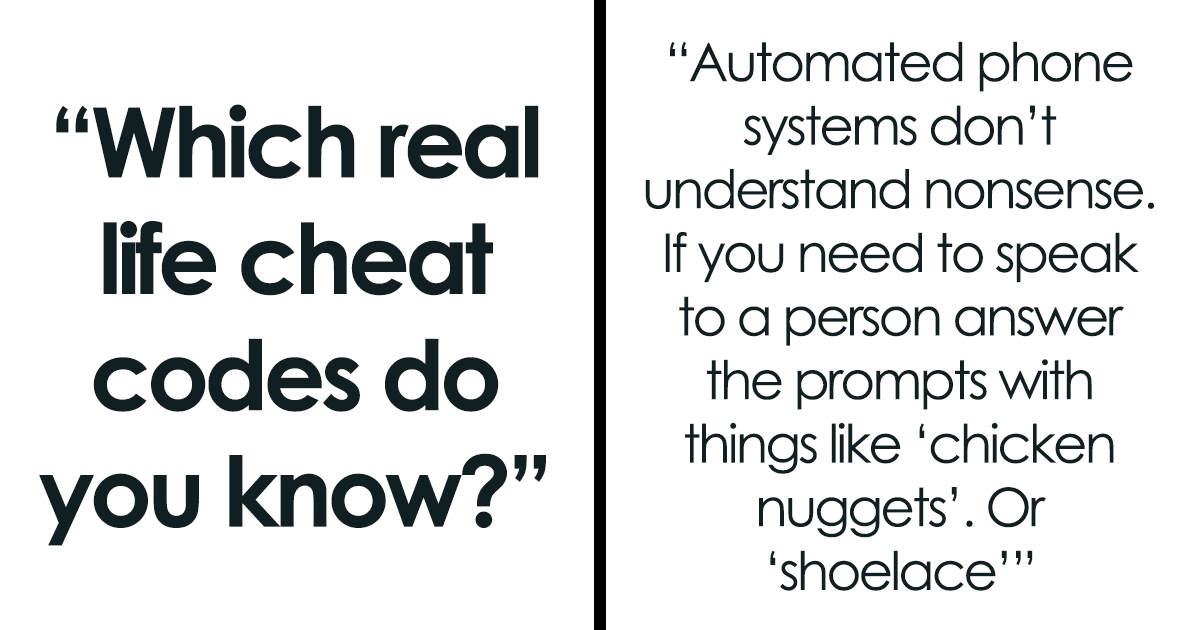
Real life does not come with a glowing “Enter Code” screen, which is rude. Still, there are practical shortcuts hiding in plain sight: tiny habits, smart questions, free public resources, and low-effort systems that make adulthood feel slightly less like assembling furniture without instructions.
These real-life cheat codes are not magic tricks. They are simple strategies that save time, protect money, reduce stress, improve health, and make everyday problems easier to handle. Think of them as legal, ethical, non-suspicious power-ups for being a functioning human.
Below are 33 answers to the question: “Which real-life cheat codes do you know?” Use them generously. Share them with friends. Pretend you discovered them after years of ancient wisdom training if that makes you feel cooler.
33 Real-Life Cheat Codes That Actually Work
1. Use a Library Card Like a Secret Membership Pass
A library card is one of the most underrated life hacks in America. Beyond books, many public libraries offer free access to e-books, audiobooks, language-learning tools, research databases, career resources, museum passes, movies, classes, and sometimes even tools or equipment. It is basically a subscription bundle, except your wallet does not cry afterward.
2. Automate Your Savings Before You See the Money
The easiest money to save is the money you never mentally spent. Set up an automatic transfer from checking to savings on payday. Even a small amount builds momentum. This works because it removes the “Should I save this?” debate, and frankly, your brain loves losing that debate to takeout.
3. Keep a “Do Not Buy Yet” List
Before buying something nonessential, put it on a list and wait 24 to 72 hours. If you still want it later, buy it with less guilt. If you forget it exists, congratulations: you just defeated impulse shopping with one note app and mild procrastination.
4. Search for Coupons Before Checking Out
Before buying online, search the store name plus “coupon,” “discount code,” or “free shipping.” Also compare prices across retailers and check return policies. The checkout page is not the finish line; it is where your inner detective should briefly put on sunglasses.
5. Pay With a Credit Card Online When Possible
For online purchases, a credit card can offer stronger dispute options than many other payment methods. The cheat code is simple: use credit responsibly, pay the balance in full, and keep receipts. Do not turn this into “free money cosplay.” Interest rates are not your friend.
6. Take Photos of Important Documents
Keep secure digital copies of your ID, insurance cards, prescriptions, travel documents, receipts, warranties, and serial numbers. Store them safely with password protection. When something breaks, disappears, or demands paperwork, you will look organized instead of whispering, “I definitely put it somewhere.”
7. Use USPS Informed Delivery
USPS Informed Delivery can show previews of incoming letter-sized mail and package tracking information. It is especially useful when you are expecting important documents, checks, cards, or packages. It is like checking your mailbox without pants, which is technology at its finest.
8. Keep Tires Properly Inflated
Proper tire pressure improves safety, helps tires last longer, and can save fuel. Check the sticker inside your driver-side door or your vehicle manual for the correct pressure. Do not rely only on the tire sidewall number. That number is not your car’s personal recommendation; it is more like the tire’s emotional boundary.
9. Use the “One-Touch Rule” for Clutter
When you pick something up, put it where it belongs instead of moving it to another temporary pile. Mail goes to the desk, trash goes to the bin, dishes go to the sink. This prevents your home from becoming a museum of “I’ll deal with it later.”
10. Keep a Donation Box Open at All Times
Place a box in a closet or laundry area for items you no longer use. When it fills, donate it. This turns decluttering into a background process instead of a dramatic weekend event starring you, twelve garbage bags, and emotional negotiations with a hoodie from 2016.
11. Set Calendar Reminders for Boring Adult Tasks
Schedule reminders for oil changes, filter replacements, bill due dates, subscription renewals, insurance reviews, and annual appointments. Your calendar is not just for meetings; it is a personal assistant that never judges your laundry chair.
12. Cancel Subscriptions From Your Bank Statement
Once a month, scan your card or bank statement for recurring charges. Cancel what you no longer use. Many people forget subscriptions because the charge is small. That is the trap. Tiny monthly leaks can sink a perfectly good budget boat.
13. Make a Budget Without Making It Weird
A budget is simply a plan for where your money goes. Track income, fixed bills, flexible spending, debt payments, and savings. You do not need a 47-tab spreadsheet named “Financial Destiny.” Start with a simple monthly overview and adjust as life happens.
14. Use the “Future Me” Test
Before making a decision, ask: “Will future me thank me for this?” This works for sleep, spending, cleaning, exercise, emails, and not texting your ex at 11:48 p.m. Future you deserves fewer problems and more clean socks.
15. Drink Water Before You Decide You Are Falling Apart
Fatigue, headaches, crankiness, and poor concentration can sometimes be helped by hydration. Water is not a personality, but it is useful. Keep a bottle nearby, drink with meals, and increase fluids during hot weather, exercise, or illness.
16. Walk for 10 Minutes After Meals
A short walk after eating can help digestion, support blood sugar control, improve mood, and add movement to your day without requiring a dramatic fitness montage. You do not need to become a marathoner. Just walk around the block like a mysterious person with errands.
17. Use the Two-Minute Rule
If a task takes less than two minutes, do it immediately. Reply to the simple email, hang the coat, rinse the cup, schedule the appointment. This rule prevents small tasks from forming a tiny administrative goblin army.
18. Start Tasks With the “Ugly First Draft”
When writing, planning, cleaning, studying, or creating, give yourself permission to do the first version badly. A messy start beats a perfect idea trapped in your head. The first draft’s job is not to be impressive; it is to exist.
19. Ask Better Questions to Get Better Help
Instead of saying, “Can you help me?” try, “I’m trying to do X, I’ve already tried Y, and I’m stuck at Z.” This makes it easier for others to give useful advice. Specific questions are like GPS coordinates for helpful people.
20. Use “Because” When Making Requests
People respond better when they understand the reason behind a request. “Could you send that by 3 p.m. because I need to include it in the client update?” is more effective than “Send this ASAP,” which sounds like a fire alarm wearing business casual.
21. Compliment People Specifically
Specific praise feels more genuine than generic praise. Instead of “Good job,” say, “Your explanation made that complicated topic easy to understand.” This works at work, at home, and anywhere humans enjoy being seen as more than furniture with opinions.
22. Learn Names and Use Them Naturally
Remembering someone’s name is a social cheat code. Repeat it once after meeting them, connect it to a visual cue, or write it down later. Do not overuse it like a suspicious salesperson, but do use it enough to show respect.
23. Keep a “Brag Document”
Save your wins, projects, compliments, results, metrics, and solved problems in one document. When performance reviews, job applications, or promotion conversations appear, you will have evidence ready. Memory is unreliable; documentation has receipts.
24. Send Follow-Up Emails After Important Conversations
After a meeting, interview, call, or agreement, send a short recap: what was discussed, what happens next, and who owns each task. This prevents confusion and makes you look organized even if your desktop has 83 icons named “final-final.”
25. Use Templates for Repeated Messages
If you type the same kind of email often, create a template. Customer replies, meeting notes, polite declines, invoices, follow-ups, and introductions can all be templated. Customize the details, but stop rebuilding the same sentence house brick by brick.
26. Pause Before Replying When Emotional
When you are angry, tired, embarrassed, or defensive, write the response but do not send it. Wait. Re-read it later. Many disasters can be avoided by letting your first emotional draft retire quietly in the drafts folder where it belongs.
27. Use Deep Breathing as a Reset Button
Slow breathing can help calm the body’s stress response. Try inhaling for five seconds, holding briefly, and exhaling slowly. It sounds too simple to work, which is exactly why people forget it. Your nervous system does not require a TED Talk; sometimes it just needs oxygen with manners.
28. Put Your Phone Across the Room at Bedtime
Sleep improves when bedtime is boring in the best possible way. Charge your phone away from the bed, dim lights, and keep a consistent sleep schedule when possible. Your pillow should not be a command center for global news, memes, and one more video.
29. Make Healthy Choices Ridiculously Easy
Place fruit where you can see it. Put walking shoes by the door. Prep simple meals. Keep water nearby. Hide snacks you want to eat less often. Willpower is nice, but environment design is stronger and far less dramatic.
30. Learn Basic Food Safety Rules
Refrigerate leftovers promptly, use shallow containers for large batches, keep the fridge cold, separate raw meat from ready-to-eat foods, and reheat leftovers thoroughly. “It smells fine” is not a food safety strategy; it is a gamble wearing pajamas.
31. Report and Block Spam Calls
Do not engage with suspicious robocalls or texts. Block the number, avoid clicking links, and report scams through official channels when appropriate. If a message creates panic and demands immediate payment, pause. Scammers hate pauses. Pauses ruin their little theater production.
32. Lower Energy Costs With Small Home Habits
Use fans wisely, seal drafts, change HVAC filters, adjust thermostats when away or asleep, wash with full loads, and unplug energy vampires when practical. Home energy savings rarely come from one heroic move; they come from many small habits quietly high-fiving each other.
33. Ask for the Discount, Upgrade, or Exception Politely
You will not always get a yes, but polite asking works more often than silent wishing. Ask if there is a student, military, senior, loyalty, first-time customer, annual payment, price-match, or open-box discount. Be kind. The person helping you is not a vending machine with a name tag.
Why These Real-Life Cheat Codes Work
The best life hacks work because they reduce friction. They make good choices easier, bad choices harder, and confusing choices clearer. A savings transfer removes the need for monthly discipline. A calendar reminder replaces memory. A template saves mental energy. A walk after meals turns exercise into a normal part of the day instead of a heroic identity crisis.
Another reason these practical life tips work is that they compound. One coupon code may save five dollars. One automated transfer may save twenty. One follow-up email may prevent a misunderstanding. None of these feels earth-shattering in the moment, but repeated over months and years, they create a smoother life with fewer emergencies.
Real-life cheat codes also protect attention. Modern life constantly asks you to make decisions: what to buy, what to eat, when to reply, whether to exercise, where the receipt went, why the printer has chosen violence. Systems reduce decision fatigue. When the default is already smart, you do not need to perform a motivational speech every morning just to behave like a responsible mammal.
Real-Life Cheat Codes by Category
Money Cheat Codes
Automate savings, review subscriptions, compare prices, use coupon codes, keep receipts, and ask for discounts. These money-saving tips are boring in the way seat belts are boring: not glamorous, but extremely useful when life hits the brakes.
Productivity Cheat Codes
Use templates, the two-minute rule, follow-up emails, calendar reminders, and ugly first drafts. Productivity is not about becoming a robot. It is about giving your human brain fewer chances to wander into the pantry and forget what it was doing.
Health Cheat Codes
Walk more, hydrate, sleep consistently, breathe slowly, and make healthy choices visible and easy. Health does not always require a dramatic transformation. Sometimes it starts with a water bottle, a ten-minute walk, and going to bed before your phone convinces you to research medieval soup recipes.
Social Cheat Codes
Use names, give specific compliments, explain your reasons, ask clear questions, and pause before emotional replies. Communication improves when people feel respected, informed, and not attacked by a paragraph written in caffeine and rage.
Common Mistakes People Make With Life Hacks
Trying Too Many at Once
The fastest way to abandon good advice is to turn it into a 19-step lifestyle overhaul. Pick two or three cheat codes and use them for a week. Once they feel natural, add another. Small changes survive longer than dramatic reinventions announced at midnight.
Confusing Simple With Useless
Many of the best strategies sound obvious. Drink water. Write things down. Ask politely. Walk. Save automatically. The problem is not that these ideas are too simple; it is that people underestimate simple things done consistently.
Expecting Instant Results
A real-life cheat code is not a magic wand. It is a lever. Pull it repeatedly and life gets easier. Use it once and forget it exists, and nothing much happens. Consistency is where the secret sauce lives, probably next to the missing phone charger.
of Real-Life Experience: What These Cheat Codes Feel Like in Practice
The funny thing about real-life cheat codes is that most of them do not feel impressive while you are doing them. Nobody applauds when you label a folder, put leftovers in shallow containers, or cancel a subscription for an app you opened twice and then emotionally abandoned. Yet these tiny actions create the kind of life where fewer things explode at once.
One of the most useful experiences is learning that organization is not a personality trait. It is a setup. People who seem naturally organized often just rely on systems. They put reminders on calendars because they know memory is unreliable. They save receipts because returns happen. They write follow-up emails because conversations evaporate faster than coffee on a Monday morning. The lesson is comforting: you do not need to become a different person. You need a better default.
Money cheat codes work the same way. Many people try to budget by promising themselves they will “be better” next month. That is not a plan; that is a motivational poster wearing a tiny hat. A better approach is automatic saving, spending alerts, and a monthly review of subscriptions. You discover that money management is less about heroic self-control and more about making fewer avoidable mistakes. The moment you cancel three forgotten subscriptions, you feel like you found money in an old jacket, except the jacket was your bank account and it had been quietly leaking.
Health cheat codes are also surprisingly humble. A ten-minute walk after lunch may not look like fitness, but it can change the rhythm of a day. Drinking water before reaching for another snack or another coffee can prevent the classic afternoon slump where your brain starts buffering like bad Wi-Fi. Going to bed with your phone across the room feels annoying for two nights, then suddenly you remember what sleep is supposed to feel like. It is not glamorous, but neither is being tired enough to argue with a toaster.
The social cheat codes may be the most powerful. Saying someone’s name, giving a specific compliment, asking a clear question, or explaining the reason behind a request can change the tone of an entire interaction. People are usually more helpful when they feel respected rather than rushed. A polite question can unlock discounts, extensions, upgrades, explanations, and second chances. The trick is to ask like a human, not like a customer-service dragon guarding a pile of expired coupons.
Perhaps the biggest experience-based lesson is this: real-life cheat codes do not remove effort; they reduce unnecessary effort. You still have to work, clean, communicate, save, exercise, cook, and make decisions. But you can stop making everything harder than it needs to be. You can design your environment, automate repeated tasks, protect your attention, and treat future you like someone worth helping.
That is the real cheat code: build a life where the easiest option is often the better option. Put the shoes by the door. Keep the water bottle nearby. Save the email template. Use the library card. Ask the question. Take the walk. Write it down. None of these will make you invincible, but together they make daily life smoother, cheaper, calmer, and slightly less absurd. In adulthood, that counts as a superpower.
Conclusion
Real-life cheat codes are not about outsmarting everyone else. They are about making your own life easier with practical systems, better habits, and small decisions that compound over time. Whether you are saving money, improving productivity, protecting your health, managing stress, or communicating more clearly, the best hacks are the ones you can actually repeat.
Start with one cheat code today. Automate a small transfer. Cancel one subscription. Take one walk. Save one template. Ask one polite question. Your future self may not send flowers, but they will definitely appreciate the reduced chaos.
Editorial Note
This article synthesizes practical consumer, health, productivity, financial, safety, and household guidance from reputable U.S.-based public agencies, medical organizations, consumer protection resources, and everyday experience. It is written for general informational purposes and should be adapted to personal circumstances.











