
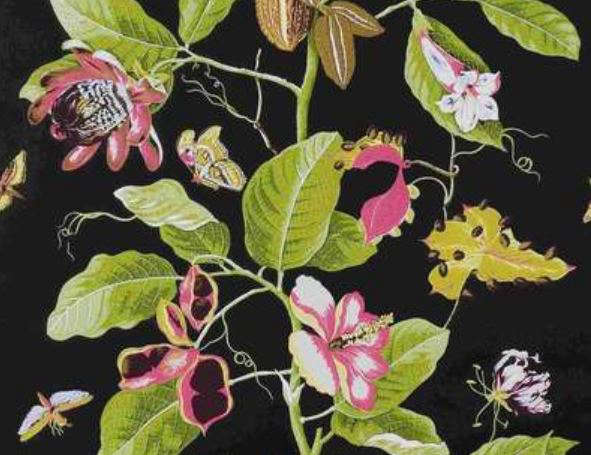
Some wallpapers politely improve a room. NAKAI W4864007 Pierre Frey Wallpaper arrives with considerably bigger ambitions. Created under the Boussac brand of Maison Pierre Frey, this black botanical wallcovering turns an ordinary wall into a theatrical garden filled with curling stems, exotic fruit, and imaginative flowers.
The pattern is bold without becoming chaotic, historical without looking trapped in a museum, and luxurious without demanding that every chair in the room wear a powdered wig. Its dark ground creates drama, while the animated botanical forms keep the design lively and surprisingly versatile.
However, Nakai is not a casual peel-and-stick paper intended for a hurried Saturday makeover. It is a hand screen-printed, paper-backed, untrimmed wallcovering that rewards planning, accurate measuring, and skilled installation. This guide examines its design, technical specifications, decorating possibilities, installation requirements, and the real experience of living with such an expressive wallpaper.
What Is NAKAI W4864007 Wallpaper?
NAKAI W4864007 is the black colorway of the Nakai wallpaper design from Boussac, part of the Pierre Frey group. The composition centers on a fantastical stem from which flowers and exotic fruits appear to grow. Rather than copying a real plant with scientific seriousness, the pattern takes a more imaginative approach. It feels botanical in the same way a storybook jungle feels botanical: recognizable, decorative, and slightly magical.
The black background gives the design much of its personality. It creates depth behind the foliage and allows the lighter botanical elements to appear crisp and animated. From across a room, the wallpaper reads as a sophisticated allover pattern. At closer range, individual blossoms, leaves, and fruits reveal themselves, giving the surface a layered quality that rewards a second look.
Although the design belongs to the broader floral and botanical category, it avoids the sugary sweetness sometimes associated with traditional flowered wallpaper. The dark palette, graphic movement, and hand-printed character give it a confident, collected appearance. It can suit a historic home, an eclectic apartment, or a contemporary space that needs something more interesting than another blank greige wall.
Key Specifications at a Glance
| Product name | Nakai Wallpaper |
|---|---|
| Product code | W4864007 |
| Colorway | Black |
| Brand | Boussac by Pierre Frey |
| Collection | Faune & Flore Wallpapers |
| Material | Paper backing |
| Printing method | Hand screen-printed |
| Roll length | 4.57 meters, approximately 5 yards |
| Width | 69 centimeters, approximately 27.16 inches |
| Vertical repeat | 59 centimeters, approximately 23.22 inches |
| Pattern match | Straight repeat |
| Surface weight | Approximately 187 grams per square meter |
| Trimming | Supplied untrimmed |
| Application | Paste the paper; double-cut installation |
| Care | Spongeable with moderate lightfastness |
Why the Hand Screen-Printed Finish Matters
Screen printing creates an effect that is difficult to duplicate with ordinary high-volume digital production. During the process, color is pushed through a prepared screen onto the paper. Separate colors generally require separate printing stages, building the design layer by layer.
This method gives Nakai a physical and visual character that can feel closer to printed artwork than generic wall covering. The pigments appear deliberate, and the pattern retains a crafted quality even when repeated across a large wall. Small variations are part of the appeal rather than evidence that a robot at the factory had a difficult afternoon.
Hand printing also explains why careful handling is important. The surface should not be aggressively scrubbed, soaked, or rubbed with harsh cleaning products. Gentle maintenance protects the printed details and helps the wallpaper age gracefully.
Understanding the Black Colorway
Dark, but Not Flat
Black wallpaper can sound intimidating, especially in a smaller room. In practice, a patterned black background often behaves differently from solid black paint. Nakai’s botanical forms break up the dark field and create movement, preventing the surface from reading as a heavy, uninterrupted block.
The design can make a room feel more intimate and architectural. In spaces used primarily in the evening, such as dining rooms, bars, libraries, and guest bedrooms, the dark background becomes especially atmospheric under warm lamplight.
A Flexible Neutral
Black is also more adaptable than it first appears. Nakai can sit comfortably beside warm oak, walnut, dark-stained antiques, brass, bronze, cane, lacquer, marble, and natural linen. It can support strong colors such as ochre, emerald, rust, crimson, and cobalt, or it can be calmed with cream, ivory, taupe, and pale wood.
The simplest decorating strategy is to identify two or three tones within the pattern and repeat them elsewhere. A light motif color might reappear in curtains or upholstery, while black can be echoed through picture frames, lighting, or furniture legs. This makes the wallpaper feel connected to the room rather than pasted onto it as a decorative afterthought.
Best Rooms for NAKAI W4864007 Pierre Frey Wallpaper
Dining Rooms
Nakai is particularly persuasive in a dining room. The exotic fruit and floral imagery naturally suits a space associated with food and entertaining, while the black background becomes rich and dramatic after sunset. Pair it with a substantial wood table, upholstered chairs, and dimmable lighting for a room that feels formal without becoming stiff.
Powder Rooms
A powder room offers enough enclosed wall space for the pattern to create an immersive effect. Because it lacks the constant steam of a frequently used shower room, it is also a more practical setting for a paper-backed wallcovering. Add a sculptural mirror and restrained lighting; the wallpaper already has plenty to say.
Bedrooms
Installed behind a bed, the wallpaper can replace the visual role of a large artwork or oversized headboard. Crisp white bedding offers high contrast, while oatmeal linen and muted velvet create a softer, cocooning mood. Keeping the remaining textiles relatively simple allows the botanical repeat to remain the star.
Libraries and Home Offices
The pattern works beautifully with bookshelves, vintage desks, leather chairs, and shaded lamps. It can give a new home office the depth and personality of a room that has evolved over generationseven when the “valuable archive” on the shelf is mostly tax paperwork and old charging cables.
Entryways
An entry hall is an ideal place to make a strong first impression. Nakai can establish an eclectic, artistic point of view immediately. It is especially effective above traditional paneling or wainscoting, where the smaller covered area reduces material requirements while retaining plenty of visual impact.
Full-Room Installation or Accent Wall?
A feature wall is the safer option when the surrounding room is open, minimal, or already contains several competing patterns. The wall behind a bed, console, dining table, or built-in cabinet usually provides enough uninterrupted surface for the repeat to read clearly.
Covering all four walls creates a richer and more immersive result. This approach is often most successful in rooms with a clear purpose and defined boundaries, including powder rooms, dining rooms, studies, and compact bedrooms. An allover installation can actually feel more intentional than a single accent wall because the pattern becomes part of the room’s architecture.
Before deciding, inspect the amount of exposed wall area. Numerous doors, large windows, tall cabinets, and oversized artwork can interrupt the pattern. If only narrow fragments will remain visible, placing Nakai on one prominent wall or above molding may show the design more effectively.
How to Coordinate Furniture and Accessories
Use Solid Upholstery
Since Nakai already supplies plenty of botanical detail, solid upholstery usually creates the best balance. Velvet, linen, wool, and leather add texture without competing for attention. A subtle stripe or tiny geometric pattern may also work, but introducing several large florals can make the room feel as though the greenhouse has staged a coup.
Mix Old and New
The wallpaper has enough historical character to complement antiques, yet its graphic black ground can sharpen contemporary furniture. Try pairing it with a traditional chest and a modern lamp, or a streamlined sofa and an ornate gilded mirror. Contrasting periods prevent the scheme from feeling like a showroom assembled from one catalog page.
Choose Warm Metals
Brass and aged bronze bring warmth to the black background. They work well for picture lights, cabinet hardware, sconces, mirror frames, and curtain rods. Polished nickel can create a cooler, cleaner appearance, while matte black produces a quieter and more unified result.
Keep Artwork Selective
Artwork can be hung over patterned wallpaper, but spacing and framing matter. Large pieces with simple compositions generally perform better than collections of tiny, highly detailed images. Wide mats and substantial frames create a visual pause between the art and the surrounding print.
Measuring and Ordering the Right Quantity
Wallpaper should not be ordered solely by dividing the wall area by the roll area. Pattern matching creates waste, and Nakai has a 59-centimeter straight repeat. Every strip must be cut so the motif aligns horizontally with the neighboring strip.
Begin by measuring the full height and width of each wall. Do not automatically subtract every door and window; offcuts may not fit elsewhere because of pattern placement. Determine how many full-width strips each wall requires, then calculate how many properly matched strips can be cut from one 4.57-meter roll.
Ceiling height has a major effect on yield. For example, a theoretical roll area may look sufficient on paper, but once each strip is adjusted to the repeat and trimming allowance, the usable number of drops can decrease considerably.
Order all rolls together and confirm that they come from the same production batch whenever possible. Hand-printed wallcoverings may show subtle color differences between print runs. Purchasing an extra roll is generally wiser than discovering halfway through the final wall that optimism is not an approved decorating material.
Installation Requirements
NAKAI W4864007 is a traditional paper-backed product. The adhesive is applied to the wallpaper rather than directly to the wall. The manufacturer specifies a maximum soaking time of approximately two minutes, which makes consistent timing important.
The wallpaper is also supplied untrimmed. Its edges must be prepared and joined using the designated trim and alignment marks. A double-cut method is required, in which overlapping edges are cut together to produce an accurate seam.
These characteristics make professional installation strongly advisable. An experienced wallpaper installer can assess the wall, plan the placement of the motif, manage the short soaking period, trim the paper correctly, and prevent paste from drying on the printed surface.
Wall Preparation
The wall should be clean, dry, stable, smooth, and evenly absorbent. Repair cracks, nail holes, peeling paint, and visible ridges before installation. Glossy paint may require sanding or a suitable primer, while new drywall typically needs sealing.
Dark wallpaper can emphasize poor seams, bumps, and pale gaps between strips. A correctly colored primer may help reduce visible contrast at the joins, but the installer should select a compatible product for the wall and adhesive system.
Pattern Placement
Before cutting the first strip, decide where the most recognizable part of the motif should appear. Centering the design behind a bed, vanity, mantel, or dining table can make the installation feel custom planned. Starting without considering placement may leave the best flower disappearing into a corner or hiding behind a wardrobe.
Care and Long-Term Maintenance
Nakai is described as spongeable, meaning light surface marks may be addressed with a clean, damp sponge. Use minimal moisture and blot gently rather than scrubbing. Strong chemicals, abrasive pads, and enthusiastic soaking should be avoided.
The wallpaper has moderate lightfastness, so prolonged direct sunlight may gradually affect its color. In bright rooms, window treatments or ultraviolet-filtering glazing can reduce exposure. This is particularly worth considering on walls opposite large south- or west-facing windows.
Keep spare material stored flat or carefully rolled in a clean, dry place. A leftover section from the same batch can be useful if a localized repair becomes necessary later.
What the Experience of Choosing and Living With Nakai Is Really Like
The experience usually begins with a sample. Online photographs can communicate the general pattern, but they cannot fully reproduce the relationship between the black ground, the printed colors, the paper surface, and the light in a particular room. A sample placed on the wall for several days often changes the decision from “That looks dramatic” to either “This is exactly right” or “Perhaps the entire breakfast nook does not need to resemble an enchanted jungle.” Both conclusions are useful.
During daylight, Nakai tends to show its graphic side. The contrast between the background and botanical forms feels clear and energetic. As natural light fades and lamps take over, the same pattern becomes deeper and more atmospheric. This day-to-night transformation is one of the wallpaper’s most rewarding qualities. It prevents the room from feeling visually static.
The planning stage demands more attention than choosing ordinary paint. Furniture placement, molding, wall openings, repeat alignment, and the intended focal point all matter. That extra work can initially feel inconvenient, but it encourages a more coherent room. Instead of buying unrelated pieces and hoping they become friends, the homeowner begins selecting lighting, fabric, art, and furniture in response to a strong central idea.
Installation day is less forgiving. Paper-backed, untrimmed, hand screen-printed wallpaper is not the ideal training ground for someone whose previous decorating achievement was successfully applying a laptop sticker. A skilled installer brings order to the process: checking rolls, marking reference lines, cutting matched drops, controlling soaking times, and protecting the face of the paper from paste.
Once installed, the immediate reaction is often surprise at how much more dimensional the design appears across a full wall. A small sample shows color and detail, but repetition creates rhythm. Stems travel through the room, flowers appear at different eye levels, and formerly empty wall areas become active parts of the interior.
Living with the pattern also changes how other objects are perceived. A plain cream chair looks more deliberate against it. A brass lamp becomes warmer. Dark wood gains depth, while pale stone and white trim appear cleaner. Even familiar possessions may seem newly edited because the wallpaper provides a richer backdrop.
There is, however, a practical learning curve. Owners become more careful when moving furniture near the wall and less casual about allowing wet umbrellas, sticky hands, or overwatered plants to make contact with the paper. This does not mean the room must become untouchable. It simply means treating the surface as decorative craftsmanship rather than disposable wall filler.
The strongest long-term benefit is personality. Nakai does not disappear politely into the background, and that is precisely its purpose. It makes a room memorable. Guests notice it, conversations begin around it, and the space feels intentionally designed rather than merely furnished. For people who enjoy expressive interiors, that emotional impact can justify the added cost and installation effort.
Is NAKAI W4864007 Worth Considering?
NAKAI W4864007 Pierre Frey Wallpaper is best suited to homeowners and designers who want craftsmanship, botanical imagery, and dramatic contrast in one design. Its hand screen-printed finish, unusual fantasy foliage, and black ground give it a distinctive identity that inexpensive mass-market papers rarely achieve.
It is not the most convenient wallpaper to install, nor is it intended for rooms that require a highly washable surface. The untrimmed edges, short soaking time, straight pattern repeat, and double-cut installation all require expertise. Yet those same characteristics are closely connected to its crafted appearance.
Used thoughtfully, Nakai can transform a dining room, bedroom, entryway, powder room, or library into a layered interior with genuine presence. Pair it with restrained furnishings, warm materials, good lighting, and enough uninterrupted wall area to let the pattern breathe. The result can feel sophisticated, slightly mysterious, and far more personal than another cautious coat of off-white paint.
Note: Request a current sample and technical sheet before ordering. Product availability, batch characteristics, pricing, and regional installation recommendations may change. A professional installer should confirm quantities, wall preparation, adhesive choice, trimming, and hanging procedures for the specific project.











