
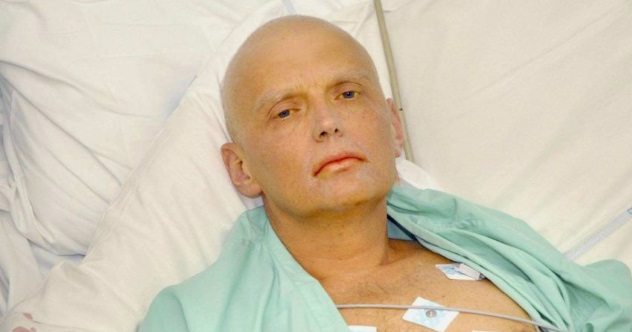
Alexander Litvinenko’s death sounds like a plot rejected from a spy novel for being too theatrical: a former Russian security officer, a London hotel, a pot of green tea, and a microscopic radioactive poison. Yet the events were real, extensively investigated, and far more disturbing than most fiction.
Litvinenko died in London on November 23, 2006, three weeks after ingesting polonium-210. British investigators concluded that former Russian operatives Andrey Lugovoy and Dmitry Kovtun carried out the poisoning. A public inquiry later found that the operation was probably directed by Russia’s Federal Security Service and probably approved at the highest levels of the Russian government. Russia and the accused men denied responsibility.
The case became a chilling combination of assassination, nuclear science, public-health anxiety, and international politics. These 10 dark facts explain why the death of Alexander Litvinenko remains one of the most extraordinary murders of the modern era.
Who Was Alexander Litvinenko?
Alexander Litvinenko was born in the Soviet Union in 1962 and served in Soviet and Russian security organizations, including the KGB’s successor, the FSB. Much of his work concerned counterterrorism and organized crime rather than the tuxedo-and-gadget espionage familiar from movies.
His relationship with the Russian security establishment collapsed publicly in 1998. Litvinenko and several colleagues claimed that their superiors had ordered them to assassinate businessman Boris Berezovsky. Russian authorities rejected the accusation. Litvinenko was arrested, acquitted in one proceeding, arrested again, and eventually fled Russia with his family.
He reached Britain in 2000, received asylum in 2001, and later became a British citizen. In exile, he wrote books, criticized President Vladimir Putin, assisted Western intelligence, and provided information about alleged connections between Russian officials and organized crime. Those activities placed him in dangerous company long before radioactive tea entered the story.
10 Dark Facts About Alexander Litvinenko’s Death
1. He Had Publicly Broken With the Security Service That Trained Him
Litvinenko was not simply a political commentator criticizing Russia from a comfortable distance. He was a former insider who had worked inside the country’s security system and then publicly accused elements of that system of serious crimes.
Once settled in London, he became increasingly outspoken. His books alleged that Russian security agencies had been involved in acts of terrorism and political violence. He also accused Putin of responsibility for the October 2006 murder of investigative journalist Anna Politkovskaya, an allegation the Kremlin denied.
The official British inquiry considered several possible motives for killing Litvinenko. It found that his work for British intelligence, assistance to Spanish investigations into Russian organized crime, association with prominent Kremlin opponents, and repeated attacks on the FSB and Putin may all have contributed. His past had not merely followed him to Britain; investigators concluded it probably provided the motive for his murder.
2. He Became a British Citizen Shortly Before He Was Poisoned
Litvinenko received British citizenship in October 2006, only weeks before his death. The timing added a grim symbolic dimension to the assassination. He had formally joined the country that had given his family refuge, yet he was killed in its capital almost immediately afterward.
The murder therefore became more than a dispute involving Russian exiles. Britain was investigating the death of one of its own citizens, allegedly caused by foreign operatives using radioactive material on British soil. That transformed an already sensational case into a prolonged diplomatic crisis between London and Moscow.
It also carried an intimidating message. If the official findings are correct, citizenship, borders, and political asylum did not place Litvinenko beyond the reach of those who wanted him silenced.
3. The Murder Weapon Was a Rare Radioactive Isotope
Litvinenko was killed with polonium-210, an intensely radioactive isotope that emits alpha particles. Outside the body, alpha radiation cannot penetrate intact skin. Once polonium is swallowed, inhaled, or introduced through a wound, however, it can irradiate internal organs and damage living tissue at extremely close range.
This combination made polonium-210 especially sinister. A person could carry it in a suitable container without immediately collapsing, and ordinary radiation detectors might miss it because alpha particles travel only a short distance. Inside a victim, the same material becomes devastating.
Polonium-210 is found naturally in tiny quantities, but obtaining a dose suitable for assassination requires specialized access and expertise. The British inquiry concluded that the polonium used to kill Litvinenko had probably come from a reactor in Russia. In other words, the periodic table became part of the evidence trail.
4. Investigators Found Evidence of an Earlier Failed Attempt
The fatal poisoning on November 1 was apparently not the first effort. Scientific analysis of Litvinenko’s hair indicated that he had ingested a much smaller quantity of polonium-210 several days earlier.
The inquiry connected that dose to an October 16 meeting with Lugovoy and Kovtun at a London office. Radioactive contamination was detected at locations associated with their movements during that trip. Investigators concluded that the pair had probably attempted to poison Litvinenko then but failed to deliver enough material.
The failed attempt makes the case darker because it suggests planning, persistence, and access to more than one quantity of polonium. This was not portrayed by investigators as an impulsive act or an accidental spill. The alleged killers seemingly returned to London and tried again.
5. The Fatal Dose Was Delivered in an Ordinary Pot of Tea
On November 1, 2006, Litvinenko met Lugovoy and Kovtun in the Pine Bar at London’s Millennium Hotel. During the meeting, he drank green tea poured from a ceramic teapot. Investigators later detected extremely high levels of polonium contamination inside that pot, particularly around its spout.
The British inquiry concluded that Litvinenko ingested the fatal dose while drinking the tea. A familiar act of hospitality had been converted into a delivery system for radioactive poison. Green tea has rarely been asked to carry so much geopolitical baggage.
The method also allowed the poisoning to occur in public without an obvious attack. There was no gunshot, struggle, or dramatic confrontation. Litvinenko left the hotel and continued with his day, unaware that an invisible process had already begun inside his body.
6. The Poison Left a Radioactive Trail Across London and Beyond
Polonium-210 may be difficult to detect with routine equipment, but it is not tidy. Once specialists began testing the places connected to the suspects, they discovered contamination at hotels, offices, restaurants, apartments, vehicles, and aircraft.
Traces were associated with rooms occupied by Lugovoy and Kovtun and with routes they had traveled. British Airways planes used between Moscow and London were examined after radioactive material was detected, prompting the airline and health authorities to contact potentially affected passengers.
The trail became a kind of invisible travel diary. Investigators could compare radioactive readings with hotel records, flight information, security footage, and witness accounts. The very material chosen for secrecy ultimately mapped portions of the operation with remarkable clarity.
7. Doctors Initially Struggled to Identify What Was Killing Him
Litvinenko began suffering severe vomiting and diarrhea on the evening of November 1. He was admitted to a hospital on November 3, but his symptoms did not immediately reveal the cause. Doctors considered food poisoning and later suspected thallium, another poison associated with hair loss and damage to internal organs.
His condition deteriorated as his bone marrow failed, his hair fell out, and multiple organs came under attack. Conventional checks for radiation did not provide an easy answer because polonium-210 primarily emits alpha particles rather than the penetrating gamma radiation commonly detected by standard instruments.
Specialized analysis eventually identified the isotope, but confirmation came only around the time of his death. The case demonstrated an unpleasant medical reality: treating poisoning becomes extraordinarily difficult when clinicians do not know what substance they are fighting.
8. Litvinenko Helped Investigators From His Hospital Bed
Although critically ill, Litvinenko spoke to police and described his meetings and movements on the day he became sick. Those statements allowed detectives to reconstruct a timeline before forensic testing revealed the full radioactive trail.
He told investigators that he believed Putin had ordered his killing. A separate deathbed statement released after his death also directly accused the Russian president. The Kremlin dismissed the accusation as nonsense and denied involvement.
Litvinenko’s allegations were not, by themselves, proof of who carried out the murder. Nevertheless, his cooperation gave investigators immediate leads, including the identities of people he had met. In a bleak sense, he became a witness in his own murder investigation.
9. His Autopsy Was Considered Exceptionally Dangerous
Because Litvinenko’s body contained a substantial amount of radioactive material, the postmortem examination required extraordinary precautions. The pathologists used protective clothing, specialized equipment, and carefully controlled procedures to reduce the risk of contamination.
The examination was later described during the public inquiry as one of the most dangerous autopsies undertaken in the Western world. This was not theatrical language invented for television. The medical team was handling the body of a man whose tissues had become a source of radiation exposure.
The circumstances also complicated funeral arrangements and raised concerns for health workers, hotel employees, passengers, and members of the public. Authorities screened people who might have encountered contaminated locations, although they repeatedly emphasized that the overall risk to the wider public was low.
10. Official Findings Did Not Produce a Criminal Trial
British prosecutors sought to charge Lugovoy and later Kovtun with Litvinenko’s murder. Russia refused to extradite them, citing its constitutional prohibition against extraditing Russian citizens. Both men denied killing Litvinenko, and neither faced a British criminal trial.
The 2016 British public inquiry reached a strong conclusion based on forensic evidence, witness testimony, intelligence material, and the suspects’ movements. It found that Lugovoy and Kovtun deliberately poisoned Litvinenko and were probably acting under FSB direction. The inquiry further concluded that the operation was probably approved by FSB director Nikolai Patrushev and President Putin. Russia rejected the inquiry as politically motivated.
In 2021, the European Court of Human Rights separately ruled that Russia was responsible for Litvinenko’s assassination. It found beyond reasonable doubt that Lugovoy and Kovtun carried out the killing and concluded that they had acted as agents of the Russian state. Russia disputed that judgment as well.
The unresolved darkness is legal rather than forensic: investigators assembled an unusually detailed account, yet no courtroom ever tested the murder charges against the accused men.
Why the Alexander Litvinenko Case Still Matters
The death of Alexander Litvinenko changed how governments and the public thought about political violence abroad. It showed that an assassination could be designed not merely to eliminate a target but also to frighten other defectors, critics, and intelligence sources.
The radioactive method made the killing conspicuous once discovered. Polonium-210 was expensive, difficult to obtain, and scientifically distinctive. That encouraged investigators to consider whether the choice was meant to communicate power as much as conceal responsibility.
The case also foreshadowed later debates about the safety of Russian defectors and dissidents living outside Russia. It remains a reference point whenever another Kremlin critic suffers a suspicious poisoning or death. Comparisons must be made carefully because every case has different evidence, but Litvinenko’s murder demonstrated that seemingly improbable methods cannot be dismissed simply because they resemble fiction.
Experiences and Lessons From the Litvinenko Investigation
The Litvinenko case offers more than a list of disturbing facts. It reveals what patients, families, doctors, investigators, hospitality workers, and ordinary travelers can experience when an unfamiliar weapon enters a crowded city.
The Patient’s Experience: Knowing Something Is Wrong but Not What
One of the most frightening aspects of rare poisoning is the gap between becoming ill and receiving an explanation. Litvinenko believed he had been deliberately poisoned, but belief did not immediately tell doctors which tests to order or which treatment might help.
His symptoms initially overlapped with more familiar conditions. That ambiguity is common in toxic exposures: nausea, weakness, diarrhea, and dehydration do not arrive wearing little name tags. As his condition worsened, uncertainty became part of the suffering. His experience illustrates why a patient’s occupational history, political risks, recent meetings, and personal suspicions may matter when routine explanations fail.
The Medical Experience: Solving a Puzzle Against the Clock
The clinicians faced a substance almost no hospital expects to encounter in an assassination victim. Initial radiation checks did not settle the mystery because the isotope’s alpha emissions were difficult to detect externally. Specialists eventually recognized a weak signal and conducted more appropriate testing.
This experience underscores the value of collaboration between emergency physicians, toxicologists, radiation experts, public-health agencies, and specialized laboratories. No single department held the entire answer. By the time the poison was identified, however, the internal damage was overwhelming. Scientific success arrived tragically late for the patient, even though it became essential for protecting others and investigating the crime.
The Public Experience: Invisible Contamination and Visible Fear
Hotel guests, airline passengers, restaurant workers, medical staff, and London residents suddenly learned that radioactive traces had been found in ordinary places. Because radiation cannot be seen or smelled, uncertainty easily expands faster than the actual hazard.
Public-health officials therefore had to perform two jobs at once: locate people who might require testing and prevent unnecessary panic among those at negligible risk. The distinction between contamination and dangerous exposure became crucial. Detectable material on a surface did not automatically mean that everyone nearby had received a harmful dose.
The Investigative Experience: Small Traces Can Tell a Large Story
For detectives, the contamination was both a hazard and an extraordinary form of evidence. Each reading could be compared with flight manifests, hotel stays, meeting schedules, receipts, and security-camera footage. The reconstructed trail strengthened the conclusion that Litvinenko had been deliberately targeted.
The experience also showed how an exotic weapon can create unexpected weaknesses for its users. Polonium was stealthy inside a drink but troublesome on hands, clothing, hotel furniture, and transportation. The alleged operation left no conventional bullet or blade, yet it scattered forensic markers across multiple countries.
The Family’s Experience: A Long Search for Accountability
For Marina Litvinenko and her family, the death was followed by years of legal proceedings, diplomatic arguments, and public scrutiny. The British inquiry did not publish its final report until 2016, nearly a decade after the murder. The European human-rights judgment followed in 2021.
The family’s experience demonstrates that establishing an authoritative account is not the same as obtaining a criminal conviction. Public inquiries and international courts can document responsibility, preserve evidence, and challenge official denials. They cannot always place suspects in a courtroom.
That gap is perhaps the case’s darkest lesson. Modern forensic science can identify an isotope, reconstruct journeys, and expose a carefully planned operation. Political borders and state protection can still prevent an ordinary murder trial.
Conclusion
The Alexander Litvinenko poisoning was horrifying not only because of the weapon but because of what the operation represented. A former security officer who had become a British citizen was allegedly pursued across national borders, poisoned in a public hotel, and left to die slowly while doctors searched for an explanation.
The inquiry findings, radioactive trail, failed first attempt, contaminated teapot, and absence of a criminal trial form a story darker than any single conspiracy theory. This case did not remain mysterious because investigators lacked evidence. It remained unresolved in court because the principal suspects stayed beyond the reach of British prosecutors.
Nearly two decades later, Litvinenko’s death remains a warning about the vulnerability of exiles, the global reach of state-linked violence, and the uncomfortable distance between discovering the truth and delivering justice.











