
Some days begin with spilled coffee, a crowded inbox, and the uncomfortable suspicion that every traffic light has formed a personal alliance against you. On days like those, dramatic life advice may be unnecessary. What you may actually need is a tiny duckling with oversized feet attempting to climb onto a rock.
Cute duck pictures combine several reliable ingredients for instant cheer: fluffy feathers, round faces, determined waddles, peaceful water, and frequent moments of completely unplanned comedy. Ducklings are not merely decorative balls of fuzz, either. Research involving mallard ducklings suggests that they can recognize abstract relationships such as whether objects are the same or different. In other words, the little bird struggling to step over a twig may be thinking more sophisticated thoughts than its expression suggests.
The following collection celebrates adorable ducklings, devoted mother ducks, spectacular splashes, synchronized swimming, and the occasional bird that appears to have forgotten how dignity works. These 30 heart-warming pictures of cute ducks may not solve every problem, but they can make the next few minutes considerably more pleasant.
Fluffy Ducklings Taking Their First Steps
1. The Duckling Wearing a Leaf as a Hat
A yellow duckling stands beneath a fallen green leaf that has landed perfectly on its head. The bird looks neither surprised nor embarrassed. Instead, it appears to be confidently launching the season’s newest wetland fashion trend. Paris has berets; the pond has biodegradable headwear.
2. A Family Walking in Perfect Single File
A mother duck leads seven ducklings across a grassy path, each baby carefully following the fluffy backside ahead. The line is so orderly that it could make an airport boarding process jealous. One duckling at the end appears slightly distracted, but every family has one member who stops to inspect a dandelion.
3. Three Sleepy Ducklings Sharing One Warm Spot
Three tiny ducklings have formed a feathery pile beside the water. Their eyes are closed, their heads are resting on one another, and nobody seems concerned about personal space. It is the duckling version of a group nap, except significantly quieter and with fewer arguments about who stole the blanket.
4. The First Brave Step Into the Pond
One duckling stands at the edge of the water while its siblings are already swimming. Its toes are touching the surface, but the rest of its body seems to be reconsidering the entire concept of aquatic life. The photograph captures that universal moment between “I can do this” and “Perhaps tomorrow.”
5. A Duckling Discovering Its Own Reflection
A curious baby duck leans toward perfectly still water and meets another equally curious duck. The resulting stare appears deeply philosophical. Is this a friend, a rival, or simply the most attractive bird at the pond? The reflection remains silent, mysterious, and extremely well groomed.
6. Tiny Feet, Enormous Determination
This picture shows a duckling attempting to climb a rock approximately three times its height. Its wings are spread, one foot is searching for traction, and failure is clearly not being considered. The image is a motivational poster created by nature, only with more fuzz and less corporate vocabulary.
7. The Duckling Who Found a Flower
A small yellow duck stands beside a daisy, gently examining the petals with its bill. The flower is almost as tall as the bird, making the meeting resemble a formal introduction between two cheerful representatives of spring. Neither has prepared a speech, but both photograph beautifully.
8. A Brood Resting on a Fallen Log
Several ducklings sit shoulder to shoulder on a log above the pond. Their webbed feet dangle over the edge while one sibling appears to be falling asleep upright. The scene looks like a group of old friends relaxing on a park bench after an exhausting morning of swimming in circles.
9. One Yellow Duckling in a Brown-and-Gold Family
Among a group of darker ducklings sits one bright yellow baby that immediately catches the eye. The color difference does not matter to the family, which remains closely packed together. It is a gentle picture of belonging without matching, proof that every group photograph benefits from one naturally luminous personality.
10. A Duckling Sheltered Beneath Its Mother’s Wing
Only a tiny face and one curious eye are visible beneath the mother duck’s feathers. The baby is warm, protected, and apparently still interested in monitoring outside activity. The photograph captures security in its simplest form: a safe place, a caring parent, and enough room to peek at the world.
Funny Duck Pictures With Serious Mood-Lifting Power
11. The Classic Tail-in-the-Air Feeding Pose
A mallard tips forward to feed beneath the surface, leaving its tail and orange feet pointing toward the sky. This behavior is known as dabbling, but visually it resembles a duck losing an argument with gravity. Mallards commonly feed near the surface rather than diving completely underwater.
12. A Duck Running Across the Water
With wings open and feet slapping the pond, this duck appears to be sprinting across the surface. Water sprays in every direction while its expression remains surprisingly focused. The result is part wildlife photograph, part action movie, and part reminder that graceful takeoffs sometimes begin with enthusiastic chaos.
13. The Duckling That Sneezed at Exactly the Wrong Moment
One duckling has its eyes closed and bill open while the surrounding birds look perfectly composed. Whether it sneezed, chirped, or objected to the photographer is unclear. What matters is that the picture has captured the avian equivalent of being the only person blinking in a family portrait.
14. A Duck Photobombing a Peaceful Landscape
The camera was apparently aimed at a quiet lake and glowing sunset when an inquisitive duck entered the foreground. Its face fills much of the frame, while the scenic background has been demoted to supporting actor. The bird seems pleased with this creative decision, and frankly, it was correct.
15. Ducklings Attempting Synchronized Swimming
Five ducklings paddle in different directions while maintaining the confidence of a professional swimming team. One turns left, two continue forward, and another appears to have misplaced the schedule. Their formation may not win an Olympic medal, but it earns maximum points for fluffiness and improvisation.
16. The Dramatic Full-Body Shake
A white duck has been photographed halfway through shaking water from its feathers. Its wings are blurred, droplets surround its body, and every feather seems temporarily independent. Anyone who has attempted a serious hairstyle on a humid day will recognize the emotional complexity of this image.
17. A Duckling Standing in a Tiny Puddle
The puddle is barely large enough to cover the duckling’s feet, yet the bird appears delighted with its private swimming facility. It splashes enthusiastically, proving that happiness is not always connected to square footage. Sometimes a shallow puddle and a complete absence of adult responsibilities are enough.
18. The Wing Stretch That Became a Victory Pose
A young duck rises tall and spreads both wings after climbing onto a stone. The pose looks less like stretching and more like celebrating a major athletic achievement. Considering the stone was slippery and the duck has very short legs, perhaps applause is entirely appropriate.
19. A Duck Sleeping With Its Bill Tucked Away
This resting duck has turned its head backward and tucked its bill into its shoulder feathers, creating a nearly perfect feathered circle. Ducks may sleep in this curled position, sometimes even while floating. The result is peaceful, compact, and far more elegant than most humans look during an afternoon nap.
20. Runner Ducks Marching Like a Tiny Patrol
A group of upright runner ducks travels across a garden in determined formation. Their long bodies and rapid steps make them look like a committee that has just discovered an urgent shortage of snacks. It is impossible to know their destination, but they clearly expect everyone else to move aside.
Heart-Warming Duck Families and Remarkable Moments
21. A Mother Duck Guiding Her Babies Through Mist
Morning fog rests over the water as a mother duck leads her brood across the pond. The adults and ducklings form dark silhouettes against the silver surface. The picture feels calm enough to lower the volume of an entire day, proving that nature sometimes begins its best scenes before breakfast.
22. Ducklings Nuzzling in the Reeds
Two baby ducks sit close together among green reeds while one rests its head against the other. The gesture is small, but the photograph feels deeply affectionate. It is the sort of image that makes viewers briefly forgive the internet for everything else it has done.
23. A Wood Duck Family Leaving Its Tree Nest
A wood duckling peers from a tree cavity while its mother waits below. Wood ducks nest in trees, and their newly hatched young climb to the entrance before jumping toward the ground. The leap may look alarming, but it is a natural beginning for these remarkably adventurous babies.
24. The Mother Duck With an Astonishingly Large Brood
One adult merganser swims ahead of a crowd of ducklings so large that counting them becomes a serious project. Female ducks sometimes care for young that are not all their own, producing enormous groups known as crèches. Famous photographs have documented mergansers leading dozens of babies at once.
25. A Duckling Riding on Its Mother’s Back
A sleepy duckling has climbed onto its mother while the pair moves across the water. The baby receives transportation, warmth, and an excellent view without contributing anything to the paddling. It is an impressive arrangement and perhaps the most accurate visual representation of traveling with small children.
26. A Mallard Couple Reflected in Golden Water
A male and female mallard glide side by side through evening light. The drake’s green head and the female’s patterned brown feathers shimmer in the reflection. Mallards are among the most familiar and widespread ducks, but a beautiful photograph can make even a common park resident look like wetland royalty.
27. Ducklings Following Their Mother Through Rain
Raindrops cover the pond as a determined family continues forward. The babies stay close behind their mother, leaving a collection of tiny ripples. Their feathers may be damp and their route uncertain, but the group keeps moving togethera surprisingly useful lesson delivered by birds weighing less than a sandwich.
28. A Rescued Duckling Rejoining Its Family
A small duckling climbs from a safe pair of human hands and hurries toward its waiting mother. Similar rescues occur when babies become trapped in drains, yards, or other urban obstacles. The most satisfying part of the image is not the rescue itself but the immediate reunion and the family’s return to normal duck business.
29. A Family Silhouetted Against the Sunset
A mother duck and her babies cross a glowing orange path on the water. Their outlines are simple, but the spacing between them tells the whole story: one leader, several followers, and a final duckling paddling hard to catch up. Even sunsets apparently have a designated late arrival.
30. The Duckling Looking Directly Into the Camera
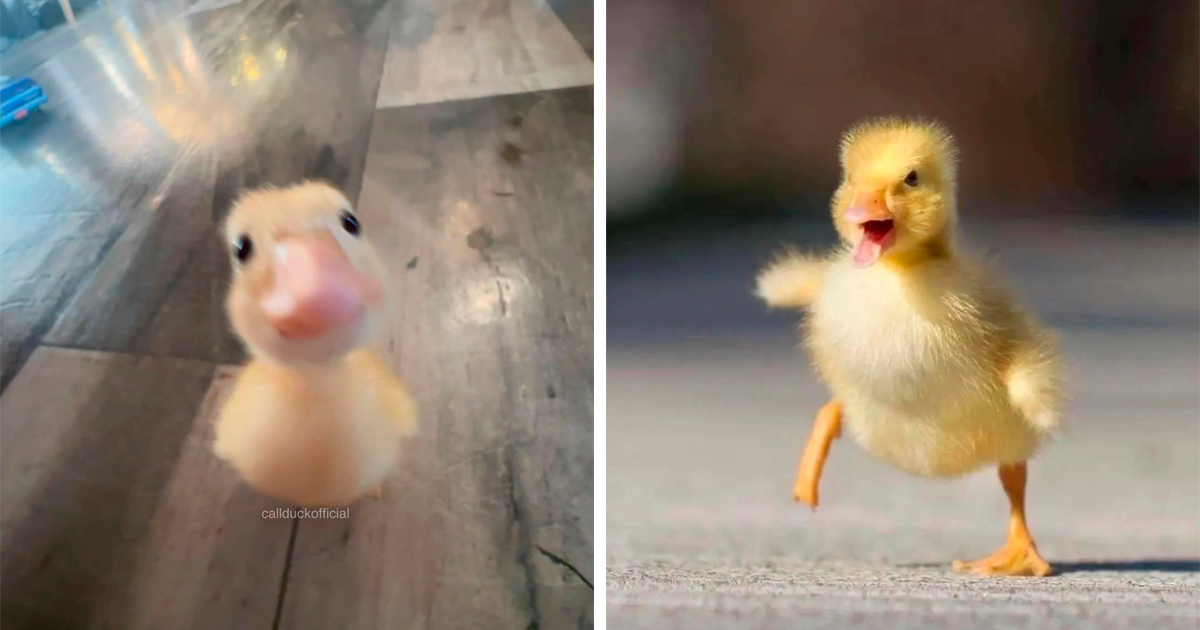
The final picture features one fluffy duckling staring straight at the lens with bright eyes and a slightly tilted head. There is no action, dramatic lighting, or complicated compositionjust pure curiosity. It feels like the bird has paused to ask whether your day is improving. At this point, the honest answer should be yes.
Why Cute Duck Pictures Can Feel So Comforting
Young animals often have features people instinctively find appealing: round heads, large eyes, soft bodies, and movements that are energetic but not always coordinated. Ducklings deliver all of these qualities while also floating peacefully through landscapes associated with calm, open space, and natural light.
Positive animal imagery cannot replace professional care for serious stress or mental health concerns. However, it can offer a brief emotional reset. Research examining animal-related media and the human-animal bond suggests that animals can inspire positive emotional responses. Separate research has found that taking photographs can increase attention to an experience and, in many situations, enhance enjoyment.
A duck photograph also gives the mind one manageable thing to notice. Instead of processing twenty unfinished tasks, you observe the ripple behind a duckling, the pattern of feathers, or the ridiculous angle of two orange feet. That moment of focused attention may be brief, but brief moments can still interrupt a difficult mood.
An Experience Worth Trying: A Slow Morning at the Duck Pond
Looking through cute duck pictures online is enjoyable, but observing ducks in person adds sound, movement, weather, and a refreshing amount of unpredictability. A local pond visit does not need to become an ambitious wildlife expedition. Choose a quiet morning, bring a camera or phone with a useful zoom, and allow enough time that you are not rushing from one photograph to the next.
At first, the pond may seem almost empty. After several minutes, small details begin to appear. A ripple moves against the wind. A brown female mallard emerges from the reeds. A duckling makes a soft call that is answered from beneath an overhanging branch. Once your attention slows down, the entire setting becomes more active.
The funniest moments usually happen without warning. A duck may attempt to climb onto a log, slide backward, and immediately pretend that sliding was the original plan. Two ducklings may chase the same insect before becoming distracted by completely different objects. An adult may rise from the water, flap its wings magnificently, and then return to feeding with its tail pointing straight upward.
Photography can make the experience more engaging because it encourages closer observation. You begin noticing reflections, expressions, feather patterns, and the way morning light changes across the water. Research on recreational photo-taking suggests that the act of taking pictures may increase attention and enjoyment, particularly when the camera helps a person become more involved in what is happening.
The camera should never become more important than the birds. Do not surround a family, block its route to water, chase ducklings, approach nests, or make noises to force a reaction. Wildlife photography guidance from the National Park Service emphasizes that the animal comes first. If a bird changes its natural behavior because of your presence, you are probably too close. A telephoto lens or optical zoom creates better photographs without turning the session into an unwanted duck interview.
Feeding should also be avoided where local rules prohibit it. Human food can encourage unnatural behavior, dependence, crowding, and poor nutrition. The best experience comes from watching ducks find their own natural foods, whether they are dabbling at the surface, grazing near the shore, or diving below the water.
After taking a few photographs, lower the camera for several minutes. Listen to the water, watch the family groups, and notice how quickly ducklings alternate between intense activity and sudden sleep. The strongest memory may not be the sharpest image. It may be a tiny bird crossing a bright reflection, a mother calling her scattered brood together, or the unexpected feeling that the morning has become much lighter.
Later, selecting one or two favorite pictures can extend the experience. A duckling photograph can become a phone background, a cheerful message to a friend, or a reminder that even an ordinary neighborhood pond contains stories worth noticing. The objective is not to collect hundreds of nearly identical images. It is to return with one moment that still makes you smile.
Cute Ducks, Healthy Wetlands, and Responsible Appreciation
The landscapes behind beautiful duck pictures matter as much as the birds themselves. Ducks depend on wetlands, ponds, marshes, rivers, forests, and coastal habitats for nesting, feeding, migration, and shelter. Wetland conservation also supports many other animals while contributing to water storage, filtration, and healthier ecosystems.
Enjoying adorable duckling pictures can therefore become more than a quick mood boost. It can inspire visits to wildlife refuges, support for habitat protection, more responsible photography, and greater respect for urban birds navigating human-made environments. The most heart-warming photograph is one captured without frightening, feeding, handling, or separating the animals in it.












