
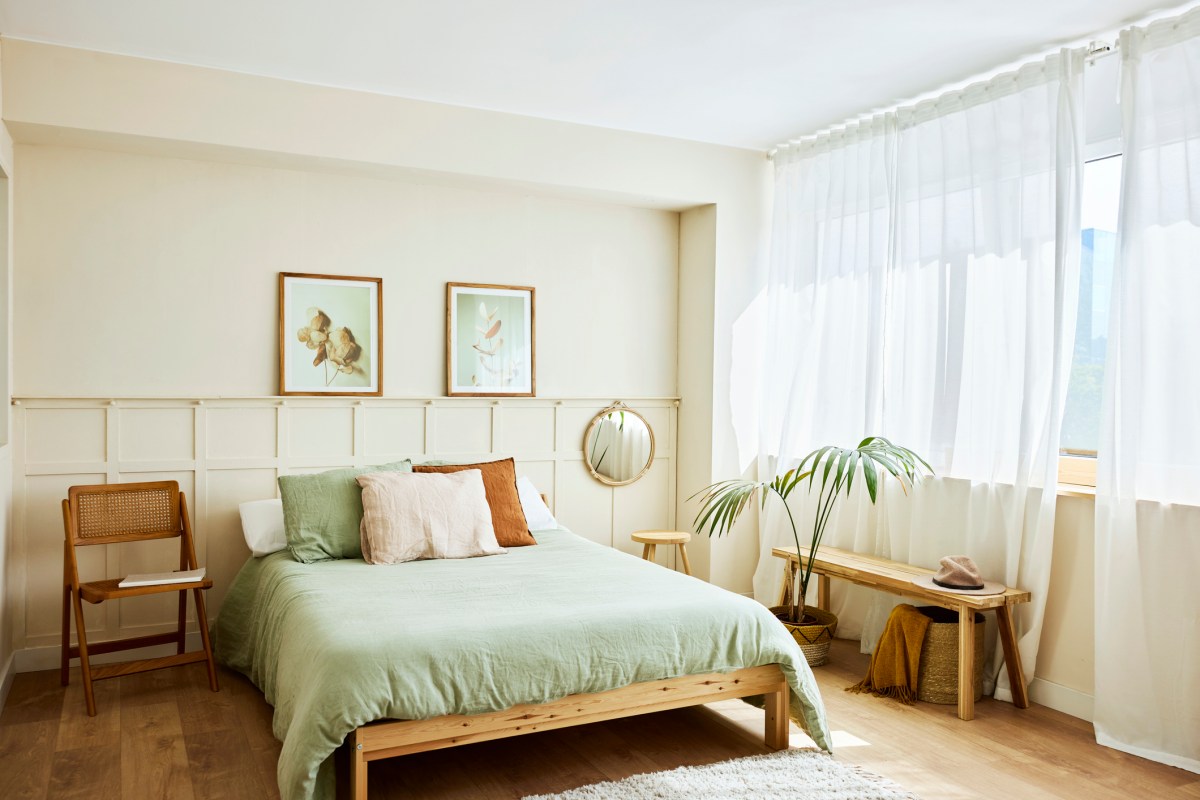
A minimalist bedroom should feel like a deep breath, not an empty furniture showroom where sitting on the bed requires written permission. The goal is not to eliminate everything you own or decorate exclusively in shades of oatmeal. It is to create a peaceful bedroom in which every object supports rest, comfort, or daily function.
Good minimalist bedroom design combines visual simplicity with practical systems. A pale color palette may look lovely, but it will not produce serenity when yesterday’s jeans are draped over a chair, charging cords are staging a rebellion, and six decorative pillows must be relocated every night. The room needs to be easy to use and equally easy to reset.
The following six minimalist bedroom ideas address both sides of the challenge: creating a calm retreat and keeping it that way after real life inevitably wanders in carrying laundry.
1. Begin With Purpose, Not Paint
Before choosing a bed frame or debating whether “warm ivory” is meaningfully different from “soft cream,” decide what your bedroom is supposed to do. Ideally, its primary purposes are sleeping, getting dressed, and perhaps reading or relaxing. Activities that introduce paperwork, exercise equipment, unopened packages, or unfinished household projects can quickly turn the room into a storage unit with a mattress.
Remove objects that do not support the room
Start by examining every visible item and asking three questions:
- Do I use this in the bedroom?
- Does it make the room more comfortable or meaningful?
- Would it function better somewhere else?
A chair used for reading earns its floor space. A chair used exclusively as an alternative closet does not. The same principle applies to stacks of documents, unused exercise machines, empty shopping bags, abandoned water glasses, and decorative objects you no longer notice.
Separate unwanted items into categories for donating, relocating, recycling, or discarding. Avoid moving everything into the closet without making decisions. That is not decluttering; it is simply teaching the clutter to hide.
Preserve intentional empty space
Minimalism depends as much on what you leave open as what you add. Clear a portion of each nightstand, maintain an unobstructed path around the bed, and allow at least one wall or corner to remain visually quiet. Empty space gives your eyes somewhere to rest and helps important pieces, such as the bed or a favorite artwork, stand out.
Design publications and professional organizers consistently recommend editing bedroom contents, reducing unnecessary furniture, and keeping frequently cluttered surfaces under control.
2. Choose a Restrained but Warm Color Palette
Minimalist bedrooms are often associated with white, beige, and gray, but neutrality is not a legal requirement. Muted blue, dusty green, clay, mushroom brown, and softened charcoal can also create a serene space. What matters is limiting visual competition.
Use a simple three-color formula
Select one primary color for walls and large surfaces, one supporting tone for furniture and textiles, and one darker or richer accent. For example, you might combine warm white walls, natural oak furniture, and muted olive accents. Another room could use pale taupe, creamy bedding, and matte black details.
This approach creates cohesion without forcing every object to match. It also makes future purchases easier. When a fluorescent-purple lamp appears during late-night online shopping, your established palette can gently escort it back out of the cart.
Prevent neutral colors from becoming boring
A calm room still needs depth. Layer materials rather than filling the space with patterns and ornaments. Linen bedding, a wool rug, woven shades, unfinished wood, boucle upholstery, or a softly plastered wall can add character while preserving a quiet appearance.
Mixing warm and cool neutrals also keeps the room from looking flat. Pair a cool gray wall with honey-toned wood, or soften crisp white bedding with a camel-colored throw. Use patterns sparingly and choose designs with a limited color range.
Design guidance from Better Homes & Gardens, The Spruce, House Beautiful, and Architectural Digest emphasizes layered neutrals, natural textures, restrained accents, and warm materials as ways to make minimalist bedrooms feel inviting rather than sterile.
3. Let the Bed Anchor the Room
The bed is usually the largest object in a bedroom, so allow it to become the clear focal point. A room feels more organized when the eye immediately understands where to look instead of bouncing among an oversized dresser, three lamps, a television, a gallery wall, and a bench holding seventeen throw blankets.
Select a visually simple bed
Platform beds, upholstered frames with clean edges, and simple wood designs work especially well in minimalist bedrooms. A lower bed can make a small room feel more open, while a slightly taller frame may provide valuable storage underneath.
Choose a headboard that complements the proportions of the wall. A large wall does not necessarily need ten small decorations. One substantial headboard or a single oversized artwork can create a stronger and calmer composition.
Edit the bedding
Comfort remains more important than appearances, but a serene bed does not require a mountain range of pillows. Start with good sheets, sleeping pillows, and one duvet, quilt, or comforter. Add a single lumbar pillow or folded throw for color and texture if desired.
Using fewer bedding layers shortens the morning routine and reduces the nightly ritual of moving decorative cushions to the floor. Minimalist beds can still feel luxurious when the fabrics are comfortable, the colors coordinate, and the bedding is loosely arranged rather than assembled like a military inspection.
Improve the furniture layout
Center the bed where the room allows and preserve clear walking routes between doors, closets, windows, and storage. In a compact bedroom, consider floating nightstands, wall-mounted sconces, or a dresser that doubles as a bedside table. Furniture that performs two jobs reduces both cost and visual clutter.
HGTV, Dwell, The Spruce, and Good Housekeeping highlight simple bed frames, floating surfaces, integrated storage, and multifunctional furniture as useful tools for maintaining an airy bedroom.
4. Use Closed Storage to Control Visual Noise
Minimalism does not mean owning nothing. It means giving what you own a logical home. Open shelves can look attractive when carefully styled, but they also expose every book, bottle, charger, souvenir, and mysterious cable to constant view.
Prioritize drawers, doors, and containers
Choose nightstands with drawers rather than tiny pedestal tables when you need bedside storage. Use a dresser that can hold clothing without crowding its top. In an open closet, install matching bins or opaque boxes to simplify the view.
Under-bed storage is useful for seasonal bedding, infrequently worn clothes, and luggage, provided it is contained in properly sized drawers or lidded bins. Random cardboard boxes shoved underneath the mattress tend to become archaeological sites.
Keep the objects you use regularly within easy reach. Store occasional items higher, lower, or farther away. This simple hierarchy prevents daily essentials from mixing with holiday sweaters, sentimental letters, and the instruction manual for a fan you no longer own.
Create a landing place for predictable clutter
Observe where disorder naturally appears. If clothes collect beside the bed, add a hamper there. If watches, keys, and glasses scatter across the nightstand, use a small tray. If tomorrow’s outfit hangs from a doorknob, install one attractive wall hook.
The best storage system works with your habits instead of demanding that you become a completely different person every evening. A well-positioned hamper beats an ambitious organizational system located three rooms away.
Hide cords and electronics
Use cable clips, a bedside charging drawer, or a cord cover to manage electronic clutter. Remove unused devices and chargers. When possible, keep televisions and work equipment outside the bedroom or conceal them when the workday ends.
Closed storage, properly fitted under-bed containers, and furniture with drawers are widely recommended for reducing visual noise while keeping everyday necessities accessible.
5. Design the Room Around Light, Darkness, and Comfort
A minimalist bedroom should not merely look calm in a photograph. It should support the physical conditions needed for rest. Sleep guidance commonly recommends a bedroom that is dark, quiet, comfortable, and relatively cool. Light exposure, disruptive noise, uncomfortable bedding, and excessive heat can interfere with the sleep environment.
Layer your lighting
Use at least two types of light. Ambient lighting provides general visibility, while task lighting supports reading, dressing, or other focused activities. Wall-mounted sconces and pendants save nightstand space, especially in a small minimalist bedroom.
Install dimmers where practical and use warm, gentle lighting during the evening. Bright overhead light is helpful while cleaning or getting dressed, but it can feel about as relaxing as a convenience store at midnight when you are trying to wind down.
Control outside light
Blackout curtains, lined shades, or an eye mask can help when streetlights or early morning sun enter the room. Check for light from alarm clocks, televisions, charging docks, and other electronics. Even tiny LEDs can seem surprisingly enthusiastic in an otherwise dark room.
Reduce unwanted sound
Soft furnishings can reduce the harshness of sound in a sparsely decorated room. Curtains, rugs, upholstered headboards, and fabric shades help prevent excessive echo. For unpredictable outside noise, a fan, sound machine, or other steady background sound may be useful.
Make comfort the nonnegotiable layer
Minimalism should never require an uncomfortable mattress, scratchy sheets, or inadequate window coverings. Spend first on the things that directly affect rest. Decorative accessories can wait; your spine has already submitted its request.
6. Build a Maintenance Routine That Takes Minutes
A minimalist bedroom can be created during one energetic weekend. Maintaining it requires small, repeatable habits. Without those habits, clear surfaces slowly attract cups, mail, receipts, skin-care products, clothing, and books until the room once again resembles a lost-and-found department.
Complete a five-minute nightly reset
Before getting into bed, return stray objects to their homes, place dirty clothes in the hamper, hang or fold clean clothing, clear drinking glasses, and plug devices into their designated charging area. The goal is not perfection. It is to prevent several small messes from joining forces.
Make the bed in the morning
Making the bed creates an immediate sense of order and discourages you from using it as a temporary storage surface. Keep the process simple enough to complete quickly. If making the bed requires fifteen decorative steps, the bedding system may be auditioning for a job it does not need.
Use a one-in, one-out guideline
When you bring in a new decorative item, bedding set, or piece of clothing, consider removing something from the same category. This prevents storage areas from gradually exceeding their limits.
Schedule brief weekly and seasonal reviews
Once a week, clear the nightstands, empty the hamper, dust visible surfaces, and return misplaced items. Every few months, review clothing, bedding, books, and miscellaneous belongings. Donate usable items that no longer fit your life and discard anything damaged beyond repair.
Apartment Therapy, Real Simple, The Spruce, Martha Stewart, and Good Housekeeping repeatedly recommend short resets, regular decluttering sessions, and systems based on existing routines rather than occasional marathon cleanups.
An Experience-Based Minimalist Bedroom Reset
A realistic minimalist bedroom transformation rarely begins with buying new furniture. It usually begins with discovering how much unrelated stuff has quietly migrated into the room. During a typical first-day reset, the largest visible improvement often comes from removing objects rather than rearranging them.
Imagine starting with a bedroom containing an exercise bike used mainly as a jacket rack, two crowded nightstands, several shopping bags, extra bedding, stacks of unread books, and a collection of decorative pillows that require their own evening relocation program. The room may not be dirty, yet it still feels restless because nearly every surface is occupied.
Week One: The room looks surprisingly larger
The first stage is editing. The shopping bags leave, the bike moves to a place where it can either be used or honestly ignored, and most of the nightstand contents are sorted into drawers. Books are reduced to the one currently being read. Extra blankets move into a labeled under-bed container.
No walls have been painted, and no expensive purchases have been made, yet the room immediately feels larger. This is an important lesson: perceived space depends partly on how much of the floor, furniture, and walls remain visible.
Week Two: Small inconveniences become obvious
Once the room is clear, weak points in the system appear. Clothes still land on the floor because the hamper is hidden inside a crowded closet. A phone charger keeps slipping behind the bed. Skin-care products return to the nightstand because their assigned storage is inconvenient.
The solution is not stricter discipline. It is better placement. The hamper moves near the usual changing area, a cable clip secures the charger, and a shallow drawer organizer gives personal items an accessible home. The bedroom becomes easier to maintain because the storage follows actual behavior.
Week Three: The room begins to feel personal again
After aggressive decluttering, some people briefly worry that the bedroom feels too bare. This is when intentional personality can return. One meaningful photograph, a textured throw, a favorite ceramic lamp, or a healthy plant can provide warmth without recreating clutter.
The key is choosing objects deliberately. Instead of decorating every empty surface, select a few items that deserve attention. A single large artwork may create more impact than a dozen unrelated pieces. One attractive lamp can contribute more atmosphere than several small accessories that mainly collect dust.
Week Four: Maintenance becomes almost automatic
By the fourth week, the five-minute evening reset usually requires less effort because fewer objects are available to become misplaced. The bed is easier to make with simplified bedding. The nightstand remains usable because it contains only a lamp, a book, water, and perhaps one personal object.
The most valuable result is not an immaculate room. It is the absence of daily friction. You can find what you need, walk through the room without navigating obstacles, and wake up without immediately seeing unfinished tasks.
This experience also reveals that sustainable minimalism is flexible. During a busy week, the room may become untidy. The difference is that it can be restored quickly because every object has a destination. Serenity comes not from maintaining a flawless photograph but from creating a space that can recover gracefully from real life.
Conclusion
The best minimalist bedroom ideas combine restraint with comfort. Begin by removing objects that do not belong, establish a cohesive color palette, let the bed anchor the design, use closed storage, improve the sleep environment, and maintain the room through brief routines.
You do not need an enormous budget, an empty closet, or a lifelong devotion to beige. You need thoughtful choices and systems simple enough to survive a tired Tuesday evening. When the room contains less visual noise and every essential has a home, it becomes easier to rest, reset, and begin the next day without first negotiating with a pile of laundry.
Editorial note: This article synthesizes sleep and bedroom-design guidance from 13 reputable U.S.-based resources: the CDC, Mayo Clinic, Sleep Foundation, Architectural Digest, The Spruce, Better Homes & Gardens, HGTV, Apartment Therapy, Real Simple, Martha Stewart, Good Housekeeping, House Beautiful, and Dwell. Persistent sleep difficulties should be discussed with a qualified health care professional.












