
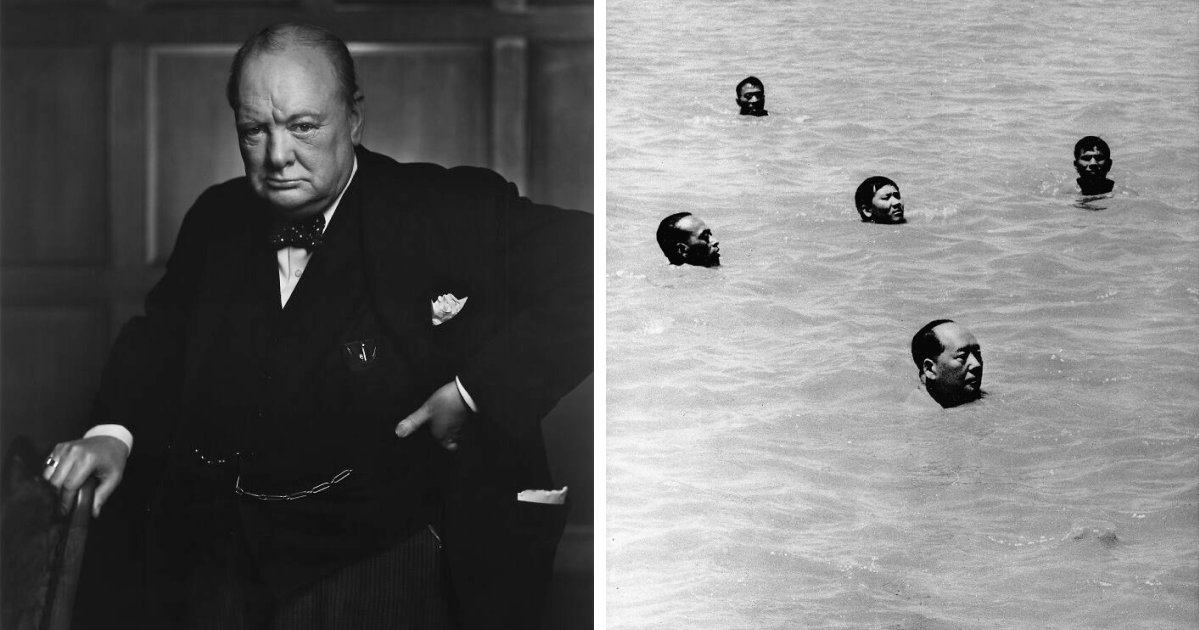
The 20th century did not politely introduce itself. It arrived with airplanes, world wars, radio, rockets, civil rights marches, nuclear anxiety, pop culture explosions, and cameras that seemed to be everywhere history was sweating. Long before everyone had a phone in their pocket, photographers carried heavy gear into battlefields, protests, laboratories, streets, refugee camps, stadiums, and moon missions. Their images became more than pictures. They became proof.
This article explores 46 of the most important images of the 20th century, not as a museum checklist, but as a visual journey through human achievement, moral failure, courage, grief, invention, resistance, and the strange ability of one frozen second to outlive everyone in the frame. From the Wright brothers’ first flight to Earthrise, from Migrant Mother to Tank Man, these iconic historical photos shaped how people understood the modern world.
Some images celebrate triumph. Others document tragedy. Many do both at once, because history, being history, rarely sorts itself into neat little boxes with labels and snack breaks.
Why 20th-Century Images Still Matter
The 20th century was the first century in which photography became a true global witness. Newspapers, magazines, wire services, government archives, museums, and television networks transformed photographs into shared memory. A person in Kansas could see a war in Vietnam. A student in New York could look at Earth from the Moon. A family in California could recognize the pain of the Great Depression in the face of a mother they had never met.
The most important photographs of the 20th century did not merely record events. They influenced public opinion, stirred political pressure, changed humanitarian conversations, and gave abstract headlines a human face. A statistic may inform us, but a photograph can stop us mid-sip with coffee halfway to our mouth.
46 Important Images That Defined The 20th Century
1. The Wright Brothers’ First Flight, 1903
The image of the Wright Flyer lifting from the sand at Kitty Hawk captured the birth of powered aviation. It looks modest today, almost like a homemade kite with ambition, but it marked the beginning of air travel, modern warfare from the skies, global tourism, and the shrinking of distance itself.
2. Suffrage Marches In Washington, D.C., 1913
Photographs of women marching for voting rights showed democracy being challenged from within. The images helped turn political exclusion into a visible national issue and remain essential to understanding American women’s suffrage.
3. World War I Trench Photography
Images from the trenches revealed the brutal reality behind patriotic slogans. Mud, exhaustion, and mechanical warfare made the Great War feel less like glory and more like a warning label written across Europe.
4. The 1918 Influenza Pandemic Scenes
Public health photographs of masked nurses, emergency hospitals, and disrupted cities remind us that disease can shape history as powerfully as politics. These images feel especially modern because public health anxiety clearly did not retire in 1918.
5. Lenin Addressing A Crowd
Images of Vladimir Lenin speaking to revolutionary crowds captured the political earthquakes that reshaped Russia and much of the world. A single platform, a dense crowd, and a raised arm became symbols of ideology in motion.
6. The Dust Bowl Farms Of The 1930s
Farm Security Administration photography gave the Dust Bowl a face, a landscape, and a moral urgency. These images showed environmental disaster and economic collapse as lived experience, not distant policy language.
7. Migrant Mother, 1936
Dorothea Lange’s portrait of Florence Owens Thompson became the defining image of the Great Depression. The mother’s worried gaze and her children leaning into her shoulders made hardship intimate. It is one of the most iconic historical photos because it transforms poverty from an economic condition into a human story.
8. Lunch Atop A Skyscraper, 1932
Eleven workers eating lunch on a steel beam high above Manhattan created one of the great images of industrial confidence. It is both terrifying and casual, like someone looked at gravity and said, “We’ll discuss this after sandwiches.”
9. Jesse Owens At The Berlin Olympics, 1936
Photographs of Jesse Owens winning in Nazi Germany became powerful visual evidence against racist ideology. His athletic triumph made politics look slow, foolish, and out of breath.
10. The Hindenburg Disaster, 1937
Images of the German airship burning at Lakehurst ended the public romance with luxury airship travel. The photograph captured both technological ambition and the danger of believing that progress is automatically safe.
11. British Children During The Blitz
World War II images of children sheltering during bombing campaigns showed civilian life under modern warfare. These photographs helped define the “home front” as a place of courage, fear, and endurance.
12. Raising The Flag On Iwo Jima, 1945
Joe Rosenthal’s photograph of Marines raising the American flag on Mount Suribachi became one of the most recognized images of World War II. Its power lies in motion, teamwork, and symbolism, though the battle’s cost reminds us that victory photographs often stand on painful ground.
13. The Mushroom Cloud Over Hiroshima, 1945
The atomic cloud became the visual signature of the nuclear age. It represented scientific capability, wartime destruction, and a permanent shift in humanity’s relationship with its own inventions.
14. V-J Day In Times Square, 1945
Alfred Eisenstaedt’s famous image of a sailor kissing a woman in Times Square captured celebration at the end of World War II. Modern viewers also discuss consent and context, proving that even beloved photographs can be re-examined as cultural values evolve.
15. Gandhi With His Spinning Wheel
Images of Mahatma Gandhi with the spinning wheel connected Indian independence to simplicity, self-reliance, and symbolic resistance. The photograph turned an ordinary object into a political statement.
16. The Nuremberg Trials
Courtroom photographs from Nuremberg showed the world attempting to answer mass violence with law. These images helped establish the visual language of international justice.
17. Jackie Robinson In Major League Baseball, 1947
Photos of Jackie Robinson on the field documented a turning point in American sports and civil rights. His presence challenged segregation not with theory, but with talent under pressure.
18. The Berlin Airlift, 1948–1949
Images of aircraft delivering supplies to West Berlin turned Cold War strategy into visible humanitarian action. Planes became symbols of survival, not just military strength.
19. Korean War Refugee Images
Photographs of civilians displaced during the Korean War expanded global awareness of conflict beyond battle lines. They showed families carrying lives reduced to bundles, children, and hope.
20. Elizabeth II’s Coronation, 1953
The televised and photographed coronation of Queen Elizabeth II signaled a media age in which royal ceremony became a global spectacle. Tradition had officially learned how to pose for cameras.
21. Rosa Parks Police Photograph, 1956
Images connected to Rosa Parks and the Montgomery Bus Boycott became visual anchors of the civil rights movement. They remind us that quiet defiance can be historically loud.
22. The Little Rock Nine, 1957
Photographs of Black students entering Central High School under hostility and protection revealed the human stakes of school desegregation. The images made legal change visible in the faces of teenagers.
23. Sputnik And The Space Race
Though Sputnik itself was a small satellite, images and illustrations around its launch helped ignite the Space Race. The 20th century looked up and suddenly realized the sky had become a scoreboard.
24. Che Guevara’s Guerrillero Heroico, 1960
Alberto Korda’s portrait of Che Guevara became one of the most reproduced political images in history. It shows how a photograph can detach from its original moment and become a global symbol, poster, brand, argument, and dorm-room decoration.
25. The Berlin Wall Goes Up, 1961
Images of concrete barriers, barbed wire, and divided streets gave the Cold War a physical form. The Berlin Wall was not only policy; it was a photographable scar through a city.
26. Marilyn Monroe Over The Subway Grate
This pop culture image became a shorthand for mid-century celebrity, glamour, and performance. It also shows how entertainment photography can become as culturally durable as political photography.
27. Martin Luther King Jr. At The March On Washington, 1963
Images from the March on Washington captured the scale and moral force of the civil rights movement. Photographs of King speaking before the Lincoln Memorial helped turn a speech into a permanent national memory.
28. John F. Kennedy Jr. Saluting, 1963
The image of a young child saluting during President Kennedy’s funeral became one of the most poignant photographs of American public grief. It compressed national mourning into one small gesture.
29. The Beatles Arrive In America, 1964
Photographs of the Beatles landing in the United States captured the explosion of youth culture, mass media, and modern celebrity. Four haircuts walked off a plane and somehow altered popular music history.
30. Muhammad Ali Over Sonny Liston, 1965
Neil Leifer’s boxing photograph of Muhammad Ali standing over Sonny Liston became an image of confidence, controversy, athletic greatness, and theatrical self-belief.
31. Vietnam War Protest Photography
Images of antiwar demonstrations showed that conflict was not only fought overseas but debated in American streets, campuses, and living rooms. The camera became part of the national argument.
32. Saigon Street Image, 1968
Eddie Adams’s Vietnam War photograph forced viewers to confront the moral chaos of conflict. It remains one of the strongest examples of photojournalism changing public conversation through a single frame.
33. Black Power Salute At The 1968 Olympics
The raised fists of Tommie Smith and John Carlos during the medal ceremony became an enduring image of protest, racial justice, and athlete activism. It still speaks fluently without needing a microphone.
34. Earthrise, 1968
Captured during Apollo 8, Earthrise showed our planet rising above the lunar surface. The image helped inspire environmental awareness by making Earth look fragile, beautiful, and surprisingly small for a place with so many arguments.
35. The Moon Landing, 1969
Images of Buzz Aldrin, the lunar module, and the American flag on the Moon became visual proof that science fiction had clocked in for work. The Moon landing remains one of the century’s clearest photographs of human ambition.
36. Kent State, 1970
The famous image from Kent State University became a defining photograph of domestic unrest during the Vietnam era. It showed how national conflict could erupt on a college campus and change public debate.
37. The Terror Of War, 1972
Nick Ut’s Vietnam War photograph of children fleeing an attack became one of the most influential antiwar images ever published. Its force came from innocence caught in conflict and from the uncomfortable truth that war does not stay neatly on maps.
38. The Blue Marble, 1972
The Apollo 17 image of Earth became a foundational environmental photograph. Unlike maps, it showed no borders. Unlike politics, it looked peaceful. Earth, for once, had excellent branding.
39. Nixon Leaving The White House, 1974
Photographs of Richard Nixon’s resignation departure turned the Watergate scandal into a visual ending. The raised arms, the helicopter, and the farewell captured a constitutional crisis in one unforgettable exit scene.
40. The Fall Of Saigon, 1975
Images of evacuation during the fall of Saigon became symbols of the Vietnam War’s end and the desperation of people trying to escape its aftermath. The photographs marked a painful closing chapter.
41. Princess Diana With An AIDS Patient, 1987
Images of Princess Diana shaking hands with people affected by AIDS helped challenge fear and stigma. They showed compassion as public education, which is a pretty efficient use of a handshake.
42. Afghan Girl, 1985
Steve McCurry’s portrait of Sharbat Gula on the cover of National Geographic became one of the best-known images of refugee life. Her direct gaze made distant conflict impossible to treat as distant.
43. The Challenger Explosion, 1986
Images of the Challenger disaster interrupted the optimism of the space age. They reminded the public that exploration carries risk and that national dreams can be shaken in seconds.
44. Tank Man, 1989
The unidentified man standing before tanks near Tiananmen Square became a global image of individual courage against state power. The photograph’s composition is simple: one person, many machines, and a silence louder than slogans.
45. The Fall Of The Berlin Wall, 1989
Photographs of people climbing, breaking, and celebrating on the Berlin Wall captured the symbolic end of a divided Europe. Concrete lost. People with hammers won.
46. Nelson Mandela Released From Prison, 1990
Images of Nelson Mandela walking free after 27 years in prison became global symbols of endurance, reconciliation, and political transformation. The photograph showed not only a man leaving confinement, but a country approaching a new chapter.
The Triumph And Tragedy Behind The Lens
What makes these 20th century important images so powerful is not just what they show, but what they ask from us. A photograph is easy to look at and difficult to escape. We can read around a fact, argue with a paragraph, or skim a textbook chapter with the athletic discipline of a bored house cat. But an image has a way of arriving all at once.
The century’s triumphs often came dressed in technology: airplanes, skyscrapers, rockets, satellites, television, and cameras small enough to follow events quickly. Yet the same century’s tragedies arrived through those technologies too: mechanized war, nuclear weapons, mass displacement, propaganda, and surveillance. That contradiction is why the best visual history of the 20th century feels so alive. Progress was real. So was pain.
Photography also changed who got remembered. Leaders still appeared, of course, because leaders have a talent for finding cameras. But ordinary people increasingly became the center of history: a migrant mother, a student walking into school, a worker above Manhattan, a protester blocking tanks, a refugee child, a nurse, a boxer, an astronaut, a crowd at a wall. The camera widened the cast.
How These Images Changed Public Memory
Many iconic photos from the 20th century became shorthand for complex events. “Migrant Mother” means Depression hardship. “Earthrise” means environmental awareness. “Tank Man” means resistance. “The Blue Marble” means planetary unity. “Raising the Flag on Iwo Jima” means wartime sacrifice and national resolve.
This shorthand can be useful, but it can also flatten history. A photograph captures one moment, not the full story. The people inside the frame had names, fears, contradictions, and futures. Some welcomed the attention. Others felt burdened by it. Some images became symbols before the public fully understood the people involved.
That is why responsible viewing matters. The best way to approach famous historical images is with curiosity and humility. Ask who took the photograph, who appears in it, what happened before and after, how it was published, and how different audiences interpreted it. A picture may be worth a thousand words, but history usually demands a few thousand more.
Experiences Related To Viewing The Most Important Images Of The 20th Century
Looking at the most important images of the 20th century can feel like walking through a hallway where every door opens into a different emotional climate. One room is filled with celebration: crowds cheering at the end of war, people dancing on the Berlin Wall, astronauts standing on the Moon as if the universe had briefly allowed a home visit. Another room is quieter and heavier: families displaced by war, workers staring into uncertain futures, students facing hatred, citizens confronting power.
The experience is powerful because these photographs do not behave like ordinary pictures. They do not simply say, “Here is what happened.” They ask, “What would you have done? What did society learn? What did it refuse to learn?” That is a very impolite thing for a rectangle of paper to do, but great photographs have never been famous for minding their manners.
In a museum or archive, these images often feel smaller than expected. We are used to seeing them enlarged on screens, posters, and textbook pages, but the original frame can be surprisingly modest. That smallness makes them more intense. A tiny photograph of Earth from space can make the planet feel vulnerable. A portrait from the Great Depression can make an economic crisis feel personal. A protest image can make courage look less like a speech and more like a body standing still at the right moment.
For writers, students, historians, designers, and everyday readers, these images offer a practical lesson in attention. They teach us that details matter: a hand position, a facial expression, a line of smoke, a crowd’s posture, an empty street, a child looking away, a flag rising, a wall falling. History is often taught through dates, but photographs teach through evidence. They let us notice texture, clothing, weather, architecture, emotion, and the accidental poetry of real life.
They also remind us to be careful. A famous image can become so familiar that we stop seeing it. We turn it into a logo, a poster, or a quick reference. But behind every iconic historical photo is a real event involving real people. Some were proud to be photographed. Some were suffering. Some never knew they would become symbols. Respect means not treating their lives as decoration.
The best experience is not passive viewing. It is active looking. Stand with the image for a moment. Ask why it survived. Ask why editors chose it. Ask what it leaves outside the frame. Ask why it still works on us decades later. The answer is usually not just composition or timing, though both matter. The answer is that these images caught the 20th century in the act of becoming itself: brilliant, wounded, inventive, reckless, brave, and unforgettable.
Conclusion
The triumph and tragedy of the 20th century can be read in books, heard in speeches, and studied through documents, but photographs give the century its face. The 46 images above reveal a world racing forward while repeatedly tripping over its own shoelaces. They show invention, war, protest, grief, justice, celebrity, exploration, and survival.
Most importantly, they prove that images are not passive objects. They move through culture. They influence memory. They challenge power. They help people care about events beyond their own street, city, or country. In a time when billions of images are made every day, the great photographs of the 20th century still teach us how to look carefully, think deeply, and remember responsibly.
Note: This article synthesizes historical information from public archives, museums, educational institutions, space agency materials, major photojournalism references, and reputable historical publications. Before publishing with actual photographs, verify image rights, captions, photographer credits, and usage permissions.












