
Grout has an impressive talent for remembering every muddy shoe, steamy shower, pasta-sauce splash, and questionable mopping decision that has ever crossed its path. Because grout is porous and usually sits slightly below the surrounding tile, ordinary floor cleaner may glide over it while the dirt settles in and signs a long-term lease.
For this guide, we compared hands-on testing results, product instructions, surface-compatibility information, and cleaning-safety recommendations from leading American home-care publications, government agencies, retailers, and manufacturers. Bob Vila’s testing involved 14 popular products, approximately 21 hours of use, and six performance categories. Other independent testers examined stain removal, residue, scent, application, scrubbing effort, dwell time, and compatibility with white grout, colored grout, ceramic tile, and natural stone.
The result is not one magical bottle for every home. Bleach gels are excellent brighteners, acid-free sprays are useful for routine cleaning, enzyme formulas simplify maintenance, and powered brushes save your wrists from filing a formal complaint. Here are the best grout cleaners for different surfaces, stains, and cleaning styles.
Our Top Grout Cleaner Picks
| Category | Recommended Product | Best For |
|---|---|---|
| Best Overall | Soft Scrub With Bleach Cleaner Gel | Brightening badly discolored white grout |
| Best Bleach-Free Cleaner | Black Diamond Ultimate Grout Cleaner | White or colored grout with dirt and soap scum |
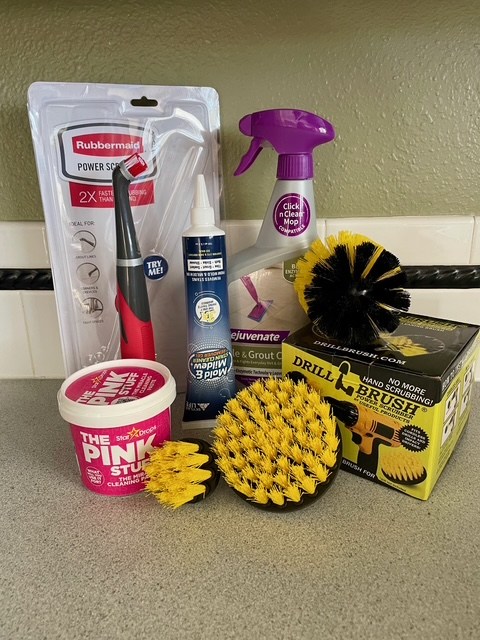
| Best Value | The Pink Stuff Miracle Cleaning Paste | Small areas and multipurpose household cleaning |
| Best for Routine Maintenance | Rejuvenate Tile and Grout Cleaner | Frequent cleaning of floors and shower walls |
| Best for Mold Stains | Skylarlife Mold and Mildew Remover Gel | Vertical grout, caulk, and silicone joints |
| Best for Natural Stone | Granite Gold Grout Cleaner | Stone tile and colored grout |
| Best Powered Tool | Rubbermaid Reveal Power Scrubber | Detailed grout lines and reduced hand scrubbing |
Best Overall: Soft Scrub With Bleach Cleaner Gel
Soft Scrub With Bleach Cleaner Gel earned the leading position in Bob Vila’s testing because it combined fast stain removal with strong whitening performance. Its thick gel consistency helps the formula remain over a grout line instead of immediately flowing into the next county.
During testing, it performed especially well on grimy grout in kitchens, bathrooms, and mudrooms. The bleach-based formula addressed everyday dirt as well as visible mold, mildew, and stubborn discoloration. It also required very little scrubbing, making it a useful choice for homeowners who would rather not spend Saturday afternoon negotiating with a toothbrush.
Where It Works Best
This cleaner makes the most sense on white or very light grout that has become brown, gray, or yellow. It can also clean many common bathroom and kitchen surfaces, but compatibility should always be confirmed on the label.
Potential Drawbacks
Bleach is powerful, but power needs supervision. Frequent or improper use may damage grout, affect sealers, discolor nearby materials, or create uneven coloring. Reserve a strong bleach gel for periodic restoration instead of automatically using it every week. Follow the specified contact time and rinse as directed.
Best Bleach-Free Grout Cleaner: Black Diamond Ultimate Grout Cleaner
Black Diamond Ultimate Grout Cleaner is a strong alternative for homeowners who want noticeable brightening without chlorine bleach. It comes in a spray bottle, works quickly, and can tackle soil, grease, and soap scum on both white and colored grout.
Bob Vila’s testers reported that it brightened grout almost as effectively as the bleach-based winner. Better Homes & Gardens also gave Black Diamond its best-overall designation after testing cleaning solutions on deliberately soiled tile sections. Its testers praised the product’s cleaning performance, manageable scent, included brush, and residue-free finish when properly removed.
Where It Works Best
Choose Black Diamond for kitchen floors, tiled entryways, countertops, and showers where ordinary soil or soap residue is the main problem. Its bleach-free formula is particularly appealing for colored grout, although testing a hidden area remains wise.
Potential Drawbacks
The scent can be strong, especially in small bathrooms, and incomplete rinsing may leave residue. Because the product is acid-free, it is not designed to dissolve every calcium deposit or hard-water spot. In other words, it is a grout specialistnot a tiny bottle wearing a superhero cape.
Best Value: The Pink Stuff Miracle Cleaning Paste
The Pink Stuff is a mildly abrasive cleaning paste made for more than grout. It can be used on suitable tile, sinks, glass, showers, and other hard surfaces, making it appealing to anyone who dislikes owning 14 bottles that all claim to clean approximately the same three things.
In grout testing, the paste removed surface staining and produced visible brightening, though it did not whiten as aggressively as bleach gel. Its thick texture allows precise application, and only a modest amount is needed for a small section.
Use a Light Touch
The abrasive particles that help lift grime can also scratch delicate or highly polished finishes if the paste is applied with too much pressure. Test it first, use a non-scratch pad or grout brush, and let the product do part of the work. Cleaning grout should not resemble an arm-wrestling tournament.
Best for Routine Maintenance: Rejuvenate Tile and Grout Cleaner
Rejuvenate Tile and Grout Cleaner uses a bio-enzymatic formula intended to break down organic residue. Rather than acting as an intense whitening treatment, it is better suited to ongoing cleaning of tile floors, bathroom walls, and shower surfaces.
The application is simple: spray, mop or wipe as directed, and allow the formula to work. Bob Vila’s testers found it effective at loosening dirt, food residue, and soap scum, although it did not dramatically whiten old grout stains. The no-scrub, no-rinse design also made it convenient in busy homes.
Best Use Case
Use this type of cleaner after restoring badly stained grout with a stronger product. Regular maintenance helps prevent fresh soil from becoming deeply embedded, reducing the need for another heroic deep-cleaning expedition six months later.
Best for Mold and Mildew Stains: Skylarlife Remover Gel
Mold and mildew stains often appear on shower grout, caulk, silicone sealant, and the corners where water lingers. A concentrated gel is useful because it clings to vertical surfaces instead of running down the wall before it has time to work.
Skylarlife Mold and Mildew Remover Gel requires a much longer dwell period than most spray cleaners. Depending on the stain and label directions, it may remain in place for several hours. That makes it less convenient for a quick cleanup but potentially more effective on neglected corners and stubborn dark staining.
Important Limitation
Removing a surface stain does not repair a moisture problem. If discoloration repeatedly returns, improve ventilation, repair leaks, dry the shower after use, and inspect deteriorating caulk. Cleaner can remove the evidence, but it cannot persuade a leaking pipe to reconsider its life choices.
Best Grout Cleaner for Natural Stone: Granite Gold Grout Cleaner
Marble, travertine, limestone, granite, and other natural-stone surfaces require extra caution. Acidic products that are perfectly acceptable on certain ceramic tiles may etch or dull stone. Granite Gold Grout Cleaner is formulated for use around stone, tile, porcelain, ceramic, glass, and colored grout.
The ready-to-use formula is free of ammonia and phosphates and is supplied with a grout brush for agitation. According to the manufacturer, it can be used as an intensive cleaner for natural stone and ceramic tile.
Why Surface Compatibility Matters
A cleaner does not remain politely inside the grout line. It inevitably touches adjacent tile, trim, metal fixtures, or countertops. Always choose a formula that is safe for the most sensitive material in the cleaning area, not merely for the grout itself.
Best Powered Grout-Cleaning Tool: Rubbermaid Reveal Power Scrubber
Sometimes the cleaner is only half the solution. A powered scrubber can produce quick oscillating action in narrow grout lines, around faucets, behind sinks, and along shower-door tracks. The Rubbermaid Reveal Power Scrubber is compact enough for detail work and easier to control than a large drill.
Powered agitation is helpful for textured grout and heavily traveled floors, but more pressure is not always better. Let the bristles move over the surface without forcing them into weak, cracked, or crumbling joints.
Alternative for Large Areas
A drill-brush attachment can cover tiled floors more quickly. Select the correct bristle stiffness, keep the brush moving, and avoid aggressive attachments on delicate tile. The goal is to remove the dirtnot excavate the grout and begin an unexpected remodeling project.
How Grout Cleaners Were Evaluated
A useful grout cleaner must do more than make one white line look impressive in a photograph. Testing across major home-care publications commonly considers several practical factors:
- Cleaning power: How effectively the formula removes dirt, grease, mud, soap scum, mildew stains, and discoloration.
- Brightening: Whether the original grout color becomes visibly clearer without creating blotchy patches.
- Dwell time: How long the product must remain on the surface before brushing or rinsing.
- Application: Whether a spray, stream, gel, paste, or pourable liquid can be placed accurately.
- Scrubbing effort: How much manual agitation is needed to achieve a satisfactory result.
- Residue: Whether the formula wipes away cleanly or requires repeated rinsing.
- Scent and ventilation: Whether fumes or fragrance make indoor use unpleasant.
- Surface safety: Compatibility with grout color, sealers, ceramic tile, porcelain, glass, metal, and natural stone.
- Value: The amount needed per cleaning session and the range of surfaces it can address.
Good Housekeeping also evaluates how well cleaners cling to vertical surfaces, whether advertised wait times are realistic, and how clearly the label communicates directions and safety precautions.
How to Choose the Best Grout Cleaner
Identify the Grout Color
A whitening cleaner may be ideal for white grout but unsuitable for charcoal, beige, blue, or other colored joints. Some products specify that they are safe for colored grout, while others should be limited to white grout. CLR Brilliant Bath, for example, is marketed for white grout rather than colored grout.
Check the Surrounding Tile
Ceramic and porcelain tile generally tolerate a wider range of cleaners than natural stone. Marble and limestone are particularly vulnerable to acidic products. Even when the grout is cement-based, the neighboring tile determines which chemicals can be used safely.
Match the Formula to the Stain
Kitchen-floor grime may respond to a degreasing grout spray. Soap scum needs a bathroom cleaner that can break down body oils and mineral residue. Mold staining may call for a clinging gel or bleach-based formula. Hard-water deposits often require a product specifically labeled for mineral buildup.
Consider the Application Style
Sprays cover walls and broad areas quickly. Narrow-stream nozzles offer precision. Gels cling to vertical grout and caulk. Pastes stay over localized stains but require more rinsing. Pourable acid cleaners are usually more practical for horizontal floor joints than shower walls.
Look for Third-Party Certification
The EPA Safer Choice label identifies products that meet the program’s criteria for performance and ingredients considered safer for people and the environment. Certification does not make a cleaner harmless or appropriate for every surface, but it can be a useful comparison point.
How to Clean Grout Safely and Effectively
- Vacuum or sweep first. Removing loose grit prevents it from turning into muddy paste.
- Read the complete label. Confirm compatibility, protective-equipment requirements, dwell time, and rinsing instructions.
- Test a hidden area. Check for discoloration, etching, damage to sealers, or changes in grout color.
- Ventilate the room. Open windows and doors or run an exhaust fan when using strong cleaning products.
- Apply to a small section. Working in manageable areas prevents the cleaner from drying before removal.
- Wait for the recommended dwell time. Scrubbing immediately may waste product and effort.
- Agitate with a grout brush. Use nylon bristles rather than metal, which may damage grout or tile.
- Rinse or wipe thoroughly. Remaining cleaner can attract soil, leave haze, or affect the surrounding material.
- Dry the area. Moisture control is especially important in showers and bathrooms.
Never Mix Cleaning Products
Do not combine bleach with ammonia, vinegar, acidic toilet-bowl cleaner, or another disinfectant. Dangerous vapors can be released when incompatible household chemicals are mixed. The CDC recommends good ventilation, following the product label, and using gloves or eye protection when required. Poison Control likewise warns that mixing bleach with ammonia or acids can create toxic fumes.
Can Homemade Grout Cleaner Work?
A homemade paste made from baking soda and hydrogen peroxide can help remove moderate staining and brighten some grout. Baking soda provides gentle abrasion, while hydrogen peroxide helps loosen residue and discoloration. One commonly published formula combines approximately one-half cup of baking soda with one-quarter cup of hydrogen peroxide.
Homemade cleaner is inexpensive and useful for light maintenance, but it is not automatically safer for every surface. Avoid acidic vinegar mixtures around marble, limestone, and other acid-sensitive stone. Never combine a homemade formula with bleach or another commercial cleaner.
Frequently Asked Questions
What is the most effective cleaner for badly stained white grout?
A clinging bleach gel is often the fastest option for heavily discolored white grout. Soft Scrub With Bleach Cleaner Gel performed particularly well in Bob Vila’s testing. Use it only on compatible surfaces, observe the short contact time, and rinse as instructed.
What is the best cleaner for colored grout?
Black Diamond Ultimate Grout Cleaner and Granite Gold Grout Cleaner are two options marketed for colored grout. Test first because age, previous sealers, dyes, and installation conditions can affect the result.
Can grout cleaner damage tile?
Yes. Acidic formulas may etch natural stone, abrasives may scratch polished surfaces, and bleach may discolor certain materials. Always base your product choice on both the grout and the surrounding tile.
Why does grout still look dirty after cleaning?
The discoloration may be embedded deeply, caused by a failed sealer, or represent the grout’s actual original color. Residue left by previous cleaners can also make the surface appear dull. In severe cases, professional steam cleaning, grout recoloring, sealing, repair, or replacement may be necessary.
How often should grout be deep-cleaned?
There is no universal schedule. Busy kitchen floors may need attention every few months, while a well-ventilated guest shower may need much less. Weekly wiping and prompt spill cleanup can significantly reduce the frequency of intensive cleaning.
Final Verdict
Soft Scrub With Bleach Cleaner Gel is the standout choice for restoring badly discolored white grout because it works quickly, clings well, and requires minimal scrubbing. Black Diamond Ultimate Grout Cleaner is the more versatile bleach-free option for routine dirt, soap scum, and colored grout. Rejuvenate is better for ongoing maintenance, while Granite Gold offers reassuring compatibility around natural stone.
The best grout cleaner is ultimately the one that matches the stain, grout color, tile material, and amount of effort you are willing to contribute. Start with the gentlest suitable method, follow the label, and escalate only when necessary. Grout may be stubborn, but with the correct cleaner and a respectable brush, it is not invincible.
Real-World Grout-Cleaning Experience: What the Testing Teaches Us
One of the most important lessons from comparing grout cleaners is that dramatic whitening and thorough cleaning are not always the same thing. A bleach gel may make white grout look spectacular within minutes, but a bleach-free cleaner can sometimes remove more greasy soil without creating such an obvious visual transformation. This distinction matters because consumers naturally judge success by color. A bright white line looks clean, even when whiteningnot soil removalcreated much of the effect.
A practical approach is to divide a dirty floor or shower into small test sections. Mark several inconspicuous areas with removable tape, apply different suitable methods, and compare them only after each section has been rinsed and completely dried. Wet grout nearly always looks darker, so judging it too soon can lead to unnecessary second applications. Drying also reveals residue that was invisible while the tile was damp.
Application control makes a surprisingly large difference. Thin sprays cover tile quickly but may waste product when the target is a narrow grout joint. Thick gels remain in place and are particularly useful on shower walls, yet clear gel can be easy to overlook during a long dwell period. Pastes provide excellent control over small stains, but using too much creates a rinsing marathon. More cleaner does not automatically mean more cleaning; sometimes it simply means more wiping.
The brush matters almost as much as the formula. A narrow nylon grout brush concentrates pressure inside the joint, while a large bathroom brush tends to skate across the tile. Powered scrubbers can save time, especially around fixtures and long floor lines, but they should not be forced against deteriorated grout. During any test, crumbling material, deep cracks, or missing sections indicate a repair problem rather than a cleaning problem.
Dwell time is another area where patience wins. Many disappointing results occur because the cleaner is sprayed and scrubbed away immediately. Surfactants, enzymes, bleaches, and other active ingredients need the contact time stated on the label. At the opposite extreme, leaving a strong product in place longer than directed can damage grout, metal, stone, sealers, or caulk. The correct dwell time is a performance instruction, not a vague suggestion from a bottle that lacks confidence.
Ventilation also changes the experience. Even a cleaner described as pleasantly scented can become overwhelming in a small bathroom. Opening a window, running the exhaust fan, and working in sections makes the task far more comfortable. Gloves improve grip as well as skin protection, especially when repeated rinsing is required.
Finally, the most successful grout-cleaning routine is usually a two-stage system: an occasional restoration cleaner followed by a milder maintenance product. After deep cleaning, wipe shower walls, address spills promptly, mop with clean water, wash reusable mop pads, and avoid leaving dirty cleaning solution in the grout lines. Otherwise, the floor may be “cleaned” with the same gray water that made it dirtywhich is less a cleaning method and more a dirt relocation program.












