
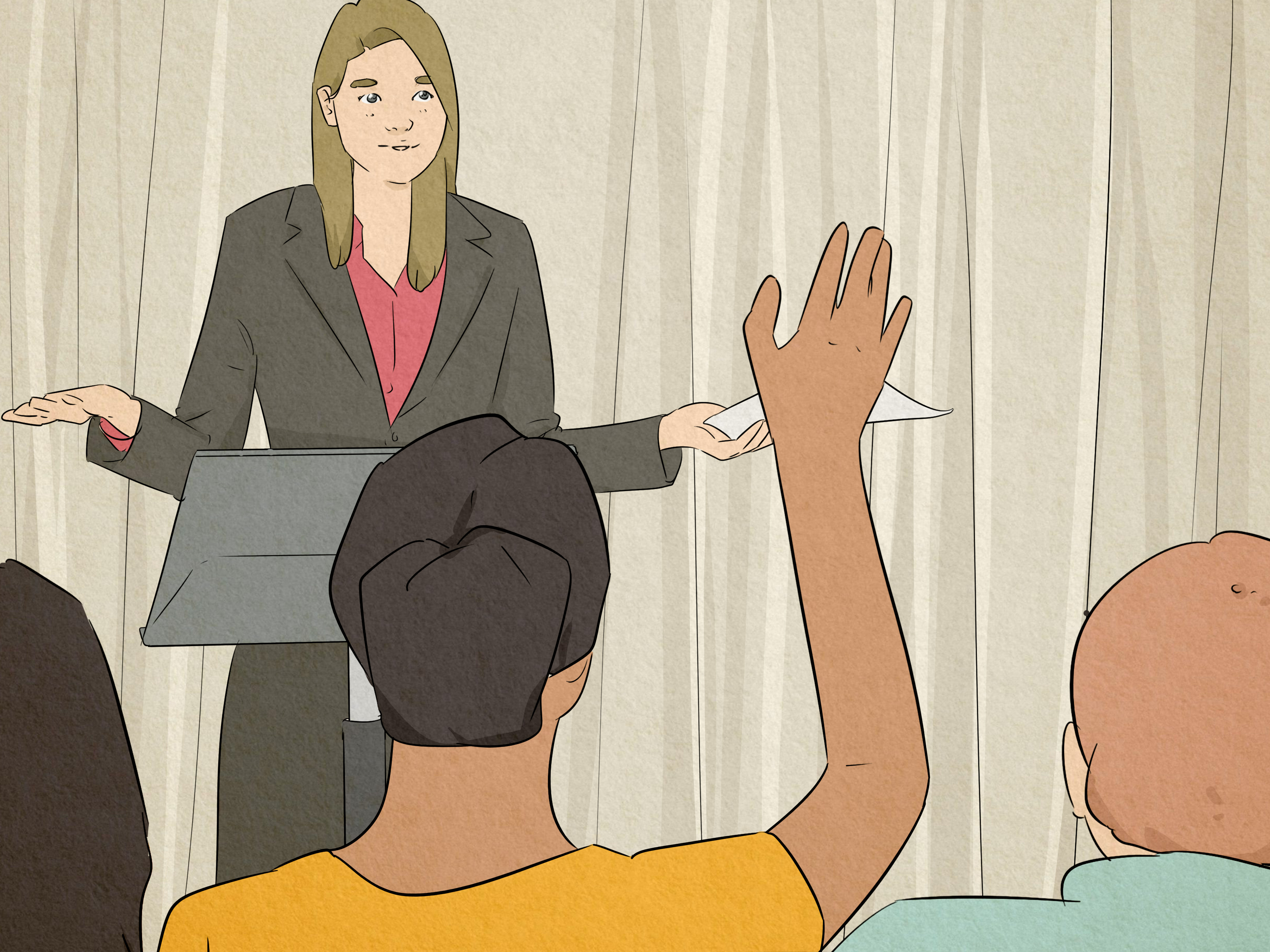
You have written your speech, practiced it twice, and discovered a small problem: the “ten-minute presentation” lasts four minutes and 38 seconds. Even the title slide looks embarrassed.
Fortunately, learning how to make a speech longer does not require stuffing it with meaningless phrases, reading every bullet point three times, or suddenly developing a fascination with the complete history of the semicolon. The best way to extend a presentation is to add useful depth, clearer explanations, memorable stories, and moments that give the audience time to think.
A longer speech should feel richer rather than slower. Your listeners should leave with a better understanding of the subjectnot with the sensation that they have been trapped in an elevator with a talking encyclopedia.
The following 12 techniques will help you increase speech length naturally while improving your structure, delivery, credibility, and audience engagement.
How Long Should Your Speech Be?
Before expanding anything, confirm the required speaking time. A classroom assignment may require five to seven minutes, while a business presentation, conference talk, wedding speech, or persuasive address may follow a completely different schedule.
Speaking rates vary according to the speaker, setting, subject, and delivery style. Nervous speakers often race through their material, especially when they read directly from a script. Strategic pauses, eye contact, vocal emphasis, and natural transitions can make the same content last longer without sounding artificially stretched. University speaking guides also recommend varying the rate rather than maintaining one mechanical speed throughout the presentation.
Time your speech aloud from beginning to end. Silent reading is not an accurate measurement because it excludes pauses, audience reactions, visual aids, and those three seconds when your brain briefly forgets how words work.
How to Make a Speech Longer Without Adding Fluff
1. Expand the Introduction
A rushed introduction can make an otherwise strong speech feel incomplete. Instead of announcing the topic and immediately sprinting toward your first point, give the audience a reason to care.
You can begin with a short story, surprising statistic, thoughtful question, vivid scenario, relevant quotation, or humorous observation. Then explain the purpose of the speech, establish your connection to the subject, and preview the main points.
For example, instead of saying, “Today I will discuss sleep,” try creating a scene: “At 2:17 this morning, millions of Americans were awake, staring at the ceiling and negotiating with their pillows.” You can then introduce the problem, explain why it matters, and show what the audience will learn.
Public-speaking resources commonly recommend attention-getters such as questions, anecdotes, illustrations, humor, quotations, and striking facts. These techniques increase speech length while giving the introduction an actual job beyond clearing its throat.
2. Add a Relevant Personal Story
Stories are among the easiest ways to make a speech longer because they combine information, emotion, characters, conflict, and meaning. A two-sentence claim can become a compelling one-minute segment when you show how the issue affected a real person.
Choose a story that directly supports your message. Include the setting, the people involved, the problem, the turning point, and the lesson. Small details make the scene feel real, but every detail should serve the central idea.
If your speech is about financial planning, for instance, describe the moment someone received an unexpected repair bill and realized an emergency fund was more than a boring spreadsheet category. Dialogue can also bring the moment to life: “The mechanic looked at the engine, looked at me, and used the phrase nobody wants to hear: ‘This will not be cheap.’”
Experienced speakers use stories because audiences tend to connect with consequences, characters, and emotional meaning more easily than with isolated statements.
3. Explain Each Main Point More Deeply
Thin speeches often contain valid points that are simply underdeveloped. The speaker makes a claim, assumes everyone understands it, and moves on before the audience has finished processing the sentence.
After presenting each main point, answer several questions:
- What does this idea mean?
- Why does it matter?
- How does it work?
- Who does it affect?
- What happens when people ignore it?
- How does it connect to the speech’s central message?
Suppose your point is, “Remote employees need clear communication.” Do not stop there. Define clear communication, identify common misunderstandings, explain their consequences, and provide a practical solution. That single sentence can become a useful two-minute section.
Strong analysis does more than present evidence. It tells listeners what they should notice, why the information matters, and how it supports the larger argument.
4. Include Specific Examples
An abstract idea tells the audience what you believe. A specific example helps them see it.
After explaining a concept, offer one or two realistic examples from daily life, business, history, education, technology, or your own experience. If the subject is complicated, compare an ineffective approach with an effective one.
For example, a speech about strong passwords could contrast “Fluffy123” with a longer passphrase and explain why predictable patterns are risky. A presentation about customer service could compare a robotic response with one that acknowledges the customer’s actual problem.
Examples should not merely repeat the point in different words. They should demonstrate how the principle works under real conditions. The bonus is that listeners will remember the example long after your beautifully polished definition has packed its bags and left their memory.
5. Add Credible Evidence and Explain It
Research can make a speech longer and more persuasive, but dropping a statistic into the presentation is not enough. Evidence needs context.
After introducing a study, statistic, expert opinion, or historical fact, explain who produced it, what was measured, what the result means, and why the audience should care. If the evidence has limitations, acknowledge them. That transparency strengthens your credibility.
Instead of saying, “A survey found that employees dislike meetings,” explain the survey population, the type of meetings involved, and the behaviors that caused frustration. Then connect those findings to your recommendation.
Use evidence to support your reasoning rather than replace it. A statistic may look impressive in formal clothes, but it still needs an introduction and an explanation before joining the party.
6. Address an Opposing Viewpoint
A persuasive speech becomes more substantial when it recognizes what skeptical listeners may be thinking. Present a reasonable counterargument, explain why someone might believe it, and respond with evidence or careful reasoning.
For example, a speech supporting remote work might acknowledge concerns about collaboration, supervision, or company culture. The speaker can then discuss hybrid schedules, measurable performance goals, and communication practices that address those concerns.
Do not invent a ridiculous opposing argument merely to defeat it. “Some people believe employees should never communicate at all” is not a counterargument; it is a cardboard villain. Choose the strongest reasonable objection and answer it fairly.
Considering alternative answers helps speakers test their claims and explain why their position remains stronger.
7. Use Smooth Transitions Between Sections
Transitions prevent a speech from sounding like a collection of unrelated paragraphs that met for the first time backstage. They guide listeners from one idea to the next while reinforcing the speech’s structure.
A good transition may summarize the previous point, explain its connection to the next one, and preview what is coming. For example: “Now that we understand why burnout develops, we can examine the workplace habits that make it worse.”
You can also use signposts such as “The first reason,” “This leads to the next challenge,” or “Let us compare these two approaches.” These phrases give listeners a mental map.
Speaking centers recommend planning transitions separately rather than hoping they magically appear during delivery. Clear signposting and purposeful pauses make the speech easier to follow while naturally increasing its duration.
8. Ask the Audience Questions
Audience questions create interaction and give listeners a moment to connect the subject with their own experiences.
You might ask for a show of hands, invite people to imagine a situation, use a rhetorical question, or request a brief response. Examples include:
- “How many of you checked your phone within ten minutes of waking up?”
- “What would you do if your monthly expenses suddenly increased by 20 percent?”
- “Think about the best teacher you ever had. What made that person memorable?”
Do not ask a question and answer it instantly. Give the audience time to think. A short silence may feel enormous to the speaker, but to everyone else it usually feels normal. Controlled pauses after questions can restore attention and emphasize the message.
9. Use Strategic Pauses
Many speakers shorten their presentations by racing through every sentence as though the podium is about to explode. Slowing down does not mean speaking in dramatic slow motion. It means allowing important ideas to land.
Pause after a major claim, before revealing an answer, between sections, and after a humorous line. A pause can build suspense, improve clarity, and give listeners time to absorb complex information.
Replace filler words such as “um,” “like,” and “you know” with silence. A clean pause sounds confident. A parade of filler words sounds like your sentence is searching the couch cushions for its keys.
Public-speaking guidance consistently treats pauses as vocal punctuation. They can emphasize key phrases, regulate pace, and prevent speakers from rushing through transitions.
10. Improve Your Vocal Variety and Body Language
A speech delivered in one flat tone will usually be finished quickly because nothing in the delivery distinguishes an important idea from a minor detail.
Vary your pitch, pace, volume, and emphasis according to the meaning of the words. Slow down for serious information, increase energy during exciting moments, and lower your voice when you want the audience to lean in.
Eye contact, facial expressions, posture, and intentional gestures also affect pacing. Looking at different parts of the room takes slightly longer than staring at your notes, but the additional time serves a purpose: it creates connection.
Vocal and nonverbal variety make a presentation more expressive while helping the audience recognize emotional shifts and key points.
11. Add a Demonstration or Visual Aid
A demonstration, chart, image, prop, or short activity can extend a presentation while making difficult information easier to understand.
Do not merely display a visual and say, “As you can see.” Explain what the audience should examine. Guide them through the important pattern, comparison, process, or change. If you use a graph, identify the axes and highlight the most meaningful result. If you demonstrate a process, explain each step and its purpose.
Visual aids should support the speech rather than become decorative wallpaper. Avoid reading slides word for word unless you want the audience to begin researching nearby emergency exits.
Place reminders in your speaking notes showing when to introduce the visual, what to explain, and when to return attention to the main message.
12. Strengthen the Conclusion
A conclusion should do more than announce, “That is all I have.” It is your final opportunity to clarify the message and leave the audience with something memorable.
Restate the central idea in fresh language, briefly review the major points, and return to the story, question, or image used in the introduction. A persuasive speech may end with a specific call to action. An informative speech may conclude with a broader implication or final insight.
For instance, if your speech began with a story about someone struggling to save money, return to that person and explain what changed after adopting a simple financial plan. This creates a satisfying sense of completion.
Do not introduce an entirely new major argument in the conclusion. That is like bringing another guest to dinner while everyone else is putting on their coats.
How to Rehearse a Longer Speech
Once you have expanded the content, practice the complete presentation aloud. Use a timer, but do not stare at it every seven seconds. Record yourself so you can identify rushed sections, unclear explanations, repetitive material, and places where a pause would help.
During rehearsal, mark several checkpoints in your outline. For a ten-minute speech, you might plan to finish the introduction near minute one, reach the second main point around minute four, and begin the conclusion near minute nine.
Practice with your visual aids and speaking notes exactly as you plan to use them. Rehearsal should reveal whether the added material strengthens the message or merely adds verbal furniture. Speaking-center guidance recommends timing full practice runs and preparing to move toward the conclusion when the remaining time becomes limited.
Common Mistakes to Avoid
Knowing how to lengthen a speech also means knowing what not to do. Avoid repeating the same sentence with slightly rearranged words, adding unrelated facts, reading long quotations, speaking unnaturally slowly, or filling every gap with “um.”
Do not add four weak main points when two strong points could be developed more deeply. Speeches become harder to remember when they contain too many competing ideas. A focused structure with clearly signposted sections is usually more effective than an endless list.
Above all, respect the maximum time. Making a five-minute speech last seven minutes may solve your original problem. Turning it into a 24-minute documentary series creates a brand-new one.
Conclusion
The best way to make a speech longer is to improve its substance and delivery at the same time. Develop your introduction, add stories and examples, explain evidence, acknowledge opposing views, strengthen transitions, involve the audience, and use meaningful pauses.
These techniques do more than add minutes. They make your ideas easier to understand, remember, and apply. Instead of asking, “How can I keep talking?” ask, “What does my audience need to understand this point fully?” The second question almost always produces a better speechand fewer listeners quietly checking whether the fire alarm works.
Experience-Based Lessons: Turning a Four-Minute Speech Into Ten Minutes
Consider a common rehearsal experience. A student has been assigned a ten-minute persuasive speech about reducing food waste. The outline appears complete: an introduction, three main points, and a conclusion. However, the first timed practice lasts only four minutes.
The student’s first instinct is to speak more slowly. During the second rehearsal, every sentence is stretched until it sounds as though the presentation is being delivered from the surface of the moon. The new time is four minutes and 45 seconds, and the speech is considerably less enjoyable.
A closer look reveals the real problem. The outline contains claims but very little development. The introduction says food waste is serious but offers no scene, scale, or reason for immediate attention. The first point mentions household waste without showing what it looks like in daily life. The second includes a statistic but never explains it. The third recommends meal planning without demonstrating how to do it.
The student begins by rewriting the opening. Instead of defining food waste, the speech describes a family cleaning out its refrigerator on Sunday evening: wilted vegetables, forgotten leftovers, expired yogurt, and one mysterious container nobody is brave enough to open. The scene is familiar, lightly humorous, and directly connected to the subject. It adds nearly a minute while making the problem recognizable.
Next, the student expands each main point. The household-waste section gains a specific example showing how impulse purchases and poor storage lead to discarded food. The statistical section now explains where the numbers came from, what types of waste were measured, and why individual behavior matters. The meal-planning section includes a three-step demonstration: check the refrigerator, plan several flexible meals, and write a focused shopping list.
The student also adds transitions. After discussing the scale of the problem, the speech says, “Knowing how much food we waste is uncomfortable, but the next question is more useful: why does it happen?” That sentence takes only a few seconds, yet it makes the structure much clearer.
During the next rehearsal, the student pauses after the central statistic and asks, “How much food did your household throw away last week?” The audience is given several seconds to think. Later, a short counterargument acknowledges that meal planning can feel inconvenient for families with unpredictable schedules. The response recommends planning adaptable ingredients rather than seven rigid dinners.
The revised speech lasts nine minutes and 20 seconds. Nothing has been repeated, and the speaker has not slowed to an unnatural pace. One final rehearsal adds better eye contact, a brief pause after the opening joke, and a stronger conclusion returning to the refrigerator scene. The finished presentation reaches nine minutes and 55 seconds.
This experience illustrates the central principle behind extending any presentation: missing time often indicates missing explanation. When speakers examine what the audience needs to see, understand, question, and remember, useful material begins to appear naturally.
A second lesson is that rehearsal must happen aloud. On paper, the original outline looked complete because every required section was technically present. Speaking exposed the shallow areas immediately. Recording the practice also revealed rushed transitions and sentences that were too complicated to say comfortably.
Finally, the student learned not to treat every practice run as a performance that must be perfect. Rehearsal is a workshop. Sections can be moved, cut, expanded, or replaced. A speech becomes longer and stronger through deliberate revisionnot through verbal wandering performed while hoping the clock develops sympathy.











