
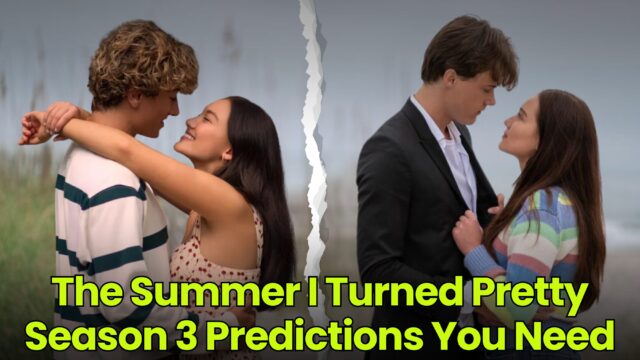
Some shows ask you to watch. The Summer I Turned Pretty asks you to choose a side, defend it like a family heirloom, and then cry in a beach house while a Taylor Swift song politely wrecks your emotional stability. That is exactly why Season 3 arrived with so much hype. It was the final chapter, the big decision, the grand emotional mess, and the season fans had been building theories around ever since Belly’s heart stayed tangled between Conrad and Jeremiah.
So what made Season 3 such prime prediction material? Simple: the setup was deliciously chaotic. Belly and Jeremiah looked solid on the surface, Conrad was still very much the ghost in the love story machine, and Jenny Han had already made it clear through the series that book readers should never get too comfortable. The adaptation respected the novels, yes, but it also enjoyed rearranging emotional furniture just enough to keep everyone nervous.
This is where the fun begins. Below are the smartest, juiciest, and most believable The Summer I Turned Pretty Season 3 predictions based on the show’s emotional logic, the themes of the book trilogy, and the kind of storytelling that loves to hand viewers a beach picnic before throwing in a thunderstorm. Sunscreen recommended. Tissues mandatory.
Why Season 3 Was Always Going to Hit Harder
Season 1 gave us dreamy summer nostalgia and the thrill of Belly finally being seen differently. Season 2 added grief, conflict, and sharper emotional edges. By the time Season 3 rolled around, the characters were no longer simply flirting on docks and making bad decisions under string lights. They were older, more serious, and much closer to adulthood. That shift mattered.
The biggest clue about the final season was maturity. This story was never only about which Fisher brother Belly would choose. It was also about growing up, making imperfect decisions, and learning the difference between first love, safe love, and lasting love. Season 3 had to feel more consequential than the earlier chapters. No more romantic coasting. No more emotional life jackets.
That is why predictions for the final season naturally centered on bigger stakes: commitment, timing, identity, forgiveness, and whether a relationship can survive when it stops being an idea and becomes real life. Nothing tests a love triangle like actual adulthood.
Prediction No. 1: Belly and Jeremiah Would Look Strong Before They Started Cracking
One of the most obvious predictions for Season 3 was that Belly and Jeremiah would begin from a place of apparent strength. From a storytelling standpoint, that was necessary. If their relationship looked shaky from minute one, there would be no suspense. Belly choosing Jeremiah at the end of Season 2 had to mean something. It had to feel real, warm, and worth believing in.
Jeremiah has always represented comfort, openness, and easy chemistry. He is the guy who makes things feel lighter, more playful, and more immediate. That kind of relationship often looks ideal after emotional chaos, especially when the alternative is Conrad, a human storm cloud in a very attractive sweater.
But here is the catch: relationships built in the shadow of unresolved feelings rarely stay simple. A strong prediction was that Belly and Jeremiah would start happy and then face stress once life became more complicated. Real commitment exposes pressure points. The more stable they appeared at first, the more dramatic the eventual cracks would feel.
Why this prediction made sense
Belly and Jeremiah worked beautifully as a romance of access and warmth. But Season 3 was never going to be just a victory lap for Team Jeremiah. The series needed conflict, and the most believable conflict would come from showing why a relationship that seems right in one season can feel less certain in another.
Prediction No. 2: Conrad Would Return as a Changed, More Dangerous Romantic Option
If Jeremiah was the present, Conrad was always the unfinished sentence. A major Season 3 prediction was that Conrad would return not just as Belly’s old heartbreak, but as a more emotionally readable version of himself. In earlier seasons, Conrad’s love often hid behind mood swings, silence, and enough internal suffering to power a small city. Season 3 needed him to evolve.
That did not mean Conrad had to become suddenly cheerful. Let’s not get unrealistic. But it did mean he had to become clearer. Viewers needed to see whether he had actually learned how to love Belly in a way that was not just intense, but sustainable. That question sat at the center of nearly every serious fan theory.
A smart prediction, then, was that Conrad would become more emotionally direct and therefore more threatening to Belly and Jeremiah’s future. Not because he would sabotage their relationship in a cartoonish way, but because he would finally show up as someone capable of saying what he wants and standing by it. That version of Conrad is not just brooding. That version is competition.
Prediction No. 3: The Show Would Keep the Endgame Mystery Alive Longer Than Book Readers Expected
Fans of Jenny Han’s books came into the series carrying extra baggage: knowledge. But adaptations do not exist to be obedient little photocopies. They exist to reinterpret, deepen, and sometimes mischievously make readers sweat. Because of that, one of the strongest Season 3 predictions was that the show would stretch uncertainty longer than the books did.
This was almost too perfect a setup to ignore. The fandom was split. The internet was loud. The Team Conrad versus Team Jeremiah debate had become part of the show’s marketing oxygen. Why resolve the triangle quickly when you can keep every social feed combusting for weeks?
So a very reasonable prediction was that the adaptation would preserve key emotional beats from the source material while changing the order, tone, or emphasis. Jenny Han had every reason to honor the spirit of the ending while still creating suspense for longtime readers. Translation: expect familiar pain, but not always on schedule.
The adaptation advantage
TV can linger where novels move quickly. It can expand side characters, deepen pauses, and turn one meaningful glance into an entire episode of fan analysis. That made it likely that Season 3 would not simply race toward a predetermined conclusion. It would make viewers earn every emotional payoff.
Prediction No. 4: Belly’s Real Arc Would Be About Choosing Herself Before Choosing a Brother
This may be the most important prediction of all. The smartest way for Season 3 to end was never just, “Belly picks one brother, roll credits, cue beach montage.” That would be too small for a story about growing up. A better prediction was that Belly’s final arc would involve claiming her own identity first.
That means asking bigger questions. Who is Belly when she is not reacting to Conrad? Who is she when she is not trying to preserve peace with Jeremiah? What kind of future does she actually want? What version of herself survives beyond Cousins Beach, family history, and romantic mythology?
If Season 3 wanted emotional depth instead of mere romantic drama, Belly had to become more than the center point of a triangle. She had to become a young woman making a conscious decision about her life. The endgame would feel most satisfying if it reflected growth, not just chemistry.
Prediction No. 5: Cousins Beach Would Matter as Much as Any Character
Every great teen drama has a setting that behaves like a cast member. In this series, Cousins Beach is not just scenery. It is memory, longing, grief, tradition, and fantasy rolled into one photogenic coastal package. So another reliable prediction was that Season 3 would lean hard into place as emotion.
Why? Because endings need emotional geography. The beach house, the boardwalk feeling, the summer rituals, the sense that childhood is slipping away while the ocean keeps pretending everything stays the same that is the secret sauce of the whole show. Cousins is where these people became themselves, and it is also where they risk getting trapped in old versions of themselves.
Expecting the final season to use Cousins as a pressure cooker was only logical. Big choices hit harder when they happen in the place that holds all your ghosts.
Prediction No. 6: Taylor and Steven Would Bring More Than Comic Relief
Any viewer treating Taylor and Steven as mere side entertainment was not paying attention. Their dynamic offered something the central triangle often lacked: sharp honesty. They flirted, fought, and jabbed at each other with the kind of energy that can either become a real relationship or a spectacular emotional disaster. Honestly, either option was fun television.
A strong Season 3 prediction was that Taylor and Steven would become more emotionally significant, not less. Final seasons thrive on contrast. While Belly, Conrad, and Jeremiah carried the epic-romance burden, Taylor and Steven could explore what young love looks like when it is messy, grounded, and a little less idealized.
They also helped the show answer an important question: are all relationships doomed to repeat the same confusion, or can some people actually learn to communicate before everything catches fire?
Prediction No. 7: Family, Not Romance, Would Deliver the Biggest Emotional Gut Punches
Romance gets the posters. Family delivers the wounds. One reason The Summer I Turned Pretty works so well is that its love triangle sits inside a deeper emotional universe shaped by grief, loyalty, memory, and parental influence. Susannah’s absence still hovered over everything, and Laurel’s role remained essential in grounding the story.
So it made perfect sense to predict that some of Season 3’s most powerful scenes would not be kisses or arguments between Belly and the Fisher brothers, but family conversations. The show has always understood that love is inherited as much as it is chosen. People bring their homes, hurts, and histories into every relationship.
In other words, if the season made you ugly-cry, there was a very good chance a parent, sibling, or old memory would be involved. The show knew exactly where to find its deepest ache.
Prediction No. 8: The Final Decision Would Be Less About Passion Than Timing
This is where many fandom arguments tend to miss the point. Fans often debate which brother is “better,” as if Belly is shopping for a blender and comparing warranty plans. But the more interesting prediction was that the final choice would come down to timing, readiness, and emotional compatibility in a specific season of life.
First love can be overwhelming and unforgettable. Best-friend love can feel safe and golden. But lifelong love usually requires something less cinematic and more difficult: alignment. The right person at the wrong moment can still be the wrong choice. The wrong relationship at the right emotional moment can still teach you something valuable.
Season 3 seemed built to test whether Belly had outgrown one version of love and grown into another. That made the ending less about who kissed better in a beach house and more about who fit the woman she was becoming.
Prediction No. 9: Jenny Han Would Refuse to Give Anyone a Totally Clean Win
If there was one thing longtime viewers should have known, it was this: Jenny Han does not hand out uncomplicated happiness like free popsicles at a boardwalk. Even when characters get what they want, they usually lose something too. That bittersweet balance is part of the brand.
So one last prediction felt especially safe: no matter who “won” the love triangle, Season 3 would make the victory emotionally complicated. There would be tenderness, yes, but also regret, memory, and the understanding that growing up means leaving certain dreams behind even beautiful ones.
That is what gives the story staying power. It never pretends love is neat. It understands that even the right ending can hurt a little on the way there.
What These Predictions Say About the Show’s Real Appeal
The reason fans obsess over The Summer I Turned Pretty Season 3 predictions is not just that they care who Belly ends up with. It is that the show has become a referendum on different kinds of love. Is love supposed to feel familiar or transformative? Easy or earned? Safe or overwhelming? Should you choose the person who knows you best, or the person who challenges the deepest part of your heart?
That is why the series became more than a YA romance adaptation. It turned into a giant emotional Rorschach test. Team Conrad sees destiny, depth, and unfinished truth. Team Jeremiah sees loyalty, warmth, and a relationship that actually looks livable. And Belly, caught in the middle, represents what so many young adults experience: wanting certainty while still figuring out yourself.
In that sense, the best predictions were never only about plot twists. They were about values. They revealed what viewers believed love should look like.
Fan Experience: Why Predicting Season 3 Felt Like a Summer Job With No Pay and Too Many Feelings
There is a very specific experience that comes with following a show like The Summer I Turned Pretty, and it has less to do with passive viewing than with full-blown emotional participation. You do not simply watch an episode and move on with your day. You watch, pause, rewind, text a friend, read a theory thread, reconsider your life choices, and then somehow end up debating fictional brothers as if they personally borrowed your car and returned it with no gas.
That was especially true heading into Season 3. The waiting period made fans even more intense. Every teaser image became “evidence.” Every interview quote became “confirmation.” Every glance in a trailer became the subject of ten think pieces and at least one dramatic social media caption in all lowercase. Predicting the final season was not just fandom behavior. It became a ritual.
And honestly, that ritual was part of the joy. Prediction culture let viewers stretch the summer feeling even when no new episode had dropped. It kept Cousins Beach alive in everyone’s imagination. People built elaborate theories around endgame clues, wardrobe choices, song selections, and the tiniest changes from the books. It was like trying to solve a love triangle using beach towels, emotional trauma, and Taylor Swift lyrics. Ridiculous? Absolutely. Fun? Also absolutely.
There was also something surprisingly personal about it. Fans did not only pick Team Conrad or Team Jeremiah because of chemistry. They picked based on their own experiences. Some people saw their first heartbreak in Conrad’s silence. Others saw the comfort of being truly chosen in Jeremiah’s openness. Belly’s indecision reflected something real for a lot of viewers: the way growing up often means choosing not just between two people, but between two versions of yourself.
That is why prediction articles kept resonating. They gave shape to all that emotional noise. They turned vibes into arguments. They let fans feel smart, invested, and slightly chaotic all at once. You could read one and think, “Yes, this person understands why a dock conversation from two seasons ago still has a hold on me.” That kind of recognition matters in fandom spaces.
In the end, the experience of predicting Season 3 was almost as entertaining as the season itself. It reminded fans why pop culture can feel communal in the best way. For a little while, everyone was standing on the same imaginary beach, staring at the same love triangle, pretending they were calm about it. No one was calm. That was the magic.
Final Thoughts
If Season 3 had one job, it was to turn romantic suspense into emotional resolution without losing the dreamy ache that made The Summer I Turned Pretty such a phenomenon in the first place. The best predictions all pointed to the same truth: this final season was never going to be only about choosing Conrad or Jeremiah. It was about choosing maturity over fantasy, honesty over avoidance, and identity over romantic confusion.
Of course, fans would always argue about the brothers. That is tradition now. But the real victory of the series is that it made those arguments feel meaningful. Underneath the beach kisses and devastating glances, this was always a coming-of-age story about how love changes when you do.
And that is why The Summer I Turned Pretty Season 3 predictions mattered so much. They were not just guesses. They were a way of reading the emotional weather before the storm rolled in.











