
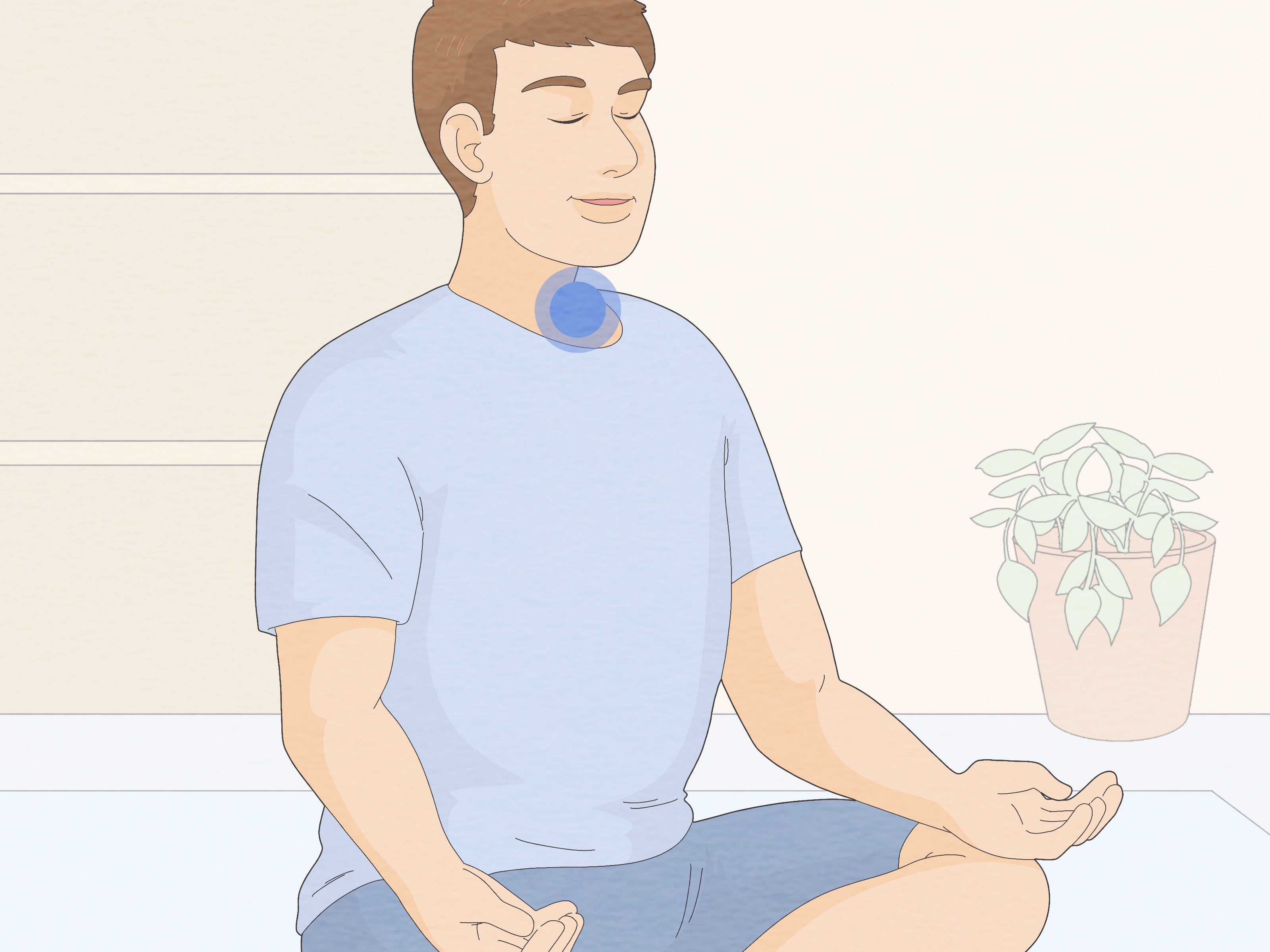
Have you ever known exactly what you wanted to say, only to watch the words disappear somewhere between your brain and your mouth? Perhaps you avoid difficult conversations, struggle to express what you need, or agree to things while an enthusiastic voice inside you is yelling, “Absolutely not.” In traditional chakra teachings, experiences like these are often described through the symbolism of the throat chakra, or Vishuddha chakra.
Vishuddha is traditionally described as the fifth of the seven primary chakras and is associated with communication, honesty, listening, creativity, and authentic self-expression. It is commonly represented by the color blue and located symbolically around the throat. Modern Western science does not recognize chakras as anatomical structures or measurable energy centers, so a “blocked throat chakra” should be understood as a spiritual or wellness concept rather than a medical diagnosis. Still, the framework can offer a useful way to think about communication habits, emotional expression, mindfulness, and personal boundaries.
That distinction matters. Persistent throat pain, difficulty swallowing, breathing problems, or ongoing hoarseness should not be blamed on chakra imbalance. Those symptoms deserve appropriate medical evaluation.
With that cleared up, here are 14 simple ways to unblock your throat chakra as a mindfulness and self-expression practiceno mystical plumbing equipment required.
What Does a Blocked Throat Chakra Mean?
Within traditional and contemporary chakra practices, the throat chakra is associated with the ability to communicate clearly while remaining truthful to yourself. A person who describes their throat chakra as “blocked” may feel uncomfortable speaking up, sharing emotions, asking for help, setting boundaries, or expressing creative ideas.
The opposite can happen too. Talking constantly, interrupting others, using words aggressively, or speaking before listening may also be interpreted by some chakra traditions as imbalance rather than healthy expression. Communication is not simply producing more words. Sometimes the most powerful throat chakra practice is knowing when to stop talking and listen.
Research on chakras themselves is extremely limited. However, several practices traditionally used for throat chakra healingincluding yoga, meditation, chanting, breathing exercises, journaling, and mindful communicationhave separately been studied for their potential effects on stress, mood, and general well-being.
14 Simple Ways to Unblock Your Throat Chakra
1. Practice Slow, Intentional Breathing
Start with something you already do roughly 20,000 times a day: breathe. The difference is that this time you actually pay attention.
Sit comfortably and relax your jaw and shoulders. Inhale slowly through your nose, then exhale gently without forcing the breath. Spend three to five minutes noticing how the air passes through your throat. You do not need a complicated breathing ratio or Olympic-level lung control.
Breathing and relaxation practices can help calm the stress response, which may make it easier to identify what you are feeling before attempting to put it into words. From a throat chakra perspective, that creates a bridge between internal awareness and external expression.
2. Hum for a Few Minutes
Humming is one of the simplest sound-based throat chakra exercises because practically anyone can do it. Close your lips, breathe comfortably, and make a gentle “mmm” sound during the exhale. Notice the vibration around your lips, face, and throat.
Interestingly, humming has effects that go beyond chakra tradition. Physiological research has found that humming temporarily produces substantially higher nasal nitric oxide levels than quiet exhalation because the vibration increases gas exchange between the nasal cavity and paranasal sinuses. That does not prove humming opens chakras, but it confirms that humming creates measurable physical changes in the upper airway.
Keep the sound comfortable. This is meditation, not an audition for a motorcycle engine.
3. Try the Traditional “HAM” Mantra
In some yogic chakra traditions, the bija, or seed mantra, associated with Vishuddha is HAM. Sit upright, inhale naturally, and slowly vocalize “haaam” as you exhale.
Repeat it five to ten times without straining your voice. Focus on the vibration and the sensation of producing sound rather than trying to manufacture a supernatural experience. Yoga Journal describes HAM as the traditional mantra connected with the throat chakra.
Small studies of chanting have also reported reductions in self-reported stress and anxiety, although these findings concern chanting as a contemplative practicenot chakra activation itself.
4. Sing Without Caring How Good You Sound
Singing exercises your voice in the most literal possible way. Choose a song you enjoy and sing somewhere you feel comfortable: your bedroom, your car, or the shower, whose acoustics have rescued mediocre singers for generations.
The objective is not vocal perfection. It is becoming comfortable making sound and taking up auditory space.
Research on singing has found associations with changes in mood and stress-related measures in some settings. For example, low-stress singing situations have been associated with reductions in cortisol, although stressful public performances can produce the opposite effect.
5. Stretch Your Neck and Shoulders Gently
Stress frequently comes with tight shoulders, a clenched jaw, and stiff neck muscles. Gentle movement can help you notice and release some of that tension.
Try slowly tilting one ear toward the corresponding shoulder, returning to center, and repeating on the other side. You can also lower your chin slightly toward your chest and gently roll your shoulders backward.
Avoid aggressive neck circles, forcing a stretch, or pushing through pain. Throat chakra practices should leave your neck feeling better, not make you wonder whether you need to explain a yoga injury at urgent care.
6. Explore Throat-Focused Yoga Poses
Yoga traditions frequently connect certain postures with Vishuddha, particularly poses that involve the neck, chest, and shoulders. Gentle options may include Bridge Pose, Cobra Pose, supported Fish Pose, and standing forward folds.
More advanced postures such as Shoulder Stand and Plow Pose are also traditionally associated with the throat area, but beginners should not attempt them merely because an internet article told them their chakra looked bored.
Yoga research suggests the practice may support stress management, emotional well-being, and flexibility, while injuries are possible when poses are performed incorrectly. Learn unfamiliar positions from a qualified instructor and modify them when necessary.
7. Write What You Cannot Yet Say
If speaking feels difficult, start with writing. Open a notebook and answer questions such as:
- What am I afraid to say?
- Where am I saying yes when I mean no?
- What conversation am I avoiding?
- What do I wish someone understood about me?
- What would I say if I knew I would be heard respectfully?
Do not edit every sentence into diplomatic perfection. The notebook is not holding a press conference. Let the first version be messy.
Within throat chakra practices, journaling is commonly used to connect internal feelings with outward expression. It can also help you recognize patterns before entering an important conversation.
8. Say One Honest Thing Each Day
“Speaking your truth” sounds dramatic, but it does not require climbing onto a table and announcing your deepest secrets to coworkers.
Start small. Say, “I actually prefer Friday.” Tell someone, “I don’t understandcould you explain that again?” Politely decline something you genuinely do not want to do. Admit that a joke hurt your feelings. Tell a friend you appreciate them.
Authentic communication develops through repeated small decisions. The goal is neither silence nor brutal honesty. Healthy assertiveness involves expressing your perspective while respecting other people’s rights and feelings.
9. Practice Listening Without Planning Your Reply
A balanced approach to communication includes receiving information as well as transmitting it. During your next conversation, notice how quickly your brain begins composing a response while the other person is still speaking.
Instead, try listening until they finish. Ask a clarifying question before introducing your own story. Reflect back what you understood.
For people exploring throat chakra healing, this can be surprisingly important. Self-expression without listening eventually becomes a podcast nobody subscribed to.
10. Use a Blue Object as a Mindfulness Cue
Blue is traditionally associated with Vishuddha. There is no scientific evidence that wearing blue clothes, looking at blue objects, or surrounding yourself with blue light literally alters an energy center. Nevertheless, symbolism can work as a behavioral reminder.
You might wear a blue bracelet before a difficult conversation or place a blue object beside your journal. Whenever you notice it, ask yourself: Am I communicating clearly? Am I listening? Is what I am saying consistent with what I actually believe?
The object does not need magical powers. It simply needs to remind you to pay attention.
11. Use Crystals as Symbols, Not Medical Devices
Aquamarine, turquoise, lapis lazuli, and other blue stones are commonly associated with throat chakra practices. Some people meditate while holding them or wear them as jewelry.
There is no good scientific evidence that crystals emit healing frequencies capable of treating physical or psychological disorders. If you enjoy crystals, use them as meaningful symbols, meditation objects, or reminders of your communication intentions rather than replacements for medical or mental health care.
A turquoise necklace can remind you to speak confidently. It cannot diagnose your thyroid. Those are very different job descriptions.
12. Take Care of Your Actual Voice
If the throat chakra represents your voice symbolically, maintaining your physical voice is a wonderfully practical complement.
Drink adequate fluids, avoid repeatedly shouting, and give your voice rest when it feels tired. Medical voice-care guidance emphasizes hydration, efficient breath support, and avoiding behaviors that unnecessarily strain the vocal folds.
Do not whisper aggressively when you lose your voice; whispering can also strain the vocal mechanism. Persistent hoarseness, especially when accompanied by pain, breathing difficulty, or swallowing problems, should be professionally evaluated rather than treated with chakra exercises.
13. Read Something Aloud
Reading aloud is excellent practice if spontaneous self-expression feels intimidating. Pick a page from a novel, poem, article, or speech and read slowly for five minutes.
Focus on breathing comfortably, articulating words clearly, and letting sentences finish without rushing. Then try reading the same passage with slightly more expression.
This exercise gives you permission to become familiar with your voice without having to invent the words yourself. Over time, that comfort may make speaking your own thoughts feel less intimidating.
14. Have the Conversation You Keep Rehearsing
Many people do magnificent imaginary communication. In the shower, they are eloquent negotiators. At 2 a.m., they deliver flawless speeches. Then the real person arrives and suddenly the vocabulary consists mainly of “yeah, that’s fine.”
Choose one unresolved conversation and prepare for it thoughtfully. Write the main point in a single sentence. Describe your feelings without attacking the other person. State what you need or what boundary you want to establish. Then choose an appropriate time to talk.
Examples include:
- “I need more notice before taking on extra work.”
- “When plans change without telling me, I feel frustrated.”
- “I care about our relationship, but I am not comfortable with that.”
For many people, this is the most meaningful interpretation of unblocking the throat chakra: turning internal awareness into respectful, real-world communication.
A Simple 10-Minute Throat Chakra Routine
If fourteen practices sound like one spiritual chore list too many, combine a few into a short daily routine.
- Two minutes: Sit quietly and breathe slowly.
- One minute: Relax your jaw, neck, and shoulders.
- Two minutes: Hum gently or chant HAM.
- Three minutes: Journal about something you want to express.
- Two minutes: Decide on one honest, respectful action you can take that day.
Consistency is more useful than turning your practice into a 90-minute ceremony involving twelve candles, seventeen crystals, three playlists, and enough preparation to launch a small satellite.
Experiences People May Have While Working With the Throat Chakra
The following examples describe common, realistic experiences someone might encounter while using throat chakra practices. They are illustrative rather than proof that an invisible energy center has physically opened.
At First, Silence May Become Uncomfortable
One of the first things people often notice during journaling or meditation is just how much they routinely leave unsaid. Someone might begin with a seemingly harmless prompt such as “What conversation am I avoiding?” and unexpectedly fill three pages.
The revelation may not be mystical at all. Perhaps they have been agreeing to extra work because they hate disappointing people. Maybe they avoid telling a partner what they need because previous conversations became uncomfortable. Perhaps they keep opinions to themselves because they learned early in life that being agreeable was rewarded.
That awareness alone can feel like progress. Before changing communication, you first have to notice your existing communication habits.
Your Voice Can Feel Strange When You Start Using It More
Someone who rarely sings, chants, or reads aloud may initially feel ridiculous doing vocal exercises. The first “HAM” can sound less like ancient spiritual wisdom and more like somebody discovering a forgotten sandwich.
That awkwardness tends to matter less with repetition. The practical experience is learning that producing sound does not require performing for anyone. Humming for two minutes or reading a paragraph aloud can become as ordinary as stretching your legs.
People may also notice physical tension they had previously ignored: a clenched jaw, raised shoulders, shallow breathing, or a habit of tightening the neck while concentrating. Gentle breathing and movement provide an opportunity to notice those patterns without automatically labeling them as chakra problems.
The Biggest Change May Happen Outside Meditation
Consider a fictional example: Maya spends two weeks journaling about communication. Nothing dramatic happens during meditationno blue lights, no cosmic choir, no sudden Sanskrit fluency. But at work, a colleague asks her to take another assignment when her schedule is already full.
Normally she would immediately say yes and spend the evening annoyed with everyone except the person who actually agreed: herself.
This time she says, “I can help, but I can’t complete it by Tuesday unless we move another priority.”
That sentence may represent more meaningful throat chakra work than an hour of visualization. She identified what was true, expressed it clearly, and communicated without aggression.
Listening May Improve Alongside Speaking
Another unexpected experience is realizing that communication problems are not always caused by saying too little. Some people discover they talk quickly whenever silence makes them nervous. Others explain themselves repeatedly because they desperately want to be understood.
Practicing intentional listening can reveal how often conversation becomes a competition between two people waiting for their turn to speak.
A person working with Vishuddha may therefore begin pausing more often, asking better questions, and tolerating a few seconds of silence. The result can feel like “opening” communication even though fewer words are being spoken.
Progress Is Usually Ordinaryand That Is Fine
Perhaps the most useful expectation is that throat chakra healing does not need to feel supernatural. Progress may look like asking a question instead of pretending you understand. It may mean saying no without writing a five-paragraph apology. It can mean singing loudly while driving, publishing something creative, admitting that you were wrong, or finally telling someone that you appreciate them.
Some days communication will still be clumsy. You may prepare the perfect sentence and deliver something approximately 40 percent as elegant. That still counts. Authentic expression is a skill, and skills improve through practice rather than perfection.
Conclusion: Finding Your Voice Without Forcing It
Learning how to unblock your throat chakra can be approached as a spiritual practice, but its most useful lessons are remarkably practical: breathe before reacting, notice tension, make sound, write honestly, listen carefully, protect your physical voice, set clearer boundaries, and say what genuinely needs to be said.
You do not need to believe that Vishuddha is a measurable energy center to benefit from examining your relationship with communication. Likewise, spiritual belief should never replace appropriate medical care for persistent throat or voice symptoms.
Start with one practice rather than all fourteen. Hum during your morning shower. Write one honest journal page. Speak one small truth. Listen through one conversation without preparing your comeback.
Your throat chakra practice does not have to make you the loudest person in the room. A better goal is becoming someone whose words, silence, values, and actions increasingly agree with one another.
Note: The throat chakra is a traditional spiritual and wellness concept rather than a scientifically established anatomical structure. Practices discussed here are intended for mindfulness, relaxation, communication, and personal reflection and should not be used to diagnose or treat medical conditions. Research informing this article included material from Cleveland Clinic, Healthline, Yoga Journal, mindbodygreen, Verywell Mind, NCCIH, Mayo Clinic, MedlinePlus, PubMed/NIH, Psychology Today, Mount Sinai, and the American Speech-Language-Hearing Association.











